

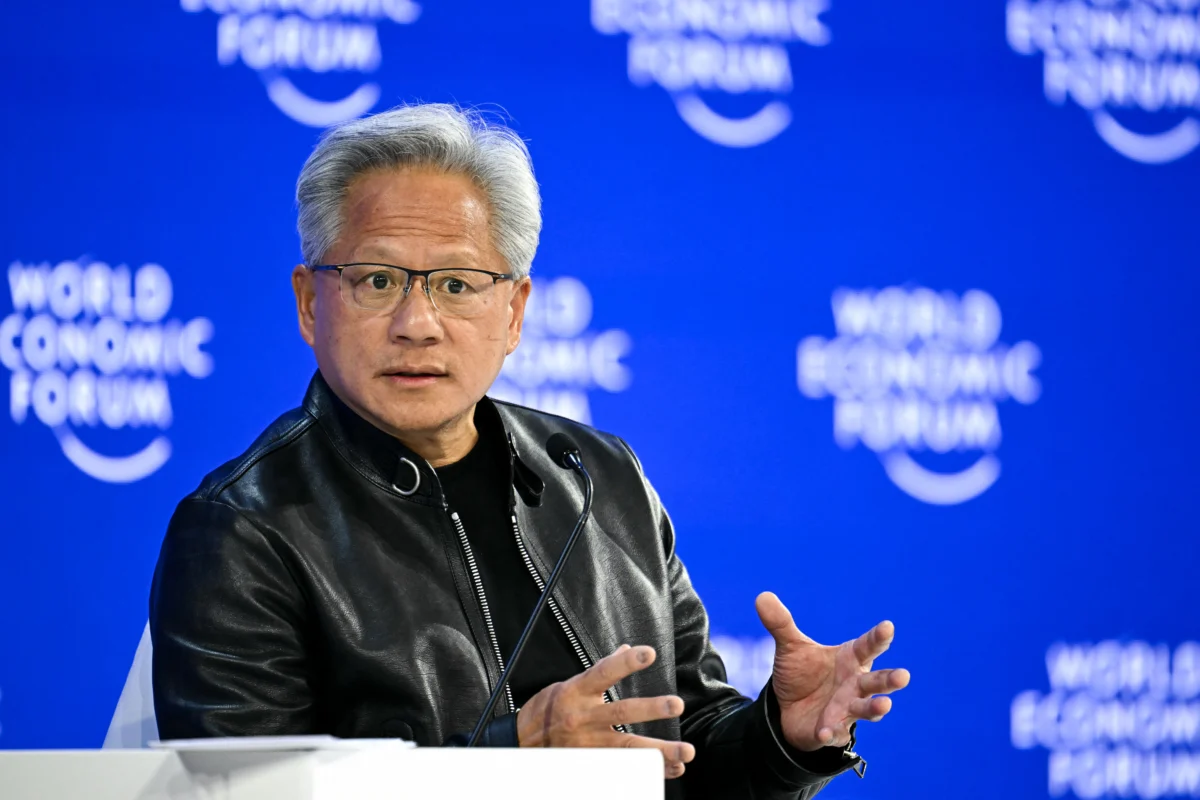
The intersection of high-stakes technology and national policy reached a dramatic crescendo on Monday morning at the All-In Summit in Los Angeles when Nvidia CEO Jensen Huang received an unscheduled phone call from President Donald Trump while onstage. The interaction, which took place in front of a live audience of venture capitalists, tech executives, and industry analysts, highlighted the deepening alliance between the world’s most valuable semiconductor company and the current administration’s "America First" approach to artificial intelligence development.
Huang was in the middle of a keynote discussion with the hosts of the "All-In" podcast—venture capitalists Chamath Palihapitiya, Jason Calacanis, David Friedberg, and David Sacks—when his phone rang. Identifying the caller as the President, Huang opted to take the call publicly, a move that bypassed traditional corporate communications protocols but underscored the direct line of communication currently existing between Silicon Valley’s hardware leaders and the White House.
The Onstage Interaction and Speakerphone Diplomacy
As Huang answered the device, he informed the President that he was currently "onstage with the besties," a colloquial term used by the podcast’s hosts and their loyal listener base. The audience, initially silent in surprise, watched as Huang attempted to share the conversation with the room. President Trump, displaying his characteristic penchant for humor and directness, quipped about the technical irony of the situation. "The great thing about life is Jensen can develop the most complex computer chip in the world… but he can’t figure out how to put you on speaker," Trump said.
Despite the lighthearted opening, the conversation quickly pivoted to the strategic future of the American technology sector. Huang, working with stagehands to secure an additional microphone to amplify the phone’s output, ensured the President’s remarks on AI regulation were heard clearly by the attendees. The exchange served as a public validation of the administration’s stance on technological "accelerationism," a philosophy that prioritizes rapid development and deployment of AI to maintain a competitive edge over global rivals.
Divergent Philosophies on AI Regulation
The call interrupted a specific debate regarding the "pace of progress" in the artificial intelligence sector. Recently, Anthropic CEO Dario Amodei published a memo advocating for a measured slowdown in the scaling of AI models, citing safety concerns and the potential for unforeseen societal consequences. This "safety-first" or "decelerationist" view has gained traction among several prominent tech figures, including OpenAI CEO Sam Altman and SpaceX CEO Elon Musk, both of whom have expressed support for some level of regulatory oversight or voluntary pauses to ensure alignment with human interests.
However, Huang and the All-In hosts have consistently championed a different path. For Nvidia, the primary manufacturer of the H100 and Blackwell GPUs that power the AI revolution, any slowdown in the industry represents not just a financial hurdle but a strategic risk for the United States. President Trump echoed this sentiment during the call, framing the push for a slowdown as a potential geopolitical trap.
"They’re just playing right into the hands of a lot of people that don’t want to see it happen," Trump told Huang, referring to those calling for a pause. "That could be political people. It could also be China. And we’re not going to let that happen. It’s a hoax."
Huang’s response was unequivocal. "You’re right. We’re not going to let that happen, sir," he replied, a statement that was met with significant applause from the summit audience. This exchange signals a clear policy direction: the current administration views AI development as a zero-sum geopolitical race, where regulation is viewed through the lens of potential national disadvantage.
The Geopolitical Stakes and the "China Factor"
The President’s mention of China highlights the central role AI plays in modern international relations. The U.S. Department of Commerce has already implemented stringent export controls on high-end Nvidia chips to prevent the Chinese military from gaining access to advanced computing power. Within this context, the administration views domestic calls for a "slowdown" as counterproductive to the goal of maintaining technological hegemony.
Industry analysts suggest that the "hoax" label used by the President refers to the idea that a unilateral pause by American companies would lead to a global pause. Instead, the administration argues that if the U.S. slows down, adversaries will continue their development unabated, potentially surpassing American capabilities in fields ranging from cyber-warfare to pharmaceutical discovery and autonomous systems.
Public Opposition and the Data Center Crisis
While the executive branch and tech leadership appear aligned on acceleration, a significant portion of the American public remains skeptical. This skepticism is not necessarily rooted in abstract fears of "superintelligence," but rather in the tangible, local impacts of the infrastructure required to support AI.
Data from a recent Gallup poll indicates a growing divide between Silicon Valley’s ambitions and the concerns of local communities. According to the survey, seven out of ten Americans oppose the construction of large-scale data centers in their immediate vicinities. The concerns are multifaceted:
- Environmental Impact: Over 50% of respondents cited the massive energy and water requirements of data centers as a primary concern. Modern AI clusters require gigawatts of power, often straining local grids and leading to the reopening of coal plants or the delayed retirement of fossil fuel facilities.
- Cost of Living: Approximately 20% of respondents expressed fear that the presence of massive tech hubs would drive up local electricity prices and real estate costs, effectively pricing out long-term residents.
- Quality of Life: Issues such as noise pollution from cooling fans and the aesthetic impact of industrial-sized warehouses in suburban areas have fueled a "NIMBY" (Not In My Backyard) movement against tech infrastructure.
President Trump and his allies, including Y Combinator CEO Garry Tan, have characterized this local opposition as part of a broader "psyop" or misinformation campaign designed to stifle American growth. However, the Gallup data suggests that the resistance is a grassroots phenomenon driven by environmental and economic anxieties.
During the call, Trump acknowledged the need for a balanced approach but reiterated his commitment to the industry. "We have to be a little bit careful… We have to do things and we have to do them prudently, but that doesn’t mean we’re going to stop an industry," he said. "So I’m with you all the way. We’re going to lead."
The Influence of the "All-In" Circle
The setting of this interaction—the All-In Summit—is significant. The hosts of the podcast have transitioned from being mere commentators to active participants in the federal government’s tech policy. David Sacks, who previously served as the administration’s "AI Czar," and David Friedberg, an advisor on science and technology, represent a bridge between the venture capital world and the White House.
This "inner circle" of tech advisors has been instrumental in shaping an environment that favors deregulation and massive infrastructure investment. Their influence suggests that the coming years will see a push for "AI-friendly" zoning laws, streamlined energy permits for data centers, and federal support for semiconductor manufacturing, likely building upon or pivoting from the foundations laid by the CHIPS and Science Act.
Chronology of Recent AI Policy Shifts
The call between Huang and Trump marks a pivotal moment in a rapidly evolving timeline of AI governance:
- Late 2023: The previous administration issued an Executive Order on the Safe, Secure, and Trustworthy Development and Use of Artificial Intelligence, which focused heavily on safety testing and reporting requirements.
- Early 2024: Industry leaders like Dario Amodei and Sam Altman began testifying before Congress, with some calling for a federal licensing body for AI.
- Mid-2024: The All-In hosts and other "accelerationists" began a concerted public relations campaign against "regulatory capture," arguing that heavy regulation would only benefit incumbent tech giants and hurt startups.
- Present Day: The Trump administration has signaled a move away from the "safety-first" precautionary principle toward a "growth-first" competitive model, explicitly linking AI progress to national security and the avoidance of "foreign psyops."
Analysis of Implications
The public nature of this phone call serves several strategic purposes. For Nvidia, it reinforces its status as a vital national asset, effectively making the company "too important to regulate" in a way that would hinder its hardware sales. For the Trump administration, it demonstrates a hands-on approach to the economy and a willingness to bypass traditional media to speak directly to the tech elite and their followers.
However, the "accelerationist" path faces significant hurdles. The physical constraints of the power grid and the rising public backlash against data centers cannot be solved by executive decree alone. If the administration and tech leaders like Huang cannot address the environmental and local economic concerns of the 70% of Americans who oppose data center expansion, the "AI revolution" may face a bottleneck not in the chips themselves, but in the ground where they are housed.
As Nvidia continues to push the boundaries of compute power, the alignment between its CEO and the President suggests that the United States will double down on its current trajectory. The rejection of a "slowdown" indicates that the global AI arms race is entering a new, more aggressive phase, where speed is prioritized over caution and national competition is the primary driver of innovation.
