

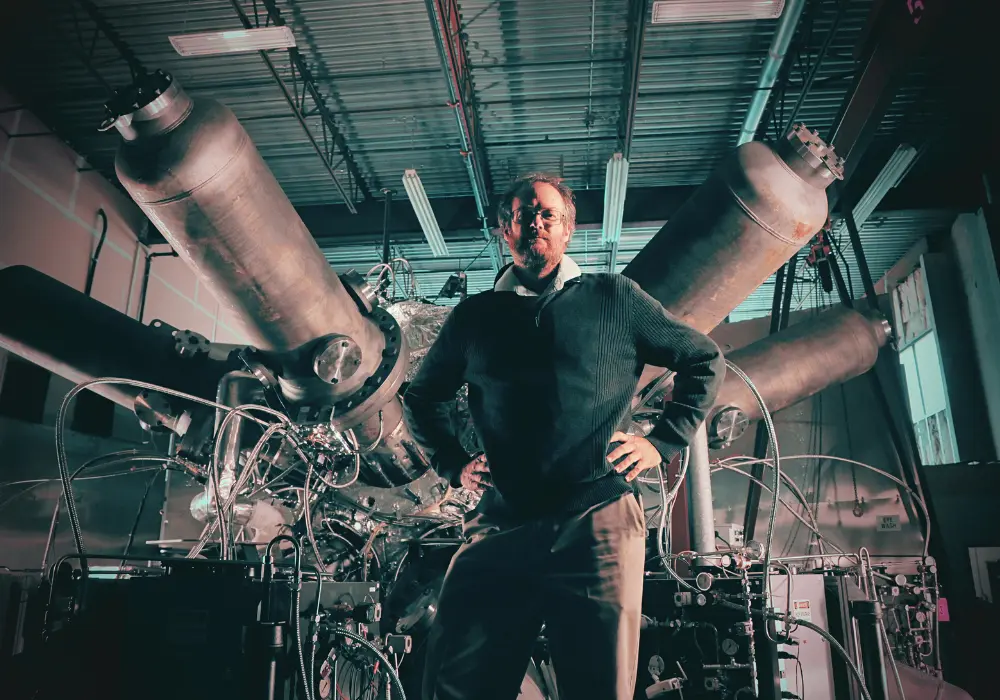
The landscape of high-performance computing underwent a seismic shift this week as IonQ, a leader in the trapped-ion quantum computing sector, announced a landmark partnership with Nvidia, the world’s most valuable semiconductor company. This collaboration aims to integrate IonQ’s quantum processing units (QPUs) into Nvidia’s accelerated quantum research centers, marking a significant pivot for Nvidia. Just months ago, the industry was reeling from cautious projections regarding the timeline of quantum viability. In January 2025, Nvidia CEO Jensen Huang sparked a market-wide sell-off when he suggested that "very useful" quantum computers might still be 30 years away. That statement led to a 40% single-day plunge in IonQ’s stock. However, the new alliance suggests a strategic acceleration, placing Nvidia alongside tech titans like Google, Amazon Web Services (AWS), and IBM in the race to harmonize quantum mechanics with classical artificial intelligence infrastructure.
A Strategic Pivot in the Quantum Timeline
The partnership between IonQ and Nvidia represents more than a mere business deal; it is a reconciliation of two distinct computational philosophies. Nvidia has dominated the classical computing era through its Graphics Processing Units (GPUs), which power the current generative AI revolution. IonQ, conversely, specializes in trapped-ion quantum computing, a method that uses individual atoms as qubits. By bringing IonQ’s QPU technology into Nvidia’s CUDA-Q platform—an open-source hybrid stack designed for quantum-classical workflows—the companies are attempting to bridge the gap between theoretical research and industrial application.
This move follows a volatile period for quantum investments. Throughout late 2024 and early 2025, investor sentiment fluctuated between euphoria over technical milestones and skepticism regarding "error rates" and "qubit decoherence." The January 2025 "Huang Dip" was a sobering moment for the industry, as it highlighted the market’s sensitivity to the rhetoric of major hardware providers. The current pivot suggests that while universal, fault-tolerant quantum computing may still be decades away, the era of "quantum-classical hybrids"—where quantum processors handle specific sub-routines for classical supercomputers—is arriving much sooner than anticipated.
The Evolutionary Context: From Sycamore to Willow
To understand the magnitude of the IonQ-Nvidia alliance, one must look at the rapid progression of quantum benchmarks over the last five years. In 2019, Google claimed "quantum supremacy" with its Sycamore processor, performing a task in 200 seconds that would have taken a classical supercomputer 10,000 years. By December 2024, the bar was raised exponentially. Google’s Quantum Artificial Intelligence Lab, led by Hartmut Neven, unveiled the "Willow" chip.
Neven reported that Willow completed a standard benchmark operation in just five minutes—a task that would require 10 septillion years (a one followed by 25 zeros) on the world’s fastest classical supercomputers. To put this in perspective, 10 septillion years is a duration many times longer than the current age of the universe. While these benchmarks are often criticized for being "synthetic"—meaning they solve mathematical puzzles with no immediate real-world utility—they prove that the hardware is capable of manipulating information in ways that defy classical physics.
The Mechanics of Quantum Advantage: Superposition and Entanglement
The fundamental difference between the GPUs produced by Nvidia and the QPUs produced by IonQ lies in the basic unit of information. In classical computing, every operation is a series of binary bits: 1s and 0s. This binary system, while incredibly efficient for linear logic and data processing, struggles with "combinatorial explosions"—problems where the number of possible outcomes grows exponentially, such as simulating the interaction of every electron in a complex molecule.
Quantum computing utilizes the qubit, which operates on the principles of superposition and entanglement. Superposition allows a qubit to exist in multiple states simultaneously, effectively allowing a computer to explore a vast "possibility space" all at once. Entanglement creates a correlation between qubits such that the state of one instantly influences the state of another, regardless of distance.
Hartmut Neven famously illustrated this through the "tennis ball analogy." If a tennis ball is hidden in one of a million drawers, a classical computer (or a human) would need to open an average of 500,000 drawers to find it. A quantum computer, utilizing quantum search algorithms, could locate the ball in approximately 1,000 steps. This exponential efficiency is what makes quantum computing the "holy grail" for industries ranging from cryptography to material science.
The Sustainability Paradox: Energy Demands of the AI Era
The integration of quantum units into Nvidia’s data centers comes at a time of unprecedented concern regarding the environmental footprint of the technology sector. As data centers expand to meet the "staggering appetite" of AI models like OpenAI’s Sora and GPT-5, the strain on global resources has reached a breaking point.
Current projections indicate that OpenAI alone could eventually consume as much electricity as the entire nation of India. Furthermore, recent analyses suggest that the carbon emissions associated with cooling and powering the massive GPU clusters required for AI training could double those of the world’s largest oil companies. Data centers also require "spectacular quantities" of water for cooling; a large-scale facility can consume millions of gallons per day, often in regions already facing water scarcity.
Quantum computing is often pitched as a potential solution to this energy crisis, but the reality is more nuanced. Theoretically, because a quantum computer can solve in minutes what a supercomputer solves in years, the total energy "per computation" should be lower. However, the "overhead" required to maintain quantum states is immense.
The Cooling Challenge and Error Correction
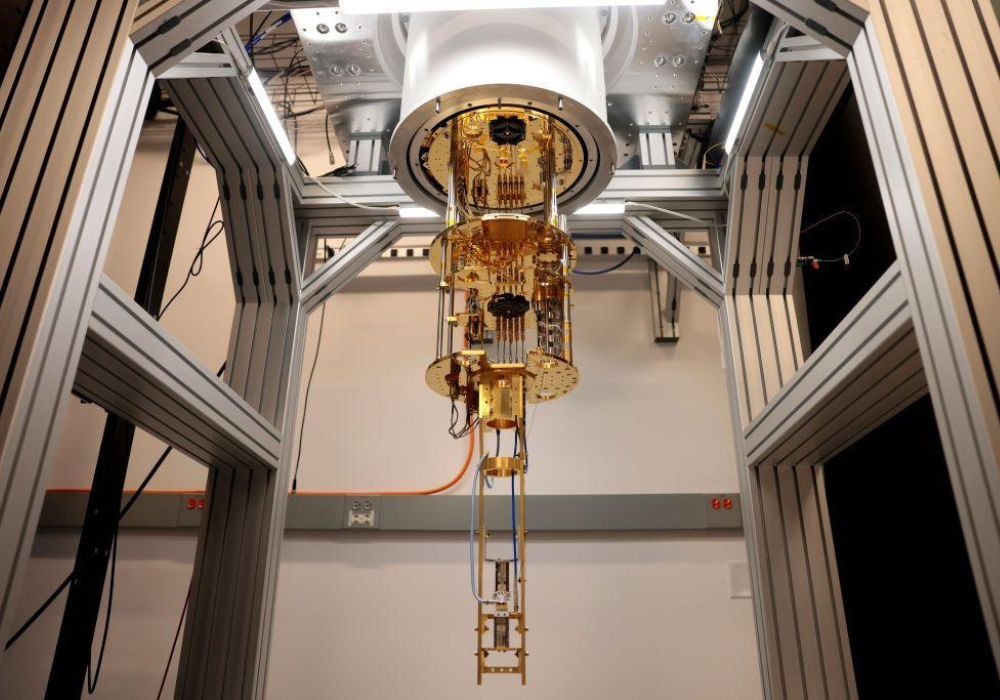
Most quantum computers, including Google’s Willow and IBM’s Condor, must operate at temperatures near absolute zero (-273.15 degrees Celsius)—colder than outer space. This requires massive dilution refrigerators, often described as "futuristic chandeliers," which consume significant power.
Julian Fletcher, chair of the BCS Quantum Computing specialist group, has noted that while the quantum core is efficient, the surrounding infrastructure is not. Fletcher’s research suggests that for a quantum computer to be truly useful, it must employ "error correction." Because qubits are incredibly sensitive to heat, vibration, and electromagnetic interference (a phenomenon known as decoherence), a single "logical qubit" might require thousands of "physical qubits" just to check for errors. Fletcher estimates that this error-correction overhead could make the energy demands of a large-scale quantum computer up to 35 times higher than a classical equivalent in the short term.
Conversely, a McKinsey report argues that even with these cooling requirements, the long-term trade-off is favorable. A fully fault-tolerant quantum chip could rival the output of billions of classical GPUs on specialized problems. If a quantum computer can replace a massive server farm for specific tasks like molecular simulation, the net energy savings would be transformative.
Global Implications and the Race for Material Sovereignty
The partnership between Nvidia and IonQ is also a chapter in the broader geopolitical race for quantum leadership. Governments in the United States, China, and the European Union have poured billions into quantum research, viewing it as a matter of national security. The ability to break current encryption standards (via Shor’s algorithm) or to design superior military hardware through advanced material simulation makes quantum computing a "dual-use" technology.
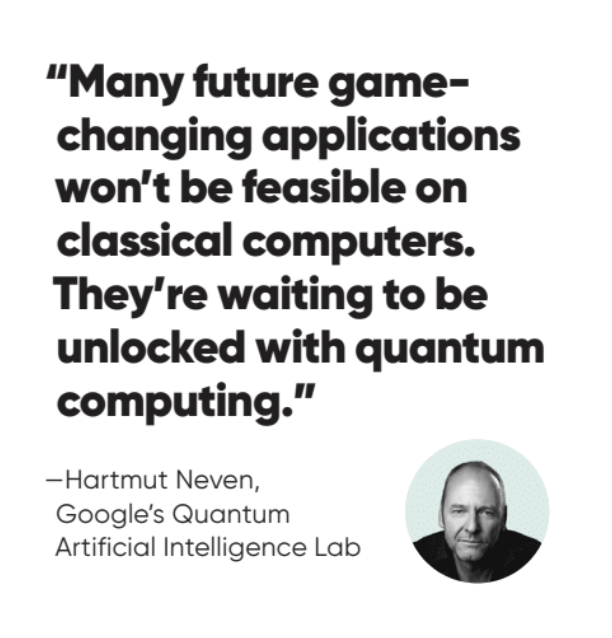
Beyond defense, the "game-changing applications" mentioned by researchers like Neven focus on sustainability and material design. These include:
- Battery Technology: Simulating the quantum chemistry of new electrolytes to create electric vehicle batteries that charge in minutes and hold twice the energy.
- Carbon Capture: Designing synthetic catalysts that can "scrub" CO2 from the atmosphere more efficiently than current mechanical filters.
- Nitrogen Fixation: Revolutionizing fertilizer production, which currently consumes 1-2% of the world’s total energy, by mimicking the way plants fix nitrogen at room temperature.
- Fusion Energy: Using quantum simulations to manage the immense heat and pressure required to sustain a fusion reaction, potentially unlocking "limitless" clean energy.
Conclusion: A Hybrid Future
As IonQ begins deploying its QPUs within Nvidia’s ecosystem, the narrative of quantum computing is shifting from "distant dream" to "hybrid reality." The partnership validates the idea that the future of computing will not be purely classical or purely quantum, but a sophisticated orchestration of both.
While the energy costs of building this infrastructure remain a significant hurdle, the potential to "unlock" solutions to the world’s most pressing environmental and scientific problems provides a powerful incentive. As Jensen Huang and IonQ’s leadership look toward the late 2020s, the focus has moved away from 30-year predictions and toward the immediate engineering task of making quantum power accessible to the developers currently building the AI-driven world. The "tennis ball" has been found; the challenge now is to build a closet large enough—and cool enough—to hold a million more.
