

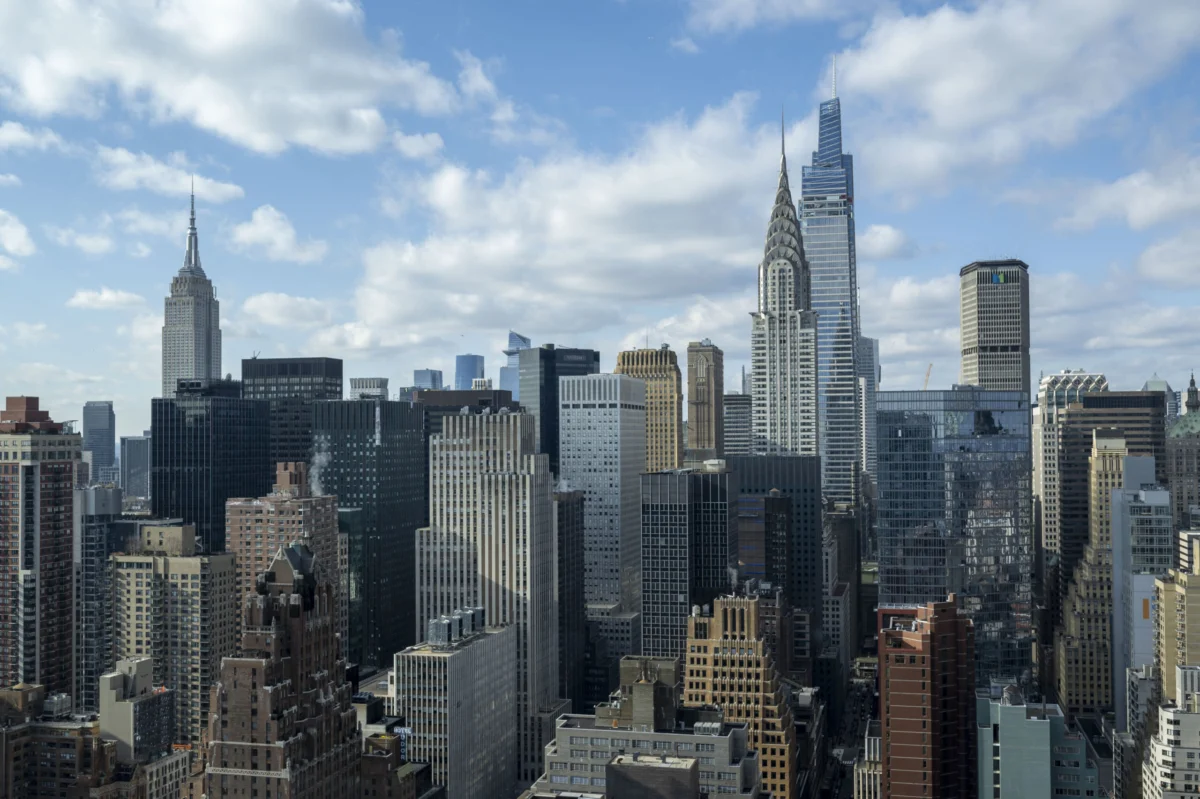
For the first time in 13 years of comprehensive analysis, New York City’s office market has emerged as the premier destination for tech talent in the United States, eclipsing the long-reigning San Francisco Bay Area. This significant shift, highlighted in a recent report by commercial real estate services and investment firm CBRE, is largely attributed to the explosive growth in artificial intelligence (AI)-specific roles and New York’s robust financial sector’s increasing adoption of technological innovation. The implications for urban development, office real estate, and economic diversification are profound, signaling a new era for metropolitan competitiveness in the digital economy.
The Shifting Landscape of Tech Talent Dominance
Historically, the San Francisco Bay Area, encompassing Silicon Valley, has been synonymous with technological innovation and the concentration of tech talent. For decades, it served as the undisputed epicenter for software development, venture capital, and groundbreaking startups, drawing professionals from across the globe. However, recent economic shifts, coupled with the escalating cost of living and a post-pandemic re-evaluation of work environments, have catalyzed a redistribution of this talent pool. New York City’s ability to attract and cultivate a burgeoning tech workforce, particularly within the specialized field of AI, represents a pivotal moment in this evolving narrative.
According to CBRE’s analysis, New York now boasts an impressive 394,300 tech talent jobs, marginally but significantly outperforming the San Francisco Bay Area’s 375,730. This comprehensive report, which scrutinizes tech-specific workers across 75 metropolitan markets in both the U.S. and Canada, underscores a fundamental change in the geographic distribution of high-skill tech employment. The data suggests that while the Bay Area has experienced a contraction in its overall tech talent workforce, New York’s diverse economy, particularly its finance sector, has been a major engine for growth, actively recruiting and integrating tech professionals, including a substantial number of AI specialists.
Colin Yasukochi, executive director of CBRE’s Tech Insights Center in San Francisco, articulated this dynamic, noting, "The story there is that there’s been cuts in the Bay Area, so the tech industry has contracted the size of the tech talent workforce, and the finance sector [in New York] has hired a lot of tech talent and a lot of AI workers." This statement highlights a crucial divergence: while some traditional tech segments in the Bay Area faced headwinds, New York’s integrated economic model proved more resilient and adaptive, leveraging its existing strengths to attract new talent.
The Unstoppable Rise of AI-Specific Roles
The primary catalyst for New York’s ascent and the broader reshaping of tech hubs is the unprecedented surge in artificial intelligence-related employment. Across both the U.S. and Canada, AI tech roles have witnessed an astounding 45% growth in the past year alone. This rapid expansion is not merely incremental; it signifies a transformative phase where AI is becoming an indispensable component across various industries, necessitating a specialized workforce.
As of June, the collective workforce dedicated to AI-related tasks across both countries totaled 751,000 individuals. This figure encompasses both newly created positions specifically designed for AI development and application, as well as existing roles that have been reconfigured or upskilled to incorporate AI responsibilities. Crucially, AI-related roles now constitute nearly one-third of all tech-talent job listings in the U.S., underscoring their critical importance in the current technological landscape.
While New York has taken the lead in overall tech talent, the San Francisco Bay Area still maintains a significant concentration of AI-specific expertise. Geographically, a substantial 37% of all AI jobs in the U.S. are clustered within four key markets: the San Francisco Bay Area, New York, Seattle, and Washington D.C. This concentration reflects the presence of leading research institutions, established tech giants, and a vibrant startup ecosystem in these regions. In Canada, the concentration is even more pronounced, with 60% of AI employment based in Toronto, Montreal, and Vancouver, showcasing strong national hubs for AI innovation.
Chronology of a Transformation: From Pandemic Shifts to AI-Driven Recovery
The narrative of this shift is best understood through a chronological lens, beginning with the pre-pandemic era of Silicon Valley’s unchallenged dominance and extending through the disruptive forces of the COVID-19 pandemic to the current AI-driven recovery.
- Decades of Dominance (Pre-2020): For many years, the San Francisco Bay Area was the global standard-bearer for tech innovation. Its ecosystem fostered a unique blend of venture capital, academic research (Stanford, UC Berkeley), and a culture of entrepreneurship that attracted top talent and capital. This led to consistently high demand for office space, driving some of the highest real estate values in the world.
- The Pandemic Pivot (2020-2022): The COVID-19 pandemic introduced unprecedented changes, most notably the widespread adoption of remote work. This paradigm shift initially cast a shadow over urban office markets, particularly in tech hubs where many companies readily embraced work-from-home policies. Many tech workers, no longer tethered to a physical office, relocated to more affordable or lifestyle-friendly areas, leading to increased office vacancies in cities like San Francisco. This period saw some companies downsize their physical footprints or opt for hybrid models, challenging traditional assumptions about office necessity.
- Emergence of AI and Office Reassessment (2022-Present): As the world began to emerge from the pandemic’s immediate grip, the rapid acceleration of AI development began to redefine workplace needs. Contrary to initial fears that AI might further reduce headcounts and thus the need for office space, the immediate impact has been quite the opposite. The complex, collaborative, and often hardware-intensive nature of AI research and development has fostered a distinct office-centric culture. This period has seen a resurgence in demand for prime office spaces in strategic locations, particularly those favored by AI companies. The CBRE report, published in January 2024 with data current through mid-2023, captures the culmination of these trends, showing New York’s ascendance and the significant role of AI in shaping current market dynamics.
Impact on Office Real Estate: A New Driver for Demand
The concentrated growth of AI talent is directly translating into increased demand for office space in these leading markets. This phenomenon offers a crucial lifeline to urban office sectors that have grappled with elevated vacancy rates and uncertain futures post-pandemic.
In San Francisco, for instance, AI companies constituted a remarkable 58% of all office leasing activity in the first half of the current year. Since 2023, AI-related businesses have accounted for 30% of total leasing activity, totaling approximately 10 million square feet. This surge represents a critical recovery for a market that experienced significant turbulence. While overall tech previously fueled the Bay Area’s office market, the pandemic’s embrace of remote work had temporarily muted this demand. AI, however, is demonstrating a different operational model, one that prioritizes in-person collaboration.
Colin Yasukochi elaborated on this cultural aspect, stating, "It’s more of the sort of startup innovation culture that we’ve seen, where people are in the office [a] minimum of four, but usually like five or six days a week. Through this whole innovation process, being together and working in person is just much more efficient and innovative." This observation underscores a key distinction: while some tech roles may thrive in remote or hybrid settings, the intense, iterative, and often sensitive nature of AI development benefits significantly from close physical proximity and spontaneous interaction.
Beyond San Francisco, AI leasing activity is predominantly concentrated in other innovation hubs, including Manhattan, Boston, and Seattle. These cities, with their strong academic institutions, existing tech infrastructure, and diverse talent pools, are proving to be fertile ground for AI startups and established firms expanding their AI capabilities. In Manhattan, for example, the demand from AI companies is contributing to a revitalization of specific submarkets, particularly those with modern, flexible office spaces that appeal to fast-growing tech firms. The demand is not just for quantity of space, but quality, with an emphasis on amenities, connectivity, and collaborative design.
Official Responses and Broader Implications
The findings of the CBRE report are likely to elicit varied responses from city planners, real estate developers, and economic development agencies. In New York, this news will undoubtedly be met with optimism, reinforcing the city’s strategic investments in its tech sector and its appeal as a global business hub. City officials may highlight initiatives aimed at fostering tech talent, such as educational programs, startup incubators, and infrastructure improvements that support a high-tech workforce. This recognition could also spur further investment in specific neighborhoods or "innovation districts" designed to attract and retain tech companies.
For the San Francisco Bay Area, while the overall tech talent lead has shifted, the continued dominance in AI-specific roles offers a clear path forward. Economic development agencies in the Bay Area will likely emphasize this specialization, focusing on policies that support AI research, development, and commercialization. The challenge will be to address factors that contributed to the overall tech talent contraction, such as housing affordability and quality of life, to ensure long-term competitiveness.
Economic and Social Ripples
The implications of this tech talent redistribution extend far beyond office leasing.
- Diversified Economic Resilience: New York’s rise as a tech hub, driven by AI and its finance sector, exemplifies the benefits of a diversified economy. Unlike more specialized tech ecosystems, New York’s ability to integrate technology into its established industries provides a buffer against volatility in any single sector. This model could serve as a blueprint for other global cities seeking to enhance their economic resilience.
- Talent Migration and Competition: The shift signifies intense competition for top tech talent. Cities that can offer not only lucrative job opportunities but also an attractive quality of life, diverse cultural experiences, and robust public infrastructure will gain an edge. This could lead to further internal migration within the U.S. and Canada, as professionals seek environments that best align with their career and lifestyle aspirations.
- Infrastructure and Urban Planning: The growth of AI-centric companies demands specific urban planning considerations. This includes high-speed internet infrastructure, specialized data centers, and a robust public transit system to support a concentrated workforce. Cities will need to adapt their infrastructure to meet the unique needs of these high-tech industries.
- Affordability Challenges: While a booming tech sector brings economic benefits, it also exacerbates challenges related to affordability, particularly in housing. As these cities attract more high-earning professionals, the cost of living can rise, potentially displacing lower-income residents and creating social equity concerns. Policymakers will need to balance economic growth with inclusive urban development strategies.
- The Future of Work and AI’s Role: The report directly addresses earlier concerns about AI’s potential to reduce headcounts and, consequently, office space needs. As Yasukochi noted, "It basically changes jobs and creates new jobs, more so than it eliminates," pointing specifically to the finance sector. This suggests that AI is primarily a tool for augmentation and innovation, fostering new roles and enhancing productivity, rather than a wholesale job destroyer in the short to medium term. The finance industry’s aggressive hiring of AI talent in New York is a prime example of this transformative, rather than purely disruptive, effect.
Looking Ahead: Sustaining Momentum in the AI Era
The landscape of tech talent and office markets is dynamic, continuously reshaped by technological advancements and socio-economic trends. New York’s ascent to the top position in overall tech talent is a testament to its adaptive capacity and the strategic integration of AI across its diverse industries. While the San Francisco Bay Area remains a critical hub for AI innovation, the broader distribution of tech talent underscores a more decentralized, multi-polar future for the tech industry.
For cities like New York, Boston, Seattle, and the major Canadian metropolises, sustaining this momentum will require continued investment in education, infrastructure, and a supportive ecosystem for innovation. The "Property Play" newsletter by CNBC with Diana Olick, which first featured a version of this article, consistently highlights these evolving opportunities for real estate investors, from individuals to venture capitalists and institutional funds. The current data strongly suggests that real estate strategies anchored in markets experiencing significant AI-driven growth are poised for substantial returns, as the demand for specialized talent translates directly into a revitalized need for collaborative, cutting-edge office environments. The future of urban economic growth and real estate vitality appears inextricably linked to the ongoing revolution in artificial intelligence.
