

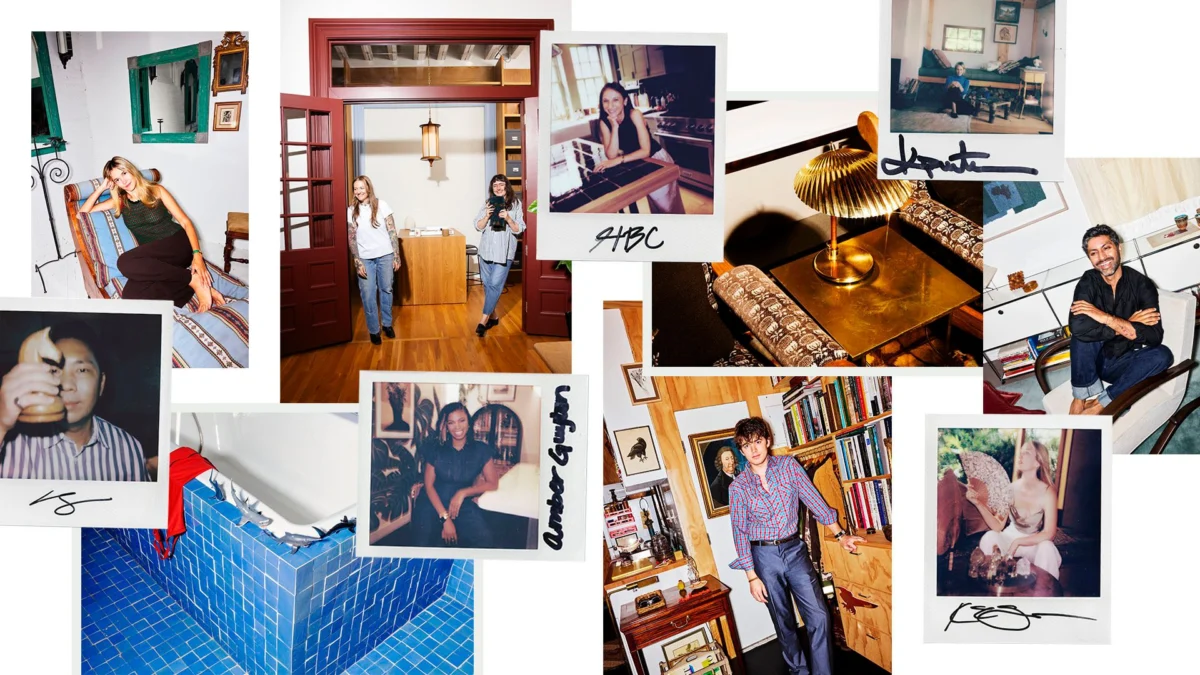
The annual selection of the New American Voices by the editors of Architectural Digest (AD) has long served as a definitive barometer for the future of the interior design and architectural industries. For the 2026 cycle, the publication has identified nine firms that represent a significant shift in the American design ethos, moving away from standardized minimalism toward a more nuanced, narrative-driven approach. These firms, spanning from the rugged coast of Maine to the sprawling suburbs of Austin and the historic neighborhoods of New York City, are not merely decorating spaces; they are reimagining how the domestic environment functions as a sanctuary, a gallery, and a reflection of complex cultural identities.

This year’s cohort arrives at a pivotal moment for the $150 billion global interior design market, which has seen a marked increase in consumer demand for "soulful" and "bespoke" environments following the global shift in remote work and domestic life. The 2026 New American Voices are characterized by their multidisciplinary backgrounds—ranging from weaving and floristry to advertising and historic preservation—suggesting that the next generation of great American designers will be defined by their ability to synthesize disparate fields of knowledge into a cohesive aesthetic vision.
The Metropolitan Visionaries: Merging Heritage with Technical Precision
In the dense urban environments of New York City, the challenge of design often lies in the reconciliation of limited space with expansive history. Rahul Ghera, the founder of Dyali, exemplifies this balance. Born in Queens to an Indian father and Nigerian mother, Ghera’s aesthetic is rooted in the "fine craft" he witnessed in his family’s embroidery business, which serviced high-fashion icons like Todd Oldham and Broadway productions. Ghera’s firm, launched in 2020 and named after his great-grandmother, operates on the principle that technical skill is the primary empowerment of creativity. With a Master of Architecture from the Rhode Island School of Design (RISD) and experience under AD100 Hall of Famer Annabelle Selldorf, Ghera focuses on the "dialogue between architecture and interiors." His work, which includes complex apartment combinations in Manhattan, suggests a future where structural integrity and textile-driven warmth are inseparable.

Similarly, Marshall Neve, based in NYC’s Chinatown, represents a shift toward the "incisive eye" of the collector. Neve, who transitioned from a career in advertising and social media, brings a curated, folk-art-influenced perspective to the field. His approach eschews "big statements" like aggressive wallpaper in favor of "quiet backgrounds" that allow a diverse array of objects—from Victorian bamboo grabbers to Japanese fireman’s jackets—to dictate the room’s energy. This philosophy aligns with a broader industry trend toward "quiet luxury," where the value of a space is determined by the provenance and soul of its contents rather than overt branding.
In the same metropolitan sphere, Hayley Cavagnolo of Hayley Bridget Interiors brings a rigorous, almost clinical level of organization to the romantic, traditional aesthetic. A graduate of the Fashion Institute of Technology (FIT), Cavagnolo spent seven years under Michelle R. Smith before launching her own firm in 2021. Her work is characterized by a "traditional yet refined" approach, focusing on the greater New York area and Westchester County. By managing every detail from the initial architectural concept to the organization of a client’s daily essentials, Cavagnolo represents the high-end service model where the designer acts as both an artist and a lifestyle strategist.

Regionalism and the Escape from the Everyday
Outside the traditional design hubs, firms like Matthew Tsang in Austin, Texas, and Pat Austin Design in Portland, Oregon, are leveraging their regional contexts to create "transportive" spaces. Matthew Tsang’s practice is deeply rooted in the concept of the "escape." Drawing from a multidisciplinary resume that includes floristry and hospitality, Tsang utilizes Asian design principles—specifically wabi-sabi—to instill a sense of restraint and intentionality. His furniture line, Tissilent, and botanical studio, Tree Things, allow him to control the composition of a room at a granular level. Tsang’s rise mirrors the broader "Austin Boom," where a new influx of wealth and culture is demanding a design language that is both global in its inspiration and local in its connection to the outdoors.
In the Pacific Northwest, Pat Austin Design, led by Candace Cohu and Ally Hasche, embraces what they call the "tension of the unpredictable." The firm, which also operates a handwoven carpet atelier called Patty Studios in Nepal, works across a variety of architectural styles, from Tacoma Craftsman homes to Los Angeles Spanish Revivals. Their refusal to adopt a "cut and paste" methodology highlights a growing resistance within the industry against the "Pinterest-ification" of home decor. By prioritizing artisanal flourishes and strange eruptions of color, Cohu and Hasche are positioning themselves as leaders in a movement that values the "unpredictable" over the safe.

The Narrative Weavers: Personal History as Design Foundation
A significant portion of the 2026 cohort focuses on the "narrative" of the inhabitant. Kelsey Sundberg, based in Los Angeles, approaches design through the lens of weaving—a craft she studied at RISD. After five years with Studio Shamshiri, Sundberg launched her firm in 2022 with a focus on "tactile and grounded" objects. Her process is notably academic, often involving research in public libraries to identify historical precedents for the "feeling" a client desires. Her work, such as the Lee Radziwill-inspired tented room for fashion designer Lela Becker, demonstrates how historical references can be "massaged" into contemporary contexts to create spaces that feel alive with memory.
In Freeport, Maine, Kacee Witherbee of Insides Studio caters to a clientele that specifically requests a home that "doesn’t look like they hired a designer." Witherbee’s background in historic preservation and her experience under Richard Keith Langham allow her to create "deep-dish" decorated spaces that feel accumulated over generations. Whether using a client’s grandmother’s kilims or incorporating antique memory jars, Witherbee’s work is a testament to the power of "real emotion" in design. This "anti-designer" look is increasingly popular among creative professionals who seek authenticity over artifice.

Soulful Maximalism and the Democratization of Design
Perhaps no designer in the 2026 group represents the changing face of the industry more than Amber Guyton of Blessed Little Bungalow. Based in Atlanta, Guyton’s path to design was non-traditional, involving studies in journalism and advertising before a home-renovation blog turned into a full-time career in 2021. Guyton is a proponent of "Soulful Maximalism," a philosophy she explores in her upcoming book. Her approach is built on four pillars: joy, culture, layers, and intention. By asserting that "interior design is for everyone," Guyton is challenging the historical elitism of the field. Her rapid ascent—including a television pilot and a bedding line—signals a market shift toward designers who are relatable, color-forward, and culturally resonant.
Cross-Continental Synthesis: The Case of Garance Rousseau
The work of Garance Rousseau, who operates between Los Angeles and New York, provides a bridge between European classicism and American modernity. Raised between Los Angeles and Versailles, Rousseau’s aesthetic is a synthesis of "Continental élan and California joie de vivre." After studying at Parsons and working for industry titans Kelly Wearstler and Waldo Fernandez, she launched her studio three years ago. Her projects—ranging from Fifth Avenue apartments to red-painted farmhouses in the Hollywood Hills—start with the architecture itself. "I ask what the house wants," she notes, emphasizing an intuitive approach that prioritizes vintage furnishings and custom details.

Analysis of Implications and Future Trends
The 2026 New American Voices collectively signal several key shifts in the architectural and design landscape:
- The End of Neutrality: The prevalence of "soulful maximalism" and "unpredictable" textures suggests that the era of the all-white, sterile interior is waning. Consumers are increasingly seeking spaces that act as a canvas for their personal histories and cultural backgrounds.
- Multidisciplinary Expertise: The most successful emerging designers are those who bring skills from outside the traditional interior design track. Knowledge of weaving, embroidery, advertising, and journalism is being used to create more holistic and narrative-driven brand identities for these firms.
- Regional Empowerment: While New York and Los Angeles remain central, the inclusion of designers from Maine, Georgia, Texas, and Oregon proves that high-level design is no longer geographically confined. Local materials and regional architectural histories are becoming primary sources of inspiration.
- Sustainability through Longevity: By focusing on vintage furnishings, historic preservation, and artisanal crafts (like the handwoven carpets of Patty Studios), these designers are promoting a more sustainable form of consumption that favors longevity and "patina" over disposable, fast-furniture trends.
As these nine firms continue to shape the American domestic landscape, their influence will likely be seen in everything from high-end residential developments to the broader consumer market. By prioritizing "how spaces are experienced" over merely "how they look," the 2026 New American Voices are setting a new standard for what it means to live well in the 21st century. Their work suggests that the future of the American home is not a standardized product, but a deeply personal, culturally rich, and technically masterful environment that "breathes fresh energy into the everyday."
