

The United States rental market has entered a period of significant recalibration, marked by a national decline in year-over-year rent prices that masks a growing divergence between asset classes and geographic regions. While national averages suggest a cooling market, the reality for real estate investors and tenants varies wildly depending on local supply dynamics and household affordability. Recent data indicates that national rents fell by approximately 1.2% year-over-year as of mid-2024, yet certain metropolitan areas are experiencing rent increases of 3% to 5%, while others face sharp corrections. This "rent recession" represents the first sustained period of stagnation since the post-pandemic boom, forcing a shift in how market participants underwrite deals and forecast future cash flows.
The National Context: A Tale of Two Asset Classes
The current stagnation in the rental market is not a uniform phenomenon. To understand the 1.2% national decline, analysts point toward a stark contrast between single-family rentals (SFR) and multifamily units. According to the Apartment List National Rent Report and supporting data from CoreLogic, multifamily rents have been the primary anchor dragging down national averages. Conversely, the single-family rental index shows a modest increase of approximately 1.5% year-over-year.
This divergence is rooted in the "stickiness" of different housing types. Single-family homes, often located in suburban areas with limited new construction, continue to benefit from high demand as families seek more space. Multifamily properties, particularly large-scale apartment complexes, are currently contending with a historic influx of new inventory. While home prices during the Great Financial Crisis plummeted by nearly 20%, rents only saw a correction of 6% to 8%, illustrating that rental income is generally more resilient than property values. However, the current environment marks a rare instance where rent growth is failing to keep pace with inflation, which has hovered between 3% and 4%. This implies that, in real terms, many landlords are experiencing a contraction in purchasing power despite stable nominal collections.
Chronology of the Supply Glut: From Boom to Delivery
The roots of the current multifamily supply crisis can be traced back to the onset of the COVID-19 pandemic in 2020. Between 2020 and late 2022, the U.S. witnessed a massive surge in multifamily construction starts. Low interest rates, a perceived shift in migration patterns toward the Sunbelt, and double-digit rent growth created an environment where developers rushed to break ground on thousands of new units simultaneously.
However, the timeline of large-scale construction means that projects initiated during the 2021 boom are only now reaching "delivery"—the point at which units become available for lease. The market is currently processing a "glut" of supply that peaked in late 2023 and continues through 2024. Because these projects often take three to four years to move from permitting and environmental reviews to completion, the market is seeing a delayed reaction to the over-exuberance of the previous years.
Industry experts anticipate that while the peak of new deliveries may have passed in some regions, the elevated level of inventory will remain a factor through 2025. It is estimated that a return to "market rate supply"—a balanced level of new deliveries—may not occur until 2026 or 2027 in the most overbuilt markets.
The Affordability Speed Limit and Household Formation
Beyond the mechanical pressures of supply and demand, a more profound variable is shaping the future of rents: the affordability ceiling. For decades, the Department of Housing and Urban Development (HUD) has defined "cost-burdened" households as those paying more than 30% of their gross income toward housing. Recent data shows that the average American now spends roughly 33% of their income on rent, effectively pushing the nation past the traditional threshold of affordability.
Market analysts describe this as a "speed limit" on rent growth. Rents cannot outrun median incomes indefinitely. When affordability is stretched, several economic behaviors emerge that suppress pricing:
- Household Consolidation: Instead of moving into new apartments, young adults remain with parents or seek roommates. This reduces "household formation," a key metric for housing demand.
- Down-Market Migration: Tenants who can no longer afford "Class A" luxury units move into "Class B" or "Class C" properties, creating a vacuum at the top of the market that forces luxury landlords to offer concessions or lower prices.
- Negative Real Wage Growth: In periods where wage growth falls below the rate of inflation, the consumer’s discretionary income shrinks, making them highly resistant to annual rent escalations.
This affordability crisis acts as a governor on the engine of real estate investment. Even in markets where supply is tight, landlords are finding that they cannot raise rents because the local tenant base has reached its financial breaking point.
Regional Winners and Losers: The Sunbelt Correction vs. The Rust Belt Resilience
The geographic variance in rental performance is perhaps the most striking feature of the 2024-2025 landscape. The "winners" and "losers" have effectively swapped places compared to the mid-pandemic era.
The Sunbelt Correction
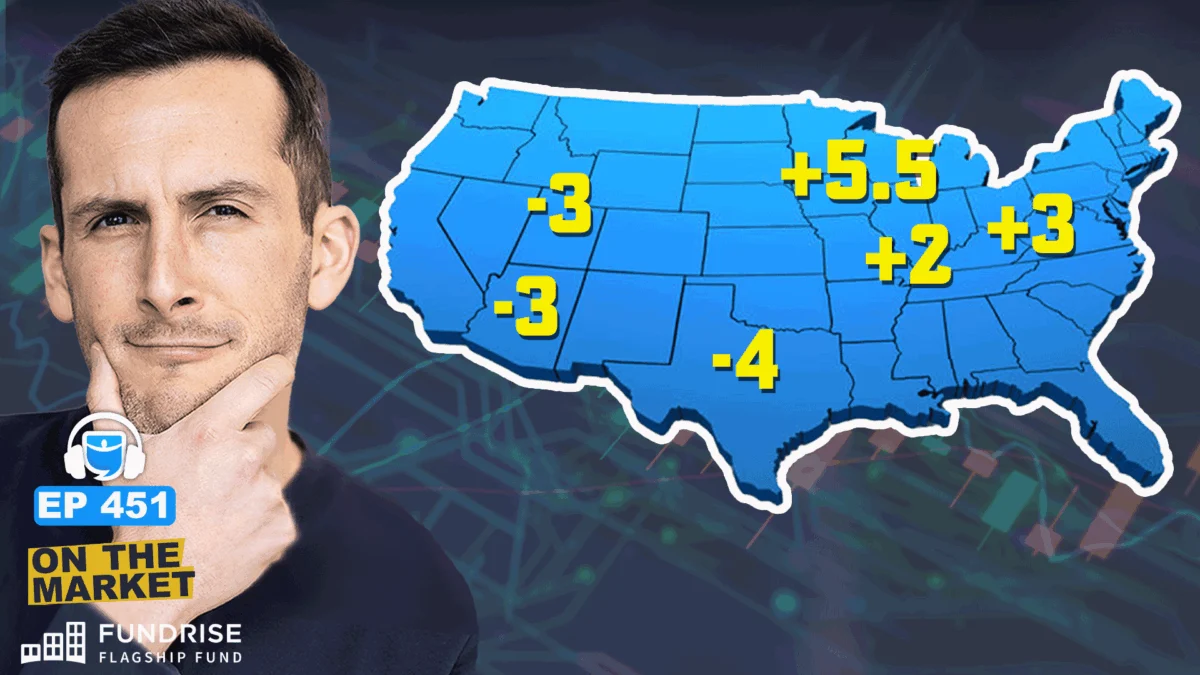
Markets that saw the highest growth in 2021—Austin, Phoenix, Orlando, and Nashville—are currently the worst performers. Austin, Texas, has seen multifamily rent declines of 4% year-over-year, while Phoenix and Denver have seen drops of approximately 3%. These areas are suffering from a "double whammy" of oversupply and a "pull-forward" effect. The massive rent hikes of 15% to 20% seen in 2021 were essentially a decade’s worth of growth compressed into twelve months, necessitating a "snap-back" period of negative growth to restore equilibrium.
The Rust Belt and Midwest Resilience
In contrast, cities in the Midwest and Northeast are seeing some of the strongest rent growth in the country. Chicago, Illinois, has emerged as a leader with rent increases of 5.5%, followed by Philadelphia and New York at 3%. These markets did not experience the same construction frenzy as the Sunbelt, meaning supply remains constrained. Furthermore, these cities often boast more favorable rent-to-income ratios, often hovering around 25%, providing "room to run" before hitting the 30% affordability ceiling.
A Forecasting Framework for Investors
For real estate investors and policy analysts, forecasting rents through 2027 requires a multi-tiered approach focusing on three specific timelines:
Short-Term (1-2 Years): The Supply Dominance
In the immediate future, supply is the "Trump card." Investors are advised to look at the ratio of new deliveries to existing housing stock. If a metro area is adding 4% to 5% of its total inventory within a single year (as seen in parts of Phoenix or Dallas), rent growth will likely remain negative regardless of other economic factors. This supply must be "absorbed"—occupied by tenants—before pricing power returns to landlords.
Medium-Term (3-5 Years): The Affordability Factor
As the supply pipeline eventually drains, the markets that recover fastest will be those with high affordability. Calculating the local rent-to-income ratio is essential. Markets that remain below the 30% threshold will have the flexibility to raise rents as the economy stabilizes.
Long-Term (5+ Years): The Wage Growth Anchor
The only sustainable way to maintain rent growth above inflation is through local wage growth. Investors are increasingly looking at job growth data, particularly in high-output sectors like technology and healthcare. Without rising wages, a market cannot support the long-term cash flow requirements of real estate portfolios.
Implications for the Broader Economy
The stagnation of rents has significant implications for the Federal Reserve’s battle against inflation. Since "shelter" makes up about one-third of the Consumer Price Index (CPI), the cooling rental market is a necessary component for bringing overall inflation back to the 2% target. However, for the real estate industry, this period represents a "stress test."
Many multifamily syndicators and developers who underwrote deals in 2021 based on 5% to 7% annual rent growth are now facing a reality of 0% or negative growth. This has led to a rise in distressed assets and a slowdown in new construction starts, which will eventually lead to another housing deficit by the end of the decade.
While the "rent recession" is painful for property owners in oversupplied markets, it offers a much-needed reprieve for cost-burdened tenants. The market is currently in a phase of "absorption and adjustment," where the excesses of the post-pandemic boom are being leveled out. For those looking to invest, the strategy has shifted from chasing high-growth "hot" markets to identifying stable, affordable metros with limited supply pipelines. As the supply glut of 2024 is eventually absorbed, the fundamental shortage of housing in the United States suggests that rent growth will return, but likely at a more sustainable, income-linked pace.
