

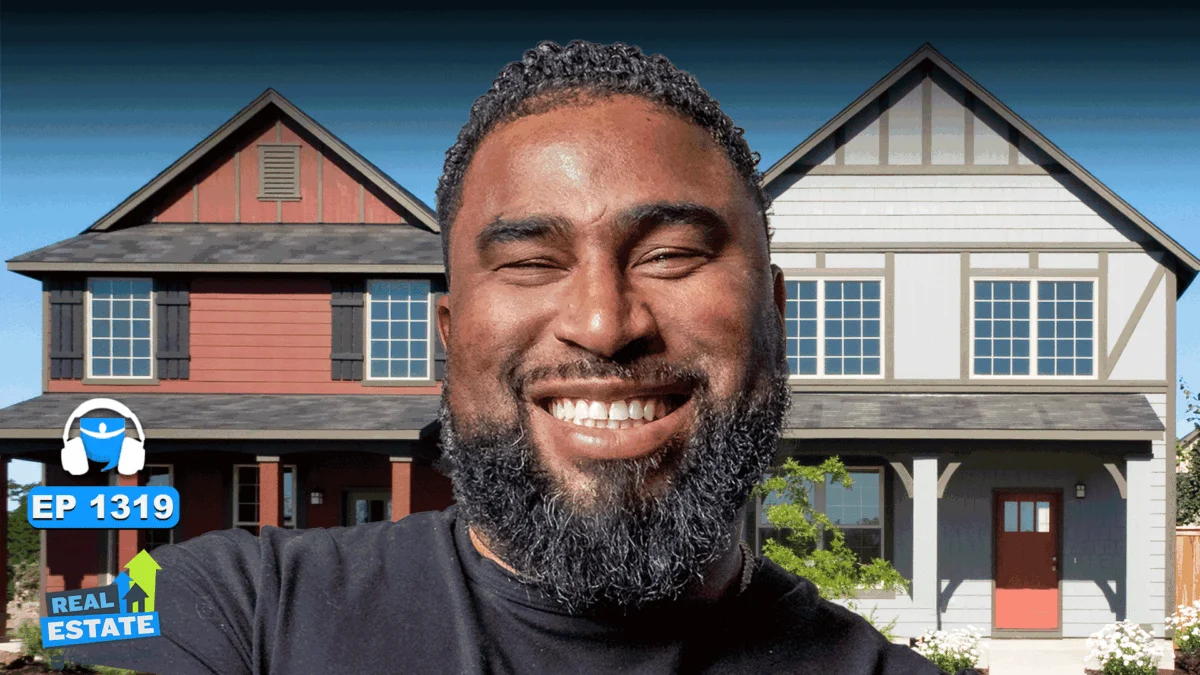
The modern real estate landscape is characterized by a paradox of plenty: while there has never been more information available to aspiring investors, the sheer volume of content often leads to "analysis paralysis." With thousands of hours of podcasts, millions of YouTube tutorials, and endless forum threads, the barrier to entry is no longer a lack of data, but the inability to filter high-quality, actionable strategies from "noise" or outdated advice. Industry experts Henry Washington and Dave Meyer, prominent figures within the BiggerPockets ecosystem, have recently outlined a comprehensive framework designed to help novice investors navigate this saturation. Their approach emphasizes a "lean" learning model, prioritizing immediate transactional skills—such as deal finding and underwriting—over long-term operational concerns like property management or contractor oversight.
The Evolution of Real Estate Education
To understand the current educational challenge, one must look at the timeline of real estate information dissemination. Prior to the mid-2000s, real estate investing knowledge was largely tribal, passed down through local Real Estate Investment Associations (REIAs) or expensive, often predatory, "infomercial" seminars. The rise of platforms like BiggerPockets in the late 2000s and early 2010s democratized this data, moving the conversation to digital forums and podcasts.
Dave Meyer, who began his career in the Denver market during the post-2008 recovery, notes that his early education was largely experiential and fragmented. In contrast, Henry Washington, who entered the Northwest Arkansas market in 2017, represents the transition into the "online era," where platforms provided a structured, albeit overwhelming, roadmap. The "pandemic era" of 2020–2022 further accelerated this, leading to an explosion of "fin-fluencers" on TikTok and Instagram. While this has increased awareness of real estate as a wealth-building tool, it has also introduced a high volume of unvetted information, making a structured learning framework more essential than ever.
The Strategic Framework: Prioritizing "Tomorrow’s Problems"
A common mistake for new investors is attempting to master the entire lifecycle of a property before purchasing their first asset. Washington and Meyer argue that skills like property management and finding contractors are "tomorrow’s problems." For a beginner, these are distractions that stall progress. Instead, the framework focuses on the "lowest common denominator"—the skills required to actually secure a deal.
Phase 1: Market Selection and Asset Identification
The first step in the learning journey is narrowing the focus. Attempting to learn about commercial syndications, short-term rentals, and single-family fix-and-flips simultaneously is a recipe for failure. Investors are encouraged to select one asset class—typically single-family residential for its lower risk profile and accessibility—and one specific geographic market. This narrowing allows the investor to understand local price points, neighborhood dynamics, and demand drivers, which vary significantly between high-appreciation markets like Seattle and cash-flow-heavy markets in the Midwest or South.
Phase 2: Mastering Deal Finding
In a high-interest-rate environment with limited inventory, the ability to find "off-market" deals is the primary differentiator between successful and stagnant investors. Washington recounts his early strategy of using direct mail to target specific lists. His approach involved a 30-day intensive research period, followed by a calculated risk-management strategy. To mitigate the fear of financial loss, he utilized a 0% interest credit card for his first mailing campaign, treating the potential loss as a manageable monthly "punishment" if no deal materialized. This highlights a critical lesson: education must be paired with a willingness to absorb calculated risks.
Phase 3: The Mechanics of Underwriting
Underwriting—the process of financially evaluating a deal—is cited as the most important skill an investor can possess. It is the only part of the process that cannot be fully outsourced. According to the framework, an investor must be comfortable with three specific metrics:
- After Repair Value (ARV): Determining what the property will be worth once it is brought to market standards.
- Rehabilitation Costs: Estimating the capital required for repairs. For those without a construction background, this involves "education through networking"—walking properties with experienced contractors or mentors to learn the costs of materials and labor.
- Market Standards: Understanding the discount required to ensure the property produces the desired yield or profit margin.
Educational Resources: Free vs. Paid Models
The debate between free and paid education is a central theme in the modern investor’s journey. Each model serves a distinct purpose depending on the investor’s time horizon and capital.
The Free Education Ecosystem
Free resources, including podcasts, YouTube, and forums, are highly cost-effective and provide a diversity of perspectives. They are ideal for "sponging" information and identifying which strategies resonate with an individual’s goals. However, the lack of organization requires high levels of self-discipline. The investor must "choose their own adventure," piece together fragmented advice, and vet the credibility of the sources.
The Paid Education Ecosystem
Paid models—such as masterminds, structured courses, and mentorships—offer three primary benefits: organization, accountability, and community. For busy professionals with more capital than time, paying for a "roadmap" can significantly shorten the learning curve. Washington and Meyer emphasize that while you do not need to pay for education to succeed, doing so often provides the "guardrails" necessary to prevent expensive rookie mistakes.
The Value of In-Person Conferences
Events such as the annual BiggerPockets Conference (BPCon) represent a hybrid of education and networking. These gatherings are often the catalysts for long-term partnerships. Washington credits his presence on the BiggerPockets podcast to a relationship formed at a Nashville conference years prior. The "social proof" and motivation found in these environments often provide the psychological push needed to move from education to action.
Data-Driven Insights and Market Implications
The importance of structured education is underscored by current market data. According to recent housing market reports, inventory levels remain significantly below historical averages, and mortgage rates have fluctuated between 6% and 7.5% over the past year. In such a tight market, "accidental" success is no longer possible.
Data from the real estate industry suggests that investors who utilize "off-market" strategies (such as direct mail, driving for dollars, or networking with wholesalers) can often secure properties at 20% to 30% below market value. However, without the underwriting skills to account for rising labor costs (which have seen a 15-20% increase in some regions due to inflation and supply chain issues), those discounts can quickly evaporate. This reinforces the Meyer-Washington thesis that math and market knowledge are the ultimate safeguards against insolvency.
Analysis of Implications
The shift toward a more structured, framework-based approach to real estate education has broader implications for the economy and the housing market.
- Market Stability: As more "mom-and-pop" investors become highly educated in underwriting and risk management, the likelihood of a wave of defaults caused by poor investment decisions decreases. Better-educated investors contribute to a more stable and professionalized rental market.
- Democratization of Wealth: The availability of high-quality free information continues to lower the barrier to entry for marginalized or undercapitalized groups. When individuals learn to "house hack" or use creative financing, they can build equity in markets that were previously considered unaffordable.
- The Role of AI: As noted by Meyer, artificial intelligence is beginning to play a role in real estate education. AI can help investors organize steps and create checklists for renovations. However, the human element—verifying data and building relationships with local experts—remains the "moat" that protects an investor from automated errors.
Conclusion: The Path Forward
The roadmap for the modern real estate investor is clear: stop trying to learn everything at once. Success in the current market requires a surgical focus on the skills that lead to the first acquisition. By mastering market analysis, deal finding, and underwriting, and by leveraging both free digital content and high-value networking opportunities, new investors can navigate the noise of the information age. As Washington and Meyer conclude, the goal of education is not to become a scholar of real estate theory, but to gain enough confidence to "write the check" and take the first step toward financial independence. Real estate remains a forgiving asset class, but in an era of high data and high stakes, the framework through which one learns is just as important as the investment itself.
