

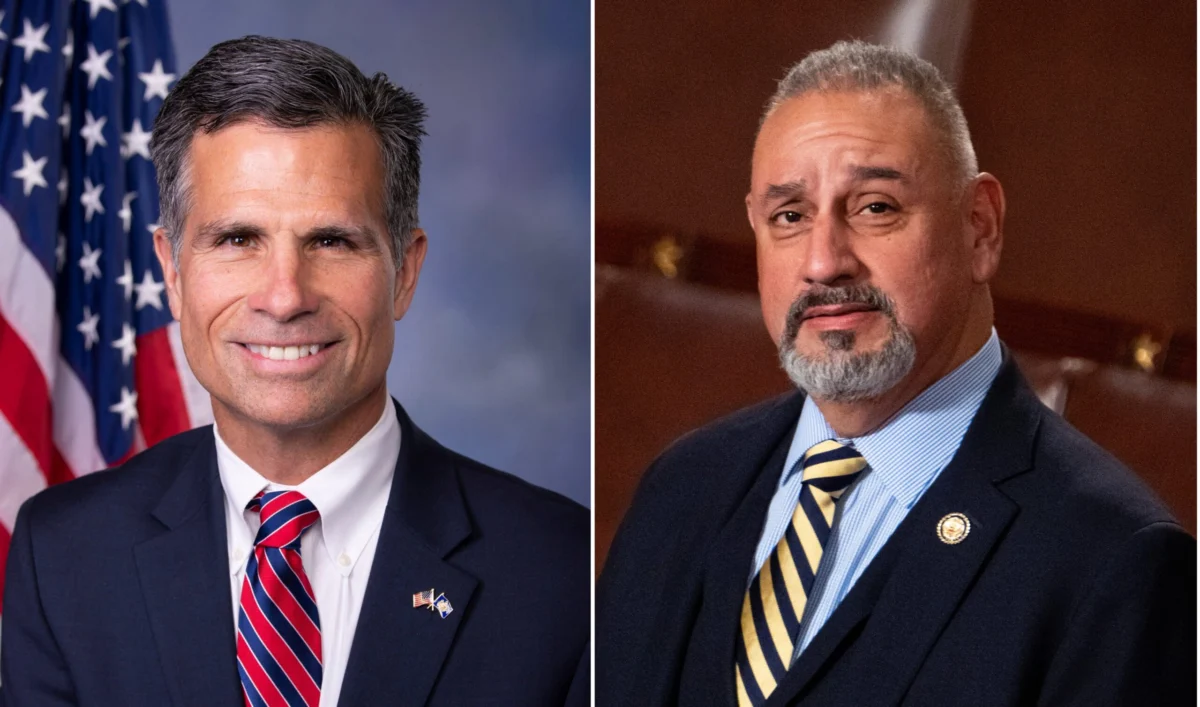
In the wake of the most significant initial public offering in financial history, federal disclosure documents have revealed that members of the United States House of Representatives and their families were among the early investors in SpaceX. Recent financial filings indicate that Representative Dan Meuser, a Republican from Pennsylvania, and Representative Gil Cisneros, a Democrat from California, disclosed transactions involving SpaceX stock shortly after the aerospace giant’s June 12 debut on the public markets. These disclosures come at a time of heightened scrutiny regarding the intersection of private financial interests and public legislative responsibilities, particularly as SpaceX continues to secure multi-billion dollar contracts with the federal government.
According to publicly accessible House financial documents, the trades were executed within days of the company’s transition to a public entity. Rep. Dan Meuser disclosed that a dependent child purchased between $15,001 and $50,000 of SpaceX stock on June 15. Financial analysts and ethics observers noted that this transaction was particularly noteworthy as it represented the first time in several years that Meuser or an immediate family member had acquired shares in an individual corporation, according to his historical disclosure patterns. Meanwhile, Rep. Gil Cisneros disclosed a purchase made on June 18, valued between $1,001 and $15,000.
The timing and nature of these investments have drawn attention due to the high-profile status of SpaceX, led by CEO Elon Musk, and the influential committee assignments held by both lawmakers. While the trades comply with current disclosure laws, they underscore the ongoing national debate regarding whether members of Congress should be permitted to trade individual stocks while in office.
The Magnitude of the SpaceX Initial Public Offering
SpaceX’s entry into the public market on June 12 was a landmark event for Wall Street, raising approximately $75 billion and establishing the company with a market capitalization exceeding $2 trillion. This valuation immediately placed SpaceX in the upper echelon of global "mega-cap" companies, serving as a critical litmus test for investor appetite regarding aerospace technology and the burgeoning artificial intelligence sector.
The stock opened at $150 per share and saw rapid appreciation in the immediate aftermath of the listing. By June 16, the shares reached a closing high of $201.80. However, the market has since experienced a period of correction and stabilization. By the close of trading on the Thursday following the disclosures, SpaceX shares were valued at $162—an 8% increase from the initial opening price, but a roughly 20% decline from the mid-June peak.
This volatility is characteristic of high-growth technology listings, yet the sheer scale of SpaceX’s valuation has turned it into what financial experts call the "ultimate blueprint" for a new wave of massive public listings. The company’s success is deeply intertwined with its dominance in satellite deployment through Starlink and its role as a primary launch provider for both commercial and government payloads.
Committee Assignments and Potential Conflicts of Interest
The primary concern raised by ethics watchdogs regarding these trades involves the specific legislative roles held by Meuser and Cisneros. In the House of Representatives, committee assignments grant lawmakers significant oversight and legislative power over specific sectors of the economy and government agencies.
Representative Dan Meuser serves on the House Financial Services Committee. This body holds broad jurisdiction over the nation’s financial system, including the regulation of securities, exchanges, and the very mechanisms through which companies like SpaceX go public. As the committee oversees the Securities and Exchange Commission (SEC), its members are at the forefront of policy discussions regarding market transparency and investor protection.
Representative Gil Cisneros holds a seat on the House Armed Services Committee, which is responsible for the oversight of the Department of Defense (DoD). The DoD is one of SpaceX’s most significant and lucrative customers. In May 2026, just weeks before the IPO, SpaceX secured a $4.16 billion contract from the U.S. Space Force for the development and deployment of threat-detection satellites. Cisneros’s connection to the defense sector is further deepened by his previous executive branch experience; he was appointed by President Joe Biden in 2021 to serve as the Under Secretary of Defense for Personnel and Readiness.
In a statement provided to the media, Cisneros emphasized that his investments are managed by independent professionals. "My wife and I have always employed outside financial advisors who have a fiduciary responsibility to maintain a diverse portfolio," Cisneros said. "We do not manage the day-to-day trading of our investment portfolio, nor have we ever suggested a trade while serving in Congress or at the Department of Defense." He further committed to advocating for increased ethics oversight for federally elected and appointed officials.
Regulatory Framework and the STOCK Act
Under current United States law, specifically the Stop Trading on Congressional Knowledge (STOCK) Act of 2012, members of Congress and their families are permitted to own and trade individual stocks. The law was designed to prevent insider trading by requiring that lawmakers publicly disclose their financial transactions within 30 to 45 days of the trade. The act also explicitly states that the prohibition against trading on nonpublic information applies to members of Congress and their staff.
The disclosures by Meuser and Cisneros appear to satisfy the reporting requirements of the STOCK Act. Currently, there is no evidence suggesting that either lawmaker utilized confidential or nonpublic information to inform these trades. However, the proximity of the trades to the IPO date has led ethics experts to suggest that these filings may only be the "tip of the iceberg." Given the 45-day reporting window, many expect a significant number of additional disclosures from other members of Congress to emerge in the coming weeks.
This situation follows a previous report involving Representative Lisa McClain (R-Mich.). It was revealed that her husband had invested up to $250,000 in xAI, an artificial intelligence firm founded by Elon Musk, prior to its merger into SpaceX. That investment was positioned to benefit directly from the SpaceX public debut. A spokesperson for the House Republican Conference stated that McClain’s investments were a matter of public record and were made in full compliance with all applicable laws.
The Broader Context: A Wave of Tech IPOs
The SpaceX listing is viewed as the "opening shot" in what is anticipated to be a series of massive public offerings from the private technology sector. As Washington, D.C. continues to debate the regulatory future of artificial intelligence and space exploration, several other high-valuation companies are preparing for their own Wall Street debuts.
Anthropic, a leading AI safety and research company, has reportedly filed for a confidential U.S. IPO. Shortly thereafter, its primary rival, OpenAI, followed suit, targeting a valuation that some analysts believe could reach $1 trillion. These companies are at the center of intense policy discussions regarding data privacy, national security, and the ethical implementation of autonomous systems.
The financial interests of lawmakers in these specific companies create a complex landscape for future legislation. As Congress moves to draft bills that could impact the profitability and operational freedom of AI and aerospace firms, the personal portfolios of those drafting the laws remain a point of contention among voters and government transparency advocates.
The Stalled Legislative Push for a Trading Ban
Despite the compliance of Meuser and Cisneros with existing laws, the political appetite for a total ban on congressional stock trading remains high among the American public. Efforts to pass such a ban have percolated in both the House and Senate for several years but have consistently encountered legislative hurdles.
Late last year, House Republican leadership vowed to bring a bill to the floor that would prohibit members of Congress from trading individual stocks while in office. In July 2025, a similar proposal in the Senate successfully advanced out of committee with bipartisan support. However, neither chamber has taken definitive action to pass the legislation into law.
Proponents of the ban argue that even the appearance of a conflict of interest erodes public trust in government institutions. They contend that lawmakers should be required to place their assets in blind trusts or invest exclusively in broad-based mutual funds to ensure that their legislative decisions are not influenced by personal financial gain. Opponents of the ban, however, argue that such restrictions could discourage qualified individuals from seeking public office and that existing disclosure rules are sufficient to ensure accountability.
Chronology of Events
To understand the trajectory of these disclosures, it is helpful to review the timeline of SpaceX’s transition to the public market:
- February 2026: Elon Musk announces the merger of xAI into SpaceX, consolidating his artificial intelligence and aerospace interests.
- May 29, 2026: SpaceX wins a $4.16 billion contract from the U.S. Space Force for threat-detection satellites, reinforcing its status as a critical defense contractor.
- June 12, 2026: SpaceX goes public in the largest IPO on record, raising $75 billion with an opening share price of $150.
- June 15, 2026: A dependent child of Rep. Dan Meuser purchases between $15,001 and $50,000 in SpaceX stock.
- June 16, 2026: SpaceX stock reaches a closing high of $201.80 per share.
- June 18, 2026: Rep. Gil Cisneros purchases between $1,001 and $15,000 in SpaceX stock.
- July 2026: Financial disclosure documents are filed and made public, sparking renewed debate over congressional trading.
Implications and Future Outlook
The disclosure of these trades highlights a growing trend of "mega-cap" companies becoming central to both federal contracting and political finance. Elon Musk and his various ventures have become increasingly prominent players in Republican politics, while simultaneously maintaining deep ties to the current Democratic administration’s defense and space initiatives.
As SpaceX settles into its role as a public entity, the transparency of its relationship with Washington will likely remain a focal point for the media and ethics watchdogs. The company’s performance on the stock market will not only affect the portfolios of private investors but also the financial disclosures of the very individuals tasked with its oversight.
For now, the focus shifts to the remaining disclosure deadline. As the 45-day window for reporting June trades closes, the full extent of Congressional participation in the SpaceX IPO will become clear. Whether this leads to a renewed push for a legislative ban on stock trading or remains a standard feature of the American political landscape remains to be seen. What is certain is that as the frontiers of space and artificial intelligence expand, so too will the complexities of governing the individuals who hold the power to regulate them.
