

Beijing, China – A high-profile bilateral summit between the United States and China last week culminated in significant agreements, with China committing to substantial purchases of U.S. agricultural goods, notably soybeans, and pledging to address American access to critical rare earth minerals. The White House, in a statement released Sunday, hailed these outcomes as among the most tangible achievements from the two-day series of meetings in Beijing between U.S. President Donald Trump and Chinese President Xi Jinping. The two leaders also cemented plans for a follow-up meeting in the United States in September, signaling a continued effort to manage the complex and often contentious economic relationship between the world’s two largest economies.
Summit Highlights and Immediate Outcomes
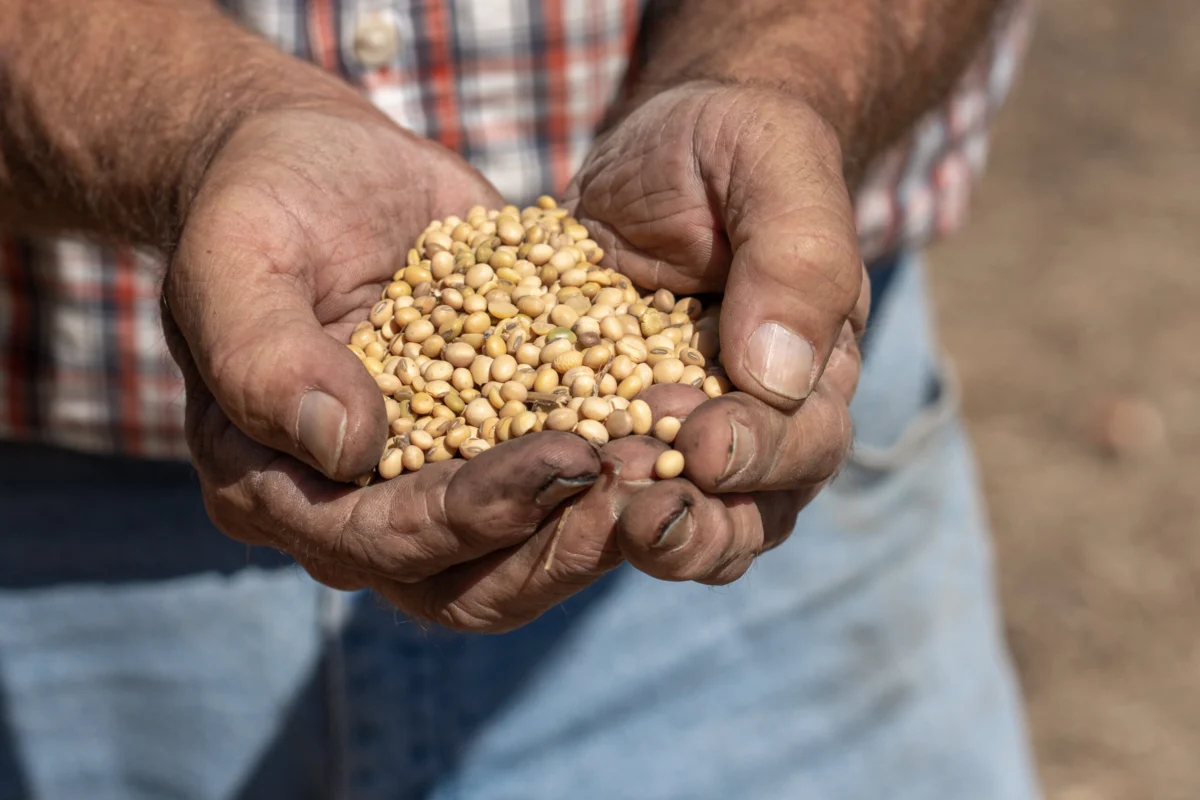
The core of the new agreements centers on a renewed commitment to agricultural trade and a critical breakthrough on rare earth supplies. The White House confirmed that China has agreed to purchase at least $17 billion worth of U.S. agricultural products annually, with this commitment extending through 2028. This figure is explicitly stated to be "in addition to the soybean purchase commitments that it made in October 2025," underscoring a layered approach to agricultural imports. Following a prior Trump-Xi meeting in South Korea in the fall of 2025, China had already agreed to procure a minimum of 25 million metric tons of American soybeans in each of the subsequent three years. While the latest White House readout did not specify a new quantity for soybeans, it did confirm China’s renewed allowance for sales of U.S. beef and poultry, markets that had seen significant disruption.
On the Chinese side, the Ministry of Commerce acknowledged agreements to promote agricultural trade but notably refrained from specifying monetary amounts or explicitly naming soybeans in its public statement. This slight divergence in reporting nuances the perception of the agreements, reflecting the careful diplomatic language often employed in such high-stakes negotiations.
Perhaps even more strategically significant, the U.S. confirmed China’s agreement to address shortages of crucial rare earth minerals, specifically mentioning yttrium, scandium, neodymium, and indium. Beijing’s control over the global supply chain for many of these "obscure minerals"—which are indispensable components in a vast array of modern technologies, from smartphones and electric vehicles to advanced weaponry—has long been a point of concern for Washington. China’s Commerce Ministry, however, did not include any mention of rare earths in its official summary of the summit’s outcomes, further highlighting areas where both sides might prefer different public interpretations of their private discussions.
Chronology of Engagement and Evolving Trade Dynamics
The recent Beijing summit represents the latest chapter in an intricate and often turbulent trade relationship between the U.S. and China. The photograph of the USSEC (U.S. Soybean Export Council) booth on November 8, 2025, at the 8th China International Import Expo (CIIE) in Shanghai, taken just before or concurrently with the summit, serves as a poignant visual backdrop. The CIIE itself is an annual event designed by Beijing to showcase its commitment to opening its market and boosting imports, often serving as a platform for announcing major trade deals. The timing of the USSEC presence at such an event, even as high-level negotiations were underway, underscores the persistent efforts by American agricultural sectors to regain and expand market access in China.
The commitment to purchasing "at least 25 million metric tons" of American soybeans, made in October 2025 following the Trump-Xi meeting in South Korea, marked a crucial initial step toward de-escalation in the agricultural sector. This initial agreement was a direct response to the severe impact of retaliatory tariffs that had previously crippled U.S. soybean exports to China. For years prior to the trade disputes, China had been the largest market for American soybeans, purchasing well over $10 billion worth annually. However, the imposition of tariffs saw these exports plummet, causing significant financial hardship for American farmers and prompting government intervention through aid packages. The renewed commitments, particularly the $17 billion annual agricultural target through 2028, indicate an intent to restore and potentially exceed previous trade volumes, offering a lifeline to a vital American industry.
The trade negotiations have been characterized by periods of intense confrontation followed by strategic de-escalation, often punctuated by direct engagements between the two leaders. The planned September meeting in the U.S. reinforces this pattern, suggesting an ongoing, high-level dialogue as the primary mechanism for managing bilateral economic issues.
Specifics of Agricultural Revitalization
The agricultural commitments are arguably the most immediately impactful for American producers. The White House’s announcement of China’s pledge to buy at least $17 billion in U.S. agricultural goods annually through 2028, coupled with the existing soybean commitments, signals a substantial restoration of market access. This comprehensive agricultural package goes beyond soybeans to include other key products such as pork, corn, wheat, and cotton, though specific breakdowns were not immediately provided.

The re-opening of the Chinese market for U.S. beef and poultry is particularly noteworthy. China had previously imposed bans or significant restrictions on American meat products due to various health and trade-related concerns, often tied to broader geopolitical tensions. For U.S. cattle ranchers and poultry producers, gaining consistent access to China’s burgeoning consumer market, with its growing demand for high-quality protein, represents a significant economic opportunity. Industry groups, such as the National Cattlemen’s Beef Association and the National Chicken Council, are anticipated to welcome these developments, having long lobbied for the removal of such trade barriers. The re-entry of these products could help diversify export portfolios and reduce reliance on other, potentially volatile, international markets.
Addressing the Critical Rare Earths Supply Chain
The agreement regarding rare earth minerals, while less detailed in the official readouts, carries immense strategic weight. China currently dominates the global supply chain for rare earths, accounting for approximately 60% of global production and an even higher percentage of processing capacity. These 17 elements are vital for a vast array of high-tech and defense applications: neodymium is crucial for powerful magnets in electric vehicle motors and wind turbines; yttrium is used in advanced ceramics and lasers; scandium in lightweight alloys for aerospace; and indium in touchscreens and solar panels.
The U.S. has increasingly voiced concerns over its dependence on China for these critical minerals, viewing it as a national security vulnerability. This dependence has spurred initiatives within the U.S. and among allies to diversify supply chains and re-establish domestic processing capabilities. The White House’s statement that China would "address rare earth shortages," particularly for specific elements, suggests a commitment to ensuring a more stable and predictable supply for American industries, potentially through agreed-upon export quotas or streamlined trade processes. However, the lack of explicit mention in China’s official statement indicates the sensitivity of this issue for Beijing, which views its rare earth dominance as a significant strategic asset. Any concrete steps China takes will be closely watched by global markets and geopolitical analysts, as it could signal a shift in its long-term resource strategy.
Broader Economic and Trade Discussions
Beyond agriculture and rare earths, the summit facilitated broader discussions on economic and trade relations. Both the U.S. and Chinese readouts confirmed agreements to establish new boards of trade and investment. These mechanisms are designed to facilitate ongoing bilateral discussions, address trade disputes more systematically, and promote investment flows in both directions. Such institutional frameworks are often seen as critical for maintaining stability in complex trade relationships, providing channels for dialogue even amidst disagreements.
China’s statement also alluded to reducing tariffs as part of its future trade plans, a long-standing demand from the U.S. throughout the trade disputes. However, the U.S. readout made no specific mention of duties or tariff reductions, suggesting that while the topic was likely discussed, no immediate or specific commitments were finalized on that front. The U.S. continues to utilize tariffs as leverage in its trade negotiations, and any widespread reduction would likely be contingent on further concessions from China across various sectors.
A notable specific agreement highlighted by the U.S. was China’s plan to purchase 200 Boeing airplanes. This represents a significant boost for the American aerospace giant, which has historically relied heavily on the Chinese market. China’s burgeoning aviation sector, driven by a growing middle class and expanding air travel, presents immense opportunities for aircraft manufacturers. The Chinese statement broadly acknowledged an aircraft purchase agreement but added that the U.S. would ensure the supply of engines and other parts. This detail is crucial given China’s ambitious indigenous passenger airplane program, COMAC, whose C919 model still heavily relies on foreign-made components, particularly engines and avionics, from companies like General Electric and Safran. This dependency highlights a strategic vulnerability for China, even as it seeks to reduce reliance on foreign technology.
Expert Analysis and Future Outlook
The initial reaction from geopolitical observers and economists has been mixed. Jacob Shapiro, a strategic partner and geopolitical advisor at The Bespoke Group, characterized the summit itself as "underwhelming" but suggested that U.S.-China relations would likely improve "incrementally" as long as President Trump remains in office. Speaking on CNBC’s "Squawk Box Asia," Shapiro noted a potential short-term pragmatic approach from Beijing. "After you get past Trump, I don’t see that Trump is passing the baton to anyone in the United States who is [interested in] meaningfully improving ties with China," he stated. This perspective suggests that Beijing might "say what they need to say to make things nice for the next couple of years," while simultaneously preparing for a potentially harsher stance from a future U.S. administration.
This analysis underscores a prevailing sentiment that while immediate trade deals can provide temporary stability, the underlying structural issues and strategic competition between the U.S. and China remain unresolved. The U.S. continues to press for fundamental reforms in areas such as intellectual property protection, forced technology transfer, and state subsidies for Chinese industries. China, meanwhile, is focused on its long-term economic development goals, including technological self-sufficiency and expanding its global influence.
The commitment to hold another leadership meeting in September indicates a shared recognition of the necessity for ongoing high-level dialogue to manage disputes and foster cooperation where possible. However, the varying levels of detail in the U.S. and Chinese readouts, particularly on rare earths and the specifics of agricultural purchases, highlight the persistent challenges in achieving truly reciprocal and transparent agreements. The true measure of these commitments will lie in their implementation and the sustained impact on trade flows and market access in the years leading up to 2028 and beyond. For now, the summit offers a moment of de-escalation and a tangible, if carefully negotiated, step forward in the complex U.S.-China relationship.
