

Renewed Escalation and Targeted Strikes
In a significant escalation, multiple unmanned aerial vehicles (UAVs), commonly known as drones, launched from Yemen struck targets in Saudi Arabia and the United Arab Emirates in the preceding days. On May 17, 2026, reports emerged of drone incursions targeting key facilities, including an oil refinery in Saudi Arabia’s Eastern Province and a civilian airport in the UAE. While official confirmations from Riyadh and Abu Dhabi initially focused on intercepting incoming threats, subsequent statements confirmed successful impacts in some areas, causing minor damage but sparking significant alarm. The Houthi military spokesperson, Yahya Saree, swiftly claimed responsibility for the operations, stating they were in response to the Saudi-led coalition’s continued military operations and blockade against Yemen. Saree detailed that the attacks employed a new generation of drones, indicating an advancement in Houthi capabilities and range. These strikes are part of a broader pattern of cross-border attacks that have intensified periodically, reflecting the Houthis’ strategy to exert pressure on the coalition and disrupt their economic and security interests. The targeting of civilian infrastructure, even if incidental to military objectives, has drawn widespread condemnation from international bodies, including the United Nations, which reiterated calls for an immediate cessation of all hostile acts.
The Stalled Diplomatic Track
The recent drone attacks have effectively frozen already precarious peace negotiations. The UN Special Envoy for Yemen, Hans Grundberg, had been engaged in intensive shuttle diplomacy between Sanaa, Riyadh, and Muscat, attempting to revive a comprehensive peace process. Key areas of discussion included a nationwide ceasefire, the lifting of blockades on Yemeni ports and Sanaa airport, and the initiation of inclusive political talks to establish a transitional government. However, fundamental disagreements persist. The Houthi movement continues to demand a complete end to the Saudi-led blockade and the withdrawal of all foreign forces as preconditions for substantive negotiations, viewing these as essential steps to alleviate the humanitarian catastrophe. Conversely, the Saudi-led coalition insists on a verifiable ceasefire and Houthi disengagement from border areas, along with guarantees for regional security, particularly concerning freedom of navigation in the Bab al-Mandab strait and Red Sea. The current deadlock is further exacerbated by a profound lack of trust between the warring parties, with each side accusing the other of intransigence and a lack of genuine commitment to peace. Diplomatic sources close to the negotiations suggest that while the framework for a political solution exists, the political will to make necessary concessions remains elusive, especially in the wake of renewed military actions.
Background to the Yemen Conflict: A Decade of Turmoil
The roots of the current conflict in Yemen stretch back to the Arab Spring uprisings of 2011, which led to the ousting of long-serving President Ali Abdullah Saleh. A Gulf Cooperation Council-brokered transition plan saw Saleh’s deputy, Abd-Rabbu Mansour Hadi, assume power in 2012. However, Hadi’s government struggled to address deep-seated grievances, including corruption, unemployment, and regional secessionist movements.
The Houthi movement, a Zaidi Shia group from northern Yemen, capitalized on this instability. Historically marginalized and alleging systematic discrimination, the Houthis launched a series of rebellions against Saleh’s government in the 2000s. By late 2014, they had swept south from their stronghold in Sa’ada, seizing the capital Sanaa in September and effectively sidelining Hadi’s government. This rapid advance prompted a decisive intervention by a Saudi-led coalition, comprising the UAE, Bahrain, Kuwait, Qatar (until 2017), Egypt, Jordan, Morocco, and Sudan, in March 2015. Operation Decisive Storm aimed to restore Hadi’s internationally recognized government and counter what Saudi Arabia viewed as Iranian expansionism through its alleged support for the Houthis.
The conflict quickly evolved into a multifaceted proxy war, drawing in regional and international powers. Iran has consistently denied directly arming the Houthis, though UN reports and Western intelligence agencies have documented transfers of advanced weaponry, including drones and ballistic missile technology. The United States and the United Kingdom have provided logistical and intelligence support to the Saudi-led coalition. The conflict has fragmented Yemen, with various factions vying for control, including southern separatists backed by the UAE, and al-Qaeda in the Arabian Peninsula (AQAP) and Islamic State affiliates exploiting the security vacuum. This complex web of alliances and antagonisms has made a unified path to peace exceedingly difficult to chart.
The Unfolding Humanitarian Catastrophe
Nearly a decade of conflict has plunged Yemen into what the United Nations describes as the world’s worst humanitarian crisis. The recent drone attacks and subsequent deadlock in peace talks threaten to further exacerbate an already dire situation.
- Food Insecurity and Famine: An estimated 17 million people, over half of Yemen’s population, are acutely food insecure, with 6 million on the brink of famine. Blockades on ports, damage to infrastructure, and internal displacement have crippled agricultural production and food distribution networks.
- Healthcare Collapse: The healthcare system has largely collapsed, with less than 50% of facilities fully functional. This has led to recurrent outbreaks of preventable diseases like cholera, diphtheria, and dengue fever, claiming thousands of lives, particularly among children.
- Displacement: Over 4 million Yemenis have been internally displaced, living in makeshift camps with inadequate access to shelter, clean water, and sanitation.
- Child Mortality: Yemen has one of the highest rates of child malnutrition globally, leading to stunted growth and increased susceptibility to illness. A child under the age of five dies every nine minutes from preventable causes.
- Economic Devastation: The Yemeni economy is in ruins. The national currency has depreciated dramatically, and basic services like electricity and clean water are scarce. A significant portion of the population relies on humanitarian aid for survival.
Humanitarian agencies, including the World Food Programme, UNICEF, and Doctors Without Borders, consistently appeal for unrestricted access and increased funding, but their operations are frequently hampered by insecurity, bureaucratic obstacles, and the ongoing blockades. The continuation of hostilities directly threatens aid corridors and the ability of these organizations to reach vulnerable populations.
Economic and Geopolitical Repercussions
The ongoing conflict in Yemen and the recent drone attacks carry significant economic and geopolitical implications for the wider Middle East and beyond.
- Global Energy Markets: Saudi Arabia and the UAE are major global oil producers. Attacks on their oil infrastructure, even if causing minimal damage, introduce a risk premium into global oil prices and highlight the vulnerability of crucial energy supplies. The repeated targeting of facilities like the Abqaiq-Khurais oil processing plants or, as in this instance, a refinery, demonstrates the Houthis’ capacity to potentially disrupt a significant portion of global energy supplies, thus impacting international markets and economies.
- Regional Security: The conflict in Yemen is inextricably linked to broader regional rivalries, particularly between Saudi Arabia and Iran. The Houthi movement is perceived as an Iranian proxy, and their ability to strike deep into Saudi and UAE territory signals a persistent threat to Gulf security. This dynamic fuels an arms race and deepens divisions, making regional de-escalation more challenging.
- Maritime Security: The Bab al-Mandab strait, a narrow waterway connecting the Red Sea to the Gulf of Aden, is a vital chokepoint for international shipping, especially oil transit from the Persian Gulf to Europe and North America. Houthi threats to shipping in this area, though less frequent recently, remain a concern for global trade and energy security.
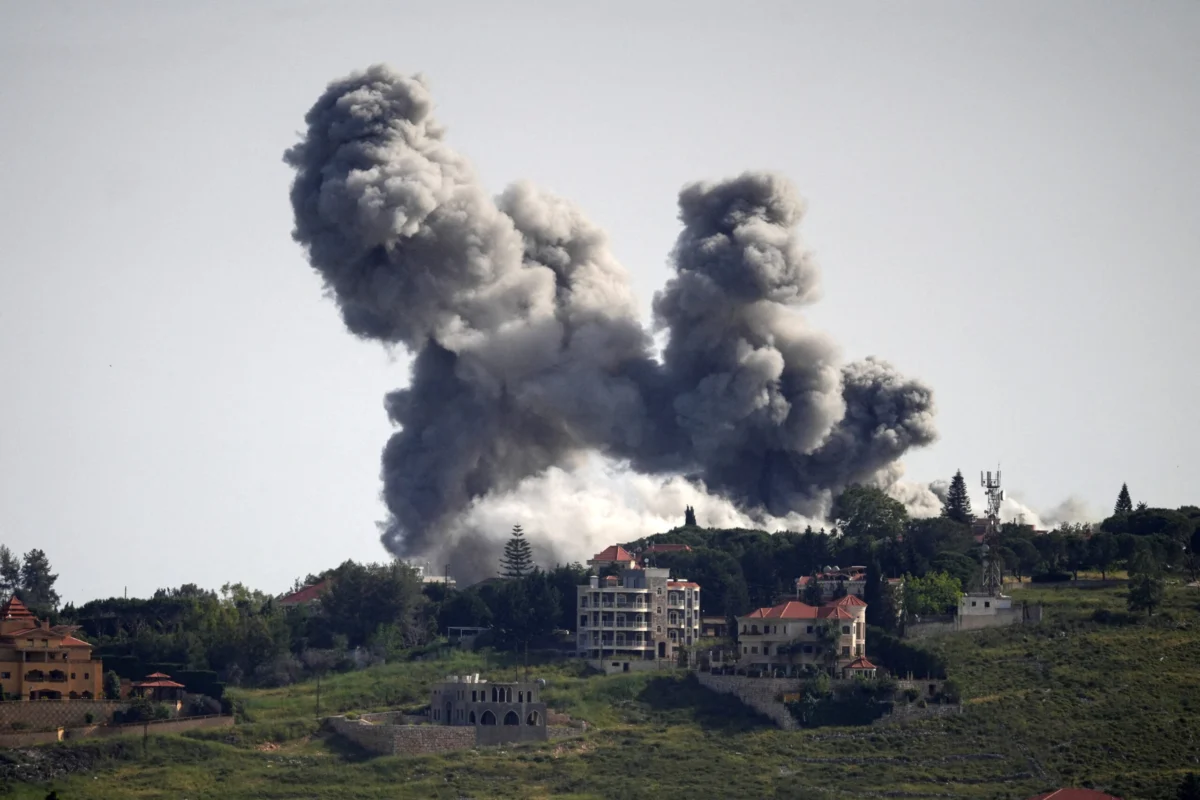
- Wider Regional Instability: The conflict in Yemen is not isolated. The image associated with this report, showing an Israeli strike in Lebanon, serves as a stark reminder of the broader volatile geopolitical landscape in the Middle East. While not directly linked to the Yemen conflict, such incidents underscore the interconnectedness of regional security challenges. Proxy conflicts, cross-border attacks, and sectarian tensions contribute to a climate of pervasive instability that can quickly spill over across borders, further complicating efforts to achieve lasting peace in any single theatre. The failure to resolve the Yemen conflict contributes to a narrative of intractable regional disputes, emboldening various non-state actors and creating opportunities for external interference.
Statements and International Reactions
Following the drone attacks, international reactions were swift and largely condemnatory, while the involved parties maintained their established positions.
- Houthi Movement: Houthi spokespersons reiterated that the attacks were legitimate acts of self-defence and retaliation against the Saudi-led coalition’s aggression and blockade. They vowed to continue targeting Saudi and UAE interests until the siege on Yemen is fully lifted and foreign intervention ceases.
- Saudi Arabia and UAE: Both nations condemned the attacks as acts of terrorism and violations of international law. Saudi Arabia affirmed its right to defend its territory and citizens and warned of a robust response to these "cowardly acts." The UAE emphasized that such provocations would not deter its commitment to regional security but would rather solidify its resolve to counter terrorism and extremism. Both nations called upon the international community to take a firmer stance against Houthi aggression and their alleged backers.
- United Nations: UN Special Envoy Hans Grundberg expressed deep regret over the renewed hostilities, emphasizing that military escalation only serves to undermine peace efforts and prolong human suffering. He reiterated his call for an immediate and unconditional ceasefire and urged all parties to return to the negotiating table without preconditions, stressing the urgent need for a political solution. The UN Security Council also issued a statement condemning the attacks and calling for de-escalation.
- International Powers: The United States, through its State Department, condemned the drone strikes, reaffirming its commitment to the security of its partners in the region. It called on the Houthis to cease all cross-border attacks and engage constructively in UN-led peace efforts. European Union representatives echoed these sentiments, urging all parties to respect international humanitarian law and work towards a comprehensive political settlement. Concerns were also raised about the potential for further destabilization of global energy markets.
Analysis and Outlook
The recent drone attacks and the ensuing deadlock in peace talks illuminate the intractable nature of the Yemen conflict. The core issues that have prevented a resolution – mutual distrust, maximalist demands, and the intricate web of regional rivalries – remain firmly in place. The Houthi movement’s continued ability to launch sophisticated attacks deep into coalition territory gives them leverage, which they are unwilling to relinquish without significant concessions, particularly regarding the blockade. Conversely, Saudi Arabia and the UAE are unlikely to accept any settlement that compromises their security interests or legitimizes the Houthi’s de facto control over large parts of Yemen, which they view as a direct threat.
The prospects for peace appear bleak in the short term. A sustainable resolution would likely require:
- Genuine De-escalation: A verifiable, nationwide ceasefire that includes a halt to all cross-border attacks and coalition airstrikes.
- Humanitarian Access: Full and unrestricted access for humanitarian aid, including the lifting of restrictions on Hodeidah port and Sanaa airport.
- Inclusive Political Process: A truly inclusive dialogue involving all Yemeni factions, not just the main belligerents, to forge a new political framework for the country.
- Regional Consensus: A broader agreement among regional powers, particularly Saudi Arabia and Iran, to de-escalate tensions and cease proxy interventions in Yemen.
- Sustained International Pressure: Consistent, unified pressure from the international community on all parties to commit to a political solution and abide by international law.
Without these elements, the conflict risks festering indefinitely, continuing to exact a devastating toll on the Yemeni population and posing a perpetual threat to regional and global stability. The cycle of violence and failed diplomacy highlights the urgent need for a renewed, concerted international effort to compel the warring parties towards a peaceful resolution, before the humanitarian crisis deepens further and the conflict spirals into an even more destructive phase. The international community’s responsibility to protect civilians and facilitate peace has never been more critical.
