

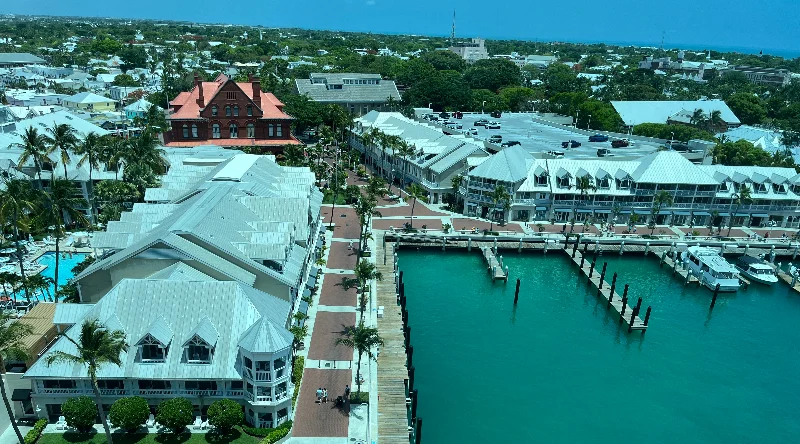
The City of Key West, situated at the southernmost point of the continental United States, finds itself at a critical juncture where geographical vulnerability meets a complex and often contradictory legislative landscape. As a low-lying island community only 90 miles from Cuba, Key West is uniquely exposed to the immediate effects of climate change, including rising sea levels, intensified storm surges, and the degradation of vital coral reef ecosystems. However, as the municipality seeks to implement long-term energy and environmental safeguards, it is encountering significant regulatory hurdles from both state and federal levels. These challenges have forced local leaders to reconsider how they frame and execute essential infrastructure projects, balancing the urgent need for climate adaptation with new laws that restrict the language and scope of environmental policy.
The Strategic Energy Plan: A Roadmap for Island Resilience
In early 2025, Key West was selected as a participant in the U.S. Department of Energy’s (DOE) Energy Technology Innovation Partnership Program (ETIPP). This federal initiative is designed to provide technical assistance to coastal, remote, and island communities, which often face higher energy costs and greater reliability risks than mainland areas. Working in conjunction with the National Renewable Energy Laboratory (NREL), the city developed a comprehensive Strategic Energy Plan intended to transition the island toward a more self-sufficient and resilient energy future.
The NREL-led plan focuses on four primary pillars of development:
- Energy Efficiency and Building Retrofitting: Improving the existing building stock to reduce total demand, particularly through the use of metal roofing and traditional architectural methods that mitigate heat and fire risk.
- Local Renewable Energy Integration: Expanding the use of distributed energy resources, such as rooftop solar and battery storage, to ensure the island can maintain power during and after major hurricane events.
- Grid Modernization and Independence: Reducing reliance on the single transmission line that connects the Keys to the mainland Florida grid, thereby improving energy security.
- Sustainable Transportation Infrastructure: Enhancing the island’s capacity for electric vehicle charging and improving public transit to reduce the carbon footprint of the local tourism economy.
Despite the technical rigor of this plan, its implementation has been complicated by shifting political priorities. While the DOE under previous directives favored aggressive decarbonization, the current federal administration has signaled a pivot away from clean energy mandates in favor of fossil fuel expansion and deregulation. This shift has left municipal governments in a precarious position, as they must now navigate a federal landscape that may no longer provide the same level of support for projects explicitly labeled as "green" or "sustainable."
Legislative Preemption: The Impact of Florida HB 1217
The challenges facing Key West are exacerbated by legislative actions at the state level. The Florida Legislature recently enacted HB 1217, titled "Prohibited Governmental Policies Regulating Greenhouse Gas Emissions." This law represents one of the most significant preemptive strikes against local government autonomy in recent history. Under HB 1217, cities and counties are strictly prohibited from adopting or enforcing any policies that reference "net-zero" goals or specifically target the reduction of greenhouse gas emissions.
The scope of the bill is expansive, covering:
- Comprehensive Planning: Municipalities cannot include net-zero targets in their long-term development blueprints.
- Land Development Regulations: Local governments are barred from requiring developers to meet specific carbon emission standards.
- Transportation Planning: Any transit policy explicitly aimed at atmospheric carbon balance is now legally vulnerable.
- Financial Restrictions: The law prohibits government entities from paying dues to professional organizations or advocacy groups that promote net-zero policies.
Critics, including environmental advocacy groups like the Sierra Club, argue that HB 1217 strips local leaders of the "home rule" authority necessary to protect their specific jurisdictions. In Key West, where the average elevation is less than five feet above sea level, the inability to officially recognize and address emission-related climate drivers is seen by many residents as a threat to the island’s long-term viability.
The Economic and Environmental Vulnerability of Key West
The urgency for climate action in Key West is underscored by data regarding the island’s physical and economic health. According to the National Oceanic and Atmospheric Administration (NOAA), sea levels in the Florida Keys have risen approximately nine inches since 1950, with the rate of rise accelerating. Projections suggest that by 2050, the region could see an additional 12 to 18 inches of rise, which would lead to "nuisance flooding" occurring on a near-daily basis in low-lying neighborhoods.
Furthermore, the local economy is inextricably linked to the environment. The Florida Keys National Marine Sanctuary generates billions of dollars in annual economic activity through tourism, fishing, and diving. The protection of the coral reef—the only living barrier reef in the continental U.S.—is essential for both biodiversity and as a natural buffer against wave energy during storms. Key West has previously attempted to protect these reefs by banning certain sunscreens containing chemicals harmful to coral, a move that was also eventually preempted by state law.
The infrastructure of Key West was largely designed for the climate conditions of the mid-20th century. High groundwater levels and rapid urbanization have strained the island’s stormwater management systems. Current estimates suggest that upgrading the regional drainage and sea-wall infrastructure to meet 2050 standards will cost hundreds of millions of dollars—funding that often requires federal and state grants which are now tied to specific, and sometimes restrictive, policy language.
Historical Defiance: The Legacy of the Conch Republic
The tension between Key West and higher levels of government is not a new phenomenon. In 1982, the island famously staged a symbolic secession from the United States in response to a U.S. Border Patrol blockade on Highway 1. The blockade, intended to deter illegal immigration and drug trafficking, created 17-mile traffic jams that crippled the local tourism industry.
In protest, Mayor Dennis Wardlow declared the independence of the "Conch Republic," briefly "surrendered" to the U.S. Navy, and then applied for $1 billion in foreign aid. While the event was largely tongue-in-cheek, it solidified the "Conch" identity as one of fierce independence and rebellion against perceived federal overreach. This historical context informs the current local sentiment regarding state-level preemption. Many residents view HB 1217 and similar mandates as a "modern-day blockade" that prevents the city from taking the necessary steps to ensure its own survival.
Strategic Adaptation: "Code-Switching" and Semantic Navigation
Faced with legal prohibitions on terms like "net-zero" and "climate change," local officials in Florida are increasingly adopting a strategy of "code-switching." This involves rebranding environmental and energy initiatives to focus on "affordability," "reliability," and "storm hardening"—terms that are generally acceptable to both state and federal regulators.

For example, a project designed to install solar panels and battery backups might be framed not as a "carbon reduction initiative," but as a "critical infrastructure reliability project" to ensure emergency services remain functional during grid outages. Similarly, wetland restoration and mangrove planting are being presented as "coastal defense" and "flood mitigation" rather than "ecosystem services for carbon sequestration."
Political strategists and local governance experts suggest that this shift in rhetoric is a necessary survival mechanism. By focusing on tangible public benefits and fiscal responsibility, cities like Key West can continue the substantive work of the NREL Strategic Energy Plan without running afoul of state laws. This approach, however, carries the risk of "normalization drift," where the underlying causes of climate change are ignored in public discourse, potentially slowing the global momentum needed for systemic change.
Federal Policy Shifts and the Future of Municipal Autonomy
The broader impact of the Trump administration’s energy policies remains a point of concern for municipal leaders across the country. The federal rejection of international climate agreements, such as the 1.5°C threshold established by the Paris Accord, signals a period where local governments may have to act as the primary drivers of energy innovation.
The Center for American Progress (CAP) notes that when state and federal governments strip cities of the tools to act, they effectively lock consumers into aging and expensive fossil fuel infrastructure. This leaves ratepayers exposed to price volatility and increased climate risk. In Key West, where electricity costs are already higher than the national average due to the complexities of island transmission, the move away from local renewable generation could have long-term negative economic impacts.
Despite these obstacles, the City of Key West appears determined to move forward with its resilience goals. The integration of green infrastructure, the expansion of stormwater storage, and the protection of natural buffers like red mangroves remain top priorities. While the language used in official documents may change to satisfy legislative requirements, the physical reality of a rising ocean remains the primary motivator for the island’s leadership.
The case of Key West serves as a microcosm for the broader national struggle over energy policy and local autonomy. As the city navigates the "whirlwind of chaos" brought about by conflicting state and federal mandates, its ability to innovate and adapt will likely serve as a blueprint for other coastal communities facing similar existential threats. The success of these efforts will depend on whether local governments can maintain their commitment to resilience while operating within a increasingly restrictive legal framework.
