

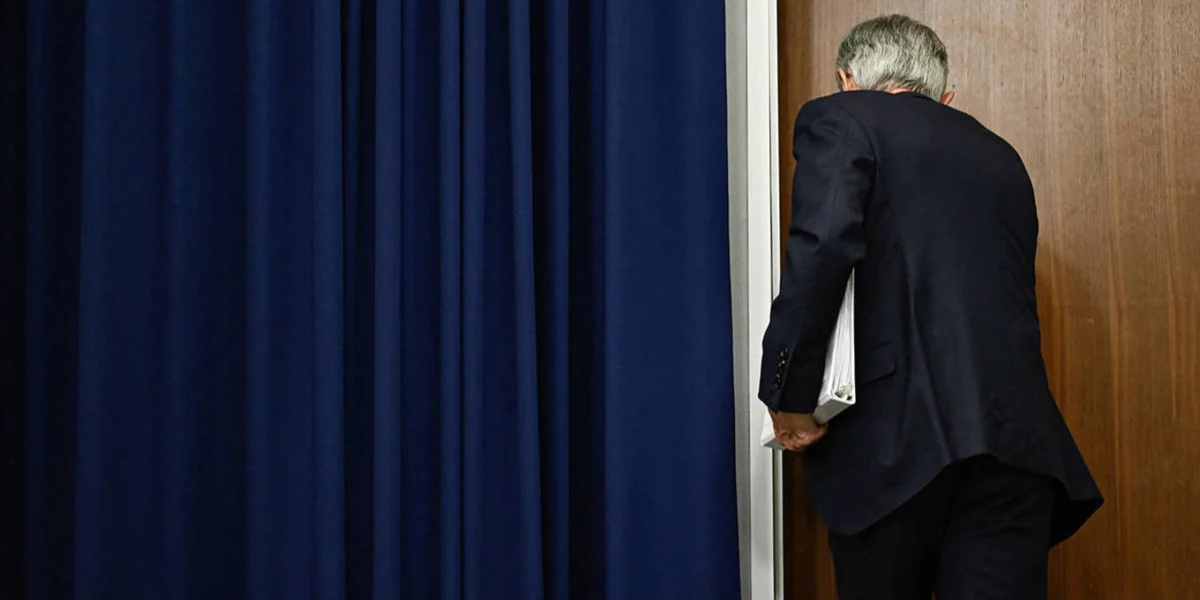
As Jerome Powell prepares to conclude his second term as Chair of the U.S. Federal Reserve on May 15, 2026, his tenure is poised to be remembered as a period of profound economic turbulence and strategic policy navigation. The irony of his legacy, as highlighted by observers, lies in the fact that his most significant achievements may have been solidified by forces that initially sought to destabilize his leadership. Powell’s decision to remain on the Federal Reserve Board of Governors after his chairmanship, a move that allows him to maintain a prominent role, could prove instrumental in shaping the institution’s future. However, this continued influence also raises critical questions about the potential for substantive policy criticisms to be overshadowed, potentially impacting the long-term health and credibility of the Federal Reserve.
The narrative surrounding Powell’s leadership is one of remarkable resilience, a testament to his ability to weather unprecedented economic storms and political pressures. His journey to the helm of the Federal Reserve was not without its challenges, and his subsequent years at the helm have been defined by a series of complex and often controversial decisions. The economic landscape he inherited was already fraught with uncertainty, and the onset of the COVID-19 pandemic in early 2020 plunged the global economy into a crisis of historic proportions.
The Powell Era: Navigating Unprecedented Economic Shocks
Jerome Powell’s appointment as Chair of the Federal Reserve in February 2018 marked the beginning of a period characterized by both innovation and significant upheaval. His initial years were focused on navigating the tail end of a long economic expansion, with a gradual approach to monetary policy adjustments. However, the global economic landscape shifted dramatically with the advent of the COVID-19 pandemic.
Timeline of Key Events During Powell’s Tenure:
- February 2018: Jerome Powell is sworn in as Chair of the Federal Reserve.
- Late 2019 – Early 2020: The emergence of the COVID-19 pandemic begins to disrupt global supply chains and economic activity.
- March 2020: The Federal Reserve implements a series of aggressive measures to combat the economic fallout from the pandemic. This included slashing the federal funds rate to near-zero and initiating massive quantitative easing programs, injecting trillions of dollars into financial markets. The Fed also established numerous emergency lending facilities to ensure liquidity and prevent a credit crunch.
- 2020-2021: The U.S. economy experiences a sharp recession followed by a surprisingly rapid recovery, fueled in part by unprecedented fiscal stimulus and the Fed’s accommodative monetary policy. Inflation begins to rise as demand outstrips supply.
- Late 2021 – 2022: Inflationary pressures intensify, reaching multi-decade highs. The Fed begins to pivot its policy, signaling an end to quantitative easing and preparing for a series of interest rate hikes.
- March 2022: The Federal Reserve raises interest rates for the first time since 2018, marking the start of an aggressive tightening cycle aimed at curbing inflation.
- 2023: The Fed continues its rate hikes, pushing borrowing costs higher across the economy. This period is marked by concerns about a potential recession, though the U.S. economy demonstrates surprising resilience.
- 2024-2025: Inflation begins to moderate, albeit at a slower pace than initially hoped. The Federal Reserve carefully balances the need to bring inflation down with the risk of stifling economic growth. Debates intensify regarding the appropriate path for monetary policy.
- May 15, 2026: Jerome Powell’s second term as Fed Chair concludes. He is expected to remain on the Board of Governors.
The "Defender of the Fed" Persona and Its Implications
Powell’s image as the "defender of the Fed" has been meticulously cultivated, particularly during the tumultuous pandemic years. His calm and measured communication style, coupled with decisive policy actions, helped to reassure markets and the public during a period of immense uncertainty. The Fed’s swift and substantial interventions are widely credited with preventing a deeper economic collapse and facilitating a faster-than-expected recovery.
During the early stages of the pandemic, the Federal Reserve acted with unprecedented speed and scale. The decision to cut the federal funds rate to near-zero and to launch massive asset purchase programs, often referred to as quantitative easing (QE), injected trillions of dollars into the financial system. These actions were crucial in stabilizing markets, ensuring the flow of credit, and providing a crucial backstop for the economy. The Fed’s emergency lending facilities, such as the Primary Market Corporate Credit Facility and the Municipal Liquidity Facility, provided vital liquidity to businesses and state and local governments, averting potential defaults and widespread financial distress.
However, this period of aggressive easing also sowed the seeds of future challenges, most notably the resurgence of inflation. As the economy rebounded, fueled by both monetary and fiscal stimulus, demand began to outpace supply. Supply chain disruptions, exacerbated by the pandemic and geopolitical events, further contributed to price pressures. By late 2021 and into 2022, inflation had reached levels not seen in decades, forcing the Federal Reserve into a sharp policy reversal.
Powell’s leadership during this inflationary surge has been characterized by a determined effort to regain price stability. The Fed embarked on an aggressive series of interest rate hikes, beginning in March 2022, to cool demand and bring inflation back down to its 2% target. This tightening cycle has been one of the most rapid in the Fed’s history, leading to increased borrowing costs for consumers and businesses, and sparking concerns about a potential recession.
Supporting Data: Inflation and Interest Rates
The impact of Powell’s policies can be observed through key economic indicators:
- Inflation: The Consumer Price Index (CPI) surged in 2022, reaching a peak of over 9% year-over-year. While inflation has since moderated, it has remained stubbornly above the Fed’s 2% target for an extended period, highlighting the persistence of price pressures. For instance, data from the Bureau of Labor Statistics indicated that in April 2026, the CPI stood at 3.5% year-over-year, a significant improvement but still above the desired level.
- Federal Funds Rate: The Federal Reserve’s benchmark interest rate, the federal funds rate, was near zero from March 2020 until March 2022. Following the aggressive hiking cycle, the target range for the federal funds rate reached 5.25%-5.50% by mid-2023 and has remained at this level through early 2026, as the Fed adopts a more data-dependent approach.
- Unemployment Rate: Despite the aggressive tightening of monetary policy, the U.S. unemployment rate has remained remarkably low, hovering below 4% for much of Powell’s tenure. This resilience has been a key factor in the Fed’s ability to pursue its inflation-fighting mandate without triggering a significant increase in joblessness, though some sectors have experienced slower growth.
- Economic Growth (GDP): U.S. Gross Domestic Product (GDP) experienced a sharp contraction in the second quarter of 2020 but recovered strongly in subsequent quarters. Growth has moderated in recent years, reflecting the impact of higher interest rates and global economic headwinds.
Criticisms and Lingering Questions
Despite his perceived successes, Powell’s tenure has not been without its critics. Some economists and policymakers have argued that the Federal Reserve was too slow to recognize the inflationary pressures building in the economy during 2021, leading to a more aggressive and potentially disruptive tightening cycle. Others have questioned the distributional effects of the Fed’s policies, suggesting that the quantitative easing programs disproportionately benefited asset owners, exacerbating wealth inequality.
The decision to keep interest rates near zero for an extended period during the pandemic, while intended to stimulate the economy, has also been scrutinized. Critics argue that this prolonged period of ultra-low interest rates contributed to asset bubbles and encouraged excessive risk-taking in financial markets.
The prospect of Powell remaining on the Board of Governors after his chairmanship raises further questions about the future of policy debate within the Fed. While his continued presence could offer valuable experience and continuity, it also presents a risk that dissenting viewpoints or substantive criticisms of past policies might be marginalized. The Federal Reserve’s strength lies in its independence and its ability to foster robust internal debate. If Powell’s continued influence leads to a less open exchange of ideas, it could undermine the institution’s long-term effectiveness.
Broader Impact and Implications
Powell’s legacy is intrinsically linked to the Federal Reserve’s role as a linchpin of the U.S. and global financial system. His leadership has navigated the institution through one of its most challenging periods, demonstrating both adaptability and a commitment to its dual mandate of maximum employment and price stability.
The Federal Reserve’s actions under Powell have had profound implications for:
- Financial Markets: The Fed’s liquidity injections and interest rate policies have significantly influenced asset prices, market volatility, and the cost of capital for businesses and governments worldwide.
- Consumer Behavior: Interest rate changes directly affect mortgage rates, car loans, and credit card debt, impacting household spending and investment decisions.
- Global Economy: As the world’s largest economy, U.S. monetary policy has ripple effects across international markets, influencing exchange rates, capital flows, and economic growth in other countries.
- Fiscal Policy: The close interaction between monetary and fiscal policy, particularly during the pandemic, has highlighted the complex interplay between the Fed’s actions and government spending and taxation.
As Powell transitions from Chair to a Board Governor, his continued involvement will be closely watched. The success of his legacy will ultimately be judged not only by the immediate economic outcomes during his tenure but also by the Federal Reserve’s ability to adapt, learn from past decisions, and maintain its credibility as an independent and effective institution in the years to come. The ongoing debate about the appropriate path for monetary policy, the management of inflation, and the potential for future economic shocks ensures that the challenges facing the Federal Reserve, and by extension, Jerome Powell, remain significant. His continued presence on the Board of Governors offers both an opportunity for seasoned guidance and a potential point of contention regarding the evolution of Fed policy and its public perception.
