

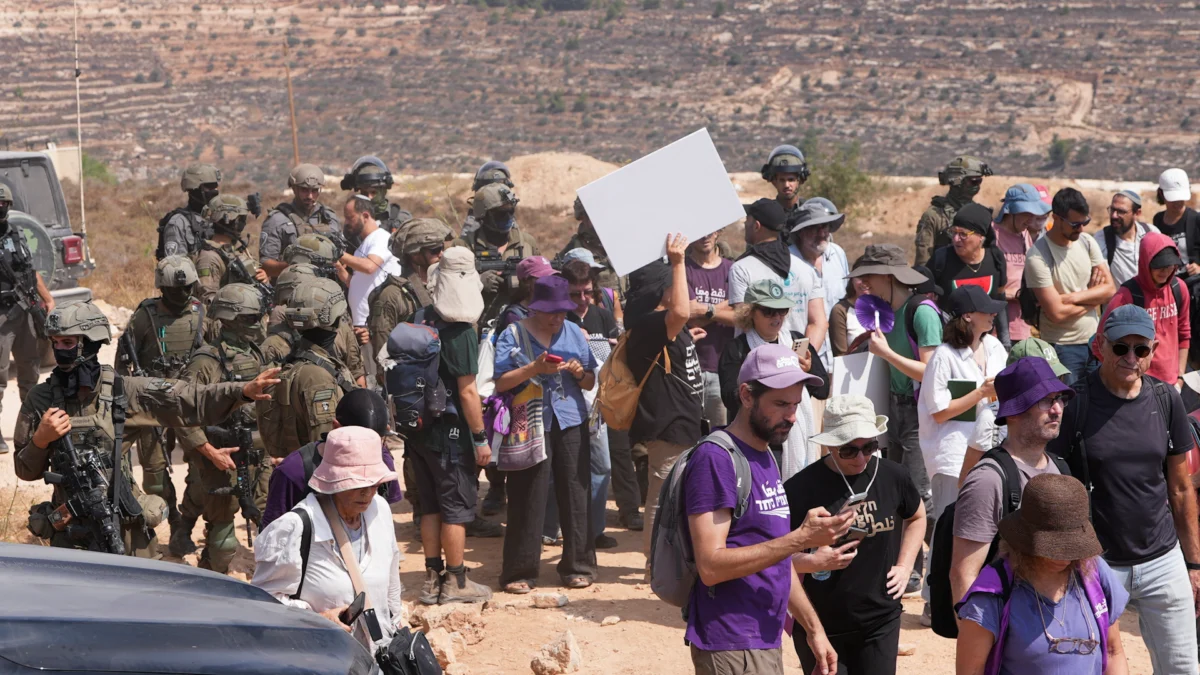
Palestinian activists reported on August 14, 2026, that Israeli soldiers have prevented them from delivering essential humanitarian aid to residents of Qusra, a Palestinian village located in the occupied West Bank, who have been under a de facto siege by Israeli settlers for nearly a week. The blockade, which has severely restricted access to food, water, and medical supplies for the villagers, underscores the escalating tensions and the precarious humanitarian situation in vulnerable Palestinian communities. Jonathan Pollak, a prominent activist from the Sumud Network, confirmed the repeated obstructions by Israeli military personnel, highlighting the dire consequences for the besieged population.
Escalation and the Week-Long Siege in Qusra
The current crisis in Qusra reportedly began approximately seven days prior to the aid attempts, around August 7, 2026, following a series of aggressive incursions by Israeli settlers from nearby outposts. According to local residents and human rights monitors, these incursions included destruction of agricultural land, harassment of farmers, and attempts to intimidate villagers. This pattern of escalating settler activity culminated in a sustained presence around the village’s periphery, effectively isolating Qusra from external access points. Villagers reported that settlers, often armed, positioned themselves on access roads and agricultural lands, making it perilous for residents to leave or for external assistance to enter. The Israeli military’s presence, while ostensibly for security, has been perceived by activists and residents as enabling the settler blockade by preventing humanitarian access rather than ensuring the safety of all civilians.
Initial attempts by Palestinian Red Crescent Society volunteers and local aid committees to reach Qusra with provisions were reportedly met with warnings from Israeli soldiers. By August 10, these warnings escalated to direct prevention, with soldiers establishing checkpoints or blocking routes that aid convoys intended to use. Activists from the Sumud Network, known for their non-violent resistance and humanitarian work in the West Bank, joined these efforts, believing that their international presence might deter military intervention. However, even their attempts on August 13 and 14 were thwarted, with soldiers citing unspecified "security reasons" or "closed military zones," arguments frequently employed to restrict Palestinian movement and access in the West Bank. Jonathan Pollak emphasized the immediate need for intervention, stating, "Our attempts to deliver basic necessities – flour, hygiene kits, medical supplies – have been systematically blocked. The villagers are running low on everything, and the situation is becoming critical, especially for the elderly and children."
Background of Qusra and Settler Violence
Qusra is a village of approximately 6,000 residents located in the Nablus Governorate of the northern West Bank, situated in Area C, which is under full Israeli military and administrative control. Its proximity to several Israeli settlements and outposts, including Esh Kodesh, Shvut Rachel, and Kida, makes it a frequent flashpoint for conflict. For decades, Qusra has been on the front lines of land disputes and settler aggression, experiencing regular incursions, olive tree uprooting, arson attacks on agricultural lands, and physical assaults against its residents.
The establishment and expansion of Israeli settlements in the West Bank, considered illegal under international law, have consistently led to friction with adjacent Palestinian communities. Settler violence, often occurring with impunity, is a documented phenomenon by human rights organizations such as B’Tselem and Yesh Din. These groups report that the Israeli military often fails to protect Palestinians from settler attacks and, in many instances, actively participates in or facilitates actions that restrict Palestinian access to their land and resources. The Israeli Civil Administration, which governs civilian affairs in Area C, has been criticized for its selective enforcement of laws, often favoring settlers while imposing stringent restrictions on Palestinian development and movement.
The strategic location of Qusra, near Route 60, a major north-south artery in the West Bank, further exacerbates its vulnerability. The land around Qusra is fertile and crucial for the villagers’ agricultural livelihood, particularly olive cultivation. However, a significant portion of this land has been declared "state land" by Israel or has been taken over by settlers, further squeezing the village’s resources and economic viability. This long-standing pattern of land confiscation, coupled with a lack of protection from settler violence, creates a perpetual state of insecurity and humanitarian need for Qusra’s inhabitants.
Statements and Reactions from Related Parties
The incident in Qusra has drawn varied responses from involved and observer parties:
-
Jonathan Pollak (Sumud Network): Pollak’s statement underscored the humanitarian catastrophe unfolding, accusing the Israeli military of complicity in the settler blockade. "This isn’t just about preventing aid; it’s about systematically isolating and pressuring a community. The Israeli army, which has a duty to protect all civilians, is actively enabling the suffering of Palestinians by blocking vital supplies," he asserted. He called for international bodies to exert pressure on Israel to uphold its obligations under international humanitarian law.
-
Palestinian Residents of Qusra: Speaking anonymously due to fear of reprisal, a village elder described the deteriorating conditions. "We are running out of flour, our children are getting sick, and we can’t get medicine. The settlers are watching us, and the soldiers are blocking the roads. We feel abandoned and forgotten by the world," he pleaded. Another resident spoke of the psychological toll, stating, "Every day is a struggle. We are afraid to go to our fields, afraid to leave our homes. This siege is not just physical; it’s designed to break our spirit."
-
Israeli Military (IDF): When approached for comment, an IDF spokesperson stated that military operations in the area were conducted "to maintain security and prevent illegal activities that could destabilize the region." The spokesperson added that "entry into certain areas may be restricted for operational reasons to prevent friction and ensure public safety," without directly addressing the prevention of humanitarian aid or the specific allegations regarding settler activity. They maintained that the IDF’s primary objective is the safety and security of all residents in Judea and Samaria (the Israeli term for the West Bank).
-
Palestinian Authority (PA): The Palestinian Ministry of Foreign Affairs and Expatriates issued a strong condemnation of the Israeli actions in Qusra. A spokesperson denounced the "collective punishment" of Palestinian civilians and called it a "flagrant violation of international law and human rights conventions." The PA urged the international community, particularly the United Nations and the European Union, to intervene immediately, provide protection for Palestinians, and ensure the unhindered delivery of humanitarian aid.
-
United Nations Office for the Coordination of Humanitarian Affairs (UN OCHA): While not issuing a specific statement on this particular event by August 14, 2026, UN OCHA regularly reports on the humanitarian situation in the occupied Palestinian territory. Their consistent data indicates a worrying trend of increased settler violence, access restrictions, and the severe impact on Palestinian livelihoods and basic services. In past reports, OCHA has consistently reiterated the obligation of Israel, as the occupying power, to ensure the welfare and protection of the civilian population and to facilitate humanitarian relief.
-
Humanitarian Organizations: Several international and local humanitarian NGOs, including Doctors Without Borders (Médecins Sans Frontières – MSF) and Oxfam, expressed deep concern over reports of aid obstruction in Qusra. They highlighted the principles of neutrality, impartiality, and independence in humanitarian action and called for immediate, unhindered access to all populations in need, as stipulated by international humanitarian law.
Supporting Data and Broader Context
The situation in Qusra is not an isolated incident but reflects a broader pattern across the occupied West Bank. Data from human rights organizations consistently points to an alarming increase in settler-related violence and land confiscation.
- Settler Violence: According to reports from B’Tselem and UN OCHA, the first half of 2026 saw a significant spike in settler violence incidents compared to previous years. These incidents included physical assaults, damage to property, uprooting of trees, and harassment, often leading to injuries or displacement. In many cases, Israeli forces were reported to be present but failed to intervene or even actively supported settlers.
- Humanitarian Access: Restrictions on humanitarian access are a persistent challenge in the West Bank, particularly in Area C. Military orders, checkpoints, and arbitrary closures often impede the delivery of essential services and goods. UN OCHA reported that in 2025, over 30% of humanitarian aid missions in Area C faced some form of access restriction or delay.
- Land Confiscation and Displacement: The expansion of settlements and the declaration of "state land" have led to the confiscation of thousands of dunams of Palestinian agricultural land. This, coupled with settler violence and movement restrictions, contributes to the forced displacement of Palestinian communities, a process that human rights groups term "de facto annexation."
- Water Scarcity: Many Palestinian communities in Area C face severe water shortages, partly due to the unequal distribution of water resources managed by Israel and the difficulty in obtaining permits for water infrastructure development. Blockades like the one in Qusra exacerbate these existing vulnerabilities.
Legal and International Implications
The prevention of humanitarian aid to a civilian population, particularly one under siege, raises serious concerns under international humanitarian law (IHL), specifically the Fourth Geneva Convention. As the occupying power, Israel has obligations under Article 55 and 59 of the Fourth Geneva Convention to ensure the provision of food and medical supplies to the civilian population under its occupation. Article 59 explicitly states that if the resources of the occupied territory are inadequate, the occupying power shall agree to relief schemes on behalf of the population, and shall facilitate them by all means at its disposal.
Furthermore, the protection of civilians and their access to essential services are fundamental principles of IHL. The actions of blocking aid and allegedly enabling a settler-imposed siege could be seen as a form of collective punishment, which is strictly prohibited under Article 33 of the Fourth Geneva Convention. The impunity with which settler violence often occurs, coupled with military actions that restrict Palestinian rights, also raises questions about Israel’s adherence to its human rights obligations.
The international community, through various UN resolutions and statements, has consistently affirmed the illegality of Israeli settlements in the occupied Palestinian territory and urged Israel to cease all settlement activities. The current events in Qusra further complicate efforts to maintain stability and work towards a peaceful resolution of the Israeli-Palestinian conflict, as they demonstrate a continued erosion of Palestinian rights and humanitarian conditions.
Broader Impact and Future Implications
The humanitarian crisis in Qusra is emblematic of the systemic challenges faced by Palestinian communities in Area C of the West Bank. The ongoing blockade and aid prevention not only inflict immediate suffering but also contribute to a broader pattern of displacement and dispossession.
- Erosion of Trust and Stability: Incidents like Qusra deepen the distrust between Palestinian communities and Israeli authorities, fueling resentment and potentially leading to further cycles of violence. They undermine any prospects for a negotiated peace and stable coexistence.
- Humanitarian Crisis: A protracted siege, even for a week, can lead to severe health consequences, malnutrition, and a breakdown of social services, particularly for vulnerable groups like children, the elderly, and those with chronic illnesses.
- Challenges for International Aid: The repeated obstruction of humanitarian aid creates a difficult environment for international organizations operating in the region. It questions the effectiveness of their efforts and the ability of the international community to provide essential protection and assistance.
- Precedent Setting: Allowing such blockades to occur without significant international intervention sets a dangerous precedent, potentially encouraging similar actions against other vulnerable Palestinian villages.
- Political Implications: The events in Qusra highlight the urgent need for a more robust international response to settler violence and Israeli policies in the West Bank. They reinforce calls from Palestinian leadership for international protection and a more assertive stance from world powers to enforce international law and humanitarian principles.
As the situation in Qusra remains critical, the focus of activists and international observers is on ensuring immediate humanitarian access and holding all parties accountable for their actions and obligations under international law. The long-term implications of this week-long siege will undoubtedly resonate within the ongoing Israeli-Palestinian conflict, further straining an already fragile political and humanitarian landscape.
