

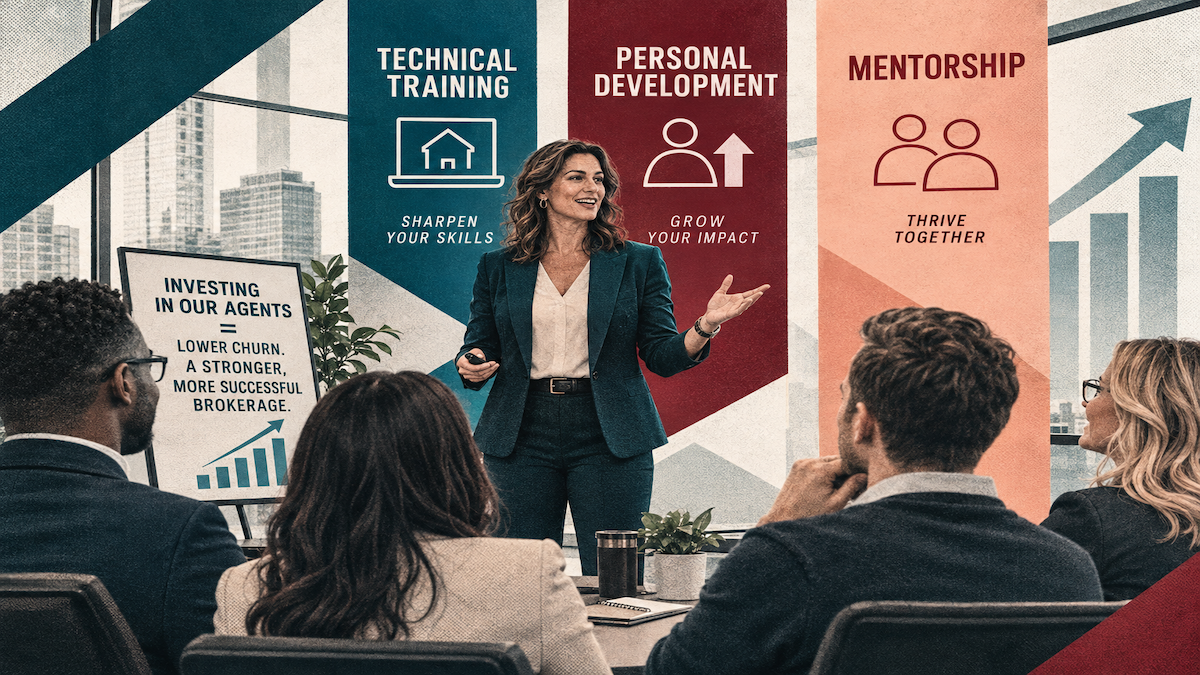
The real estate industry is currently navigating a period of unprecedented transformation, characterized by shifting regulatory landscapes, fluctuating interest rates, and evolving consumer expectations. Amidst these external pressures, a critical internal debate has emerged regarding the fundamental role of the brokerage in supporting its agents. Historically, many brokerage firms have operated on a transactional basis, viewing agent education and mentorship as discretionary costs rather than essential investments. However, industry veterans and market analysts are increasingly arguing that this "sink or swim" mentality is not only detrimental to individual agents but is also a primary driver of brokerage instability and revenue volatility.
The Dichotomy of Brokerage Management Models
At the heart of the modern real estate management crisis are two diametrically opposed philosophies. The first, often referred to as the "Broker A" approach, treats the brokerage as a mere platform for independent contractors. Under this model, agents are expected to arrive with the necessary skills or acquire them through trial and error. The rationale is that since agents have completed their state-mandated licensing requirements, the brokerage’s responsibility for technical training is fulfilled.
This approach frequently leads to high levels of agent churn. Statistics from the National Association of Realtors (NAR) have historically suggested that a significant percentage of new agents—as high as 87% by some estimates—leave the industry within their first five years. In the "Broker A" environment, agents who lack immediate confidence or a robust network often struggle to gain traction. When they fail, they move to competing firms in search of better support, or they exit the industry entirely. For the brokerage, this results in a constant cycle of recruitment and onboarding, which carries high administrative costs and prevents the establishment of a stable, high-performing culture.
In contrast, the "Broker B" approach views mentorship and continuous education as the bedrock of the business. This model acknowledges that while licensing courses provide a theoretical foundation, the practical application of real estate—negotiation, lead generation, and client management—requires hands-on guidance. By investing in the agent’s professional trajectory from day one, "Broker B" firms aim to accelerate the time it takes for a new hire to become a "top producer." The long-term benefits of this model include higher retention rates, lower human resources overhead, and a more consistent stream of repeat and referral business, which stabilizes revenue during market downturns.
The Economic Reality of Agent Churn and Retention
The financial implications of agent turnover are profound. Industry data indicates that the cost of replacing a productive agent can range from $10,000 to $20,000 when accounting for marketing, administrative onboarding, and the loss of potential commission revenue during the transition period. Furthermore, high turnover rates damage a brokerage’s brand reputation. Clients often value continuity; if a homeowner’s previous agent is no longer with the firm, the likelihood of that client returning to the same brokerage for a future transaction diminishes significantly.
During periods of high market volume, the "sink or swim" model can be masked by the sheer number of new entrants into the field. However, when market conditions tighten—as seen during periods of rising interest rates or low inventory—the volume of new agents declines. Brokerages that rely on a high-churn, high-volume recruitment strategy often find themselves in a precarious position during these cycles, facing sharp revenue declines as their "revolving door" of agents fails to produce consistent results.
A Chronological Framework for Implementing Support Systems
Building a robust support system does not require an immediate, massive capital infusion. Instead, it can be implemented through a phased, "brick-by-brick" approach over a standard calendar year.
Phase 1: Foundational Literacy (Months 1-3)
The first step involves establishing a baseline of knowledge that aligns with the brokerage’s specific culture and market niche. This is often achieved through a curated library of industry-standard literature. By hosting weekly study sessions or Q&A forums led by top-producing agents, the brokerage creates a collaborative environment where theoretical knowledge is tempered by real-world experience.
Phase 2: Tailored Technical Training (Months 4-8)
As the foundation is set, the brokerage must develop proprietary training materials. This involves identifying the specific hurdles agents face in their local market—such as specific zoning laws, regional contract nuances, or local marketing strategies. By documenting these processes and creating a library of training videos, the brokerage builds an asynchronous learning platform. This allows new agents to learn at their own pace while freeing up management to focus on high-level strategy rather than repetitive instruction.
Phase 3: Mindset and Personal Development (Ongoing)
The final phase focuses on the psychological resilience of the agent. Real estate is a high-rejection, high-stress industry. Incorporating personal development programs—ranging from the discipline-heavy philosophies of figures like Jocko Willink and David Goggins to the strategic mindset coaching of Tony Robbins—helps agents manage the emotional volatility of the business.
The Role of Mentorship in the Modern Brokerage
Mentorship remains the most challenging yet most rewarding element of the support system. It requires a significant commitment of time from senior leadership and top-performing agents. To make mentorship sustainable, forward-thinking brokerages are increasingly using incentive-based models.
By framing mentorship as a professional development opportunity for the mentor, brokerages can encourage their top producers to take on mentees. Incentives often include commission splits on the mentee’s first few transactions or leadership bonuses. This creates a "win-win" scenario: the new agent receives expert guidance, the mentor receives a passive income stream and develops management skills, and the brokerage benefits from increased productivity and retention.
Contextual Challenges: The NAR Settlements and Industry Shifts
The urgency for better agent support is heightened by recent industry upheavals, including the National Association of Realtors (NAR) class-action lawsuits regarding commission structures. As the industry moves toward greater transparency and potentially decoupled commissions, agents must be better equipped than ever to articulate their value proposition to both buyers and sellers.
In this new environment, the "technical training" aspect of the brokerage becomes a survival mechanism. Agents who cannot effectively explain their worth or navigate the complexities of new buyer-broker agreements will likely be forced out of the market. Brokerages that provide the tools for agents to adapt to these regulatory changes will capture a larger share of the remaining market as less-supported competitors fail.
Case Study: Growth Through Resilience
The efficacy of the mentorship-heavy model is evidenced by the growth of firms like Realty ONE Group MVP in Florida. Led by Derek Carlson, the firm grew to over 1,100 agents in just nine months, even while navigating the aftermath of industry-wide legal challenges and personal health crises. This growth trajectory suggests that agents are actively seeking environments where they feel supported and empowered.
The Florida market, characterized by high competition and diverse property types, serves as a microcosm for the national real estate landscape. In such markets, the ability of a brokerage to scale rapidly depends not just on recruitment, but on the speed at which it can turn a novice agent into a competent professional.
Analysis of Long-Term Implications
The shift toward a developmental brokerage model reflects a broader trend in the global economy toward "human capital" investment. In an era where technology can automate many of the administrative tasks of a real estate transaction, the "human element"—the ability to advise, negotiate, and provide emotional support—is the agent’s primary product.
Brokerages that fail to recognize this shift and continue to treat agents as disposable assets will likely face consolidation or obsolescence. Conversely, those that build effective support systems will foster a culture of loyalty and excellence. This not only improves the bottom line but also elevates the professional standing of the real estate industry as a whole.
In conclusion, the transition from a "sink or swim" culture to one of mentorship and education is no longer a luxury for real estate brokerages; it is a strategic necessity. By investing in their agents’ success, brokers ensure their own longevity and create a more stable, professional, and profitable industry for all stakeholders involved. The "Broker B" model, while requiring more initial effort, ultimately delivers a more resilient business structure capable of weathering any market condition.
