

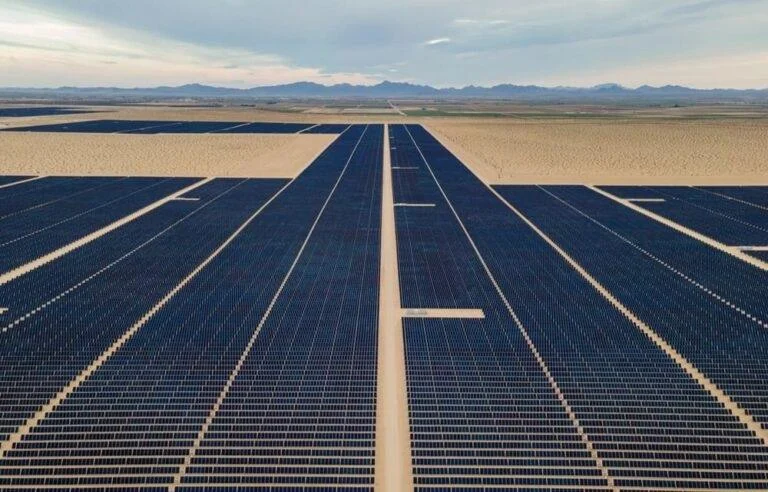
The $4.95 billion financing package is not only notable for its scale but also for its complex structure, which utilizes innovative financial mechanisms enabled by recent federal climate legislation. The Darden projects are slated to provide a combined solar capacity of 1.15 GWac (1.6 GWp) and an enormous 4.6 GWh of battery energy storage. This integration of large-scale generation with significant storage capacity is designed to address the "duck curve" phenomenon in California, where solar production peaks during the day but drops off just as evening demand rises. By storing excess solar energy during the day and discharging it during peak hours, the Darden projects will provide essential grid stability and reliability.
A Strategic Spin-out and the Google Connection
IPX Power’s emergence as an independent entity is a direct result of the shifting landscape in the technology and energy sectors. Earlier this year, tech giant Google finalized a $4.75 billion acquisition of Intersect Power. While Google’s primary interest lay in securing clean energy capacity to power its energy-intensive AI data centers, the acquisition necessitated a restructuring of Intersect’s broader development pipeline. IPX Power was subsequently spun out to focus specifically on the development, ownership, and operation of large-scale utility-scale infrastructure.
The Darden projects represent the first major undertaking for IPX Power as an independent developer. Led by CEO David Brochu, the company aims to capitalize on the growing demand for "firm" renewable energy—power that is available when needed, rather than just when the sun shines. The successful closing of this $4.95 billion financing deal signals strong market confidence in the spinoff’s leadership and its ability to execute massive, complex infrastructure projects.
Project Specifications and Technical Scope
The Darden projects are located on privately owned land in California’s Central Valley, a region traditionally dominated by agriculture but increasingly becoming a hub for renewable energy development. The project will occupy retired agricultural land, a move that aligns with regional efforts to manage water scarcity. Under the Sustainable Groundwater Management Act (SGMA), many farmers in the Central Valley are being forced to fallow land to conserve water; converting these parcels into solar farms provides an alternative economic use for the land that requires significantly less water than traditional farming.
The technical specifications of the Darden projects are as follows:
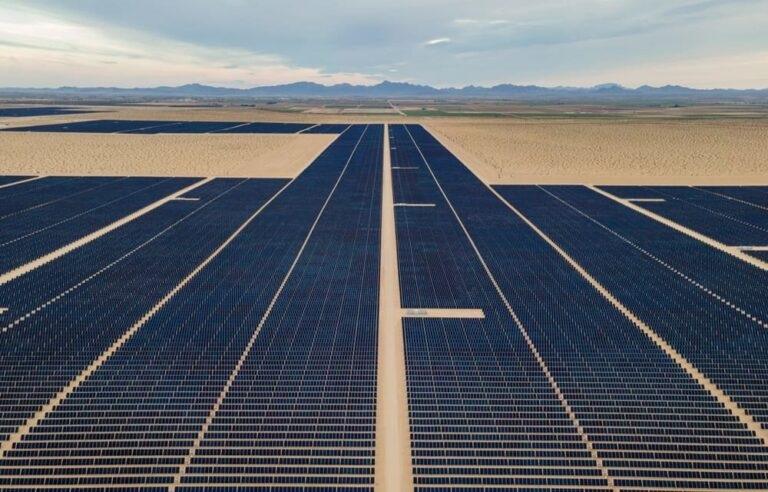
- Solar Capacity: 1.15 GWac (Alternating Current) / 1.6 GWp (Peak Direct Current).
- Storage Capacity: 4.6 GWh (Gigawatt-hours) of battery energy storage.
- Location: Central Valley, California.
- Expected Commercial Operation Date (COD): 2028.
Once operational, the project will be one of the largest hybrid solar-plus-storage facilities in the world. The 4.6 GWh of storage is particularly significant, as it provides roughly four hours of discharge at maximum capacity, a critical duration for meeting the California Independent System Operator’s (CAISO) resource adequacy requirements.
Detailed Breakdown of the $4.95 Billion Financing
The financing for the Darden projects involves a sophisticated multi-tranche debt and equity structure, involving more than 20 global financial institutions. The package is designed to bridge the gap between construction costs and the eventual monetization of federal tax credits.
The $4.95 billion construction debt package includes:
- Construction Loan: $1.83 billion, which will convert into a term loan upon the project’s completion.
- Tax Credit Transfer Bridge Loan: $1.81 billion, designed to provide immediate liquidity based on the projected value of transferable tax credits.
- Tax Equity Bridge Loan: $911 million.
- Letter of Credit (LC) Facility: $403 million to support various project obligations and grid interconnection requirements.
In addition to the debt package, the transaction includes $929 million in tax equity commitments and tax credit purchase agreements for an aggregate of $2.13 billion in investment tax credits (ITCs). This financing structure heavily utilizes the "transferability" provisions of the Inflation Reduction Act (IRA), which allow clean energy developers to sell their tax credits to third-party entities with large tax appetites, thereby simplifying the financing process and reducing reliance on traditional, often constrained, tax equity markets.
A Global Consortium of Financial Partners
The scale of the Darden projects required the coordination of a massive syndicate of international banks. The financing was led by a group of Initial Coordinating Lead Arrangers and Joint Bookrunners, including MUFG Bank, Banco Santander, Crédit Agricole Corporate and Investment Bank (CIB), Deutsche Bank, and Société Générale.
Other participating institutions included:

- Coordinating Lead Arrangers: BNP Paribas, CIBC Capital Markets, CoBank, ACB, HSBC Bank USA, Intesa Sanpaolo, J.P. Morgan, National Bank of Canada, NORD/LB, Royal Bank of Canada, Standard Chartered, Truist Securities, Wells Fargo Securities, and Westpac Banking Corporation.
- Joint Lead Arranger: KeyBanc Capital Markets.
- Tax Equity Providers: J.P. Morgan and Morgan Stanley provided the core tax equity commitments. J.P. Morgan also committed to purchasing the portion of the investment tax credits not allocated to tax equity investors, a commitment expected to be backfilled by third-party buyers as construction progresses.
David Brochu, CEO of IPX Power, emphasized the collaborative nature of the deal, stating, “Large, complex, innovative projects like Darden are central to the energy transition, and only achievable through deep collaboration with trusted partners. We are thrilled to have worked with Darden’s many financial partners to make this historic transaction a reality.”
Market Implications and the Future of the California Grid
The Darden projects arrive at a critical juncture for California’s energy landscape. The state has mandated a transition to 100% clean energy by 2045, but this transition has faced hurdles including supply chain disruptions, interconnection delays, and the inherent variability of wind and solar power.
By integrating 4.6 GWh of storage, IPX Power is providing a "dispatchable" clean energy solution. This is vital for CAISO, which has struggled with net-load peaks during summer heatwaves. When the sun sets and solar production drops, the Darden batteries can begin discharging, reducing the state’s reliance on natural gas peaker plants.
Furthermore, the project highlights the increasing role of "transferability" in the renewable energy market. Rubiao Song, Managing Director and Head of Energy Investments at J.P. Morgan, noted that the deal used an "innovative combination of tax credit transfer and tax equity commitments at an unprecedented scale." This model is expected to become the blueprint for future multi-billion-dollar renewable projects, as it allows developers to tap into a broader pool of capital than traditional tax equity alone.
Chronology and Timeline to Completion
The journey toward the Darden projects’ 2028 operational goal involves several key milestones:
- Early 2026: Spin-out of IPX Power from Intersect Power following the Google acquisition.
- May 2026: Closing of the $4.95 billion financing package.
- Late 2026: Commencement of major site preparation and construction in the Central Valley.
- 2027: Installation of solar arrays and battery storage containers; commencement of substation and interconnection infrastructure.
- 2028: Testing, grid synchronization, and full commercial operation.
The construction phase is expected to create hundreds of local jobs in the Central Valley, providing an economic boost to a region that has historically relied on the volatile agricultural sector. As the project moves toward its 2028 completion, it will serve as a bellwether for the viability of massive, integrated clean energy hubs in the United States.

Fact-Based Analysis of Long-Term Impact
The Darden projects represent more than just a large construction effort; they signify a shift in how utility-scale power is developed and financed in the post-IRA era. The $4.95 billion investment is a testament to the fact that clean energy is no longer a niche asset class but a central pillar of institutional finance.
The project also addresses land-use concerns by repurposing "retired" agricultural land. This avoids the controversy of developing "greenfield" sites or ecologically sensitive desert lands. By utilizing land that is already disturbed and potentially unfarmable due to water restrictions, IPX Power is demonstrating a sustainable model for land use that balances food security, water conservation, and energy needs.
Ultimately, the Darden projects will contribute significantly to California’s greenhouse gas reduction goals. With 1.15 GW of solar capacity, the facility is estimated to offset millions of metric tons of carbon dioxide over its operational life, equivalent to taking hundreds of thousands of internal combustion vehicles off the road. As IPX Power moves forward with this flagship project, the eyes of the energy industry will be on the Central Valley, watching as one of the most ambitious clean energy visions in American history takes shape.
