

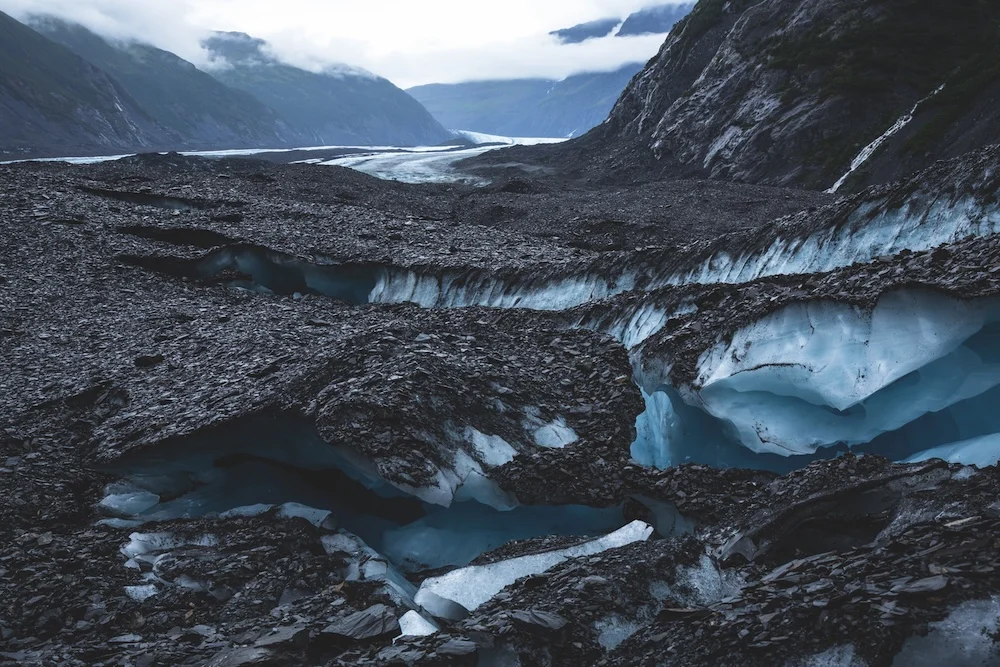
In August 2019, a group of approximately 100 people, led by Iceland’s Prime Minister Katrín Jakobsdóttir and former Irish President Mary Robinson, ascended the steep, volcanic slopes of the Ok mountain in western Iceland. Their destination was the site where the Okjökull glacier had stood for centuries. By 2014, however, the glacier had been declared "dead"—the first Icelandic glacier to lose its status because it was no longer thick enough to move under its own weight. At the summit, the group installed a bronze plaque bearing a "Letter to the Future." The inscription, written by Icelandic author Andri Snær Magnason, served as both a memorial and a stark warning: "Ok is the first Icelandic glacier to lose its status as a glacier. In the next 200 years, all our glaciers are expected to follow the same path. This monument is to acknowledge that we know what is happening and what needs to be done. Only you know if we did it."
This ceremony marked a pivotal shift in the global consciousness regarding climate change. It was billed as the world’s first funeral for a glacier, a ritualized form of mourning that has since been replicated across the globe. From the Swiss Alps to the peaks of the American West, these "glacier funerals" have become a symbolic medium through which humanity processes ecological grief. However, as these frozen giants vanish, they are attracting a new and paradoxical kind of attention: "last-chance tourism." This phenomenon sees millions of travelers flocking to the world’s most vulnerable icy landscapes to witness them before they disappear forever, creating a complex cycle of appreciation and environmental degradation.
The Evolution of Ecological Grief and Ritualized Mourning
The 2019 funeral in Iceland was not an isolated event but rather the beginning of a burgeoning trend of public mourning for the natural world. Shortly after the Okjökull ceremony, hundreds of people gathered in the Swiss Alps to hold a memorial for the Pizol glacier, which had lost 80% of its volume since 2006. Clad in black, mourners hiked to the Glarus Alps to lay flowers and perform a funeral march accompanied by alphorns. Similarly, in the United States, researchers and activists have organized "eulogies" for glaciers in Oregon and Montana, using music and poetry to express the profound sense of loss associated with the changing landscape.
Sociologists and anthropologists identify this trend as a manifestation of "solastalgia"—a term coined by philosopher Glenn Albrecht to describe the distress caused by environmental change in one’s home environment. Unlike nostalgia, which is a longing for a place one has left, solastalgia is the grief felt while still in the place, as the environment itself transforms into something unrecognizable. The ritualization of this grief through funerals serves a dual purpose: it provides a space for collective mourning and acts as a high-profile "call to action" intended to shock the public and policymakers into recognizing the immediacy of the climate crisis.
The Data of Disappearance: The Rice University Casualty List
To quantify this loss, researchers at Rice University in Texas have pioneered the "Global Glacier Casualty List." This project is more than a database; it is a commemorative effort to "remember their names and tell their stories." According to a 2026 study released by the university, the rate of glacier loss has accelerated significantly in the 21st century. Since the year 2000, thousands of glaciers of varying sizes have vanished. The study notes that while large, iconic glaciers receive the most media attention, the loss of smaller, unnamed glaciers is equally catastrophic for local ecosystems and water security.
The Rice University study highlights a staggering statistic: approximately 14 million people now visit the world’s most popular glaciers every year. This surge in interest is driven by the realization that these natural wonders are finite. Anthropologist Cymene Howe, a co-author of the study, notes that the desire to be near glaciers is deeply rooted in their unique nature. "To be near these giant bodies of ice is a powerful experience because they are unique natural wonders that move, creak, whisper and invite reflection," Howe stated. However, she also observed that as glaciers disappear, the opportunity for the average person to witness them becomes an increasingly rare privilege.
The Paradox of Last-Chance Tourism
"Last-chance tourism" (LCT) occupies a precarious ethical and environmental space. It is defined as a niche tourism market where travelers visit a destination specifically because it is perceived as endangered. While LCT can raise awareness and generate revenue for conservation efforts, it frequently contributes to the very destruction it seeks to witness.
The environmental footprint of these visits is significant. Many of the world’s most famous glaciers, such as those in Alaska, Antarctica, or the Himalayas, require long-distance air travel or cruise ships to reach—both of which are major sources of carbon emissions. A study by Emmanuel Salim, a mountaineer and geography professor at the University of Toulouse, suggests that tourists risk "loving glaciers to death." Salim’s research into the Mer de Glace in France—one of the most visited glaciers in the world—found that the carbon emissions generated by visitors traveling to the site significantly outweigh the educational benefits they might receive from seeing the melting ice.
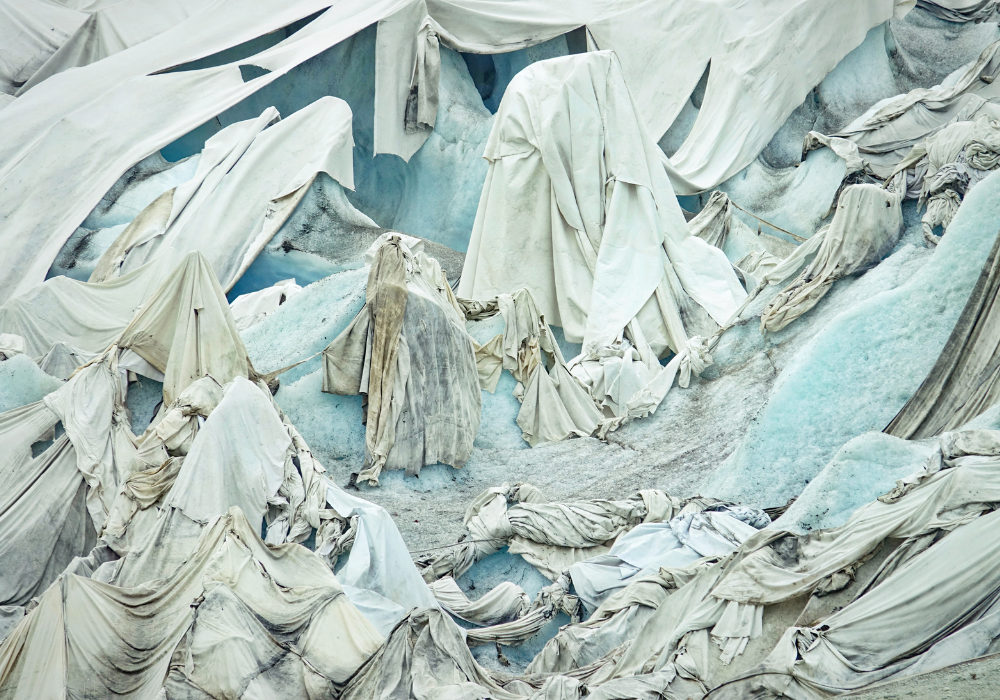
Furthermore, the physical presence of millions of visitors can cause direct harm. Increased foot traffic, the construction of infrastructure like cable cars and viewing platforms, and the soot deposited by nearby transport can lower the "albedo effect" (the reflectivity of the ice), causing the glacier to absorb more heat and melt even faster.
Chronology of Major Glacier Events and Studies
The timeline of glacier decline and the human response to it illustrates a rapid intensification of concern over the last decade:
- 2014: Okjökull (Iceland) is officially stripped of its status as a glacier after being monitored for years by glaciologists.
- 2017: The "Larsen C" ice shelf in Antarctica breaks away, one of the largest calving events ever recorded, drawing global attention to polar melt.
- 2019 (August): The first world-publicized "funeral" is held for Okjökull in Iceland.
- 2019 (September): Switzerland holds a funeral for the Pizol glacier.
- 2021: A landmark study in Nature reveals that glaciers are losing nearly 270 billion tons of ice per year, accounting for 21% of global sea-level rise.
- 2023: The World Meteorological Organization (WMO) reports that European Alps glaciers saw record-breaking melt levels due to a lack of winter snow and Saharan dust.
- 2024-2025: Increased regulation in regions like Venice and the Galapagos prompts discussions about "glacier permits" to limit visitor numbers at sensitive sites.
- 2026: Rice University publishes its comprehensive study on the 14 million annual glacier visitors and updates the Global Glacier Casualty List.
Regional Impacts and Global Consequences
The disappearance of glaciers is not merely an aesthetic or sentimental loss; it is a systemic threat to global stability. Glaciers act as the world’s "water towers," storing freshwater in the winter and releasing it during dry seasons. In regions like the Andes and the Himalayas, hundreds of millions of people depend on glacial meltwater for drinking, agriculture, and hydroelectric power.
In Alaska, glaciers like the Valdez and Mendenhall are among the fastest-melting on Earth. The state has seen a massive uptick in tourism as visitors rush to see the "calving" of ice into the sea. However, this melting contributes to rising sea levels that threaten coastal communities worldwide. In the European Alps, the retreat of glaciers has made mountaineering more dangerous due to increased rockfalls from thawing permafrost, forcing the closure of traditional climbing routes.
The economic implications are also profound. Many mountain communities rely on glacier-related tourism for their livelihoods. As the ice retreats, ski resorts are forced to close or invest in expensive snow-making technology, and the "last-chance" boom is seen by many as a final, desperate harvest of revenue before an inevitable economic collapse.
Analysis: The Future of Glacial Interaction
The rise of glacier funerals and last-chance tourism reflects a broader human struggle to reconcile our lifestyle with the preservation of the planet. While the Rice University study and the work of experts like Cymene Howe and Emmanuel Salim highlight the dangers of current tourism trends, they also point toward a need for a "regenerative" model of travel. This would involve strict carbon offsets, limiting visitor numbers, and prioritizing educational outcomes that lead to tangible political and lifestyle changes.
The "Letter to the Future" in Iceland remains the definitive statement on this era. It suggests that the value of a glacier is not found in its utility for tourism or its beauty for photography, but in its role as a stabilizer of the global climate. As the "Casualty List" grows, the focus is shifting from simply documenting the death of glaciers to attempting to save what remains.
The paradox of the "double-edged sword" mentioned by Howe remains the central challenge for the next decade. If the 14 million people who visit glaciers every year return home as climate advocates, the tourism might be justified. However, if they return only with photos of a dying giant, the emissions from their journey may simply accelerate the end of the very wonders they admire. The transition from "mourning" to "meaningful action" is the bridge that researchers, activists, and policymakers are now desperately trying to build before the last of the frozen giants disappears from the map.
