

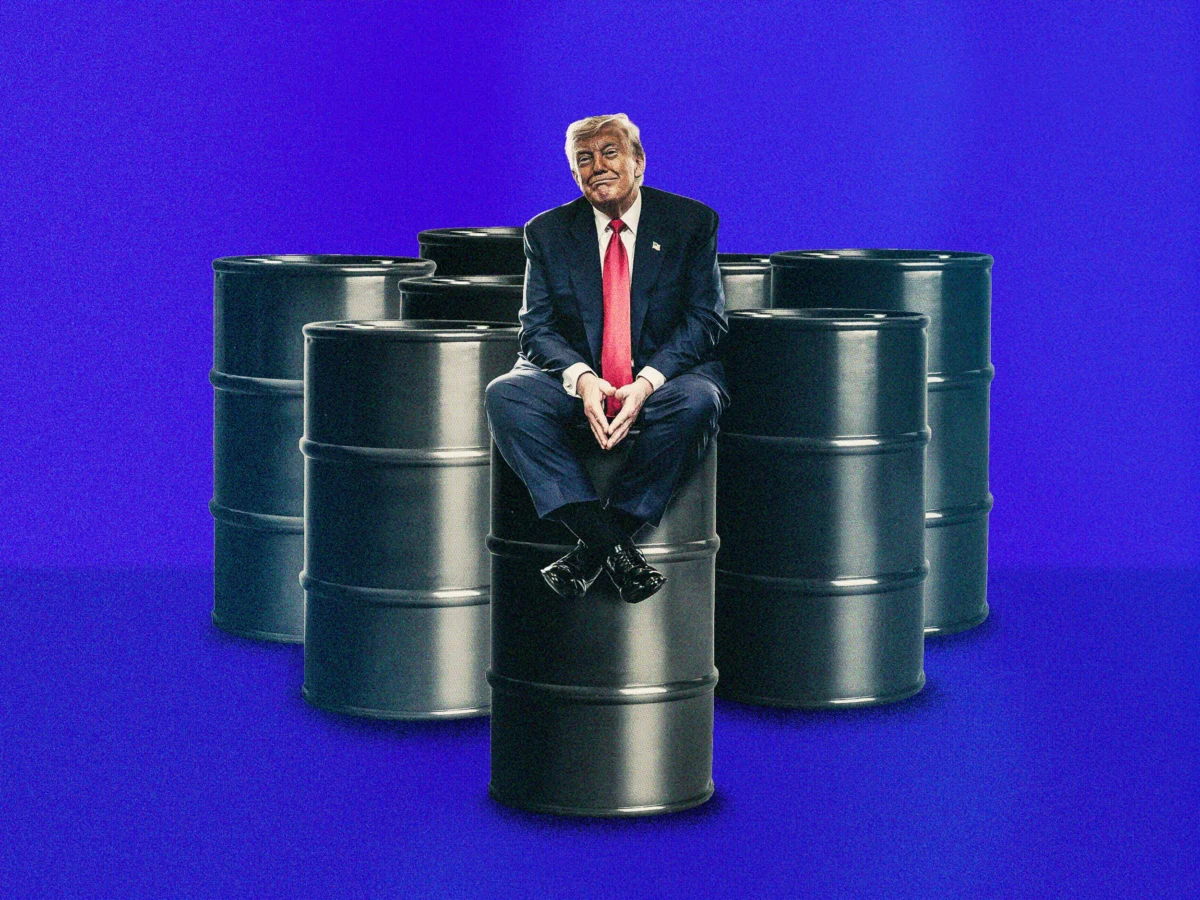
The global energy market has been thrust into a state of unprecedented uncertainty following recent claims by President Donald Trump regarding a clandestine maritime operation designed to bypass the ongoing blockade of the Strait of Hormuz. According to the President, a secret United States mission successfully facilitated the transit of 100 million barrels of oil through the world’s most vital maritime chokepoint despite the presence of hostile forces and a near-total cessation of commercial traffic. This assertion has sent ripples through an industry already grappling with a fundamental question: exactly how much oil is leaking through the blockade, and who is responsible for its movement? As intelligence agencies, commodity trackers, and energy analysts attempt to verify these figures, it has become increasingly clear that the traditional methods of monitoring global energy flows are failing in the face of what experts call the "dark trade."
The Strait of Hormuz, a narrow waterway separating the Persian Gulf from the Gulf of Oman, serves as the primary artery for the global oil industry. Under normal circumstances, approximately 21 million barrels of crude oil and petroleum products pass through the strait daily, representing roughly 21 percent of global petroleum liquids consumption. However, the current geopolitical conflict has seen this flow reduced to a mere trickle. Data from the World Trade Organization (WTO) indicates a staggering 95 percent reduction in crude oil shipments from Arabian Gulf ports and a 99 percent reduction in liquefied natural gas (LNG) carriers. Despite these catastrophic figures, the emergence of a shadow market—characterized by spoofed signals, night-time transits, and naval escorts—suggests that the blockade is not as airtight as it appears on paper.
The Mechanics of Evasion and the Dark Trade
The primary reason for the discrepancy between official shipping data and actual oil movement lies in the sophisticated tactics employed by "dark" vessels. Matt Stanley, head of market engagement at the commodity intelligence firm Kpler, notes that the industry is currently witnessing a level of disruption never before experienced in the modern era. To evade detection and bypass the blockade, tankers are increasingly turning off their Automatic Identification System (AIS) transponders. AIS is a mandatory tracking system used by ships and vessel traffic services to identify and locate vessels by electronically exchanging data with other nearby ships, AIS base stations, and satellites.
By "going dark," these vessels become invisible to standard commercial tracking software. These operations are often conducted under the cover of darkness, with ships hugging the Omani coastline to stay as far as possible from patrolling naval forces or coastal batteries. In some instances, these tankers are provided with direct naval escorts by major powers, further complicating the efforts of international monitors to provide an accurate tally of outgoing cargo.
However, the oil industry possesses unique methods for detecting these surreptitious shipments that go beyond satellite tracking. Crude oil is not a uniform commodity; different grades possess distinct chemical "fingerprints" based on the specific fields from which they originate. For example, the United Arab Emirates (UAE) produces Murban crude, which can be exported via the port of Fujairah, located outside the Strait of Hormuz. Conversely, Upper Zakum crude, another major UAE grade, is typically exported from terminals within the Persian Gulf. Analysts have reported sightings of Upper Zakum crude in international markets that should, theoretically, be inaccessible. While these sightings confirm that oil is moving, the total volume remains a subject of intense debate.
Putting the 100 Million Barrel Claim into Perspective
While the figure of 100 million barrels sounds substantial, market analysts are quick to place it in a broader context. If President Trump’s claim is accurate, and 100 million barrels have moved through the strait since the beginning of May, it would represent a significant logistical feat under blockade conditions. However, compared to pre-conflict levels, the volume is relatively modest. In a standard operating environment, 100 million barrels represent only five days’ worth of traffic through the Strait of Hormuz.
"100 million barrels is a good number, but it’s a relative drop in the ocean compared to previous traffic," says Stanley. Over the course of a month, this volume would suggest a flow of roughly 3.3 million barrels per day—significantly higher than the official WTO figures suggest, yet still a fraction of the 21 million barrels per day required to maintain global stability in the long term. This suggests that while "secret missions" and dark trade are providing a lifeline to certain markets, they are insufficient to offset the massive supply vacuum created by the blockade.
The Price Paradox: Why Brent Crude Remains Stable
Perhaps the most baffling aspect of the current crisis is the behavior of global oil prices. Historically, a disruption of this magnitude—the International Energy Agency (IEA) has labeled it "the largest supply disruption in the history of the global oil market"—would be expected to send prices skyrocketing toward $150 or $200 per barrel. Instead, Brent crude has remained remarkably resilient, recently trading at $87.55 per barrel, which is actually lower than its price point before the conflict began.
This price paradox is attributed to a combination of strategic buffers and a significant shift in global demand. China, the world’s largest oil importer, has played a pivotal role in stabilizing the market. Beijing has spent years building a massive Strategic Petroleum Reserve (SPR), estimated at approximately 1.3 billion barrels. Currently, China is drawing down these reserves at a rate of roughly one million barrels per day. Furthermore, Chinese demand has plummeted; while the country was purchasing 12.5 million barrels per day in December, that figure dropped to 7 million barrels per day during the peak months of the blockade (May through July).
In addition to Chinese reserves, Western producers have stepped into the breach. The United States, Brazil, and Canada have increased production and adjusted export routes to fill the void left by the Persian Gulf. This "robust" response from non-OPEC producers has provided the market with a temporary sense of security. Iman Nasseri, managing director for the Middle East at FGE NexantECA, suggests that the market has responded well by cutting demand and utilizing existing stocks. However, he warns that this stability is fragile.
The Looming "Operationally Critical" Threshold
The reliance on buffers is a finite strategy. Analysts warn that global oil stocks are rapidly approaching "operationally critical" levels. This is the point at which the remaining oil in storage is either physically inaccessible (sludge at the bottom of tanks) or required to maintain the basic pressure and integrity of the distribution infrastructure. Once these levels are reached, the market will no longer have a cushion to absorb the impact of the blockade.
The United States, currently acting as a "swing producer," faces its own internal pressures as the seasons change. While the U.S. has been able to export significant quantities to support global markets, the approach of the Northern Hemisphere’s winter will necessitate a shift in priority toward domestic heating oil and energy security. If the Strait of Hormuz remains closed through August and into the fourth quarter of the year, the convergence of depleted reserves and increased winter demand could lead to a violent price correction.
A Protracted Recovery: The Long Road to 2027
Even if a diplomatic or military resolution to the blockade were achieved tomorrow, the global energy landscape would not return to normalcy immediately. The physical damage to energy infrastructure in the region has been extensive. IEA Executive Director Fatih Birol has noted that more than 80 energy facilities have been damaged during the conflict. Recovery efforts are expected to be slow and technically challenging.
Analysis by S&P Global CERA estimates that oil fields shut down for as little as two months could require anywhere from ten weeks to seven months to restart. The technical complexities of restarting a pressurized reservoir—ensuring that water encroachment hasn’t ruined the well and that pipelines remain intact—mean that "turning the taps back on" is a misnomer. The UAE’s national oil company has provided an even more somber outlook, estimating that full flows through the Strait of Hormuz may not resume until 2027.
Strategic Implications and the Future of Energy Security
The blockade of the Strait of Hormuz and the subsequent rise of the dark trade have forced a fundamental reevaluation of global energy security. For decades, the world has relied on the free flow of goods through vulnerable chokepoints, assuming that the mutual economic interest of all nations would prevent a total shutdown. That assumption has now been shattered.
The long-term implications are twofold. First, there will likely be a permanent shift toward diversifying energy transit routes. Countries in the region are already looking at expanding pipelines that bypass the strait, such as the East-West Pipeline in Saudi Arabia and the Abu Dhabi Crude Oil Pipeline. Second, the "dark trade" has demonstrated that in a sufficiently desperate market, transparency is the first casualty. The ability of nations to move 100 million barrels of oil under the radar suggests that the future of commodity tracking will require more advanced satellite imagery, chemical analysis of crude, and perhaps even blockchain-based tracking of tankers to ensure the integrity of global supply chains.
As the middle of August approaches—a date many analysts have circled as a psychological turning point—the world remains in a state of suspended animation. The "secret missions" described by President Trump may be providing a temporary reprieve, but the underlying reality remains: the world’s most important energy artery is severed, and the bandages currently in place are beginning to fray. Whether through diplomacy or a shift in the conflict’s tide, the resolution of the Hormuz crisis is now the single most important factor for the global economy heading into the final months of the year.
