

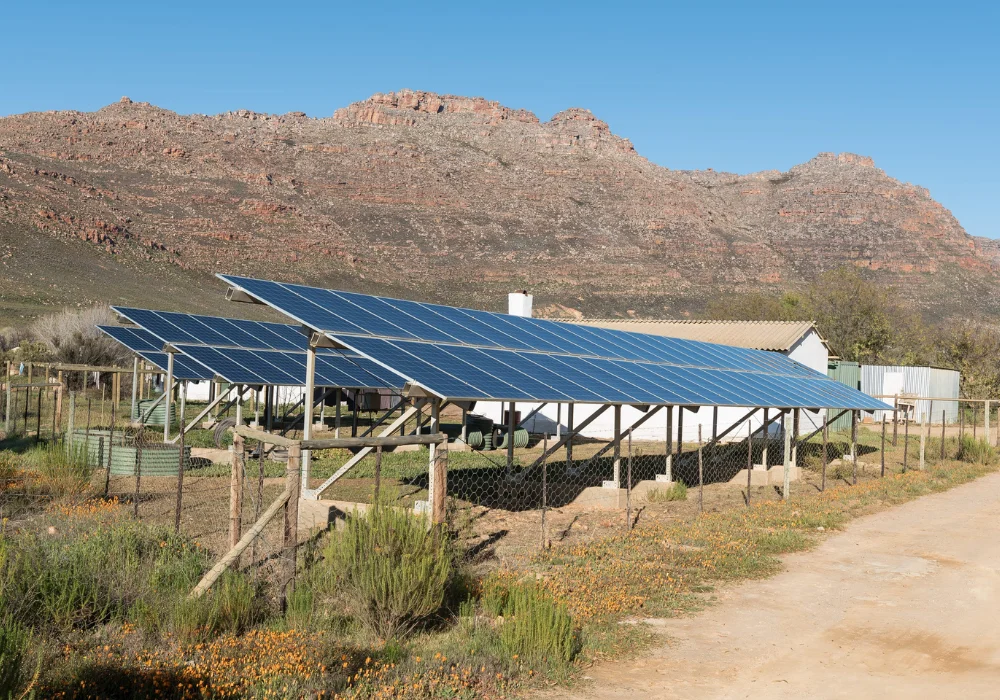
In the remote farming village of Khirais, Syria, a quiet revolution is occurring that offers a blueprint for survival in conflict-affected regions. For just US$0.20 per month, 24 households now enjoy round-the-clock electricity, a stark contrast to the conditions they faced just three years ago. When the villagers began rebuilding their community in 2021 following years of devastating armed conflict, they were met with a near-total energy vacuum. The national grid provided electricity for barely one hour a day, causing refrigerated food to spoil, forcing children to study by candlelight, and halting the mechanical processes essential for local agricultural production.
The transformation began when a regional non-profit installed a community-managed solar array on the roof of the village center. Today, these panels power lighting, refrigeration, and essential appliances, catalyzing a revival of the local agricultural economy. However, Khirais is not merely an isolated success story. It represents a broader, emergent phenomenon in fragile states where decentralized renewable energy (DRE) systems are filling the void left by collapsed state infrastructure and failing public grids. The experience of this small village raises critical questions for international policymakers and financiers: when communities are forced to improvise their own energy systems, how can public policy and formal finance integrate these assets into a sustainable and equitable national recovery?
The Fragility of Global Energy Access
The energy crisis in Syria is a microcosm of a global challenge. According to the Council on State Fragility, more than 80% of the estimated 800 million people worldwide who lack access to electricity live in "fragile" or conflict-affected settings. These regions are projected to account for a significant portion of future growth in global electricity demand, yet they remain starved of the capital necessary to build modern energy infrastructure.
The financing gap is staggering. In 2025, the Green Climate Fund (GCF) approved a record US$3.26 billion in new project funding, but only approximately US$500 million—roughly 15%—was allocated to fragile and conflict-affected states. This disparity leaves the world’s most vulnerable populations dependent on expensive, polluting diesel generators or forced to remain in the dark. The Council on State Fragility argues that these regions require energy systems that are not only affordable and green but, crucially, "resilient in the face of conflict and uncertainty." Distributed systems, such as rooftop solar, small wind turbines, and localized mini-grids, are uniquely suited for this role because they generate power close to the point of consumption, reducing reliance on vulnerable long-distance transmission lines and centralized generation plants that are often targets during periods of unrest.
A Chronology of Syria’s Energy Collapse and Solar Rebirth
To understand the scale of the current solar boom, one must look at the trajectory of Syria’s power sector over the last fifteen years. Before the outbreak of armed conflict in 2011, Syria possessed a relatively robust energy sector with an installed generation capacity of approximately 9.5 gigawatts (GW). The system was largely centralized, relying on thermal power plants and hydroelectric dams.
As the conflict progressed, the infrastructure suffered catastrophic damage. Power plants were shelled, fuel supply lines were severed, and maintenance became impossible due to sanctions and the flight of technical expertise. By the end of 2023, the available capacity had plummeted to approximately 1.6 GW. For the civilian population, this translated to a reality where the public grid provided less than two hours of electricity daily in many regions.
In response to this systemic failure, a massive, bottom-up solar movement emerged. Because much of this transition is privately financed and largely unregistered by state authorities, precise data is difficult to capture. However, industry estimates provide a clear trend: the nominal capacity of off-grid solar in Syria rose from roughly 250 megawatts (MW) in 2022 to an estimated 2 GW by 2025. Current data suggests that approximately one-quarter of Syrian households now utilize some form of solar equipment to mitigate the impact of frequent blackouts.
This is not a traditional "green transition" driven by environmental policy; it is a survival mechanism. Research indicates that a 1% increase in conflict intensity in Syria was associated with a 9.71% short-term increase in renewable energy production. This correlation underscores that as the grid fails and fuel becomes scarce, the demand for localized, self-sufficient power generation spikes.
The Socio-Economic Divide: The Risk of a Two-Tier System
While the rapid adoption of solar energy has provided a lifeline for many, it has also exposed deep socio-economic fault lines. The Syrian solar boom has created an unequal market where access to energy is dictated by access to foreign currency, international remittances, and upfront capital.
Hayley Schuler-McCoin, a senior research fellow at the Carboun Institute, notes that the households most capable of adopting solar technology are often those receiving wages in U.S. dollars or those with strong connections to the Syrian diaspora. Because solar components—panels, inverters, and batteries—are almost entirely imported, they must be purchased with hard currency. For the average Syrian family, the startup costs for a basic solar system can exceed US$1,000, a prohibitive sum in an economy where the local currency has devalued significantly.
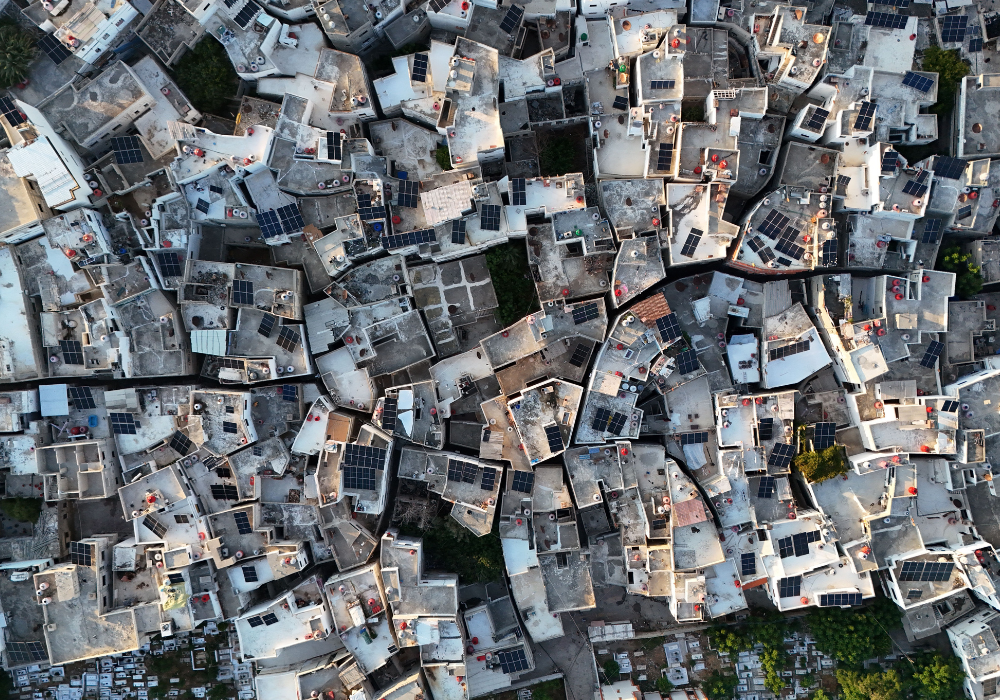
Those without access to dollars or remittances are often left with two undesirable options: purchasing expensive and health-hazardous electricity from local diesel generator networks or going without power entirely. Schuler-McCoin warns that without intervention, this could result in a "two-tier" energy system. Families with resources can buy resilience and insulate themselves from fuel price volatility, while the poor remain trapped in energy poverty. Furthermore, the market is currently plagued by poor-quality equipment and a lack of regulated maintenance services, which adds long-term financial risk for those who do manage to scrape together the funds for an installation.
Lessons in Finance: From Bangladesh to the Middle East
Addressing these inequities requires a shift in how energy projects are financed in fragile contexts. Shafiqul Alam, a lead analyst at the Institute for Energy Economics and Financial Analysis (IEEFA), suggests that the "Bangladesh model" offers valuable lessons. Bangladesh’s Infrastructure Development Company Limited (IDCOL) successfully expanded solar access by combining capital subsidies with a network of local partner organizations that understood the credit profiles of rural households.
In Syria, current financing mechanisms are often ill-suited for small-scale users. Many commercial lenders require borrowers to have formal credit histories and collateral, which are rare in a conflict-disrupted economy. Alam argues for the implementation of credit guarantees and "pre-financing" schemes. By reducing the risk for local lenders and providing capital subsidies to lower the entry cost for low-income households, international donors can ensure that the "solar revolution" is inclusive.
"Many small systems can make a massive revolution," Alam says. "If there is public support, the multiplier effect could be huge."
Bridging the Gap: Solar as a Complement to the Grid
Despite the success of decentralized solar, experts emphasize that it is not a total replacement for a national power grid. Large-scale industry, heavy manufacturing, and dense urban centers still require the stability and high-load capacity that only a centralized grid can provide. The International Energy Agency (IEA) maintains that grids are essential for integrating renewables and providing the flexibility needed for a modern economy.
In Syria, the path forward involves a "bridge" strategy. Distributed solar and mini-grids can provide immediate relief and keep critical services like water pumps, medical clinics, and small businesses running while the long, expensive process of grid reconstruction takes place. The World Bank has initiated the Syria Electricity Emergency Project with US$146 million in funding to repair high-voltage substations and interconnectors. However, this is only a fraction of what is needed.
A potential long-term solution lies in "net-metering" policies. If the reconstructed grid is designed to be flexible, households and businesses with surplus solar generation could sell power back to the national utility. This would not only provide a revenue stream for families but also reduce the overall infrastructure burden on the state.
Strategic Implications for Global Recovery
The Syrian experience demonstrates that decentralized energy is a strategic asset in conflict recovery. It supports the very activities that allow a society to rebuild: irrigating parched farmland, maintaining communication networks, and enabling light manufacturing. In some instances, solar power is even being used to charge electric vehicles for medical aid delivery, operating at a fraction of the cost of traditional internal combustion vehicles in a fuel-starved environment.
As other regions—from Myanmar to parts of Sub-Saharan Africa—face similar challenges of fragility and grid collapse, the lessons from Khirais and the wider Syrian solar boom become increasingly relevant. The transition to renewable energy in these contexts is not a luxury; it is a prerequisite for stability.
The ultimate success of Syria’s energy recovery will depend on whether international finance can move beyond "feel-good" pilot projects and toward systemic support that prioritizes both grid modernization and equitable access to decentralized technology. By fostering a hybrid model that values local autonomy as much as central infrastructure, policymakers can ensure that the lights stay on long after the immediate crisis has passed.
