

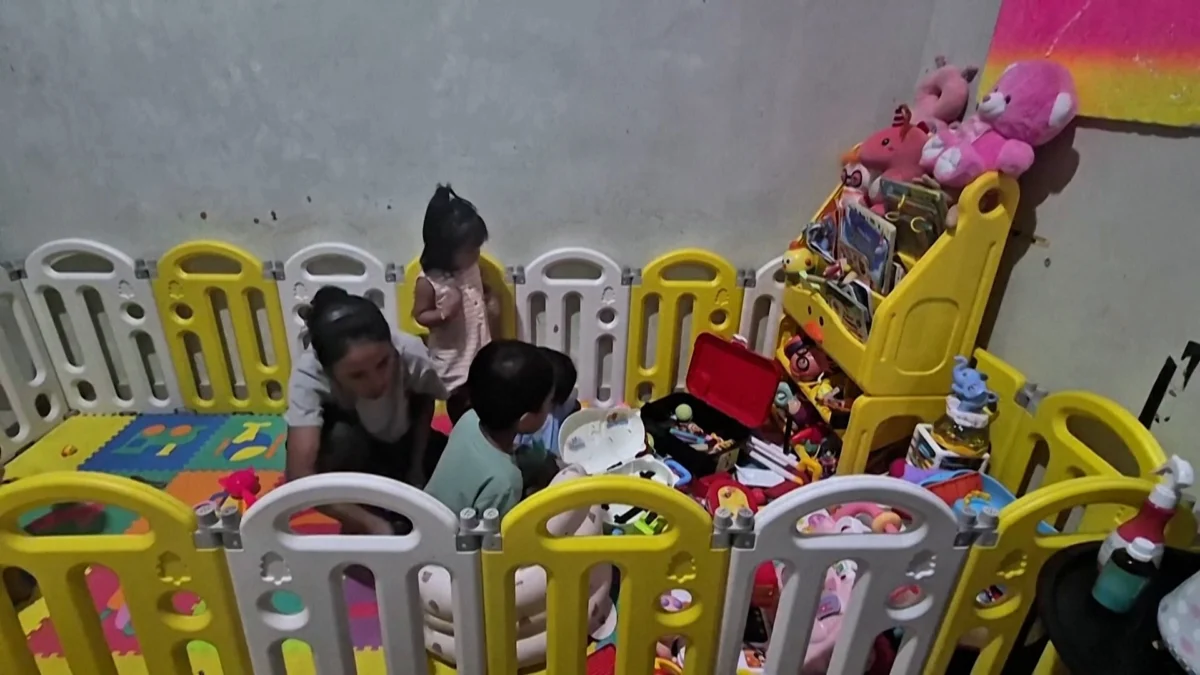
In a critical response to the deteriorating air quality across the Indonesian archipelago, non-governmental organizations (NGOs) have officially opened two specialized emergency shelters in Palangkaraya, Central Kalimantan. These facilities are specifically designed to protect the most vulnerable demographics—infants, young children, and pregnant women—from the toxic haze currently blanketing large swaths of Borneo and Sumatra. As of late August 2026, official estimates suggest that more than five million residents across these regions are directly exposed to hazardous levels of wildfire smoke, a perennial crisis that has reached a tipping point this season.
The shelters, located in the heart of the provincial capital of Central Kalimantan, serve as a desperate sanctuary for families whose homes cannot provide adequate protection against the fine particulate matter (PM2.5) that has permeated the atmosphere. Palangkaraya, often the epicenter of Indonesia’s haze crisis due to its proximity to vast peatlands, has seen its Air Quality Index (AQI) surge to levels frequently categorized as "Hazardous," often exceeding 500—well beyond the scale used by international health organizations to define dangerous air.
Humanitarian Response in the Face of Escalating Toxicity
The initiative, led by a coalition of local environmental and social welfare organizations including chapters of the Indonesian Forum for the Environment (WALHI) and various community-based health groups, aims to provide more than just a place to sleep. These shelters are equipped with high-efficiency particulate air (HEPA) filtration systems, oxygen supplies, and basic medical facilities staffed by volunteer nurses and pediatricians.
The decision to prioritize children stems from the severe physiological risks they face. Health experts warn that infants and children breathe more rapidly than adults, inhaling a higher volume of pollutants relative to their body weight. The acrid smoke, a byproduct of burning peat and forest biomass, contains a lethal cocktail of carbon monoxide, cyanide, and microscopic soot that can cause irreversible damage to developing respiratory systems and cognitive functions.
"We are seeing an influx of parents who are desperate," stated a volunteer coordinator at one of the Palangkaraya shelters. "Their children are coughing, their eyes are red, and they are struggling to breathe in their own living rooms. In these shelters, we create a ‘clean room’ environment where the air is filtered, allowing their lungs a much-needed reprieve from the toxic outdoors."
A Chronology of the 2026 Haze Crisis
The current environmental disaster did not occur in isolation but is the result of a protracted dry season exacerbated by shifting climatic patterns. The timeline of the 2026 crisis reflects a steady escalation of fire activity:
- May 2026: Meteorological agencies in Indonesia (BMKG) issued early warnings regarding a significant drop in rainfall across Sumatra and Kalimantan. Farmers and land developers were cautioned against using fire for land clearing, a common but illegal practice.
- June 2026: Small-scale hotspots began to emerge in Riau and South Sumatra. Local authorities reported the first wave of respiratory complaints in rural areas, though the smoke had not yet reached major urban centers.
- July 2026: The frequency of hotspots tripled. Efforts by the Manggala Agni (the state’s forest fire brigade) were intensified, but the underground nature of peat fires made total suppression nearly impossible. By mid-month, haze began to impact flight schedules in Pontianak and Banjarmasin.
- August 2026: A massive surge in fire activity was recorded in Central Kalimantan. Palangkaraya was engulfed in a thick, orange-tinted fog. On August 29, the official count of people directly affected by "hazardous" or "very unhealthy" air reached the five-million mark, prompting the opening of the NGO-led shelters.
The Science of the Smoke: Why Peatland Fires are Unique
To understand the severity of the situation in Palangkaraya, one must understand the nature of the terrain. Much of Central Kalimantan is built upon deep peat—a soil composed of partially decayed organic matter. In its natural, waterlogged state, peat is fire-resistant. However, decades of drainage for palm oil plantations and pulpwood concessions have left these areas bone-dry and highly flammable.
When peat catches fire, it does not merely burn on the surface; it smolders meters underground. These fires are notoriously difficult to extinguish, often requiring months of heavy rainfall to be fully quenched. The smoke produced by peat fires is significantly more dense and toxic than that of regular forest fires, containing high concentrations of methane and other greenhouse gases. This creates a feedback loop where the fires contribute to global warming, which in turn leads to more severe dry seasons and more fires.
Statistical Analysis of the Public Health Impact
The scale of the 2026 crisis is reflected in the alarming data emerging from local health clinics (Puskesmas). In the last thirty days alone, cases of Acute Respiratory Infection (ISPA) have spiked by an estimated 40% across the affected provinces.
| Province | Estimated Population Exposed | Reported ISPA Cases (Aug 2026) | Primary Fire Type |
|---|---|---|---|
| Central Kalimantan | 1.2 Million | 45,000+ | Deep Peat |
| South Sumatra | 1.5 Million | 38,000+ | Agricultural/Forest |
| Riau | 1.1 Million | 32,000+ | Peat/Plantation |
| West Kalimantan | 1.2 Million | 35,000+ | Mixed Forest |
These figures are likely conservative, as many residents in remote areas do not have access to medical facilities or choose to self-treat. The long-term economic cost is also mounting. School closures have been implemented in dozens of districts, affecting the education of hundreds of thousands of students. Flight cancellations and delays have disrupted logistics and tourism, leading to losses estimated in the millions of dollars for the local economy.
Official Responses and Political Implications
The Indonesian government has deployed thousands of personnel from the National Disaster Management Agency (BNPB), the military (TNI), and the police to combat the blazes. Water-bombing aircraft have been seen hovering over the skies of Borneo, dropping millions of liters of water on stubborn hotspots. However, officials admit that the scale of the fires often outstrips the available resources.
"The government is doing its best to tackle the fires at the source," said a spokesperson for the regional disaster management agency. "But the wind conditions and the dryness of the peat make this an uphill battle. We appreciate the efforts of NGOs in providing immediate humanitarian relief through these shelters."
However, environmental advocates argue that the government’s response remains reactive rather than preventative. They point to the continued existence of drainage canals in peatlands and a lack of stringent law enforcement against corporations whose concessions harbor hotspots. The "Safe House" or shelter initiative by NGOs is seen by some as a critique of the state’s inability to provide clean air—a fundamental human right.
Regional and International Consequences
The 2026 haze is not just an Indonesian problem; it is a transboundary crisis. Prevailing winds have begun to carry the smoke plumes toward Singapore and Malaysia, sparking diplomatic tensions reminiscent of the severe haze events of 2015 and 2019. The ASEAN Agreement on Transboundary Haze Pollution is once again under the spotlight, as neighboring nations call for more transparent data sharing and more aggressive fire prevention measures from Jakarta.
From a global perspective, the fires are a climate catastrophe. The carbon released from Indonesia’s burning peatlands can, in a bad year, exceed the total annual carbon emissions of highly industrialized nations like Germany or the United Kingdom. This places Indonesia in a difficult position regarding its international climate commitments under the Paris Agreement.
Analysis of Future Implications
The opening of shelters in Palangkaraya marks a significant moment in the 2026 crisis. It signals that the situation has moved beyond an environmental concern into a full-blown humanitarian emergency. The reliance on NGOs to provide breathable air for children suggests a gap in the permanent infrastructure required to handle the "new normal" of climate-induced disasters.
Moving forward, experts suggest several critical paths:
- Peatland Restoration: Accelerating the re-wetting of drained peatlands to restore their natural fire-resistant properties.
- Permanent Clean Air Infrastructure: Integrating HEPA filtration into public buildings, schools, and hospitals in fire-prone regions so that emergency shelters are not the only option.
- Economic Transition: Providing smallholder farmers with viable alternatives to slash-and-burn agriculture and ensuring large-scale corporations are held strictly liable for fires on their land.
As the smoke continues to hang heavy over Palangkaraya, the immediate focus remains on survival. For the parents currently seeking refuge in the NGO shelters, the geopolitical and environmental debates are secondary to the simple, urgent need for their children to take a clean breath of air. The coming weeks will be a decisive test for Indonesia’s disaster management capabilities and its commitment to protecting its youngest citizens from a predictable, yet increasingly devastating, annual calamity.
