

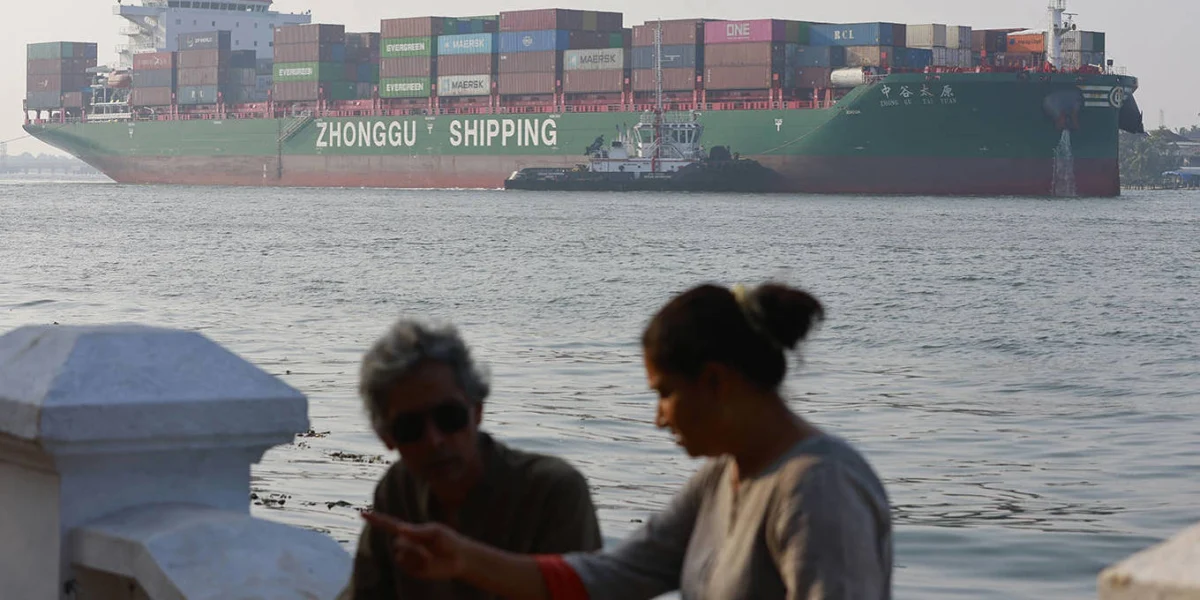
India has signed a flurry of trade deals since Donald Trump’s return to the White House in an attempt to ensure that no single bilateral rupture will cause catastrophic harm. It should continue to expand its trade ties, while being wary of any bilateral agreement that curtails its freedom of action vis-à-vis third countries.
NEW DELHI – Indian Prime Minister Narendra Modi’s recent participation in the Shanghai Cooperation Council (SCO) meeting in Kyrgyzstan transcended discussions on regional security, serving as a crucial platform to advocate for deepened trade links among member states. This engagement exemplifies India’s increasingly assertive and multifaceted approach to trade diplomacy, a strategy that has gained significant momentum amidst evolving global economic and geopolitical landscapes. The proactive pursuit of trade agreements is not a nascent strategy but rather an acceleration of existing policies, recalibrated to address emerging challenges and opportunities.
A Strategic Trade Offensive
The past year has witnessed a notable acceleration in India’s trade negotiations. The landmark Free Trade Agreement (FTA) with the United Kingdom, finalized last year, was swiftly followed in January by what has been described as the "mother of all deals" – a comprehensive agreement with the European Union. These agreements are indicative of India’s deliberate strategy to diversify its trade partnerships and reduce its reliance on any single economic bloc or nation. The impetus for this accelerated trade offensive can be traced, in part, to the shifts in global trade policy observed since the return of Donald Trump to the White House. Trump’s "America First" agenda and his administration’s imposition of tariffs and renegotiation of existing trade pacts created an environment of uncertainty, prompting many nations, including India, to re-evaluate their trade dependencies.
The current administration in Washington, while exhibiting a different rhetorical approach, has also maintained a degree of protectionist sentiment and a focus on bilateral trade balances. This has led India to pursue a dual strategy: strengthening ties with traditional partners while simultaneously forging new alliances and deepening existing ones with a broader spectrum of countries and economic blocs. The ongoing high-level trade talks with the United States, building upon a joint statement of intent issued in February, underscore this commitment to maintaining dialogue and exploring avenues for enhanced economic cooperation, even amidst potential friction points.
The SCO: More Than Regional Security
Prime Minister Modi’s presence at the SCO summit in Bishkek, Kyrgyzstan, highlights the interconnectedness of regional security and economic prosperity. The SCO, comprising eight member states including India, Russia, China, Pakistan, and four Central Asian nations, represents a significant economic bloc with vast potential for trade and investment. India’s push for deeper trade links within the SCO framework is a strategic move to leverage this regional grouping for mutual economic benefit. This aligns with India’s broader "Act East" policy and its vision of a connected Indo-Pacific, emphasizing the importance of regional economic integration as a bulwark against global economic volatility.
The SCO’s economic agenda often focuses on facilitating trade, investment, and connectivity projects. India’s active participation signals its intent to play a more significant role in shaping the economic future of this vital Eurasian region. By advocating for reduced trade barriers and enhanced cooperation, India aims to create a more favorable environment for its businesses and to secure its supply chains.
Key Trade Agreements and Their Context
1. The UK-India Free Trade Agreement (FTA): This agreement, finalized in the preceding year, signifies a renewed commitment to economic partnership between two Commonwealth nations with historical ties. The FTA aims to reduce tariffs on a wide range of goods, facilitate greater market access for services, and promote investment. For India, the agreement provides an opportunity to expand its exports of goods such as textiles, engineering products, and pharmaceuticals, while also attracting British investment in sectors like financial services, technology, and renewable energy. The UK, in turn, seeks to boost its exports of automotive components, financial services, and higher education. The negotiations were reportedly complex, with significant progress made in areas such as digital trade, intellectual property, and sustainable development. The economic implications are projected to be substantial, with estimates suggesting a potential increase in bilateral trade by billions of dollars annually.
2. The EU-India Broad-based Trade and Investment Agreement (BTIA): The recent agreement with the European Union, dubbed the "mother of all deals," represents a significant leap forward in India’s engagement with one of the world’s largest economic blocs. Negotiations for a comprehensive FTA between India and the EU had been stalled for years before their recent revival. The agreement is expected to cover a wide array of sectors, including goods, services, investment, and intellectual property rights. For India, the EU market offers immense opportunities for its burgeoning manufacturing and service sectors, particularly in IT, automotive, and pharmaceuticals. The EU, on the other hand, seeks enhanced access to India’s growing consumer market for its automobiles, machinery, and agricultural products. The complexity of these negotiations is underscored by the differing regulatory frameworks and market access expectations of both sides. The successful conclusion of this agreement, if fully ratified and implemented, could significantly boost bilateral trade and investment flows, creating jobs and fostering economic growth.
3. US-India Trade Talks: The continuation of high-level trade talks with the United States reflects India’s pragmatic approach to managing its relationship with the world’s largest economy. Following a joint statement of intent in February, discussions have been ongoing, focusing on issues such as market access for agricultural products, digital trade, and investment facilitation. While the US has historically sought greater market access for its agricultural goods and services, India has been keen to protect its domestic industries and farmers. The trade relationship between the two nations is complex, marked by both significant cooperation and occasional trade disputes. India’s strategy here appears to be one of seeking mutually beneficial outcomes while safeguarding its national interests. The potential for an expanded trade relationship remains considerable, given the sheer size of both economies.
The Trump Factor and India’s Strategic Imperative
The re-election of Donald Trump to the White House in 2024 has cast a long shadow over global trade dynamics. Trump’s previous tenure was characterized by a protectionist stance, a skepticism towards multilateral trade agreements, and a penchant for imposing tariffs. His return has amplified concerns about potential trade disruptions and a renewed focus on bilateral deals that prioritize American interests. For India, this necessitates a strategic recalibration of its trade policy.
India’s flurry of trade deals since Trump’s return can be interpreted as a proactive measure to build resilience against potential trade shocks. By diversifying its trade partners and strengthening existing alliances, India aims to mitigate the impact of any unilateral trade actions that might be initiated by the US. This approach is rooted in the principle of hedging bets – ensuring that a rupture in one bilateral relationship does not lead to catastrophic economic consequences.
Analysis of Implications
The current trajectory of India’s trade diplomacy suggests a strategic shift towards greater economic self-reliance and a diversified global footprint.
- Diversification of Markets: The emphasis on FTAs with diverse partners like the UK and the EU, as well as engagement with regional blocs like the SCO, reduces India’s dependence on any single market. This diversification acts as an insurance policy against protectionist measures from major economies.
- Strengthening Supply Chains: By fostering deeper trade ties, India aims to build more robust and resilient supply chains, less susceptible to geopolitical disruptions. This is particularly crucial in the current global environment, marked by ongoing geopolitical tensions and the lingering effects of the COVID-19 pandemic.
- Leveraging Economic Diplomacy: India is increasingly using trade agreements as a tool for broader geopolitical engagement. The SCO engagement, for instance, not only seeks economic benefits but also strengthens India’s influence in a strategically important region.
- Balancing National Interests: While pursuing aggressive trade expansion, India remains cognizant of the need to protect its domestic industries and ensure equitable terms of trade. The ongoing negotiations with the US highlight this delicate balancing act.
Challenges and the Road Ahead
Despite the positive momentum, India faces several challenges in its pursuit of enhanced global trade. The implementation of these agreements requires robust domestic regulatory frameworks and efficient trade facilitation mechanisms. Furthermore, navigating the complex geopolitical landscape and the varying economic priorities of its trading partners will demand astute diplomacy and strategic foresight.
The key takeaway from India’s current trade strategy is its proactive and multifaceted approach. By actively pursuing a diverse range of trade agreements and engagements, India is positioning itself to weather global economic uncertainties and to harness the opportunities that arise from an increasingly interconnected, yet complex, world. The focus on expanding trade ties, while remaining vigilant against agreements that could constrain its strategic autonomy, reflects a mature and pragmatic approach to international economic relations. The long-term success of this strategy will depend on India’s ability to effectively implement these agreements, adapt to evolving global trade dynamics, and consistently advocate for its national interests on the world stage.
