

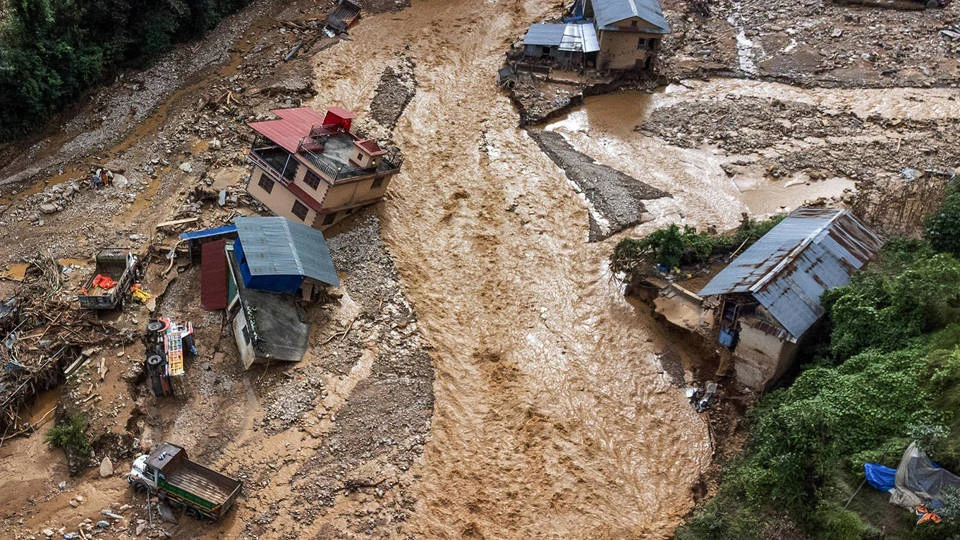
The recent devastating floods that have ravaged parts of Nepal and the Tibet Autonomous Region of China serve as a stark and urgent reminder of the critical need for robust, prearranged disaster-risk financing mechanisms. These catastrophic events, which have resulted in significant loss of life, widespread displacement, and extensive damage to infrastructure, have also exposed the vulnerability of national economies to the cascading economic consequences of natural disasters. As Asia grapples with the escalating threat of climate change and intensified extreme weather phenomena, policymakers across the continent must accelerate efforts to bolster financial resilience, particularly for nations like Nepal, which are disproportionately affected by such crises. The current situation demands immediate action to support affected communities and strengthen regional preparedness before the next inevitable crisis strikes.
The Human and Economic Toll of Climate Extremes
The sheer scale of destruction wrought by the recent floods in Nepal has been heartbreaking. Reports from early [Month, Year, e.g., August 2023] indicated that [Specific number, e.g., hundreds] of people lost their lives, with thousands more displaced from their homes. Entire villages were inundated, critical infrastructure such as roads, bridges, and power lines were obliterated, and agricultural lands, the backbone of Nepal’s economy, were submerged, threatening food security for months to come. In Tibet, while the human impact may have been less severe, the ecological and economic damage has also been substantial, with extensive flooding impacting agricultural production and transportation networks.
While the specific triggers for any single weather event can be complex, with factors like localized rainfall patterns playing a significant role, the broader context of climate change and its impact on extreme weather events cannot be ignored. The World Meteorological Organization (WMO) has issued warnings about the intensification of El Niño phenomena, predicting a higher likelihood of above-normal global temperatures and significant alterations in rainfall patterns. Historically, El Niño events in Southeast Asia have often led to drier conditions, increasing the risk of droughts, wildfires, and the associated haze pollution. However, the complex interplay of atmospheric and oceanic factors means that the impact can vary significantly across regions and seasons, with some areas experiencing increased precipitation and flooding, as tragically demonstrated in Nepal.
The Chain Reaction: From Physical Hazard to Macroeconomic Shock
The true economic threat of such natural disasters lies not just in the immediate physical damage, but in the subsequent economic chain reactions. Floods, droughts, and extreme heat waves directly impact agricultural yields, leading to crop failures and reduced food production. For countries like Nepal, which have limited food reserves, underdeveloped logistics networks, and a reliance on concentrated import sources for certain goods, a decline in domestic production can rapidly translate into shortages and soaring food prices. This, in turn, erodes household purchasing power, leading to declining demand and broader economic contraction.
Governments often find themselves in a precarious position. They face immense pressure to mitigate the impact on their citizens by subsidizing essential goods or arranging for emergency imports, thereby straining public finances. Simultaneously, central banks grapple with the difficult challenge of managing supply-driven inflation – caused by shortages – while also confronting weakening aggregate demand. This creates a complex and often contradictory economic environment that is difficult to navigate.
The Fiscal Aftershock: Long-Term Economic Drag
Beyond the immediate humanitarian and inflationary pressures, the long-term fiscal implications of inadequate disaster preparedness are profound. When critical infrastructure – roads, ports, irrigation systems, schools, and hospitals – cannot be repaired or rebuilt in a timely manner, temporary disruptions can morph into a persistent drag on productive capacity. This can manifest in various ways: governments may be forced to divert funds earmarked for crucial development projects to cover emergency relief and reconstruction costs. They might resort to short-term, high-interest borrowing, further increasing their debt burden. Alternatively, they may have to wait for extended periods for crucial international aid, during which time the economic damage continues to compound. This "post-disaster financing gap" can all too easily spiral into a protracted economic slump, hindering long-term growth prospects and trapping vulnerable nations in a cycle of recovery and repeated devastation.
The Staggering Global Cost of Disasters
The economic magnitude of these events is not merely theoretical; it is backed by alarming global data. According to the United Nations Office for Disaster Risk Reduction (UNDRR), direct economic losses from disasters averaged between $180 billion and $200 billion annually between 2001 and 2020. However, this figure represents only the tip of the iceberg. When the indirect, cascading effects – such as disruptions to supply chains, loss of ecosystem services, and long-term impacts on human capital – are factored in, the total annual cost escalates dramatically to over $2.3 trillion. This staggering sum underscores the immense economic imperative for proactive disaster risk management.
ASEAN+3’s Proactive Stance: The Disaster Risk Financing Initiative
Recognizing the escalating threat, regional bodies are taking steps to enhance preparedness. In May [Year, e.g., 2026], finance ministers and central bank governors from the ASEAN+3 countries – which include the ten ASEAN member states, China, Japan, and South Korea – formally endorsed the Disaster Risk Financing Initiative’s roadmap for 2026-2028. This strategic framework is designed to assist member nations in developing comprehensive national disaster-risk financing strategies. A key component of this initiative is the expanded utilization of financial instruments such as insurance, catastrophe bonds, and other innovative risk transfer mechanisms.
This initiative represents a significant shift from a reactive approach to disaster management to a more proactive and financially astute one. By anticipating potential losses and pre-arranging financial resources, countries can significantly mitigate the immediate economic fallout of a crisis.
The Role and Limits of Prearranged Financing
It is crucial to acknowledge that prearranged disaster-risk financing, while vital, cannot cover the entire spectrum of costs associated with a major catastrophe. Insurance policies, for instance, are not designed to fully absorb the monumental expenses of a catastrophic event. Their true value lies in providing a reliable and swift injection of funds during the critical initial phase of a crisis. This is precisely the period when delays in accessing financial resources can be most damaging, and when governments have the least capacity to improvise and secure emergency funding.
A compelling example of the efficacy of such mechanisms can be seen in the rapid response of the Southeast Asia Disaster Risk Insurance Facility (SEADRIF). As a regional platform operating under the ASEAN+3 umbrella, SEADRIF is designed to provide swift payouts in the event of specified natural disasters. Following heavy rainfall and widespread flooding in Laos in early [Month, Year], SEADRIF disbursed approximately $1.14 million to the Lao PDR government and the World Food Programme within a mere five business days, after official data confirmed that over 260,000 people had been affected. This rapid disbursement enabled immediate relief efforts and helped to stabilize the situation before economic consequences could fully take hold.
Matching Financing to Risk: A Strategic Approach
The most effective strategy for disaster-risk financing involves a careful matching of financial instruments to the specific nature and scale of the risks faced. For frequent, relatively minor losses, accessible budget reserves and dedicated disaster funds can provide a reliable safety net. For medium-sized shocks that exceed the capacity of regular budgets but are not catastrophic, contingent credit facilities can be deployed. For the less frequent but fiscally severe events – those with the potential to cripple national economies – insurance and capital-market instruments, such as catastrophe bonds, become indispensable.
To ensure that these prearranged funds can reach affected communities swiftly and efficiently, governments must possess well-established social protection systems and meticulously planned contingency operations. These systems act as the crucial conduits through which financial resources can be channeled to where they are most needed, minimizing bureaucratic delays and maximizing impact.
Transforming Uncertainty into Manageable Risk
The fundamental advantage of prearranged disaster-risk financing is its ability to transform uncertain, post-disaster financial liabilities into quantifiable risks that can be measured, priced, allocated, and, most importantly, managed in advance. When a portion of the anticipated recovery costs is secured through prearranged mechanisms, governments are significantly less likely to resort to disruptive and damaging fiscal measures in the immediate aftermath of a disaster. This means a reduced likelihood of abrupt tax hikes, drastic cuts to essential public investment, the need for emergency borrowing at unfavorable rates, or prolonged delays in delivering aid to those affected. Consequently, a government’s fiscal exposure becomes more predictable, thereby reducing uncertainty surrounding public debt levels, inflation rates, and overall economic growth trajectories.
Broader Economic Benefits: Clarity for Businesses and Markets
The positive ripple effects of a robust disaster-risk financing framework extend far beyond government balance sheets. By providing greater clarity and predictability regarding post-disaster fiscal responses, such as taxation policies, public investment adjustments, payment timelines, and credit conditions, businesses and financial markets gain a more stable operating environment. This predictability is crucial for maintaining investor confidence and facilitating the swift restoration of vital economic infrastructure, including ports, roads, power grids, and communication networks. Limiting disruptions to regional supply chains is particularly important in the highly interconnected ASEAN+3 region, where the rapid recovery of one economy can significantly contribute to the stability of its neighbors.
Disaster-Risk Finance: A Macroeconomic Firewall
The evolving economics of climate change has fundamentally reshaped the perception and role of disaster-risk finance. It is no longer viewed as a mere peripheral instrument that simply pays out claims after an extreme weather event has occurred. Instead, it has emerged as a vital policy lever capable of protecting a nation’s fiscal space and enhancing its medium-term economic outlook before a crisis even materializes. In essence, disaster-risk finance functions as a macroeconomic firewall, safeguarding fiscal stability, financial system resilience, food security, social protection programs, and long-term infrastructure planning. By mitigating economic volatility and reducing uncertainty surrounding recovery processes, it contributes to a more stable and predictable economic environment.
Preparing for the Next Challenge: Resilience in a Warming World
The ASEAN+3 region has a proven track record of building robust regional financial safety nets, particularly against currency and financial crises. As the current El Niño phenomenon intensifies and poses an increasing threat to the region, the next critical task is clear: to prevent natural disasters from escalating into humanitarian catastrophes, fiscal crises, and ultimately, systemic financial breakdowns. By strengthening regional disaster-risk financing capabilities, governments will be far better positioned to rapidly restart their economies, preserve their fiscal prudence, and contain the damaging spillovers of crises. This proactive and integrated approach to managing the financial risks of natural disasters is what constitutes genuine resilience in an era of accelerating climate change. The lessons from Nepal and Tibet must serve as a powerful impetus for accelerated action across the continent.
