

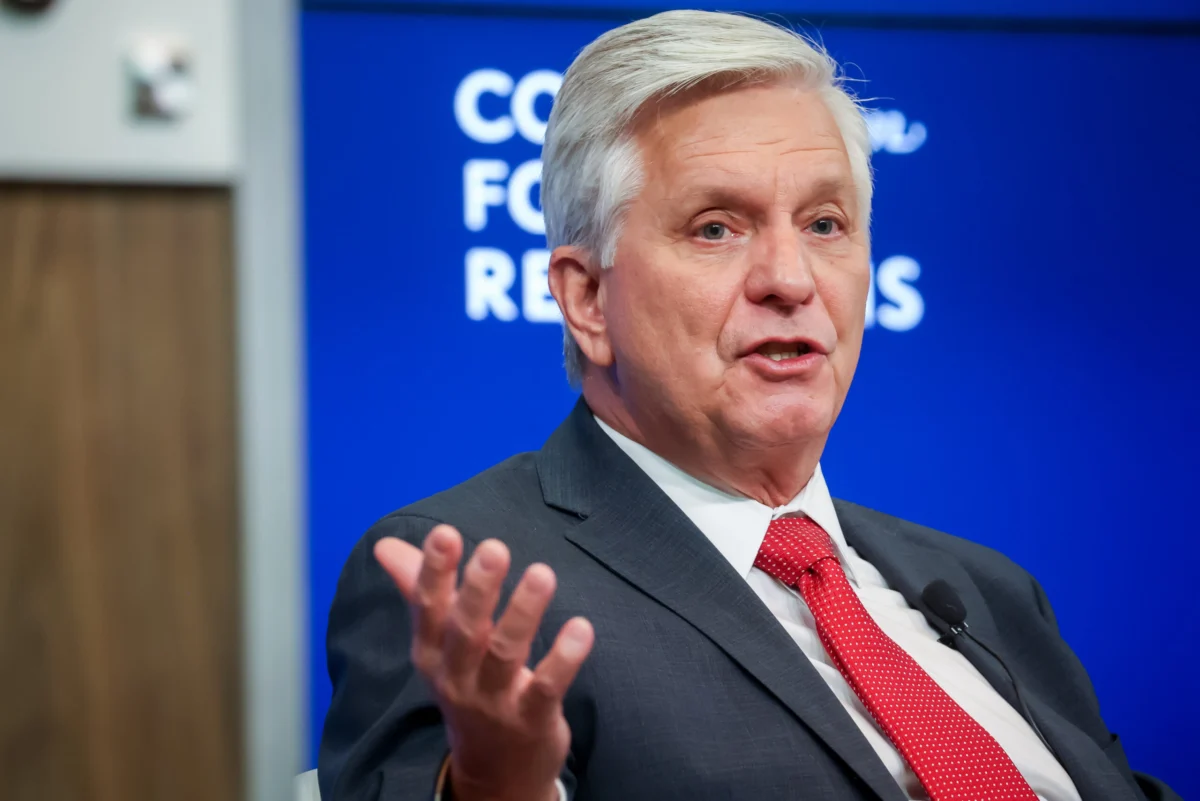
Federal Reserve Governor Christopher Waller indicated on Thursday a leaning towards maintaining current interest rate levels at the central bank’s upcoming September meeting, contingent upon inflation data remaining benign. His remarks, delivered in a Reuters interview, suggest a departure from the hawkish tone that had begun to permeate market expectations following recent statements from other Fed officials. Waller expressed a growing confidence in the trajectory of inflation, arguing that the inflationary pressures attributed to tariffs have likely been contained and that elevated energy prices have not significantly permeated broader economic sectors.
While acknowledging that inflation remains "meaningfully above" the Federal Reserve’s long-term target of 2%, Waller highlighted recent trends as indicative of "some signs of disinflation." This cautious optimism, if sustained by forthcoming economic reports, would bolster his inclination to support holding the federal funds rate at its current setting. This sentiment was quickly reflected in financial markets, with the probability of a rate hike at the September 15-16 Federal Open Market Committee (FOMC) meeting dropping significantly. Traders, as measured by the CME Group’s FedWatch gauge, revised their expectations, pricing in a 48.4% chance of a hike, a notable decrease of approximately 15 percentage points from the previous day.
Waller’s approach, which he described by referencing John Lennon’s plea, "Give disinflation a chance. We can wait one meeting," underscores a belief that a single meeting’s pause in rate increases would not materially alter the path of inflation toward the 2% target. He posited that the cost of waiting one meeting is minimal, especially when considering the potential limited impact of a 25-basis-point hike on the Consumer Price Index (CPI).
However, Waller was careful to qualify his remarks, emphasizing that his stance is subject to incoming data. He stated that any indications of a reversal in disinflationary progress between now and the FOMC meeting could prompt him to reconsider his position. He also noted that current monetary policy is perceived as "only slightly restricting aggregate demand," suggesting that even a modest acceleration in inflation could sway him towards supporting tighter policy. The upcoming weeks are critical, as the Bureau of Labor Statistics is scheduled to release key inflation indicators, including the Consumer Price Index (CPI) and the Producer Price Index (PPI). These reports are crucial inputs for the Commerce Department’s Personal Consumption Expenditures (PCE) price index, the Fed’s preferred inflation measure.
Background and Context: The Fed’s Inflation Mandate
The Federal Reserve operates under a dual mandate: to promote maximum employment and stable prices. For years, the central bank has strived to achieve and maintain a 2% inflation rate, viewing it as conducive to sustainable economic growth and price stability. However, recent economic developments, including supply chain disruptions, fiscal stimulus measures, and geopolitical events, have contributed to a period of elevated inflation, posing a significant challenge for policymakers.
The FOMC has responded to this inflationary surge with a series of aggressive interest rate hikes throughout 2022 and early 2023, aiming to cool demand and bring inflation back under control. The pace and magnitude of these hikes have been closely watched by markets, with expectations for future policy shifts heavily influenced by economic data releases and pronouncements from Fed officials.
Contrasting Views and Market Reactions
Waller’s comments stand in nuanced contrast to recent statements made by Fed Chair Jerome Powell at the Jackson Hole symposium. Powell, while acknowledging some moderating inflation trends, expressed caution, stating that recent softer monthly inflation readings "do not tell me that underlying trends have meaningfully improved." He warned that if trends do not cooperate, "we have work to do," a sentiment that markets interpreted as hawkish, leading to increased expectations of a rate hike at the September meeting.

While the differences in the literal wording between Waller and Powell might appear subtle, the market’s interpretation has been significant. The divergence in perceived hawkishness between two prominent Fed officials underscores the ongoing debate within the central bank regarding the appropriate path forward for monetary policy. Waller’s emphasis on disinflationary signs suggests a greater confidence in the current policy’s effectiveness and a desire to avoid overtightening, which could stifle economic growth unnecessarily.
Supporting Data and Inflationary Trends
To understand Waller’s perspective, it is important to examine the inflation data he referenced. While the headline CPI for July stood at 3.7% and the core CPI (excluding volatile food and energy prices) was at 3.3%, Waller argued that these figures do not fully capture the underlying disinflationary momentum. He pointed to the three-month inflation rate, as measured by the Fed’s preferred PCE gauge, which has reportedly decreased from 4.76% in February to 3.05% currently.
"That is a considerable improvement, and the speed of this downward trajectory is encouraging," Waller remarked. He also suggested that certain components of the PCE index, specifically "nonmarket services prices" that are estimated rather than directly observed, might be artificially inflating the reported inflation numbers. Furthermore, anticipated revisions to the Bureau of Economic Analysis’s methodology for calculating the PCE price index are expected to lead to lower inflation readings for earlier periods. These technical factors, combined with moderating price pressures in other sectors, contribute to Waller’s more optimistic outlook.
Broader Economic Implications and Analysis
The Federal Reserve’s monetary policy decisions have far-reaching implications for the U.S. economy and global financial markets. Interest rate decisions influence borrowing costs for consumers and businesses, impacting everything from mortgage rates and auto loans to corporate investment and hiring decisions. A pause in rate hikes, as suggested by Waller, could provide a much-needed reprieve for sectors sensitive to interest rates, potentially supporting continued economic activity and preventing a sharper slowdown.
Conversely, if inflation proves more persistent than anticipated, a premature pause could lead to entrenched inflationary expectations, necessitating more aggressive policy action down the line. The delicate balancing act for the Fed is to cool inflation without triggering a recession. Waller’s emphasis on the "speed of this downward trajectory" and the potential for data revisions suggests a focus on the evolving nature of inflation and a willingness to adapt policy based on nuanced observations rather than solely on headline figures.
The Path Forward: Data Dependency and Policy Flexibility
The Federal Reserve’s commitment to data dependency remains paramount. The upcoming CPI and PPI reports will be critical in shaping the FOMC’s decision at the September meeting. These reports will provide a clearer picture of whether the disinflationary trend is robust and broad-based or if it is a temporary aberration.
The differing perspectives, even if subtle, among Fed officials highlight the complexities of navigating the current economic landscape. Waller’s willingness to articulate a data-dependent, potentially dovish stance, tempered by a clear acknowledgment of potential risks, provides valuable insight into the internal deliberations of the central bank. His remarks serve as a reminder that monetary policy is not set in stone and can be adjusted as new information becomes available. The market’s reaction, with a significant shift in rate hike probabilities, underscores the impact of such official pronouncements and the continuous effort by investors to decipher the Fed’s future intentions. The coming weeks will be crucial in determining whether the disinflationary narrative gains further traction and solidifies the case for a steady hand on the interest rate lever.
