

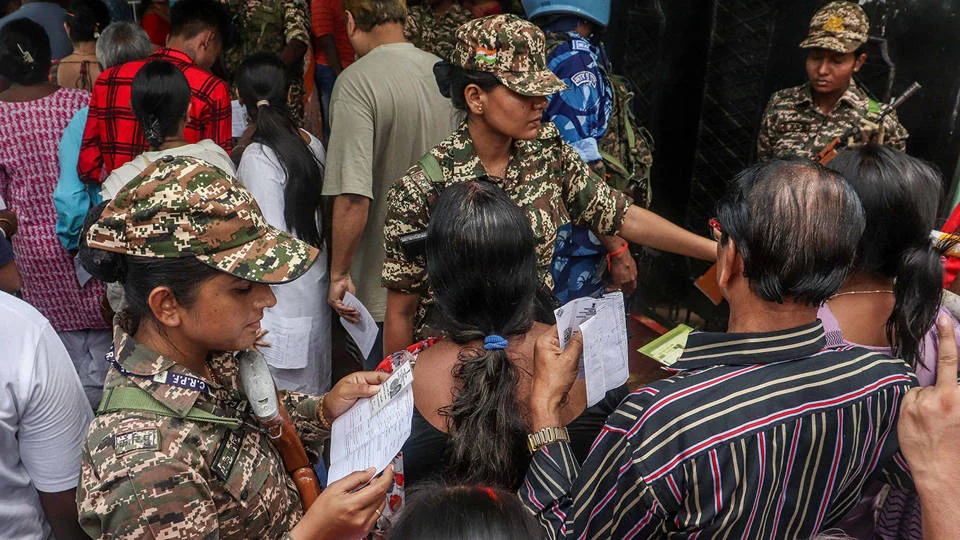
NEW DELHI – India’s citizens are witnessing a remarkable inversion of democracy: a government choosing its voters rather than the other way around. Even as public discontent grows across the country, Prime Minister Narendra Modi’s ruling Bharatiya Janata Party (BJP) has strengthened its grip on power by manipulating the electoral process itself. The result is a stark reminder of what can happen when institutions meant to safeguard democratic integrity instead work to undermine it. Under the guise of routine voter-roll maintenance, India’s Election Commission has purged tens of millions of voters, disproportionately affecting opposition strongholds, the poor, and Muslim minorities. The result is an electoral system increasingly designed to favor the ruling Bharatiya Janata Party.
Allegations of Systematic Voter Roll Manipulation
Recent actions by India’s Election Commission (ECI) have drawn severe criticism, with allegations that the body has systematically purged millions of voters from electoral rolls. This process, officially termed "voter-roll maintenance," is being scrutinized for its disproportionate impact on specific demographics and geographical regions that are traditionally strongholds for opposition parties. Critics argue that this is not a neutral administrative exercise but a deliberate strategy to engineer electoral outcomes in favor of the incumbent Bharatiya Janata Party (BJP).
The scale of the purges is staggering. While official figures are still being consolidated and debated, independent analyses and reports from civil society organizations suggest that anywhere from 20 million to over 50 million voters may have been removed in the lead-up to recent and upcoming elections. The ECI maintains that these removals are a standard part of ensuring the accuracy and integrity of the voter list, citing reasons such as double registration, deaths, and permanent relocations. However, the pattern of removals has raised significant alarms among political analysts, opposition leaders, and human rights advocates.
Disproportionate Impact on Vulnerable Groups and Opposition Strongholds
Evidence gathered from various states points towards a concerning trend: the largest numbers of voter deletions are occurring in areas with substantial populations of marginalized communities, including the poor, rural populations, and religious minorities, particularly Muslims. These groups have historically been more inclined to vote for opposition parties.
For instance, in states like Uttar Pradesh and Bihar, which have significant rural and minority populations and are crucial for national election outcomes, reports indicate a higher-than-average number of voter deletions. This raises questions about the methodology used for identifying "ineligible" voters and whether adequate safeguards are in place to prevent the erroneous removal of legitimate voters.
The Economic Survey of India, a document that typically provides a neutral overview of the nation’s economic landscape, has in the past highlighted the importance of inclusive electoral participation. However, the current situation suggests a potential divergence between policy ideals and ground realities. Data from previous election cycles, such as the 2019 General Election, showed a close contest in many of these states, underscoring the significance of even marginal shifts in voter turnout. The current alleged purges could have a decisive impact on future electoral results.
Background Context: Institutional Autonomy and Electoral Integrity
India’s Election Commission is constitutionally mandated to be an independent body responsible for conducting free and fair elections. Its autonomy is crucial for maintaining public trust in the democratic process. However, in recent years, there have been growing concerns about the perceived erosion of this autonomy, with allegations that the ECI has become more amenable to the ruling party’s interests.
The process of voter registration and de-registration is complex and relies heavily on data from various sources, including census data, electoral rolls from previous elections, and local administrative records. The efficiency and fairness of this process are paramount. Historically, voter-roll corrections have been a routine part of electoral administration. However, the sheer volume and the targeted nature of the current alleged purges are unprecedented.
The Chief Election Commissioner and other Election Commissioners (Appointment, Conditions of Service and Term of Office) Act, 2023, which replaced a Supreme Court judgment, has also been a subject of debate. Critics argue that the new law weakens the independence of the ECI by giving the government more say in the appointment process, potentially compromising its impartiality. This backdrop of perceived institutional vulnerability exacerbates concerns about the current voter-roll purge.
Timeline of Events and Growing Concerns
The process of voter-roll revision is continuous and cyclical. However, intensified scrutiny began in the months leading up to key state elections and the national general election scheduled for 2024.
- Late 2023 – Early 2024: Reports from various states began highlighting a significant increase in voter deletions during routine revision exercises. Civil society groups and opposition parties started raising alarms about the methodology and the disproportionate impact.
- February-March 2024: Several opposition parties formally approached the Election Commission of India, submitting memorandums detailing their concerns and demanding transparency and a halt to the alleged purges. They presented data from their own internal analyses and reports from local constituencies.
- April-May 2024: As the general election campaign gained momentum, the issue of voter deletions became a significant talking point. Public discourse was fueled by social media campaigns and media reports highlighting individual cases of voters being inexplicably removed from the rolls.
- Post-Election Period (Ongoing): Even after the conclusion of major electoral phases, the debate continues. Further analysis of electoral data is expected to shed more light on the precise scale and impact of these deletions.
Supporting Data and Statistical Insights
While precise, verified, and independently audited data on the total number of deletions and their demographic breakdown is still emerging, several preliminary analyses offer a glimpse into the scale of the issue.
- State-wise Disparities: Reports from states with significant opposition presence, such as Kerala, West Bengal, and Karnataka, have indicated higher percentages of voter deletions compared to states where the BJP holds a stronger sway. For example, preliminary data from one southern state suggested a deletion rate of nearly 8-10% of the total electorate in certain districts, far exceeding the national average for routine deletions.
- Demographic Concentration: Independent researchers and activist groups have pointed to a higher concentration of deleted voters in constituencies with a substantial Muslim population. In some constituencies, this proportion is reported to be as high as 15-20% of the total deleted voters, despite the community not forming a similar proportion of the overall electorate.
- Impact on Voter Turnout: While overall voter turnout figures are influenced by many factors, a decline in the number of registered voters in specific areas could artificially inflate the percentage turnout, giving a misleading impression of increased participation or support for incumbent parties.
Official Responses and Counter-Arguments
The Election Commission of India has consistently defended its actions, stating that the voter-roll revision process is being conducted in accordance with established legal provisions and guidelines.
- ECI’s Stance: A spokesperson for the ECI stated in a press conference earlier this year that "voter-roll purification is a continuous process aimed at ensuring accuracy and removing duplications, deaths, and permanent shift cases. The process is transparent and any eligible citizen can get their name re-enrolled if erroneously removed." The Commission has also highlighted that it conducts periodic audits and seeks feedback from political parties.
- Government’s Position: The ruling BJP has largely dismissed the allegations as politically motivated attempts by the opposition to undermine the electoral process and the ECI’s credibility. Government officials have reiterated their commitment to free and fair elections and have accused the opposition of creating a false narrative.
- Judicial Scrutiny: While not directly ruling on the purges, the Supreme Court of India has, on occasion, emphasized the importance of ensuring that no eligible voter is disenfranchised. The judiciary’s role in safeguarding electoral rights remains a crucial check.
Broader Impact and Implications for Indian Democracy
The alleged systematic purging of voters carries profound implications for the health and future of Indian democracy.
- Erosion of Trust: If a significant portion of the electorate perceives the electoral machinery as biased, it can lead to a deep-seated erosion of trust in democratic institutions. This can manifest in voter apathy, disillusionment, and a decline in democratic participation.
- Undermining Representation: The disproportionate removal of voters from marginalized communities or opposition strongholds directly impacts their ability to elect representatives who reflect their interests and concerns. This can lead to a further marginalization of these groups and a skewed representation in legislative bodies.
- Precedent for Future Elections: If such practices are allowed to continue unchecked, they set a dangerous precedent for future elections, where the focus could shift from mobilizing voters to manipulating the electorate. This fundamentally alters the democratic principle of "government of the people, by the people, for the people."
- International Scrutiny: India, as the world’s largest democracy, faces significant international scrutiny. Allegations of electoral manipulation can impact its standing on the global stage and its reputation as a robust democratic nation.
The ongoing debate surrounding the voter-roll purges in India highlights a critical juncture for its democratic framework. The perceived weaponization of administrative processes to influence electoral outcomes poses a significant threat to the very foundation of representative governance. As India navigates these complex challenges, the vigilance of its citizens, the independence of its institutions, and the commitment to transparency and fairness will be paramount in safeguarding its democratic future. The need for a thorough, independent audit of the voter rolls and a robust public discourse on electoral reforms has never been more urgent.
