

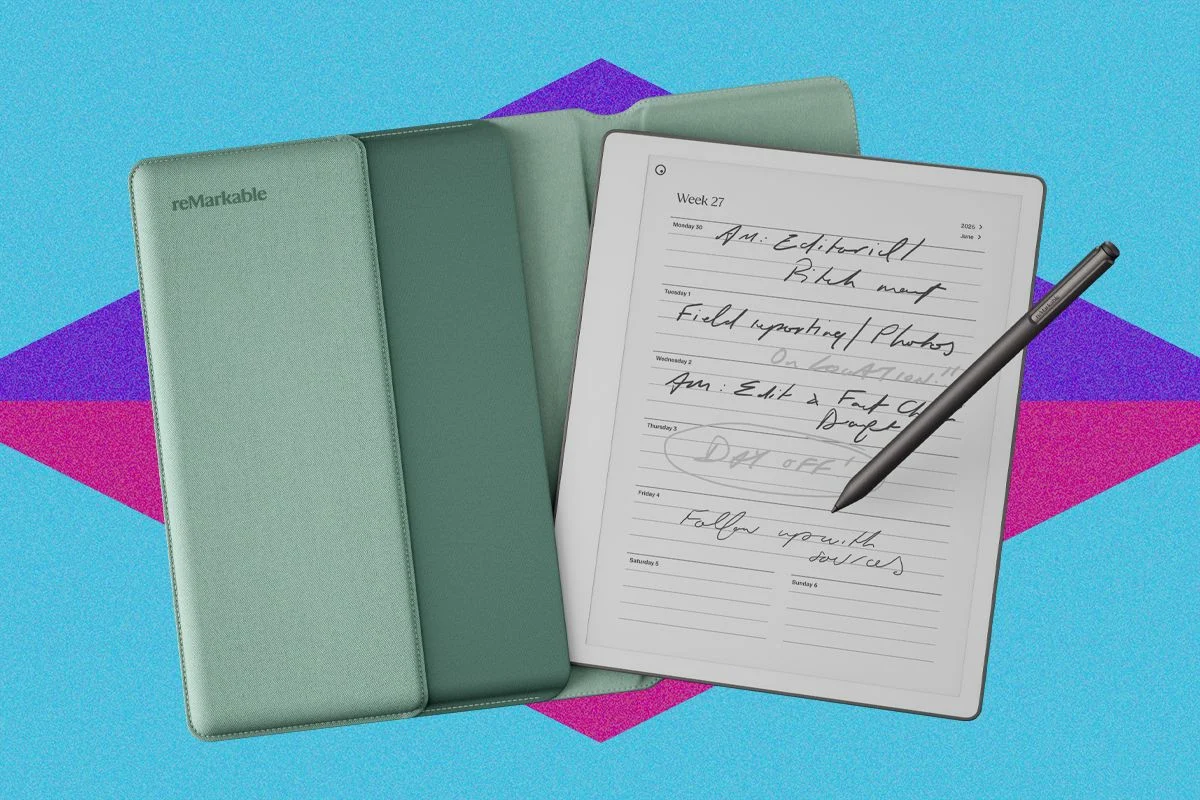
The State of the Digital Stationery Market
The current digital notebook landscape is divided into three distinct categories: smart pens, dedicated E-Ink tablets, and reusable analog notebooks with cloud-sync capabilities. Smart pens, such as the Neo Smartpen M1+ and the Moleskine Smart Writing Set, cater to users who are unwilling to abandon the feel of real ink on fiber. These devices use infrared cameras to track pen strokes on specialized "ncode" paper, digitizing handwriting in real-time.
Conversely, E-Ink tablets like the Kindle Scribe, ReMarkable 2, and Supernote A6 X2 Nomad aim to replicate the paper experience on a high-contrast, low-latency electronic screen. These devices have gained traction due to their "distraction-free" nature, lacking the intrusive notifications and blue-light eye strain associated with traditional tablets like the iPad. Finally, hybrid solutions like the Rocketbook series offer a low-cost, eco-friendly alternative by using erasable synthetic paper and smartphone-based scanning.
Chronology of Innovation in Digital Note-Taking
The journey toward modern digital notebooks began in the early 2000s with the introduction of the first digital pens, which were often bulky and required tethering to a computer. By 2010, the emergence of the LiveScribe pen marked a milestone in integrating audio recording with handwriting. However, the true "paperless" revolution gained momentum in 2017 with the launch of the original ReMarkable tablet, which prioritized the "pencil-on-paper" friction that had been missing from glass-screened devices.
In 2022, the market reached a tipping point when Amazon entered the fray with the Kindle Scribe, signaling that digital note-taking had achieved mainstream viability. By 2024, the focus shifted toward color E-Ink technology, as seen in the Boox Note Air4 C and the Kindle Scribe Colorsoft. This era also introduced advanced software features, including AI-powered handwriting-to-text conversion and deeper integration with cloud ecosystems like Google Drive, Microsoft OneDrive, and Slack.
Comparative Analysis of Smart Pen Technology
For many, the transition to a digital tablet is too jarring. This has sustained the demand for smart pens. The Neo Smartpen M1+, priced at approximately $129, represents the pinnacle of ergonomics in this category. It is the thinnest and lightest smart pen currently available, designed to mimic the weight and balance of a standard ballpoint pen. Its companion app, Neo Studio, allows for granular editing, including the ability to change ink color and thickness after the writing has been completed.
In the premium sector, the Moleskine Smart Writing Set ($262) leverages the brand’s prestige and design aesthetic. The set includes a "Paper Tablet"—a notebook with rounded edges designed to look like a digital device—and the Pen+ Ellipse. While the Moleskine Notes 2.0 app has seen significant improvements in stability, the higher price point remains a barrier for some, especially when compared to the $59 Neo Smartpen Dimo, a budget-friendly alternative that utilizes replaceable batteries instead of a rechargeable internal cell.
At the luxury end of the spectrum, the Montblanc Digital Paper ($935) offers an ultra-premium experience. While its technical capabilities are comparable to mid-range smart pens, the device distinguishes itself through superior craftsmanship and a highly customizable pen featuring three programmable buttons.
The Rise of E-Ink Digital Notebooks
E-Ink tablets have become the preferred choice for heavy-duty note-takers. The Kindle Scribe series remains a dominant force due to its dual functionality as a world-class e-reader and a competent digital notebook. The 3rd Generation Kindle Scribe ($500) and the new Colorsoft model ($630) feature impressive battery life that often spans weeks, a feat traditional LCD tablets cannot match. However, industry analysts note that the Scribe’s software is often viewed as "e-reader first," lacking the complex folder structures and organizational tools found in dedicated productivity devices.

The Supernote A6 X2 Nomad ($394) and its larger sibling, the Manta, are often cited by enthusiasts as the superior choice for organization. Supernote’s software allows users to create headings and keywords within their handwritten notes, making them searchable—a feature that bridges the gap between analog and digital utility. Similarly, the Boox Note Air4 C ($470) offers a more "open" experience, running on Android 13. This allows users to install apps from the Google Play Store, effectively turning the E-Ink device into a versatile tablet that can handle email, web browsing, and music playback without the glare of an OLED screen.
Supporting Data: Technical Specifications and Performance
When evaluating these devices, technical benchmarks such as latency (the delay between the pen touch and the line appearing) and DPI (dots per inch) are critical.
- Latency: The ReMarkable 2 and Kindle Scribe lead the industry with latency figures under 21 milliseconds, creating a near-instantaneous writing experience.
- Screen Resolution: Most modern E-Ink notebooks offer 300 DPI for black-and-white content, ensuring that text appears as crisp as printed ink. Color E-Ink, however, often drops to 150 DPI when displaying colors, a limitation of the current Kaleido 3 screen technology.
- Sustainability: The Rocketbook Fusion Plus ($30) offers the highest "return on investment" for environmentally conscious users. A single 42-page notebook can be erased and reused hundreds of times, potentially replacing dozens of traditional paper notebooks.
Economic Pressures and the Impact of Tariffs
The digital notebook industry is currently grappling with rising manufacturing and shipping costs. Recent shifts in global trade policies and the imposition of tariffs on electronic components have forced several major players to adjust their pricing models.
ReMarkable recently increased the price of its flagship Paper Pro, while Supernote reported a price hike of approximately $30 to $50 across its Nomad and Manta lines due to increased component costs. Kobo, another significant competitor in the E-Ink space, implemented a more modest $10 price increase. Industry observers suggest that these price fluctuations may continue as companies seek to maintain margins while investing in expensive R&D for color E-Ink and AI integration.
Official Positioning and Industry Responses
Manufacturers have begun to pivot their marketing strategies to highlight specific use cases. Amazon has leaned heavily into "AI-powered productivity," introducing features that summarize handwritten notes or automatically format lists. A spokesperson for the Kindle division recently emphasized that their goal is to "simplify the transition from reading to thinking," positioning the Scribe as a tool for reflection.
In contrast, companies like ReMarkable and Supernote have doubled down on the "minimalist" approach. ReMarkable’s marketing focuses on the "freedom to focus," explicitly positioning their lack of a web browser or social media apps as a feature rather than a limitation. This "distraction-free" ethos has resonated particularly well with authors, researchers, and high-level executives who need to escape the constant pings of the modern digital environment.
Broader Impact and Future Implications
The long-term implications of the digital notebook trend extend into education and corporate sustainability. Schools are increasingly looking at E-Ink devices as a way to reduce paper waste while providing students with a tool that encourages the cognitive benefits of handwriting, which studies have shown improves memory retention compared to typing.
In the corporate world, the integration of digital notebooks with enterprise software like Slack and Microsoft Teams is transforming how meeting minutes are taken and shared. The ability to write a note in a physical-feeling notebook and have it instantly appear in a shared company channel is streamlining workflows and reducing the "admin load" on employees.
As we look toward 2025, the industry is expected to focus on two major fronts: the perfection of color E-Ink—making it as vibrant as traditional paper—and the enhancement of OCR (Optical Character Recognition) to handle increasingly messy handwriting with near-perfect accuracy. While the "paperless office" has been a predicted reality for decades, the current generation of digital notebooks suggests that we are finally entering an era where the digital and physical worlds of writing can coexist without compromise.
