

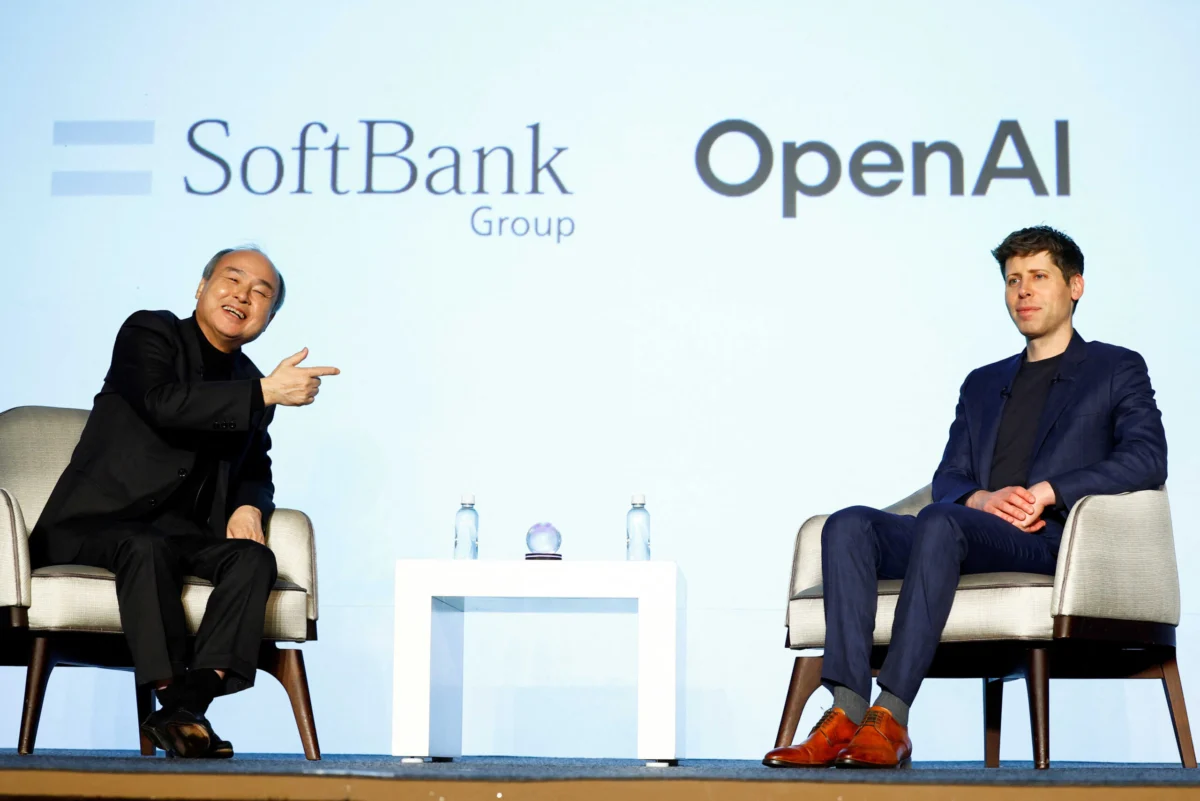
Silicon Valley titans, including Elon Musk and OpenAI CEO Sam Altman, have painted a future where artificial intelligence acts as a powerful deflationary force, promising unprecedented abundance and a dramatic reduction in costs. Altman himself has articulated this vision, writing that "intelligence too cheap to meter is well within grasp." Musk, the ubiquitous CEO of Tesla and SpaceX, has echoed this sentiment, positing that AI and robotics will usher in an era of extreme economic output, driving down prices. SoftBank’s Masayoshi Son, in earlier pronouncements, had anticipated a significant 40% drop in prices, suggesting that "unnecessarily hard work, sweating work, would no longer be needed."
However, the reality unfolding across the global economy suggests these optimistic projections are far from being realized in the immediate term. Instead of a swift deflationary wave, the integration of AI into the broader economic landscape is encountering significant headwinds of corporate inertia. This friction is not only slowing the anticipated productivity gains but, in some instances, is contributing to near-term inflationary pressures.
The widespread adoption of AI technologies within established corporate structures has proven to be a more complex and protracted process than many of its most vocal proponents initially suggested. While the theoretical potential of AI is immense, translating that potential into tangible, economy-wide productivity booms is proving to be a considerable challenge.
A key factor contributing to this complexity is the monumental investment spree currently underway within the tech industry itself. The construction of vast data centers and the development of sophisticated AI infrastructure represent a multitrillion-dollar global undertaking. This surge in capital expenditure is not only straining existing supply chains but is also creating new demand pressures in critical sectors. For example, the immense energy requirements of these data centers are driving up electricity costs in many regions. These immediate, tangible expenses are accumulating before the full-scale economic benefits of AI are widely felt, presenting a significant dilemma for central banks like the Federal Reserve, which are tasked with managing inflation.

Ronnie Chatterji, chief economist at OpenAI, acknowledges that the immediate costs associated with AI implementation are more readily apparent than its potential long-term benefits. "For it to impact the economy, it has to be adopted by organizations," Chatterji stated. "Those organizations have to realize value." He further concedes that "it’ll still be a little while before we see it sort of clearly for productivity statistics." This underscores the gap between the development of AI capabilities and their effective integration into business operations to drive measurable economic uplift.
The Economic Scale of AI Investment
The sheer scale of financial commitment to the AI build-out is substantial. Goldman Sachs Research estimates that capital expenditure on AI infrastructure in the U.S. alone is projected to reach $581 billion this year. Globally, this figure could balloon to as much as $1 trillion. This represents a significant portion of economic activity; in the U.S., AI-related capital spending currently accounts for 1.8% of gross domestic product, a share that the firm anticipates will grow to 2.8% by 2028.
Despite these vast investments, the penetration of AI into the business world is still in its nascent stages. A recent survey by the U.S. Census Bureau revealed that only between 17% and 20% of U.S. businesses reported utilizing AI technologies. This adoption rate is notably higher among larger corporations compared to small and medium-sized enterprises, indicating a potential widening of the digital divide.
Historical Parallels and Productivity Gains
Peter Boockvar, chief investment officer of OnePoint BFG Wealth Partners, draws a comparison between the current AI fervor and the internet’s transformative impact in the late 20th and early 21st centuries. He notes that even during that period of intense technological advancement and automation, the U.S. experienced a relatively modest productivity gain of 1.5% over a 30-year span. Looking at a longer 50-year horizon, average productivity growth hovered around 2.5%. Boockvar expresses skepticism about the notion that generative AI will deliver a significantly more dramatic enhancement to the economy than the internet did. "Technology has always made people more productive," he observed. "But is generative AI multiple step functions higher? We just don’t know." This highlights the uncertainty surrounding the magnitude and speed of AI’s potential productivity impacts.
Navigating the "Weak Links" of AI Adoption
Within the corporate world, executives who have begun implementing AI are offering a more grounded perspective, cautioning against an overreliance on industry hype. Julie Averill, former chief information officer at Lululemon, where she oversaw AI adoption, stated, "The reality is that the technology is there. The hype is around the ease of the technology in a large organization."

Averill recounted Lululemon’s experience using AI to assist executives in predicting product sales trends. While effective, this application was far more intricate than simply deploying a conversational chatbot. She emphasized that the inherent challenges of implementing new technologies in large organizations persist. "The things that have always made implementations in large companies difficult still exist, which is people," Averill explained. "Getting people to change their behaviors, taking them along the journey with you, and getting them to trust the model, that’s hard."
This sentiment is echoed in OpenAI’s internal data, according to Chatterji. He has observed that "AI power users deploy the technology at eight times the rate of average companies, measured by tokens per user." He further noted that this gap has widened significantly in recent months, indicating a growing disparity between leading-edge firms and more typical organizations. "It is growing incredibly fast in terms of the gap between the frontier firms and the typical firms," Chatterji said. "The companies that are reorganizing their workflows around it and changing the way they work around AI, they’re having more success."
Economists studying AI refer to these implementation hurdles as "weak links." These are tasks within a job that are not easily automated. AI excels at automating specific, well-defined tasks, such as analyzing radiological scans. However, most jobs are a composite of various tasks, some more amenable to automation than others. Charles Jones, a Stanford professor and leading scholar on AI’s economic impact, who is currently on leave at Anthropic, explains this concept.
The historical trajectory of professions like radiology offers a compelling illustration. Nobel laureate Geoffrey Hinton famously predicted in 2016 that radiologists would become obsolete within five to ten years. Instead, the demand for radiologists has grown. Jones explains that this is because "radiologists do more than just read scans, and AI tools complement those other skills by automating a fraction of the tasks that radiologists perform." The non-automated components of their work, such as patient interaction and collaboration with colleagues, fall into the category of weak links. The full extent of these weak links and their impact on AI-driven productivity will only become clearer as AI adoption scales across the economy.
The Federal Reserve’s AI Conundrum
The complex interplay between AI’s potential and its immediate economic effects has not gone unnoticed by policymakers. Last month, Fed Chairman Kevin Warsh appointed Charles Jones to a task force dedicated to informing the central bank’s understanding of AI and its economic ramifications. The task force also includes venture capitalist Marc Andreessen, a prominent investor in AI startups and a proponent of an "hyper-deflationary" future driven by AI.

As Jones, Andreessen, and other task force members prepare to present their findings in the coming months, their insights will feed into an ongoing, robust debate within the Federal Reserve concerning the impact of AI. Even before his confirmation as Fed Chairman, Warsh advocated in November for the Fed to revise its growth forecasts upward to account for AI’s potential. He asserted that "AI will be a significant disinflationary force, increasing productivity and bolstering American competitiveness," a stance that garnered favor with then-President Donald Trump, who was advocating for lower interest rates.
However, not all Fed officials share this optimistic outlook regarding AI’s immediate disinflationary power. In July, Fed officials voted to maintain the benchmark interest rate within a range of 3.5% to 3.75%. This decision was not unanimous, with some officials expressing concern that higher interest rates might be necessary to curb AI-driven price increases and prevent overheating.
Minneapolis Fed President Neel Kashkari, in a statement explaining his dissent in favor of a higher interest rate, highlighted the inflationary aspects of the AI build-out. "The massive investment in data centers has also added a new demand element to the high inflation Americans are experiencing," he stated. The energy-intensive nature of data centers is contributing to rising utility costs for consumers. Data from the Bureau of Labor Statistics shows that household electricity prices increased by 10% in the two years preceding July, outpacing the overall inflation rate of 6.2% during the same period.
Other Fed officials have voiced concerns about supply chain bottlenecks for the specialized servers required to power advanced AI models. The insatiable demand for AI chips from companies like Nvidia has outstripped the production capacity of chip manufacturers, leading to significant price increases for critical components. JPMorgan Chase estimates that the cost of dynamic random-access memory (DRAM) will surge by 400% by the end of the year compared to 2024. Similarly, the cost of computer software and accessories, as reflected in CPI data, has risen by 22.4% since July 2024.
This confluence of factors has prompted a more cautious tone from Chairman Warsh. While acknowledging that the vast AI investments are laying the groundwork for future growth, he recently stated that "the precise timing and magnitude of effects on the supply side remain hard to predict."

Peter Boockvar summarizes the challenge: "The cost and inflationary aspect is really complicating Kevin Warsh’s job. He wants to believe in the productivity enhancements down the road – but it’s not something he can react to." In essence, while AI may eventually fulfill its revolutionary promise, its current economic manifestation is proving to be a complex and costly undertaking, presenting a tangible challenge to inflation management. The short-term reality of AI’s economic impact is one of significant expenditure and nascent productivity gains, creating a complicated landscape for monetary policy.
