

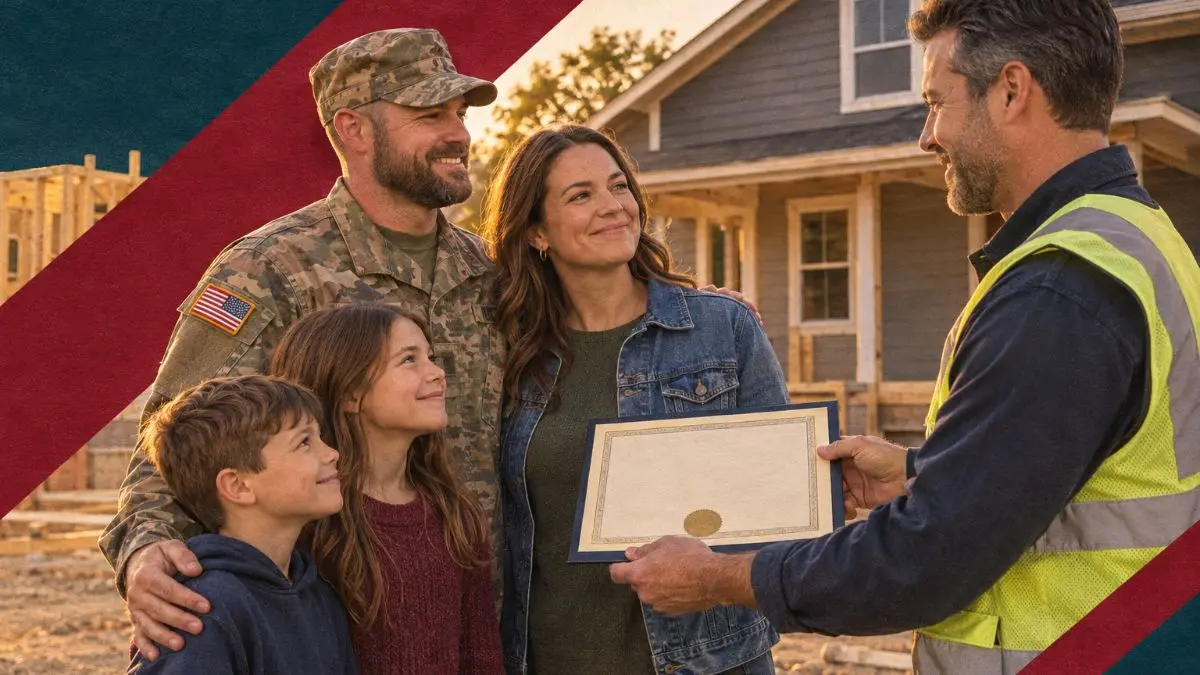
Across the United States, the residential construction industry has marked this year’s Veterans Day with an expansive suite of initiatives designed to address the unique housing and professional challenges faced by military families. From the donation of brand-new, mortgage-free residences to the establishment of specialized workforce training pipelines, both national corporations and regional builders are leveraging their resources to support those who have served in the armed forces. These efforts come at a critical time when housing affordability remains a primary concern for transitioning service members, and the construction industry continues to grapple with a persistent labor shortage.
The Gift of Homeownership: National Builders Lead Mortgage-Free Initiatives
The most significant contributions this year involve the outright donation of newly constructed homes to veterans and their families. This practice, often conducted in partnership with specialized non-profit organizations, aims to provide long-term financial stability to individuals who have sustained injuries or served extended tours of duty.
PulteGroup, one of the nation’s largest homebuilding companies, reaffirmed its commitment to the veteran community through its "Built to Honor" program. In collaboration with Operation Homefront, PulteGroup announced the gifting of multiple homes in diverse geographical markets, including Anna, Texas; Wixom, Michigan; and Richmond Hills, Georgia. These donations are specifically tailored to the needs of the recipients, ensuring that the transition from active duty or military housing to civilian homeownership is seamless and sustainable.
Similarly, Meritage Homes partnered with Operation Homefront to award a mortgage-free home in Gulfport, Mississippi. The recipient, Navy Personnel Specialist 2nd Class Maggie Coleman, is a veteran with 13 years of service. The property, a 2,000-square-foot residence featuring four bedrooms and three bathrooms, represents more than just a financial asset. For Coleman, the home is a foundational element for her family’s future. "I want to give my children everything I didn’t have," Coleman stated during the announcement. "I want this home to be a place where my kids and I can share stories and make memories."
In a high-profile event in Austin, Texas, Lennar joined forces with the nonprofit Operation Finally Home and U.S. Army Reserve soldier and country music artist Craig Morgan. The collaboration resulted in a surprise reveal for two military families who believed they were attending a reception as guests of honor. Instead, they were presented with the deeds to brand-new, mortgage-free homes. This event highlights the growing trend of "experiential giving," where builders use public platforms to raise awareness for veteran housing needs while providing life-changing assets to specific families.
Workforce Development: Bridging the Gap from Service to Skill
While home donations provide immediate relief for a select number of families, the industry is also focusing on systemic support through workforce development. Invitation Homes recently announced a strategic partnership with the Home Builders Institute (HBI) to address the dual challenges of veteran unemployment and the national construction labor deficit.
This initiative provides funding for hands-on training, recognized industry credentials, and direct job placement for transitioning service members. The program is designed to translate military discipline and technical skills into the residential construction sector. According to industry data, the construction sector requires hundreds of thousands of new workers annually to meet housing demand. By targeting veterans, homebuilders are tapping into a demographic known for leadership, problem-solving, and technical aptitude.
This workforce integration serves a dual purpose: it provides veterans with a clear, high-earning career path in the civilian sector while simultaneously strengthening the labor pool for builders. The HBI partnership emphasizes that support for veterans extends beyond a single day of recognition, focusing instead on long-term economic empowerment.
Regional Builders and Targeted Financial Incentives
Not all support for veterans comes in the form of donated homes. Regional and mid-sized builders, which may lack the scale for multi-city home giveaways, have implemented targeted financial incentives to lower the barrier to entry for military buyers. These promotions often take the form of price reductions, closing cost assistance, or upgrades.
In the Midwest, Taylor Homes—operating across Kentucky, Indiana, and Ohio—doubled its "We Salute You" bonus to $2,000 for the month of November. This direct price reduction is intended to offset the rising costs of homeownership for active-duty members and veterans. In the Southeast, Tennessee-based Pratt Home Builders offered a $3,000 savings package available through November and December. This incentive is versatile, allowing buyers to apply the funds toward the purchase price, design center upgrades, or essential appliances.

The "Home of the Brave" program by D.R. Horton, the largest homebuilder in the U.S. by volume, provides up to $2,500 toward closing costs in specific markets like San Antonio, Texas. Similar programs are visible in Northern Colorado, where Landmark Homes offers a $1,000 incentive that can be stacked with other promotions, and in Idaho, where Hubble Homes maintains a $2,500 "Homes for Heroes" discount.
In Charleston, South Carolina, David Weekley Homes provides $1,000 in "Flex Dollars" to military personnel, while Drees Homes offers a $2,500 discount in key military-heavy markets such as Jacksonville, Florida. These incentives are often part of broader "Hometown Heroes" initiatives that extend benefits to teachers, police officers, and first responders, recognizing the collective contribution of public service professionals to community stability.
The Economic and Social Context of Veteran Housing
The focus on veteran housing by the construction industry is rooted in both social responsibility and economic necessity. According to the U.S. Department of Veterans Affairs (VA), while the veteran homeownership rate is generally higher than that of the general population—hovering around 78% compared to approximately 65% for non-veterans—the challenges of maintaining that ownership are significant. Veterans often face higher rates of disability and unique mental health challenges that can complicate financial stability.
Furthermore, the transition from military to civilian life often coincides with a period of financial vulnerability. The VA Home Loan program is a vital tool, offering $0 down payment options and competitive interest rates, but it does not cover all costs. The closing cost assistance and "Flex Dollars" provided by builders fill a critical gap, often making the difference between a successful purchase and a failed one in a high-interest-rate environment.
Data from the National Association of Realtors (NAR) indicates that veterans are highly motivated buyers who value suburban stability and larger family homes. By offering targeted discounts, builders are not only performing a social good but are also securing a loyal and reliable customer base.
Chronology of Veterans Day Industry Initiatives
The evolution of these programs shows a shift from simple discounts to comprehensive social impact strategies:
- Early 2000s: Industry support was largely characterized by small, localized discounts on upgrades or minor price reductions for active-duty personnel.
- 2010–2015: The rise of dedicated nonprofits like Operation Homefront and Operation Finally Home led to the first major wave of mortgage-free home donations by national builders like PulteGroup and Lennar.
- 2018–2022: Builders began integrating "Hometown Hero" programs, expanding military discounts to include first responders and educators, reflecting a broader community-focused marketing strategy.
- 2023–2024: The focus has expanded to include workforce development. Builders are now viewing veterans as a solution to the labor crisis, leading to partnerships with organizations like the Home Builders Institute.
Analysis of Implications for the Housing Market
The multi-faceted approach of the homebuilding industry suggests several long-term implications. First, the emphasis on workforce development could provide a template for solving the labor shortage in other skilled trades. If the partnership between Invitation Homes and HBI proves successful, it may encourage other industries—such as manufacturing or logistics—to create similar veteran-specific pipelines.
Second, the visibility of these programs serves as a powerful branding tool. In a competitive real estate market, consumers increasingly favor companies that demonstrate corporate social responsibility (CSR). By aligning themselves with veteran causes, builders enhance their reputation among a broad demographic of patriotic consumers.
Finally, the concentration of these efforts in "military towns" like San Antonio, Jacksonville, and Gulfport reinforces the economic ecosystems of these regions. When builders invest in veterans in these areas, they are supporting the local economies that are most dependent on military stability.
Conclusion: A Sustained Commitment Beyond the Holiday
The activities observed this Veterans Day indicate that the relationship between the homebuilding industry and the military community is deepening. While the mortgage-free home giveaways capture the most media attention, the underlying network of financial incentives and career training programs may have a more significant aggregate impact on the veteran population.
As the housing market continues to navigate fluctuations in mortgage rates and inventory levels, the support of homebuilders provides a vital safety net for those who have served. These initiatives reflect an industry-wide recognition that the "American Dream" of homeownership is a goal that requires active facilitation, particularly for those whose service has taken them far from home. By providing the keys to new houses and the tools for new careers, the construction industry is playing a pivotal role in the civilian reintegration of America’s veterans.
