

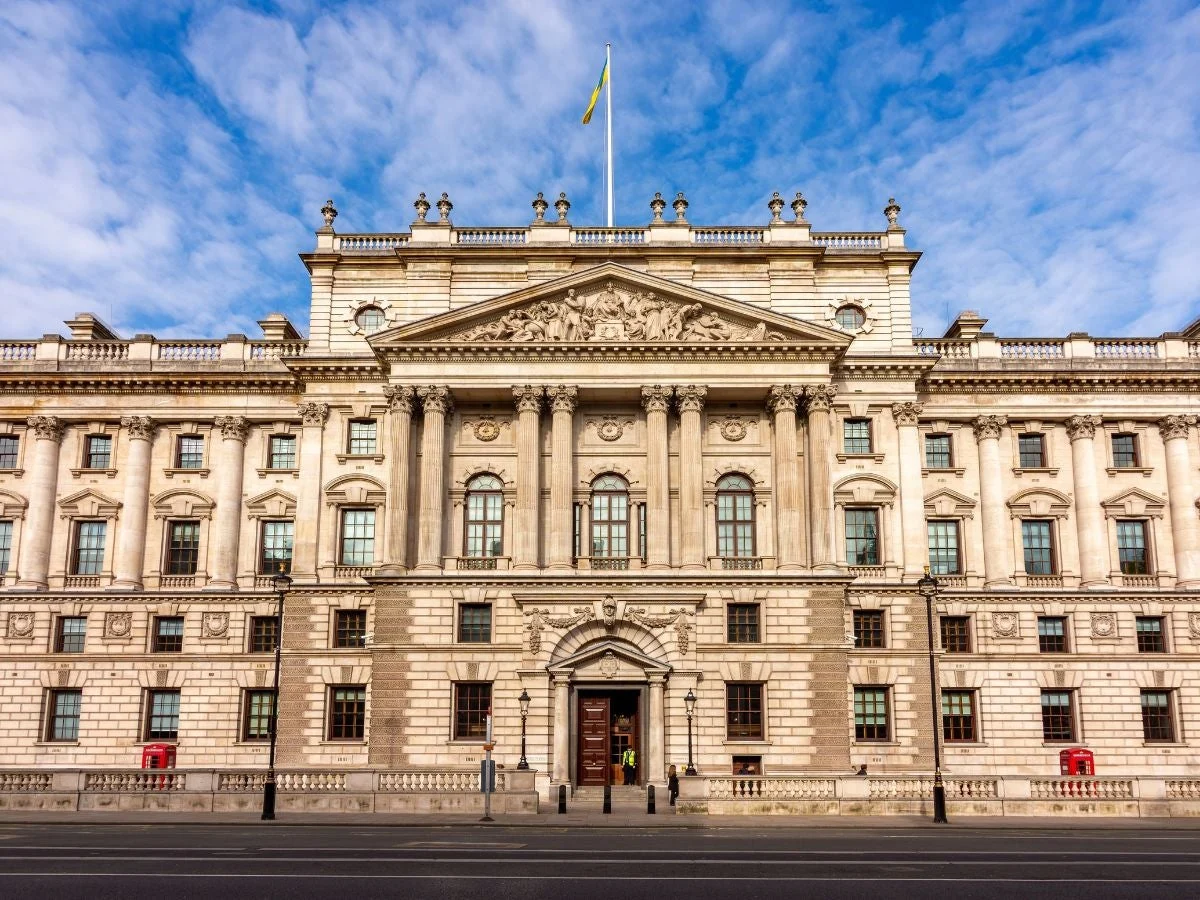
Billionaires who received letters from His Majesty’s Revenue and Customs (HMRC) this month, requesting comprehensive details of their financial arrangements, are reportedly consulting with their professional advisors to determine the optimal response. The unsolicited correspondence, first reported by Bloomberg, targets individuals identified by HMRC as having a significant UK tax footprint. Recipients have been invited to voluntarily disclose information pertaining to their trusts, assets, and property holdings. Some, though not all, have also been invited for face-to-face meetings with HMRC officials, according to insights shared with Spears.
The proactive approach by HMRC signals a potential intensification of scrutiny on the UK’s wealthiest individuals, reflecting broader trends in global tax enforcement and a drive for greater transparency in offshore financial structures. This move comes amidst ongoing efforts by tax authorities worldwide to enhance compliance and combat tax evasion, particularly among high-net-worth individuals.
Strategic Engagement: Navigating HMRC’s Request
Kelly Greig, a partner in the international private client practice at Kingsley Napley, advises her clients to approach these letters with seriousness and to carefully calibrate their engagement with HMRC. "If you show them everything, it could lead to disclosures you weren’t intending, and prompt them to make further enquiries which could lead to penalties," she cautioned. Conversely, complete non-response could be misconstrued by HMRC as an attempt to conceal information. "Ignoring a letter altogether, she adds, could lead HMRC to think ‘what have you got to hide?’"
For Ultra-High-Net-Worth Individuals (UHNWIs) who agree to a meeting, Greig emphasizes the importance of establishing a clearly defined scope and a written agenda. "Make sure you get to take your adviser in the room," she advised, underscoring the need for expert representation during these crucial discussions.
The Evolving Landscape of Tax Information
Charlie Sosna, head of Mishcon de Reya’s private wealth and tax group, highlights that clients should consider the extent of information HMRC likely already possesses. "HMRC will likely have a significant amount of information from the Common Reporting Standard, so it would be naive to think: ‘I’m not going to provide any of this information. HMRC don’t know it’," he stated. This perspective acknowledges the sophisticated data-gathering capabilities now available to tax authorities, driven by international information exchange agreements and advanced analytical tools.
Sosna further elaborated, "I don’t think there’s any point in being unnecessarily difficult with HMRC, but neither do we think you should automatically provide them with everything." This suggests a strategic approach is required, balancing cooperation with a careful consideration of what information is being disclosed and why.
Phineas Hirsch, a partner in the international tax practice at Payne Hicks Beach, echoes this sentiment, noting that HMRC has significantly enhanced its capabilities over the past decade. "They have invested in their systems, and with artificial intelligence, they are able to process vast amounts of information very quickly and connect the dots," he observed. "It is harder for clients to retain complete privacy, which is something we have been telling them for some time."
The Role of Technology in Tax Enforcement
HMRC’s investment in technology, particularly artificial intelligence (AI), is a significant factor in its evolving approach to tax compliance. In April of this year, HMRC appointed its first ‘chief AI officer’ and announced a £175 million, decade-long partnership with the tech firm Quantexa. This collaboration aims to provide HMRC with "a clearer, connected view of its data" through the strategic application of AI. This technological advancement allows HMRC to analyze large datasets more efficiently, identify patterns, and connect disparate pieces of financial information, thereby strengthening its ability to detect potential tax irregularities.
Rakesh Dabasia, a private client partner at accountancy firm Buzzacott, notes that the perceived invasiveness of these requests, coupled with the potential for significant advisory fees if further information is required, may lead to a limited response rate. "Individuals may feel this request to be invasive," he commented. "Some may also question whether responding to these letters could lead to requests for even more information, resulting in considerable advisory fees if required." The consensus expectation among advisors, he added, is that "take-up may be limited" to HMRC’s current letters.
Motivations Behind HMRC’s Outreach
The timing and nature of these letters have prompted various interpretations within the UHNW community. One significant driver may be the findings of a report by the Public Accounts Committee (PAC) released in July of the previous year. The PAC report pointedly stated: "HMRC cannot identify how much tax is paid by UK billionaires, despite the relatively small number of individuals and significant sums of money involved." The committee recommended that HMRC consider "segmenting its wealthy customer group according to different levels of wealth," effectively treating the ultra-wealthy as a distinct category for tax assessment purposes. The current letters could be interpreted as HMRC acting upon these recommendations and initiating a more targeted approach to understanding the tax liabilities of its wealthiest constituents.
Another potential motivation, as suggested by Kelly Greig, could be HMRC’s concern regarding the increasing number of high-profile wealthy individuals departing the UK. "By gathering data on people who are hugely globally mobile, HMRC are getting a picture of how they might be able to leave the country quickly, and looking at where their ties are," she explained. This proactive information gathering could be aimed at ensuring that individuals leaving the UK fulfil their tax obligations before their departure.

The PAC report was published just three months prior to the conclusion of the UK’s non-domicile tax regime in April 2025. This significant legislative change was reportedly a catalyst for many UHNWs residing in London to accelerate their plans to reassess their residency status and associated tax implications. The current HMRC outreach may be an attempt to gain a clearer picture of the financial structures of those who may be contemplating or have already initiated such a relocation.
Broader Implications for the UK and its Wealthy Residents
James Quarmby, head of the private wealth team at Stephenson Harwood, suggests that these letters might be perceived as an unwelcome burden by wealthy individuals already feeling under pressure from government policies and public sentiment. "I think for those wealthy people who presently feel under attack by both the government and public opinion, this will be seen as another unwelcome burden. These types of things matter to clients, who can’t help getting stressed by HMRC enquiries, no matter how wealthy they are."
Quarmby also raises concerns about the potential impact on the UK’s economic competitiveness. He questions whether such actions could be "self-defeating for UK plc" given the notable number of high-profile billionaire departures observed over the past year. The perception of increased tax scrutiny and potential for aggressive enforcement could further influence decisions of wealthy individuals to relocate their domiciles and assets elsewhere.
HMRC’s Official Stance
An HMRC spokesperson reiterated the authority’s commitment to assisting all taxpayers, including the wealthiest individuals, in meeting their obligations. "We want to help all customers get their tax right, including the UK’s wealthiest people. We’ve had dedicated customer compliance managers for wealthy individuals for several years, allowing us to identify and address tax risks effectively," the spokesperson stated. This indicates that while the current letters represent a specific initiative, the underlying focus on wealthy individuals is not new, but rather an evolution of existing strategies.

The proactive engagement by HMRC with its wealthiest taxpayers underscores a global trend towards increased transparency and accountability in tax matters. The success of this initiative will likely depend on HMRC’s ability to balance its enforcement objectives with the need to maintain confidence among high-net-worth individuals, a segment that significantly contributes to the UK’s economic landscape. As the situation unfolds, the response from billionaires and their advisors will provide crucial insights into the effectiveness of HMRC’s current strategy and its potential implications for the UK’s standing as a global financial centre. The authority’s continued investment in technology and data analysis suggests that such targeted approaches to tax compliance are likely to become more prevalent in the future.
