

The diplomatic landscape of the Middle East shifted toward the Red Sea port of Jeddah this Saturday as representatives from the Sudanese Armed Forces (SAF) and the paramilitary Rapid Support Forces (RSF) convened for their first face-to-face discussions since the outbreak of hostilities on April 15. This joint initiative, spearheaded by the United States and Saudi Arabia, represents the most significant attempt to date to halt a conflict that has rapidly descended into a full-scale civil war, claiming hundreds of lives and forcing a mass exodus of civilians. While the international community watches with cautious optimism, the reality on the ground in Khartoum remains a stark contrast to the quiet halls of diplomacy, with heavy artillery and airstrikes continuing to devastate the capital’s infrastructure.
The talks in Jeddah are described by mediators as "pre-negotiation talks," a term that underscores the fragile nature of the dialogue. Rather than a comprehensive political settlement, the immediate objective is to secure a reliable and enforceable humanitarian ceasefire. This would allow for the delivery of life-saving aid and the safe passage of civilians trapped in combat zones. However, even as the delegations arrived in the kingdom, the rhetoric from both sides remained combative. The Sudanese army, led by General Abdel Fattah al-Burhan, has characterized the RSF as a "rebellious" militia, while the RSF, commanded by Mohamed Hamdan Dagalo—widely known as Hemedti—accuses the army of attempting to reinstate the remnants of the former Islamist regime.
A Capital Under Siege: The Human Cost of Urban Warfare
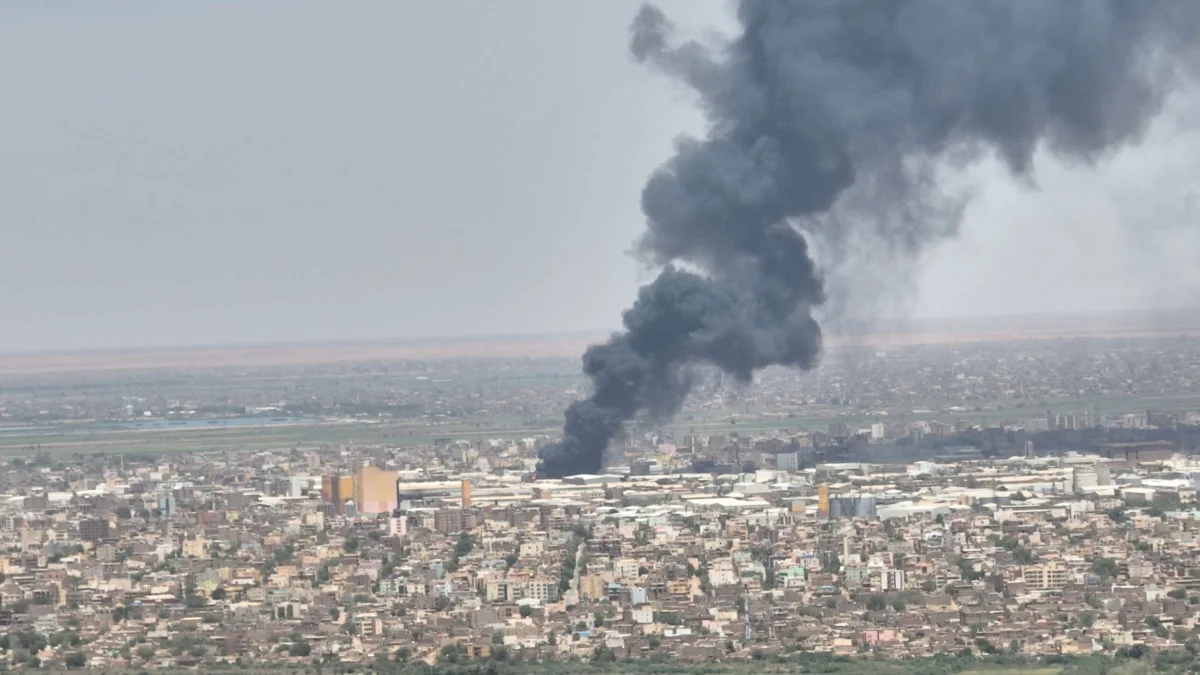
While diplomats in Jeddah seek a breakthrough, the residents of Khartoum and its sister cities, Bahri and Omdurman, continue to endure a living nightmare. Drone footage and satellite imagery have captured massive plumes of black smoke rising over Bahri (Khartoum North), where industrial zones and residential neighborhoods have become primary battlefields. On Saturday, eyewitnesses reported that the sounds of warplanes and heavy explosions echoed throughout the night, shattering any semblance of the most recent unilateral ceasefire declarations.
The tactical nature of the fighting has turned densely populated urban centers into "kill zones." Residents in Eastern Khartoum have reported that airstrikes are frequently directed at residential areas where RSF fighters are believed to have taken up positions. This urban guerrilla warfare has made it nearly impossible for civilians to access basic necessities. "We don’t leave the house because we’re scared of stray bullets," noted Ahmed, a resident of Bahri, echoing the sentiment of millions who are currently sheltering in place with dwindling supplies of water, food, and electricity.
The World Health Organization (WHO) has raised the alarm over the total collapse of the healthcare system in the conflict regions. According to recent data, more than 70% of hospitals in Khartoum and the surrounding areas are non-functional. Those that remain open are operating under extreme duress, facing critical shortages of oxygen, blood bags, and trauma kits. While the WHO successfully delivered medical aid to Port Sudan recently, the organization noted that security clearances to move these supplies into the heart of the conflict remain elusive, effectively bottlenecking humanitarian relief at the coast.
The Path to Conflict: A Timeline of Broken Transitions
The current violence did not emerge in a vacuum but is the culmination of a long-standing power struggle that began following the 2019 ouster of long-time autocrat Omar al-Bashir. To understand the gravity of the Jeddah talks, it is essential to trace the timeline of Sudan’s derailed democratic transition:
- April 2019: Mass protests lead to the military ousting Omar al-Bashir. A civilian-military power-sharing agreement is established under a Sovereign Council.
- October 2021: General al-Burhan, supported by Hemedti, leads a military coup that dissolves the civilian-led government of Prime Minister Abdalla Hamdok, stalling the transition to democracy and triggering widespread international sanctions.
- December 2022: Under intense international pressure, the military and several civilian groups sign a "Framework Agreement" intended to pave the way for a new two-year civilian-led transition ending in elections.
- Early 2023: Tensions begin to simmer over the specifics of the transition. The primary sticking point becomes the integration of the RSF into the regular Sudanese army. The army demands a two-year timeline for integration, while the RSF insists on a ten-year window.
- April 15, 2023: Armed clashes erupt at the Soba military base and Khartoum International Airport, quickly spreading throughout the country as both sides vie for control of strategic assets.
The rivalry between Burhan and Hemedti is deeply personal and institutional. Burhan is a career officer representing the traditional military establishment, while Hemedti rose to power as the leader of the Janjaweed militias during the Darfur conflict in the early 2000s. In the months leading up to the war, Hemedti had increasingly aligned himself with civilian political factions, a move seen by the army leadership as a play for supreme political power. Burhan has explicitly blamed the current bloodshed on Hemedti’s "unbridled ambitions."
Geopolitical Stakes and International Mediation
The involvement of the United States and Saudi Arabia as primary mediators highlights the strategic importance of Sudan. Situated at the crossroads of the Horn of Africa, the Sahel, and the Red Sea, Sudan’s stability is vital for regional security. Saudi Arabia, in particular, has deep economic and security interests in Sudan. The kingdom shares the Red Sea coastline with Sudan and has historically relied on Sudanese troops—from both the SAF and the RSF—to bolster its coalition in the war against Houthi rebels in Yemen.
The visit of U.S. National Security Adviser Jake Sullivan to Saudi Arabia this weekend further emphasizes the high priority Washington is placing on the Sudanese crisis. The U.S. goal is not only to stop the fighting but to prevent a regional conflagration that could draw in neighboring countries like Libya, Chad, and Ethiopia. There is also a significant concern regarding the vacuum of power, which could be exploited by extremist groups in the volatile Sahel region.
However, the international community’s influence is being tested. Despite numerous ceasefire agreements brokered by various parties over the last three weeks, none have been fully respected. The United Nations has been forced to significantly scale back its operations after three World Food Programme (WFP) employees were killed in the early days of the fighting. Looting of UN warehouses has further hampered the ability to provide aid to the estimated 100,000 people who have already fled across borders into Egypt, Chad, and South Sudan.
Analysis of Implications: A Precarious Future
The Jeddah talks are a "litmus test" for whether either side believes a military victory is still possible. If the SAF and RSF continue to view the conflict as a zero-sum game, the pre-negotiation talks may serve as little more than a tactical pause for rearmament. The army’s refusal to sit directly with the RSF delegation, as stated by special envoy Dafallah Alhaj, suggests that a formal recognition of the RSF as a legitimate political entity is still far off.
For the Sudanese people, the stakes could not be higher. Beyond the immediate death toll—which official counts place in the hundreds, though the actual figure is likely much higher due to unreported casualties—the long-term socio-economic damage is profound. Sudan was already grappling with an inflation rate exceeding 300% and a severe food security crisis before the war. The destruction of the central bank, government ministries, and private businesses in Khartoum threatens to set the country back by decades.
Furthermore, the conflict risks reigniting older ethnic tensions, particularly in the Darfur region, where reports of communal violence have surged since the fighting began in Khartoum. If the war transitions from a power struggle between two generals into a multi-front ethnic conflict, the chances of a negotiated settlement will diminish exponentially.
Official Responses and Global Reaction
The international response has been one of mounting desperation. UN Secretary-General António Guterres has repeatedly called for an immediate cessation of hostilities, warning that Sudan is "failing" and that the world must act to prevent a total state collapse. The African Union (AU) and the Intergovernmental Authority on Development (IGAD) have also been active in trying to find an African-led solution, though the Jeddah initiative has currently taken center stage.
In a joint statement, Riyadh and Washington "urged both parties to take into consideration the interests of the Sudanese nation and its people and actively engage in the talks toward a ceasefire and an end to the conflict." The statement also emphasized that these talks are focused on "reaching an effective short-term ceasefire to facilitate the delivery of emergency humanitarian assistance and the restoration of essential services."
As the delegations sit down in Jeddah, the world is waiting to see if the generals can be persuaded to move from the battlefield to the ballot box, or if Sudan is destined for a protracted period of fragmentation. For now, the "black smoke over Bahri" remains the most potent symbol of a nation in agony, caught between the ambitions of its military leaders and the aspirations of its people for a peaceful, civilian-led future.
