

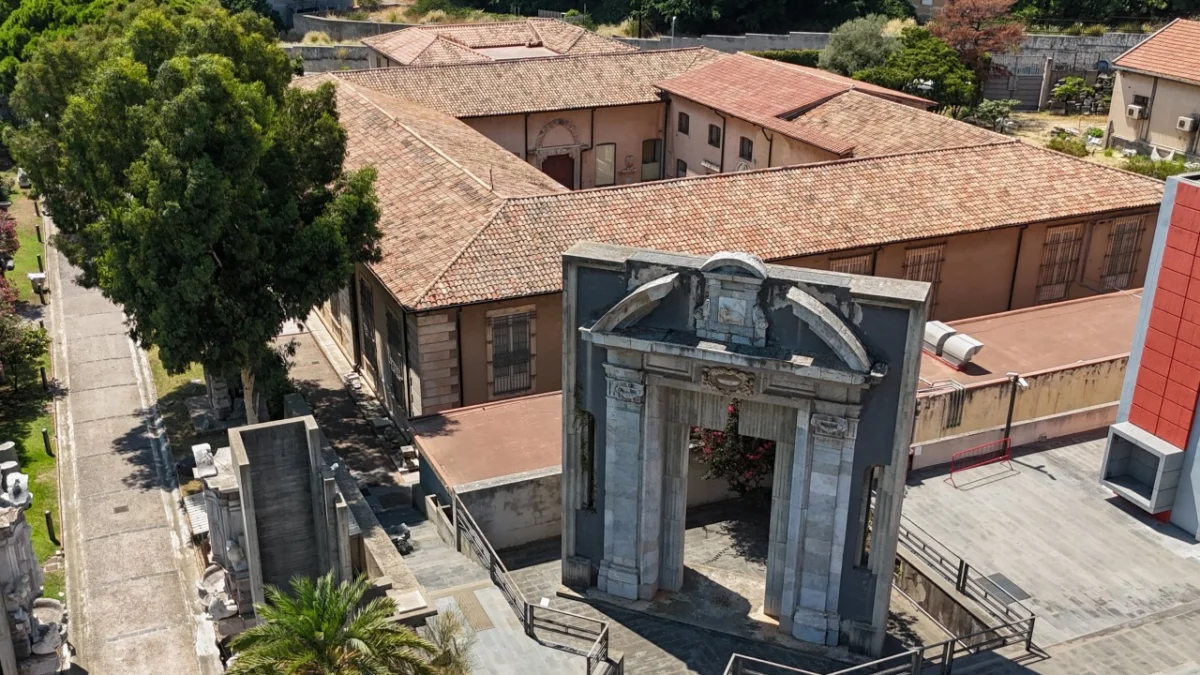
The regional museum of Messina, known as MuMe (Museo Regionale Interdisciplinare di Messina), has fallen victim to a sophisticated and devastating art heist, resulting in the loss of four irreplaceable works by the 15th-century Renaissance master Antonello da Messina. The theft occurred on Saturday evening, August 15, strategically timed to coincide with the traditional Assumption holiday, a period when the city’s attention was focused on religious processions and public festivities. According to cultural officials and Italian media reports released on Sunday, the stolen items carry an estimated market value ranging between €70 million and €80 million (approximately US$81 million to US$92 million), though historians argue their cultural worth to the Sicilian identity is beyond any financial calculation.
The thieves demonstrated a high level of technical proficiency, successfully bypassing state-of-the-art alarm systems and security protocols at the museum. The targeted works include three panels from the historic San Gregorio Polyptych, dated 1473, and a rare double-sided panel depicting the Virgin Mary and the dead Christ in Pietà. The latter was particularly well-protected, housed within an armored display case that the perpetrators managed to breach without immediate detection. While the thieves initially removed all five panels of the San Gregorio Polyptych from their heavy wooden frame, two of the panels were discovered abandoned behind a wall within the museum premises, suggesting a hurried escape or a logistical complication during the final stages of the robbery.
The Stolen Masterpieces: A Deep Cultural Loss
Antonello da Messina (c. 1430–1479) is widely regarded as one of the most influential figures of the Italian Renaissance, credited with bridging the gap between the meticulous realism of Flemish oil painting and the monumental perspective of Italian art. The loss of his works is a blow not only to the city of Messina but to the global art community.
The San Gregorio Polyptych is considered Antonello’s most complex surviving work. Commissioned in 1473 for the convent of San Gregorio in Messina, the altarpiece originally consisted of five panels arranged in two tiers. The central panel depicts the Madonna and Child enthroned, flanked by saints. The thieves made off with three of these panels, leaving the remaining two in the museum’s corridors. The polyptych is particularly famous for its pioneering use of light and the psychological depth of its figures, hallmarks of Antonello’s style following his exposure to Northern European techniques.
The fourth stolen piece, the double-sided panel of the Virgin and the Pietà, is equally significant. Its removal from an armored case indicates that the thieves were likely equipped with specialized tools and had precise knowledge of the museum’s layout and security weaknesses. This work is celebrated for its emotional intensity and the delicate handling of the human form, showcasing the artist’s ability to convey profound grief through subtle anatomical detail.
Chronology of the Heist
The timeline of the event suggests a meticulously planned operation that took advantage of the "Ferragosto" holiday, a time when Italian cities are often less populated as residents head to the coast or countryside, and local law enforcement resources are stretched thin by holiday crowds.
- Saturday, August 15, 8:00 PM: As the sun set over Messina, thousands of residents and tourists gathered in the city center for the Assumption Day celebrations. The streets surrounding the MuMe museum were filled with noise and activity, providing a perfect acoustic cover for any mechanical sounds coming from the museum.
- Saturday, August 15, 9:30 PM – 9:55 PM: Investigative reports suggest this was the window during which the breach occurred. The thieves entered the museum, likely through a secondary access point, and moved directly to the Antonello da Messina wing.
- Saturday, August 15, 9:50 PM: The thieves successfully bypassed the electronic alarm system. It remains unclear whether the system was jammed, deactivated, or if the perpetrators utilized a "blind spot" in the sensor grid.
- Saturday, August 15, 9:55 PM: The armored case containing the double-sided panel was breached. Simultaneously, the San Gregorio Polyptych was dismantled from its mounting.
- Saturday, August 15, 10:00 PM: Museum director Marisa Mercurio confirmed that the theft was completed just before 10:00 PM. During their flight, the thieves abandoned two of the five polyptych panels, possibly due to the weight of the frames or a sudden disruption.
- Sunday, August 16, Early Morning: Security staff discovered the empty frames and the breached display case during a routine inspection. The local Carabinieri and the specialized Command for the Protection of Cultural Heritage (TPC) were immediately notified.
Official Responses and Expert Analysis
The reaction from the cultural sector has been one of shock and mourning. Marisa Mercurio, the director of MuMe, expressed the collective heartbreak of the institution. “We are devastated by what happened. They were two of Antonello da Messina’s most important and best-known works,” Mercurio told the ANSA news agency. “It is a tremendous loss for the museum, the city, the community, and the art world. These works were central to our regional heritage.”
Art expert Alberto Fiz, who provided the valuation of the stolen pieces, noted that while the monetary value is astronomical, the works are "unsellable" on the open market. "Pieces of this stature are too well-documented to be sold at auction or to legitimate collectors," Fiz explained. "The fear is that they have been stolen to order for a private ‘black’ collection, or that they will be used as collateral in underworld negotiations."
The Carabinieri Command for the Protection of Cultural Heritage, often referred to as the "Blue Helmets of Culture," has taken over the investigation. This specialized unit is world-renowned for its database of stolen art and its success in tracking down looted antiquities. Investigators are currently reviewing CCTV footage from the surrounding streets and interviewing museum staff to determine if the thieves had inside information regarding the security system’s vulnerabilities.
Supporting Data and Security Context
Italy holds the world’s largest concentration of UNESCO World Heritage sites, and its regional museums are often repositories of masterpieces that rival those in the Louvre or the Uffizi. However, maintaining high-level security across hundreds of satellite museums remains a significant challenge for the Italian Ministry of Culture.
According to data from the Carabinieri TPC, art theft in Italy has seen a general decline over the last decade due to better tracking and digitalization of records. However, "high-value, low-volume" heists targeting specific masterpieces remain a persistent threat. In many cases, thieves target regional museums during national holidays when local security presence might be perceived as less vigilant.
The MuMe museum had recently undergone renovations to improve its exhibition spaces and security. The fact that an armored case was breached and an alarm system bypassed suggests a level of sophistication usually associated with organized crime syndicates rather than opportunistic looters.
Broader Implications and the Future of the Works
The theft of the Antonello da Messina works raises urgent questions about the safety of Italy’s cultural assets. For Messina, a city that has historically suffered from natural disasters—most notably the devastating earthquake of 1908 which these very paintings survived—the loss feels like a modern-day catastrophe. The San Gregorio Polyptych was one of the few tangible links to the city’s pre-earthquake artistic glory.
There are several possible trajectories for the investigation:
- Ransom Demands: In some instances of high-profile art theft, the works are held for "art-napping" purposes, where the thieves or intermediaries demand a ransom from the insurance company or the state for their safe return.
- Organized Crime Collateral: Stolen masterpieces are sometimes used as "currency" between criminal organizations, traded for drugs or weapons because their value remains stable even if they cannot be liquidated easily.
- Recovery through Diligence: The Carabinieri TPC has an impressive track record. In many cases, stolen art is recovered years later when it surfaces during unrelated criminal investigations or when the "heat" around the theft has died down.
As the investigation continues, the museum has been temporarily closed to the public to allow for forensic teams to process the scene. The global art community remains on high alert, with Interpol expected to add the four panels to its "Stolen Works of Art" database. For now, the empty frames at the MuMe serve as a grim reminder of the vulnerability of human heritage in the face of determined criminality. The hope remains that, like the city of Messina itself, these masterpieces will eventually be restored to their rightful place in history.
