

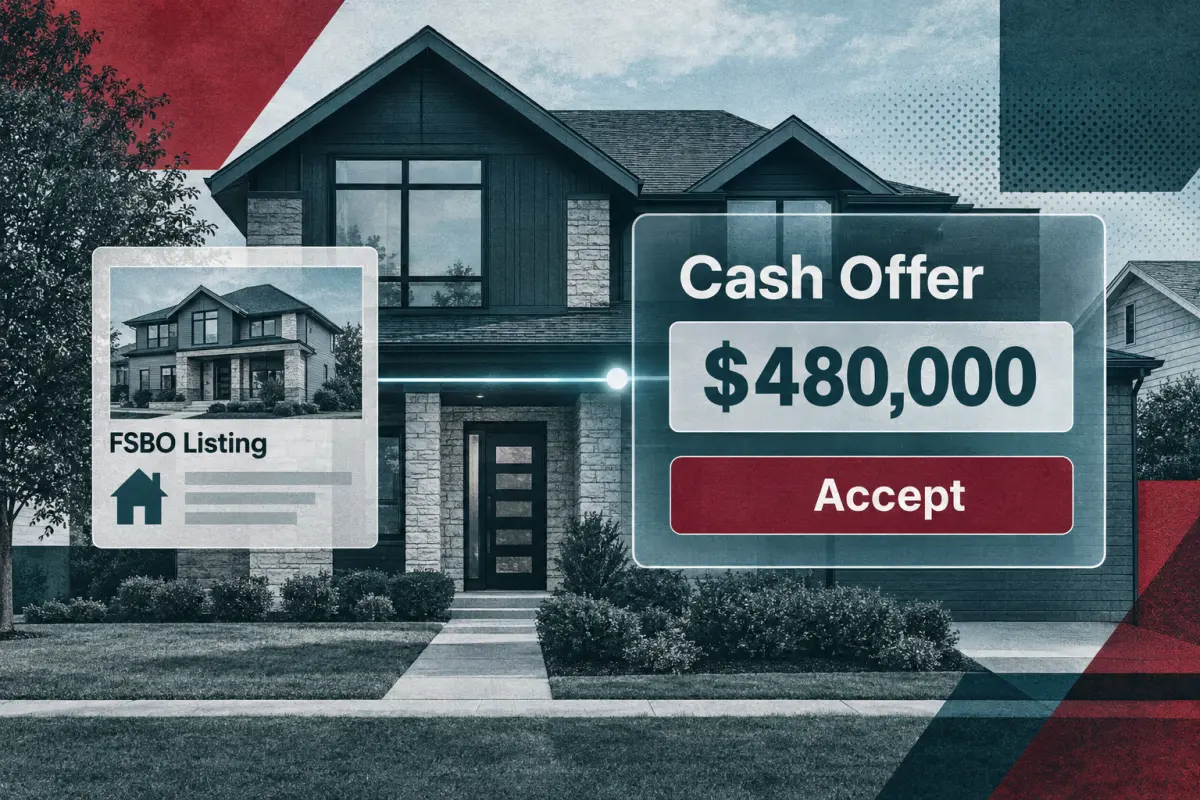
In a strategic move designed to reshape the landscape of the for-sale-by-owner (FSBO) market, FSBO.com announced a landmark partnership with Opendoor on Monday, marking a significant shift in how independent sellers can navigate the complexities of real estate transactions. This collaboration integrates Opendoor’s institutional cash-offer engine directly into the FSBO.com listing platform, providing homeowners who choose to sell without a traditional real estate agent a streamlined path to liquidity. The partnership represents a convergence of the "do-it-yourself" real estate movement and the high-tech efficiency of the iBuying sector, offering a hybrid model that emphasizes flexibility, speed, and seller empowerment.
Under the terms of the agreement, homeowners who list their properties on FSBO.com can now request a cash offer from Opendoor with a few clicks, provided the property meets specific eligibility criteria regarding location, home type, and condition. This integration does not mandate a sale to Opendoor; rather, it provides a "floor price" or a guaranteed exit strategy while the seller simultaneously tests the open market for higher bids from traditional buyers. This dual-track approach is intended to mitigate the risks typically associated with selling a home independently, such as long days on the market or the uncertainty of buyer financing.
The Evolution of the FSBO Marketplace and Strategic Pivot
The partnership is a cornerstone of a broader transformation currently underway at FSBO.com. Long known as a primary destination for sellers looking to avoid the standard 5% to 6% commission fees associated with traditional brokerage models, FSBO.com is transitioning from a legacy listing directory into a comprehensive, artificial intelligence-powered real estate ecosystem. This evolution is being led by partners Mike Kortas and Brad Rice, who envision a future where technology bridges the gap between the cost-savings of independent selling and the professional support provided by full-service firms.
Mike Kortas, a partner at FSBO.com, emphasized that the modern homeowner demands more than just a place to post a listing. "The future of real estate isn’t about limiting homeowners to one way of selling their property," Kortas stated. "It’s about giving them every possible advantage." By incorporating Opendoor’s capabilities, FSBO.com is effectively leveling the playing field for unrepresented sellers, giving them access to the same institutional liquidity that was previously more common in the investor-heavy segments of the market.
This strategic pivot comes at a time when the real estate industry is facing unprecedented scrutiny regarding commission structures and transparency. Following recent legal settlements involving the National Association of Realtors (NAR), many industry analysts predict an uptick in homeowners exploring alternative selling methods to retain a larger portion of their home equity. FSBO.com’s move to modernize its platform with AI and institutional partnerships positions it to capture this growing segment of the market.
Understanding the iBuying Integration and Mechanics
Opendoor, the pioneer of the iBuying (instant buying) model, operates by using proprietary algorithms to value homes and provide near-instant cash offers. For FSBO.com users, this means that the traditional hurdles of home staging, public showings, and open houses can be bypassed entirely if the Opendoor offer meets their financial goals.
Will Holmes, head of partnerships at Opendoor, noted the importance of transparency in the decision-making process. "Every homeowner should get to see what a cash offer looks like before deciding how to sell," Holmes said. "FSBO.com sellers can now do that in a few clicks, then pick the path that works for them."
The mechanics of the integration are designed for simplicity. When a seller creates a listing on FSBO.com, the platform’s backend communicates with Opendoor’s API to determine if the property is within Opendoor’s service areas—currently spanning dozens of major U.S. metropolitan markets. If eligible, the seller receives a preliminary offer. If the seller chooses to move forward, a digital assessment or a brief in-person walkthrough is conducted to finalize the price. If the seller declines or chooses to wait, the listing remains active on FSBO.com, where it can be viewed by traditional buyers, investors, and buyer-side agents.
Contextual Background: The State of the Real Estate Market
To understand the significance of this partnership, one must look at the current volatility and structural changes within the U.S. housing market. Throughout 2023 and into 2024, high mortgage rates and low inventory have created a challenging environment for both buyers and sellers. In such a market, the certainty of a cash offer is a powerful tool.
Historically, FSBO transactions have accounted for approximately 7% to 10% of all home sales in the United States, according to data from the National Association of Realtors. However, FSBO sellers often face a "pricing gap." NAR data has frequently suggested that FSBO homes sell for a median price lower than agent-assisted sales, though proponents of the FSBO model argue this is skewed by the fact that many FSBO sales are "closely held" transactions between family members or friends.
By introducing Opendoor’s valuation and cash-offer system, FSBO.com is providing a data-driven benchmark for these sellers. This helps independent sellers avoid underpricing their homes while providing a safety net against the market’s fluctuations. Brad Rice, a partner at FSBO.com, highlighted this psychological and tactical advantage: "Having a cash offer gives homeowners another option and can strengthen their position when negotiating with other buyers."
Timeline of Industry Shifts and PropTech Convergence
The trajectory leading to this announcement can be traced back several years through the rise of "PropTech" (Property Technology).
- 2014–2019: The rise of iBuying. Opendoor and competitors like Zillow Offers and Offerpad began purchasing homes directly from consumers, promising a "frictionless" transaction.
- 2021: A market inflection point. Zillow famously exited the iBuying space after its pricing algorithms failed to accurately predict market shifts, leading to significant losses. This left Opendoor as the primary leader in the sector, forcing the company to refine its risk management and partnership strategies.
- 2023: Legal challenges to the traditional commission model. Several high-profile lawsuits challenged the way real estate commissions are paid, leading to a massive settlement by the NAR. This created a vacuum for new services that cater to sellers looking for lower-cost alternatives.
- Early 2024: FSBO.com begins a series of platform upgrades, focusing on AI integration to help sellers write better descriptions, optimize pricing, and manage leads.
- Present: The FSBO.com and Opendoor partnership is finalized, creating a direct link between the largest independent listing site and the largest institutional buyer.
Expanding the Ecosystem: Photography, Escrow, and Mortgages
The partnership with Opendoor is only one component of FSBO.com’s planned expansion. Recognizing that a successful real estate transaction requires a suite of ancillary services, the company has announced plans to launch a national network of professional photography services. High-quality visual marketing is often cited as the most critical factor in online listing engagement, and by facilitating this service, FSBO.com aims to improve the "curb appeal" of independent listings.
Furthermore, FSBO.com is moving into the "closing" side of the business. The company plans to integrate title and escrow connections, as well as home warranty solutions. These services are traditionally handled by real estate agents or their preferred vendors. By bringing these into the platform, FSBO.com is attempting to create a "closed-loop" transaction environment where a seller can manage the entire process from listing to deed transfer within a single dashboard.
Perhaps most notably, the platform is expanding into mortgage services, including buyer preapproval capabilities. This addresses one of the primary pain points for FSBO sellers: qualifying potential buyers. By providing tools to verify a buyer’s financial standing, the platform reduces the risk of deals falling through during the financing contingency period.
Addressing the "Coverage Gap" Through Local Investors
While Opendoor maintains a presence in many major markets, it does not cover every ZIP code in the United States. To address this, FSBO.com has announced a secondary initiative to establish relationships with local real estate investors and builders in markets outside of Opendoor’s current coverage areas.
This "investor network" strategy aims to ensure that the "cash offer" feature is truly nationwide. Local investors, who often have different risk profiles and investment criteria than a large corporation like Opendoor, can provide liquidity in rural areas or for properties that may not meet Opendoor’s strict "buy box" (which typically focuses on newer, single-family homes within a certain price range).
Analysis of Implications for the Real Estate Industry
The collaboration between FSBO.com and Opendoor carries several significant implications for the broader real estate industry:
- Disruption of the Traditional Funnel: Traditionally, the home-selling process begins with a search for a real estate agent. By offering a "one-click" cash offer and a suite of professional tools, FSBO.com is attempting to capture the seller at the very beginning of their journey, before they ever sign a listing agreement with a brokerage.
- Valuation Transparency: One of the greatest challenges for independent sellers is "emotional pricing." Having an objective, institutional offer from Opendoor provides a reality check for sellers, potentially leading to more realistic market pricing and faster turnover.
- The Rise of the "Hybrid Seller": The market is seeing the emergence of the "hybrid seller"—someone who wants the cost-savings of FSBO but the security of a guaranteed backup offer. This partnership perfectly encapsulates that consumer profile.
- Pressure on Commissions: As tech platforms make it easier to sell without an agent, traditional brokerages may face increased pressure to justify their commission percentages. The "value-add" of an agent will likely shift more toward high-level negotiation and complex legal navigation rather than simple listing and marketing.
Official Responses and Market Reaction
While traditional real estate associations have yet to issue a formal statement regarding this specific partnership, the reaction among PropTech analysts has been largely positive. The move is seen as a "win-win" for both companies: Opendoor gains access to a high-intent pipeline of sellers who are already looking for alternatives to the status quo, and FSBO.com gains a powerful feature that elevates its value proposition.
In the days following the announcement, industry forums have seen a mix of skepticism from traditional agents—who argue that a cash offer from an iBuyer often comes with service fees that can rival commissions—and excitement from tech-forward investors who see this as the natural progression of the "Amazon-ification" of real estate.
Conclusion and Future Outlook
The partnership between FSBO.com and Opendoor is a definitive signal that the boundaries between different real estate models are blurring. As FSBO.com continues to roll out its AI-driven features and expands its service offerings to include mortgages, title, and professional marketing, it is moving closer to becoming a full-service digital brokerage in all but name.
For the American homeowner, this partnership represents the expansion of choice. Whether a seller chooses to accept an instant cash offer for the sake of convenience or uses that offer as a benchmark while pursuing a higher price on the open market, the result is a more transparent and empowered selling experience. As the real estate industry continues to grapple with regulatory changes and technological disruption, the FSBO.com and Opendoor integration stands as a prominent example of how technology is being leveraged to put the consumer at the center of the transaction.
