

The trajectory of interior designer Heidi Caillier serves as a compelling case study in the evolution of modern American design, marking a transition from a peripatetic early life to her current status as a pillar of the high-end residential aesthetic. Caillier’s journey reached a significant milestone with her recent return to San Francisco, a city that first sparked her professional ambitions in 2005. Her homecoming is defined not just by a change in geography, but by the renovation of an elegant Victorian residence that reflects nearly two decades of stylistic refinement. This return follows a transformative period in the Pacific Northwest, where Caillier cultivated a signature look that has since resonated across social media and the pages of global design publications.

A Narrative of Rootedness and Professional Genesis
Caillier’s early years were characterized by a lack of permanence. Born into a military family, she moved frequently between cities, eventually attending school in Providence and New Orleans. After earning a master’s degree in public health, she spent years traveling and working varied roles before landing in the Bay Area. It was in San Francisco that the architecture and cultural density finally provided the "center" she had been seeking.

Her entry into the design world was initially modest. Operating through the now-defunct platform Homepolish—a startup that once aimed to democratize interior design before its collapse in 2019—Caillier took on small-scale projects. During this period, the prospect of owning or designing one of the city’s grand historic homes seemed a distant fantasy. The San Francisco real estate market, notoriously one of the most expensive and competitive in the world, presented a formidable barrier to entry for a nascent practice.

The Tacoma Transition: Developing the Gray Days Aesthetic
In 2015, seeking a change of pace and proximity to family, Caillier and her husband, Justin, relocated to Tacoma, Washington. This move occurred at a pivotal moment; as they departed San Francisco, they learned they were expecting twins. While Caillier initially feared that leaving the California design hub would stall her career, the environmental shift proved to be the catalyst for her artistic breakthrough.

The Pacific Northwest’s climate—marked by persistent fog and low light—forced a reimagining of interior spaces. Rather than fighting the shadows, Caillier leaned into them. She began experimenting with dusky color palettes, layered textiles, and a mix of traditional English prints with mid-century European lighting. This "cozy" maximalism became her hallmark. During these years, she collaborated closely with photographer Haris Kenjar to document her work. Their shared vision of moodily lit, unpretentious, yet aspirational interiors found a massive audience on Instagram, where Caillier now commands nearly 500,000 followers.

Chronology of a Rising Career: 2015–2025
The decade following her move to Washington saw a rapid escalation in Caillier’s professional standing. The timeline of her rise reflects a broader trend in the design industry, where digital influence translates into blue-chip commissions:

- 2015: Relocation to Tacoma and the birth of twins, Rowan and Soter.
- 2017–2020: Rapid growth of her design firm through digital storytelling and editorial features.
- 2020: The COVID-19 pandemic leads to the closure of her husband’s bar, prompting him to take on full-time childcare as Caillier’s business expands nationally.
- 2023: Launch of a highly successful furniture collaboration with Lulu and Georgia, bringing her aesthetic to a broader commercial market.
- 2024: Completion of a high-profile mountain home for Kendall Jenner, which became a viral sensation for its bold use of yellow plumbing fixtures and oversized furniture.
- 2025: Selection for the AD100, the definitive list of the world’s top architects and interior designers.
- 2026: Return to San Francisco and the completion of her personal Victorian renovation.
The San Francisco Renovation: Preserving Provenance
The search for a permanent home in San Francisco was a rigorous process. Caillier sought a property with "provenance"—a sense of history and architectural integrity—within a specific budget and location south of the Presidio. After losing an initial offer on a different property, she secured a Victorian that was, by her own admission, "underwhelming" and in need of significant modernization.

The renovation was conducted with a focus on speed and preservation. To avoid the multi-year delays often associated with San Francisco’s stringent architectural permitting for major structural changes, Caillier worked with a contractor but bypassed a traditional architect. This "delicate dance" allowed her to preserve the original character of the front of the house while completely reimagining the back and the primary suite.

Technical and Aesthetic Specifications
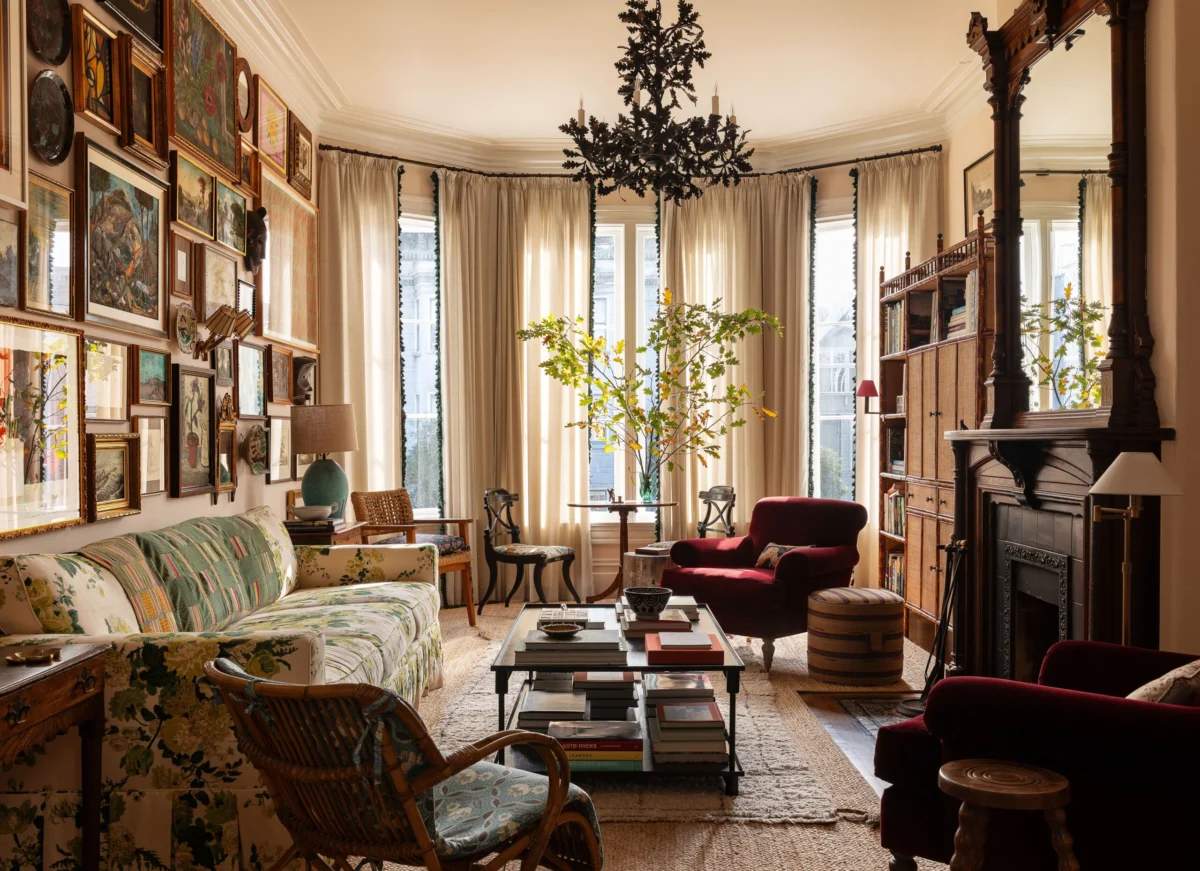
The resulting home is a masterclass in the use of color and texture. Caillier’s design choices challenge contemporary minimalism, favoring a "formidable" voice that rejects common tropes like recessed lighting or white sofas.

- The Kitchen: Features cabinetry by Isla Porter painted in "Toro Rosso" by Portola Paints, a bold red that serves as the home’s heart. Reclaimed limestone floor tiles from Historic Decorative Materials and lighting by Jamb and Hector Finch add layers of history.
- The Dining Room: Enveloped in custom de Gournay wallpaper, the space is anchored by an antique French farm table and Swedish chairs upholstered in Schumacher fabric.
- The Living Room: Painted in Farrow & Ball’s "Tailor Tack," the room features a shellwork Grotto lamp by Tess Morley and a gallery-style arrangement of art, including works by Danielle Mourning.
- The Snug: A testament to textural layering, utilizing Elizabeth Dow abaca grass cloth on the walls and a custom sofa in Watts fabric.
- The Primary Suite: The bedroom uses Guy Goodfellow Collection florals across walls, windows, and the headboard, creating an immersive, garden-like environment. The adjacent closet is finished in Portola Paints’ "Kimono Blue."
Broader Industry Implications and Market Analysis
Caillier’s success and her return to San Francisco occur against the backdrop of a "renaissance" for the city. Despite headlines regarding urban flight, the high-end residential design sector in San Francisco remains robust. Designers like Caillier are part of a movement that values the city’s unique architectural "bones" and its access to a dense concentration of artisans and galleries.

Furthermore, Caillier’s career trajectory highlights the shifting power dynamics in interior design. Her path from Homepolish to the AD100 demonstrates that the traditional gatekeeping of the industry has been disrupted by social media and direct-to-consumer brand building. By the time she returned to San Francisco, she did so not as a designer looking for work, but as a brand with national reach and a portfolio that includes some of the world’s most recognizable celebrities.

Statement on the Design Philosophy
Reflecting on the project, Caillier noted the unique challenges of designing for oneself. "Every designer will tell you that their own house is the hardest job because you’re doing so much of it on the fly," she stated. The project relied on a network of long-term collaborators, such as muralist James Mobley, who provided a hand-painted backdrop for her sons’ room, and the craftsmen at de Gournay.

Her design philosophy is rooted in a compelling tension: the juxtaposition of playful florals against linear, geometric patterns, and the mixing of antique European furniture with contemporary American brands like Nickey Kehoe. This approach creates spaces that feel lived-in and historical, yet distinctly modern.

Conclusion: A Legacy in the Making
Heidi Caillier’s return to San Francisco is more than a personal milestone; it is a professional statement. By transforming a "very underwhelming" Victorian into a vibrant, multi-layered family home, she has demonstrated the power of a clear aesthetic vision to transcend market conditions and geographical shifts. Her work continues to influence a generation of designers who seek to balance the rigor of traditional English design with the adventurous spirit of the American West. As San Francisco undergoes its own cultural and economic shifts, the presence of designers who prioritize provenance and craftsmanship ensures that the city’s architectural legacy remains both preserved and relevant for the 21st century.
