

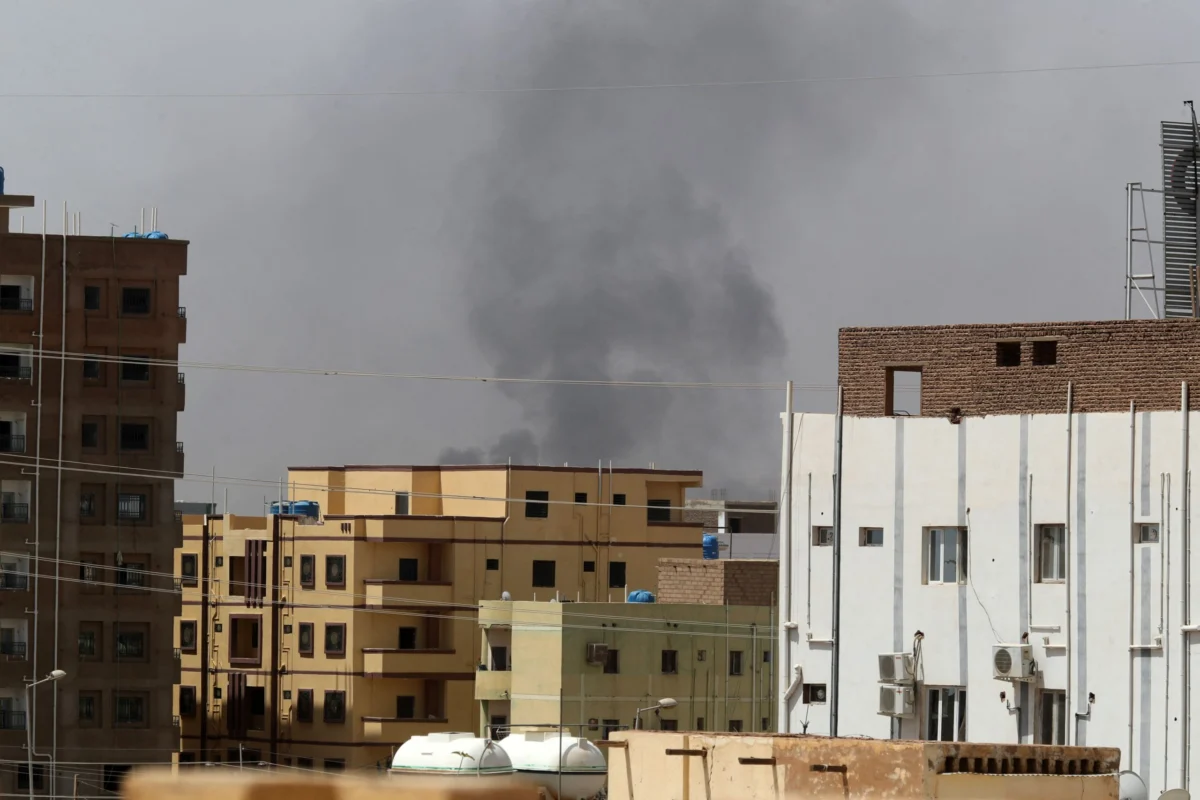
Sporadic fighting between Sudan’s warring military factions continued to reverberate across the capital city of Khartoum on Sunday, according to local residents, even as a newly brokered deal for a week-long ceasefire raised cautious hopes for a temporary reprieve in a conflict that has now entered its second month. The agreement, facilitated by the Kingdom of Saudi Arabia and the United States, represents the most significant diplomatic breakthrough since the violence erupted on April 15, 2023. However, the sounds of heavy artillery and small-arms fire in the central and southern districts of the capital served as a stark reminder of the immense challenges facing the implementation of the truce.
The ceasefire deal was formally signed by representatives of the Sudanese Armed Forces (SAF), led by General Abdel Fattah al-Burhan, and the paramilitary Rapid Support Forces (RSF), commanded by Mohamed Hamdan Dagalo, widely known as Hemedti. The signing took place in the Saudi port city of Jeddah following weeks of arduous proximity talks. Unlike previous verbal commitments to "humanitarian pauses" that were almost immediately violated, the Jeddah agreement includes a formal document and an internationally supported monitoring mechanism. Scheduled to take effect on Monday evening, the truce is designed to facilitate the delivery of life-saving humanitarian aid and the restoration of essential services to a population increasingly pushed to the brink of starvation and disease.
The Mechanics of the Jeddah Agreement
The short-term ceasefire is intended to last for an initial period of seven days, with the possibility of extension if both parties agree. A critical component of this deal is the establishment of a Monitoring and Coordination Committee. This body is expected to include representatives from Saudi Arabia, the United States, and the warring factions themselves. For the first time, the international community intends to use satellite imagery and other monitoring technologies to track violations on the ground, providing a level of accountability that was absent in earlier attempts to halt the violence.
The primary objectives of the Jeddah accord are humanitarian. It mandates that both the SAF and the RSF allow for the safe passage of civilians leaving conflict zones and ensure that humanitarian organizations can reach those in need without interference. This includes the repair of water and electricity infrastructure, which has been severely damaged by five weeks of urban warfare. Despite the signing, analysts remain skeptical. Neither General al-Burhan nor Hemedti traveled to Jeddah to sign the document personally, signaling that the top leadership may still be prioritizing a military victory over a negotiated settlement.
Five Weeks of Devastation: A Chronology of Conflict
The war in Sudan did not emerge in a vacuum. It is the violent culmination of a power struggle that has been simmering since the 2021 military coup, which derailed Sudan’s fragile transition toward civilian-led democracy. Prior to that, the two generals had been uneasy allies in the 2019 ousting of long-time autocrat Omar al-Bashir. However, tensions reached a breaking point over the proposed integration of the RSF into the regular army—a key requirement for a new transition deal that was supposed to be signed in early April.
Since the first shots were fired in mid-April, the conflict has rapidly transformed the once-bustling streets of Khartoum into a battlefield.
- April 15: Heavy fighting breaks out at the RSF base in Soba and near the Khartoum international airport.
- Late April: Most foreign embassies evacuate their staff as the security situation deteriorates. The SAF begins utilizing its air superiority, conducting strikes on RSF positions embedded in residential neighborhoods.
- Early May: The United Nations reports a massive surge in internal displacement. Diplomatic efforts shift to Jeddah as the humanitarian crisis worsens.
- Mid-May: Reports of widespread looting, sexual violence, and the targeted destruction of hospitals become frequent, particularly in Khartoum and the western region of Darfur.
The Humanitarian Toll and Regional Instability
The human cost of the conflict is staggering and continues to mount. According to the World Health Organization (WHO), at least 705 people have been confirmed killed and more than 5,287 injured. However, medical professionals and local activists on the ground insist these figures are a gross underestimate, as many bodies cannot be recovered from the streets and many deaths in rural areas go unrecorded.
The displacement crisis is equally dire. Approximately 1.1 million people have been forced to flee their homes. More than 800,000 are displaced within Sudan’s borders, while over 200,000 have crossed into neighboring countries such as Egypt, Chad, and South Sudan. This mass exodus threatens to destabilize an already volatile region. Egypt, which is dealing with its own economic challenges, has seen tens of thousands of Sudanese families arrive at its southern border, while Chad is struggling to accommodate refugees fleeing a resurgence of ethnic violence in Darfur.
In Khartoum, the collapse of the social order is nearly total. Safaa Ibrahim, a 35-year-old resident who spoke to Reuters, described a life defined by fear and fragmentation. "We’re tired of this war. We’ve been chased away from our homes, and the family has scattered between towns in Sudan and Egypt," she said. "We want to return to normal life and safety. Al-Burhan and Hemedti have to respect people’s desire for life."
Urban Warfare and the Siege of Khartoum
The nature of the fighting in the capital has been particularly grueling for civilians. The RSF, a highly mobile paramilitary force, has taken up positions inside residential buildings, schools, and hospitals, effectively using the urban landscape as a shield. In response, the Sudanese Army has employed heavy artillery and aerial bombardments. This dynamic has left millions of civilians trapped in their homes without access to food, water, or medicine.
The healthcare system in Khartoum has essentially collapsed. The WHO estimates that nearly 70% of hospitals in conflict-affected areas are out of service. Those that remain open are operating with minimal supplies, no reliable electricity, and staff who are working under the constant threat of being caught in the crossfire. "The health situation is getting worse day after day," said Mohamed Hamed, a local activist. "The people of Khartoum are waiting for the truce and the opening of humanitarian corridors just to survive."
Adding a new and dangerous layer to the conflict, senior army general Yassir al-Atta recently suggested that while the army is not yet formally arming civilians, they have a "natural right" to defend themselves against RSF incursions into their homes. This rhetoric has raised fears among international observers that the conflict could devolve into a full-scale civil war characterized by ethnic and tribal militias.
Geopolitical Implications and the Road Ahead
The international community views the Jeddah talks as a critical first step, but not a final solution. Mediators from the U.S. and Saudi Arabia have emphasized that this ceasefire is a "short-term" measure. Further negotiations will be required to address the more complex issues, such as the permanent removal of military forces from urban centers and the eventual return to a civilian-led political process.
The stakes extend far beyond Sudan’s borders. Sudan occupies a strategic position on the Red Sea and serves as a bridge between the Middle East and Africa. A prolonged conflict could create a vacuum filled by extremist groups or lead to the permanent fragmentation of the state, similar to the situations in Libya or Yemen. Furthermore, the involvement of various regional actors—some supporting the SAF and others believed to have ties to the RSF—complicates the path to peace.
The role of the African Union (AU) and the Intergovernmental Authority on Development (IGAD) will be vital in the coming weeks. While the Jeddah talks have focused on the immediate cessation of hostilities, African leaders are pushing for a more inclusive political dialogue that includes the civilian pro-democracy groups that led the 2019 revolution. These groups, often referred to as the Forces of Freedom and Change (FFC), have been largely sidelined since the 2021 coup but remain essential for any long-term stability.
Conclusion: A Tense Countdown to Monday
As the sun set over a smoke-filled Khartoum on Sunday, the atmosphere remained one of tense anticipation. The success of the Jeddah agreement depends entirely on the willingness of the commanders on the ground to honor the signatures of their representatives. If the ceasefire holds, it will provide a much-needed window for aid agencies to replenish stocks and for civilians to find safety. If it fails, as so many others have, the conflict risks entering a new, even more destructive phase.
For the millions of Sudanese caught in the crossfire, the ceasefire is not a matter of politics, but of survival. The coming 24 to 48 hours will be a litmus test for the influence of the United States and Saudi Arabia over the warring generals and, more importantly, a test of whether the Sudanese state can be pulled back from the abyss of total collapse. Until then, the residents of Khartoum continue to hunker down, listening to the echoes of gunfire and waiting for a silence that has been absent for far too long.
