

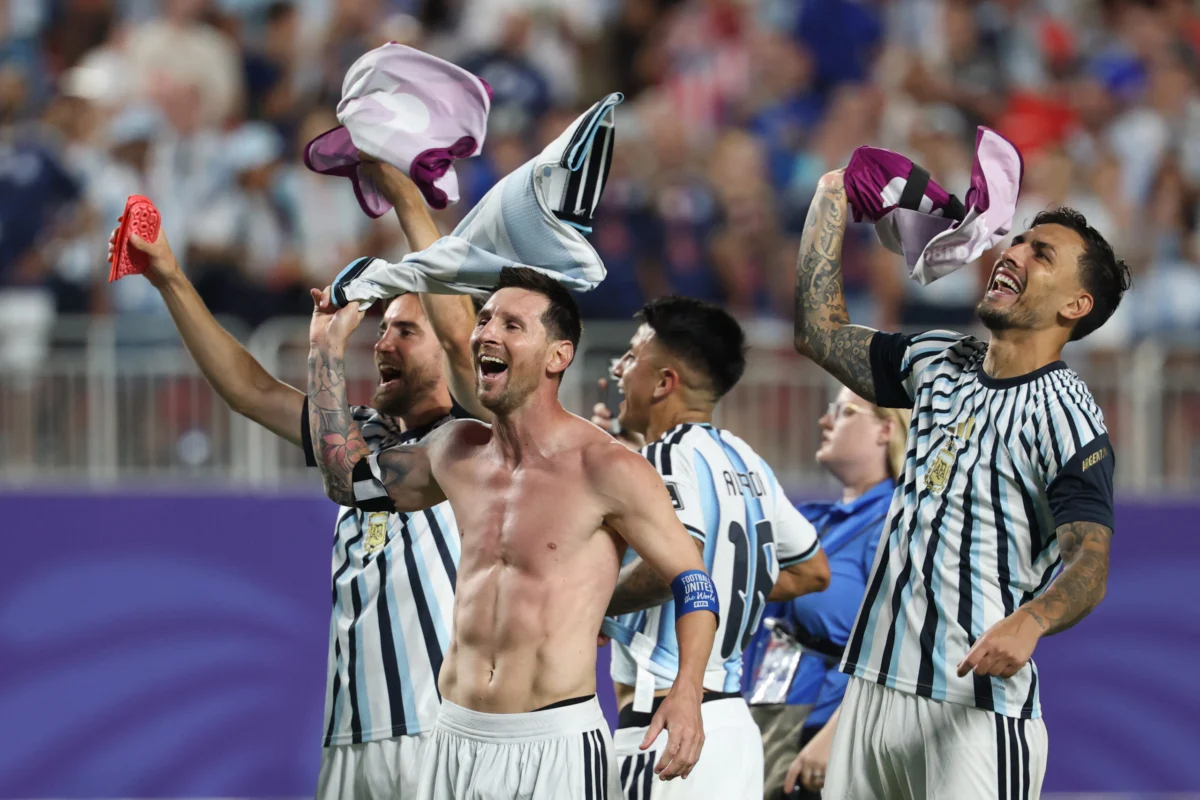
For the first time since the 1990 FIFA World Cup in Italy, the global footballing spectacle will feature an exclusive quartet of former champions battling it out in the semifinals. Argentina, England, France, and Spain, nations boasting a collective nine World Cup titles, navigated their respective quarterfinal clashes with a blend of tactical acumen, individual brilliance, and, at times, a touch of fortune, to overcome less experienced yet formidable opponents. This historic convergence of footballing royalty sets the stage for a dramatic conclusion to the tournament.
The path to the final four was marked by pivotal moments and strategic gambles. Argentina, the defending champions, overcame a spirited Switzerland, benefiting from a controversial diving incident that saw their opponent reduced to ten men. England and Spain, meanwhile, capitalized on crucial goalkeeping errors from Norway and Belgium, respectively, to secure their berths. France, the 2018 champions, delivered a masterclass in efficiency against a tactically perplexing Moroccan side, whose unusual striker-less formation ultimately failed to contain the French juggernaut. These results underscore a narrative of experience prevailing under pressure, as the established footballing powers asserted their dominance in critical junctures.
A Return to Royalty: The 1990 Parallel
The 1990 World Cup semifinals featured Argentina, West Germany, England, and Italy – a lineup that, like the current one, consisted entirely of past champions. That tournament culminated in West Germany defeating Argentina in the final. The re-emergence of such an elite final four in 2026 speaks volumes about the enduring strength of these footballing nations and their ability to consistently produce top-tier talent and tactical setups capable of navigating the pressures of the modern game. This year’s tournament has seen its share of upsets and thrilling contests, but ultimately, the pedigree of champions has shone through when it mattered most, setting up a truly mouth-watering semifinal round.
Quarterfinal Overview: A Battle of Experience vs. Ambition
The quarterfinals themselves were a testament to the unpredictable nature of World Cup football, featuring moments of individual brilliance, controversial VAR decisions, and strategic gambles. Each match offered distinct narratives, highlighting the fine margins that separate victory from defeat at this elite level. The outcomes not only propelled four giants forward but also provided valuable tactical insights and confirmed the status of key players who will undoubtedly shape the remainder of the competition.
France Dominates Morocco in Boston: Tactical Puzzlement and French Efficiency
Match Result: France 2-0 Morocco
Venue: Boston Stadium
Date: July 9, 2026
France’s victory over Morocco, while seemingly straightforward on the scoreboard, was preceded by a significant pre-match talking point: Morocco’s starting lineup. Coach Mohamed Ouahbi opted for an unconventional striker-less formation, a decision that baffled many pundits and even France’s seasoned coach, Didier Deschamps. "I was quite surprised by the starting 11," Deschamps admitted post-match. "I tried to understand why [Ouahbi] made these choices, no real forwards." This tactical gamble, possibly aimed at stifling France’s prolific attack and overloading the midfield, ultimately backfired, leaving Morocco’s forward line isolated and largely toothless.

Morocco, having enjoyed a fairy-tale run that saw them defy expectations and capture the hearts of many, entered the match without their injured breakout forward Ismael Saibari. However, with other capable forwards like Soufiane Rahimi on the bench, Ouahbi’s decision to start without a designated striker remained a mystery, leading to speculation that he might have been hoping for a defensive masterclass or even a fortuitous French own goal. An early Dayot Upamecano shank that landed on top of the net offered a momentary glimpse of such a possibility, but it never truly materialised into a sustained threat.
France, meanwhile, demonstrated their customary efficiency. Despite an early scare where goalkeeper Yassine Bounou saved Kylian Mbappé’s penalty kick following a lengthy VAR review – a testament to Bounou’s heroics throughout the tournament – Les Bleus remained composed. Mbappé, relentless in his pursuit of goal, eventually broke the deadlock with a spectacular dipping right-footer inside the far post. The goal, coming just after the 60-minute mark, effectively deflated Moroccan hopes and underscored Mbappé’s crucial role as France’s primary offensive weapon. Morocco’s attempt to introduce a forward, Soufiane Rahimi, after the goal, proved too little, too late. France’s ability to adapt and capitalize on their opponent’s tactical missteps highlighted their maturity and depth, affirming their status as formidable contenders.
Implications for France: This match demonstrated France’s ability to win even when facing unusual tactics. Their defensive solidity and the individual brilliance of players like Mbappé ensure they remain a threat to any opponent. The victory, their sixth consecutive win in the tournament, reinforced their status as a well-oiled machine capable of handling pressure.
Spain Edges Belgium in Los Angeles: Youthful Grit and Clinical Finish
Match Result: Spain 2-1 Belgium
Venue: Los Angeles Stadium (Inglewood)
Date: July 10, 2026
Spain’s 2-1 victory over Belgium was a hard-fought encounter, decided by a late goal stemming from a moment of unexpected initiative and a goalkeeping error. The match illuminated the growing influence of Spain’s young talents and the enduring challenges faced by Belgium’s "Golden Generation."
A significant talking point for Spain has been the emergence of their teenage sensation, Lamine Yamal, who had been a consistent threat throughout the tournament. However, it was another Barcelona teenager, 19-year-old centre-back Pau Cubarsi, who played an indirect but crucial role in the deciding goal. With the score tied and Belgium’s superb first-choice goalkeeper Thibaut Courtois sidelined by injury, Cubarsi ventured forward and unleashed a speculative shot from nearly 30 metres out. This was Cubarsi’s first attempt on goal since Spain’s opening 0-0 draw against Cape Verde, and it seemed to catch reserve keeper Senne Lammens by surprise. Lammens fumbled the shot, presenting Mikel Merino with a golden opportunity, which he clinically converted from close range in the 88th minute.
Cubarsi’s presence in Spain’s starting backline is itself a significant narrative. Few successful World Cup teams gamble on such youthful central defenders; Italy’s Giuseppe Bergomi, who played as an 18-year-old in 1982, remains a notable exception. While Cubarsi showed moments of vulnerability against the Belgians, he was largely untroubled by the imposing Romelu Lukaku, who came on as a substitute. Spain’s defensive philosophy, rooted in their Barcelona-style "keep-away" possession game, often relies less on physical confrontations and more on controlling the tempo and denying opponents the ball – an area where Cubarsi, comfortable on the ball, excels.

Belgium, despite becoming the first team to score against La Roja in the tournament, saw their campaign end in disappointment. Their "Golden Generation," a term that has followed them for years, once again failed to convert potential into a major trophy. The absence of Courtois was undoubtedly a blow, but the team struggled to consistently break down Spain’s intricate passing game.
Mikel Merino, the late goal-scorer, continued his impressive run of providing instant offense for Spain. His goal against Belgium came just two minutes after his introduction, echoing his five-minute impact against Portugal in their 1-0 last-16 victory. This demonstrated Spain’s depth and tactical flexibility from the bench. However, the match also exposed a potential vulnerability for Spain: the effectiveness of double-teaming against Lamine Yamal, as demonstrated by Belgium’s Jeremy Doku. This tactical blueprint will likely be adopted by France’s Desire Doue in the upcoming semifinal clash, posing a significant challenge for Spain’s attacking maestro.
Implications for Spain: Spain’s blend of experienced players and fearless youth, combined with their unwavering commitment to a possession-based style, makes them a formidable opponent. However, the reliance on such young talents brings with it the challenge of handling intense physical marking, as seen with Yamal. Their deep squad, highlighted by Merino’s impact, could be a key asset in the taxing semifinal.
England Overcomes Norway in Miami Thriller: VAR Controversy and Bellingham’s Brilliance
Match Result: England 2-1 Norway
Venue: Miami Stadium
Date: July 11, 2026
England’s 2-1 victory over Norway was a pulsating encounter marked by tactical gambles, VAR controversy, and the consistent brilliance of Jude Bellingham. Norway, under coach Stale Solbakken, had previously stated their intention not to be a "naive country, playing for fun," a philosophy that saw them strategically rest key players earlier in the tournament. This strategy successfully brought stars Erling Haaland and Martin Ødegaard into the elimination stages fresh, but ultimately, the quarterfinal exposed their limitations against a top-tier opponent.
The match had its share of contentious moments. An early disallowed goal for Norway, following a VAR review for a Haaland shove on England’s Elliot Anderson, proved to be a pivotal decision. While Anderson’s reaction was perhaps exaggerated, the call stood, denying Norway an early lead. Later in the first half, Norway’s Alexander Sørloth squandered a golden 2-on-1 opportunity, failing to square the ball to Haaland and being thwarted by John Stones – a moment of tactical naivety that cost them dearly.
The most significant controversy, however, revolved around England’s equaliser just before halftime. With Norway leading 1-0, goalkeeper Ørjan Nyland sent a long goal kick that appeared to change trajectory mid-air, landing inexplicably at the feet of Anderson. Solbakken vehemently protested, accusing officials of a "TV camera cable-gate" incident, suggesting the ball had struck an overhead cable. FIFA, however, maintained there was "nothing to see here," dismissing the claims. Anderson quickly fed Anthony Gordon, who then found Jude Bellingham, and the England talisman duly converted, leveling the score.

Norway’s defensive struggles were compounded by an injury to Julian Ryerson, weakening their flanks. Despite this, they held firm until the dying minutes of extra time. It was Bukayo Saka who earned a corner against Marcus Holmgren Pedersen, and from the ensuing set-piece, Harry Kane’s chip was tipped away by Nyland for another corner. From the second corner, Morgan Rogers unleashed a shot, and once again, Bellingham was in the right place at the right time to convert the rebound, sealing England’s 2-1 victory in the 123rd minute.
In the final moments, with Haaland surprisingly on the bench, Norway had a last gasp opportunity when England goalkeeper Jordan Pickford and a defender collided, leaving an open goal. However, French referee Clement Turpin blew his whistle, stopping play and cautioning Norway defender Kristoffer Ajer for dissent, effectively ending Norway’s challenge. England manager Thomas Tuchel conceded his team got "lucky," but the narrative of England’s resilience and their ability to generate their own luck, particularly through the consistent heroics of Jude Bellingham, has been a recurring theme. Bellingham’s two crucial goals in the match underscored his status as one of the tournament’s standout performers, a dynamic force equally adept at midfield control and decisive attacking contributions.
Implications for England: England’s ability to grind out a victory against a determined opponent, despite moments of controversy, highlights their mental fortitude. Bellingham’s emergence as a consistent match-winner is a huge boost, but defensive lapses and reliance on individual brilliance remain areas to watch. Their progression underscores the maturity of this squad under Tuchel, who has instilled a winning mentality.
Defending Champions Argentina Eliminate Switzerland in Kansas City: VAR, Ejections, and Set-Piece Mastery
Match Result: Argentina 3-1 Switzerland
Venue: Kansas City Stadium
Date: July 12, 2026
The defending champions Argentina advanced to the semifinals with a 3-1 victory over Switzerland, a match significantly influenced by a contentious VAR decision and the Albiceleste’s clinical set-piece execution. Switzerland, known for their disciplined approach, found their game plan severely disrupted by an early red card.
The pivotal moment occurred when Swiss forward Breel Embolo went down near the halfway line just before a drinks break. Initially, referee João Pinheiro cautioned Argentina’s Leandro Paredes. However, following a VAR review, the decision was overturned, and Embolo was instead shown a yellow card for simulation. As Embolo had already been cautioned earlier for a tackle on Paredes, this second yellow resulted in his ejection from the match. The official explanation cited "mistaken identity" – a rare invocation of a VAR directive allowing intervention for a "potential" red card – creating significant debate. Embolo’s dive seemed out of character, marking his first red card for the national team and only his second at the senior level since 2015. The numerical disadvantage proved insurmountable for Switzerland.
Despite the controversy, Argentina showcased their quality, demonstrating that their reliance on Lionel Messi for goals is not absolute. However, Messi’s influence remains profound, particularly from set-pieces. He delivered a pinpoint corner kick for Alexis Mac Allister, who headed in the opening goal in the 10th minute. The goal was a testament to the tactical preparation of the Argentine coaching staff, with assistant Walter Samuel reportedly identifying Mac Allister’s ability to find space amidst a taller Swiss defense. This highlighted Argentina’s capacity to exploit specific vulnerabilities and their continued evolution under coach Lionel Scaloni.

Argentina’s subsequent goals further solidified their control, with Lautaro Martinez adding to his tournament tally. Switzerland, despite being a man down, fought valiantly but could not stem the tide against a team of Argentina’s caliber. Their disciplined defense, which had seen them through previous rounds, was eventually breached by Argentina’s sustained pressure and superior individual talent.
Implications for Argentina: Argentina’s victory, though aided by the red card, showcased their ability to perform under pressure and capitalize on opportunities. Their improved set-piece prowess and the continued contributions from players beyond Messi, like Mac Allister and Lautaro Martinez, underscore their collective strength. The experience of defending a World Cup title adds another layer of mental resilience, making them formidable opponents in the semifinals.
Key Tactical Takeaways and Player Performances
The quarterfinals offered several crucial insights into the evolving dynamics of the tournament:
- The VAR’s Continued Influence: From the Embolo red card to the "connected ball" controversy and the disallowing of Norway’s goal, VAR remained a central, often contentious, figure in the biggest matches. Its interventions, while aiming for accuracy, sometimes disrupted the flow and generated significant debate.
- The Rise of Young Stars: While the veteran champions prevailed, the impact of young players like Jude Bellingham, Lamine Yamal, and Pau Cubarsi was undeniable. Their fearless approach and talent suggest a bright future for their respective national teams.
- Managerial Gambles: Morocco’s striker-less formation highlighted the risks associated with unconventional tactics at the highest level. While bold, such decisions can backfire spectacularly if not executed perfectly or if opponents adapt quickly.
- Set-Piece Dominance: Argentina’s opener from a corner, and England’s winning goal from a similar situation, underscored the critical importance of set-pieces in tight knockout games.
- Goalkeeping Errors: Key mistakes from Senne Lammens (Belgium) and Ørjan Nyland (Norway) directly led to decisive goals, emphasizing the unforgiving nature of the World Cup stage for goalkeepers.
Looking Ahead: The Semifinal Showdowns
The stage is now set for two colossal semifinal clashes, pitting these four champions against each other in what promises to be an unforgettable round:
- Argentina vs. [Opponent 1]: The defending champions, with Messi still orchestrating from midfield and a robust supporting cast, face a stern test against an equally experienced side. Their tactical flexibility and set-piece strength will be crucial.
- France vs. [Opponent 2]: The reigning World Cup winners, boasting the explosive talent of Mbappé and a rock-solid defense, will look to continue their dominant run. Their ability to switch gears from patient build-up to lightning-fast counter-attacks makes them incredibly dangerous.
- England vs. [Opponent 3]: England’s blend of youth and experience, spearheaded by the dynamic Jude Bellingham, has shown resilience. Their challenge will be to maintain defensive solidity against top-tier attacks while unleashing their potent offensive weapons.
- Spain vs. [Opponent 4]: Spain’s possession-based football, with its emphasis on young, technically gifted players, will aim to dictate the tempo. The tactical battle for midfield control will be paramount in their semifinal fixture.
Historical Echoes and Future Prospects
The return of an all-champions semifinal line-up is a powerful reminder of the cyclical nature of footballing dominance. While other nations have made strong bids and provided thrilling moments, the consistency and depth of these traditional powerhouses ultimately shone through. This alignment not only guarantees a thrilling conclusion to the 2026 FIFA World Cup but also solidifies the legacies of these nations in the annals of football history. As the tournament approaches its climax, the footballing world eagerly awaits to see which of these giants will ultimately lift the coveted trophy, writing the next chapter in their storied histories.
