

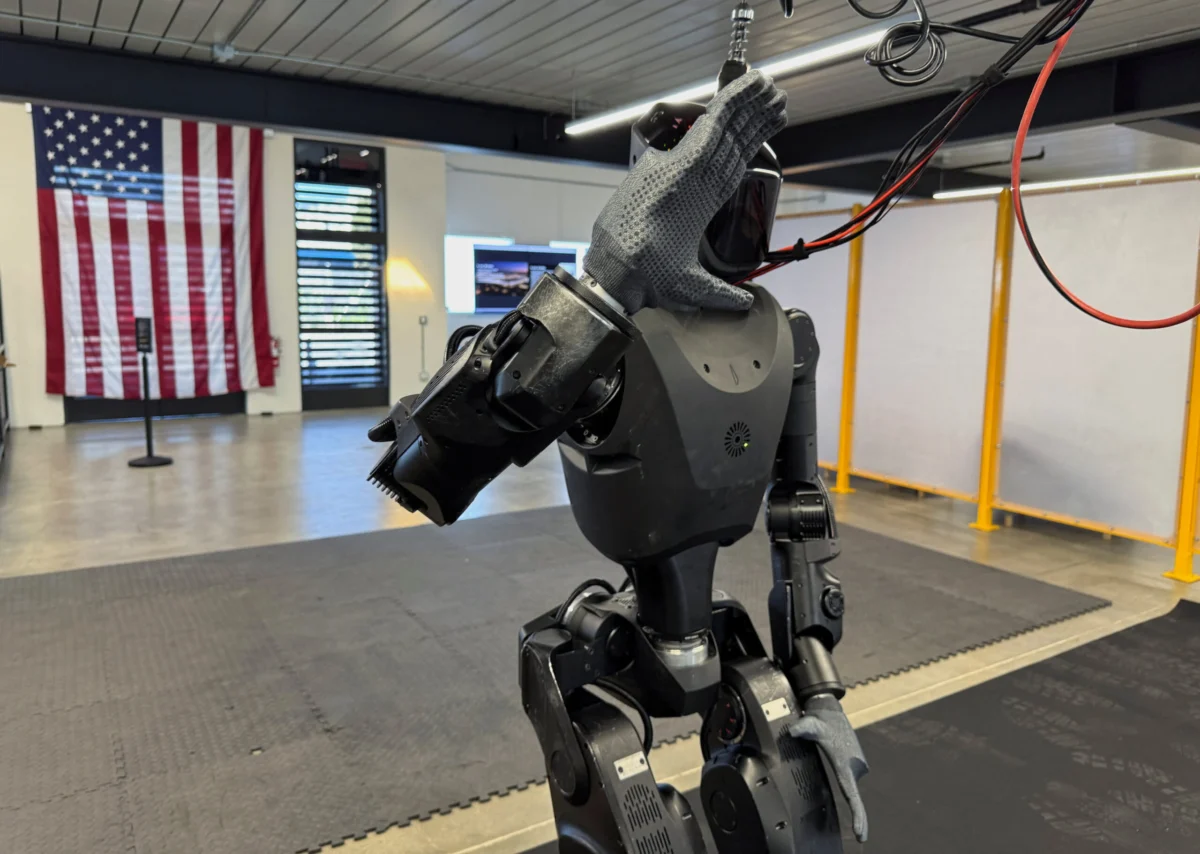
While the prevailing trend in Silicon Valley focuses on the development of humanoid robots designed for domestic convenience—tasks such as folding laundry, organizing kitchens, or serving coffee—a San Francisco-based startup is pivoting toward a more austere and high-stakes application. Foundation Future Industries (FFI), established in 2024, has emerged as a provocative outlier in the robotics sector, explicitly prioritizing the deployment of autonomous humanoid systems in heavy industrial environments and active military theaters. By targeting hazardous roles that are often deemed too dangerous for human personnel, the company aims to redefine the utility of humanoid forms from service-oriented assistants to essential assets in national security and industrial resilience.
The strategic direction of Foundation Future Industries represents a significant departure from the consumer-facing goals of competitors like Tesla’s Optimus or Figure AI. Led by CEO Sankaet Pathak, the company’s mission is rooted in the philosophy that the highest "net good" for robotics technology lies in its ability to replace humans in life-threatening scenarios. This "dual-use" approach—developing technology that serves both civilian industrial needs and defense requirements—has positioned FFI at the center of a growing debate regarding the ethics, efficacy, and political implications of autonomous warfare.
The Ukraine Proving Ground: A New Era of Field Testing
The transition of humanoid robotics from laboratory prototypes to operational tools reached a milestone earlier this year when Foundation Future Industries deployed two of its Phantom MK-1 units to Ukraine. This deployment, conducted in coordination with Ukrainian officials and supported by the U.S. government, marks what is widely considered the first known instance of humanoid robots being tested in an active combat theater. Ukraine has increasingly become a global laboratory for military innovation, where artificial intelligence, low-cost drones, and autonomous ground vehicles are being integrated into frontline operations with unprecedented speed.
The ongoing conflict, now entering its fifth year, has necessitated the rapid adoption of technology to mitigate human casualties. In the case of FFI’s Phantom MK-1, the testing focused primarily on logistics and supply chain management in contested "gray zones." These are areas where traditional supply runs expose soldiers to high risks from sniper fire, FPV drones, and artillery. The MK-1 units were utilized to perform supply pickups and transport equipment across terrain that would be treacherous for human infantry.
However, the initial trials also highlighted the current limitations of the technology. The Phantom MK-1 possesses a modest payload capacity of approximately 44 pounds and faces challenges regarding battery endurance and environmental sealing against moisture and dust. Despite these hurdles, Pathak maintains that the pilot program successfully demonstrated the "proof of concept." FFI is currently preparing to send the Phantom 2 to the region, a successor model designed with double the payload capacity and enhanced "superhuman" physical attributes intended for more rigorous field conditions.
Strategic Leadership and Political Scrutiny
The rapid ascent of Foundation Future Industries is inseparable from its leadership and the political weight of its advisory board. Sankaet Pathak, the company’s founder, is a figure who has previously navigated the complexities of the tech industry, having led the fintech platform Synapse prior to its high-profile bankruptcy in 2024. FFI was co-founded with Arjun Sethi, former CEO of Tribe Capital, and Mike LeBlanc, a co-founder of Cobalt Robotics, bringing together a blend of venture capital experience and robotics expertise.
The company’s profile was further elevated by the appointment of Eric Trump, the second son of the sitting U.S. President, as Chief Strategy Advisor. A spokesperson for FFI confirmed that Eric Trump was an early investor in the firm and shares the founders’ vision of revitalizing American manufacturing through advanced robotics. However, this association has invited intense scrutiny from Capitol Hill. Democratic Senator Elizabeth Warren has publicly questioned the ethics of the arrangement, characterizing the firm’s acquisition of government contracts as "corruption in plain sight." FFI has defended the appointment, asserting that their goal is to ensure the United States maintains a technological edge over global adversaries.
The company has also faced questions regarding its corporate claims. Early in its development, FFI suggested a close relationship with General Motors, implying potential investment and manufacturing collaboration. These claims were subsequently rejected by GM, leading to a period of skepticism regarding the startup’s transparency. Nevertheless, the firm’s ability to secure $24 million in U.S. government research contracts has solidified its standing as a serious contender in the defense tech landscape.
The Geopolitical Tech Race: U.S. vs. China
The development of military-grade humanoid robots is increasingly framed within the context of a broader geopolitical competition between the United States and China. China has made significant strides in the humanoid sector, with the government in Beijing providing substantial subsidies and policy support to domestic robotics firms. While Chinese companies like Unitree and Fourier Intelligence have focused largely on industrial and commercial applications, the People’s Liberation Army (PLA) has frequently showcased robotic dogs equipped with machine guns and motion-controlled humanoid prototypes in military exhibitions.
Foundation Future Industries has leaned into this rivalry, positioning its technology as a necessary component of U.S. national security. Pathak has stated that the objective is to deliver systems that are superior to any equivalent technology emerging from China. This sentiment aligns with a broader "Replicator" initiative within the U.S. Department of Defense, which seeks to deploy thousands of low-cost, autonomous systems across multiple domains to counter China’s numerical advantages in traditional military hardware.
While the Pentagon has explored various forms of unmanned ground vehicles (UGVs) for decades, the move toward humanoid forms represents a specific tactical choice. Most military robots to date have been tracked or wheeled, which are efficient on flat surfaces but struggle with the "human-built" world.
The Tactical Advantage of the Humanoid Form
The argument for humanoid robots in combat and industry rests on the fact that the world’s infrastructure is designed for the human body. Modern urban combat, which is characterized by narrow corridors, stairwells, ladders, and basements, presents significant obstacles for traditional wheeled or quadrupedal robots.
Kateryna Bondar, a senior fellow at the Wadhwani AI Center at CSIS, notes that humanoid systems possess a unique advantage in "human-centric" environments. The ability to climb a ladder to a rooftop or navigate a cluttered industrial facility allows these robots to operate in spaces that were previously inaccessible to machines. This dexterity, combined with autonomous decision-making capabilities, could allow humanoid units to serve as "first-entry" teams in hazardous urban environments, clearing buildings or neutralizing threats before human soldiers enter.
Furthermore, the industrial applications are equally significant. FFI envisions its robots working in high-heat environments, chemical plants, or nuclear facilities where the risk to human health is prohibitive. By utilizing a humanoid form, these robots can use existing tools and operate machinery designed for human hands, eliminating the need for expensive, specialized equipment redesigns.
Ethical Dilemmas and the Reality of Autonomous Warfare
As the prospect of "Terminator-style" robots moves from science fiction toward the battlefield, ethical concerns have intensified. The primary point of contention is the degree of autonomy granted to these machines, particularly regarding the "lethal autonomous weapons systems" (LAWS) debate.
FFI has indicated that while most weaponized applications will maintain a "human-in-the-loop" for final decision-making, there are scenarios where the robots may need to make fully autonomous decisions to ensure survivability in time-critical environments. This shift toward "human-on-the-loop" or "human-out-of-the-loop" systems is a point of concern for international human rights organizations and tech ethicists, who warn of the lack of accountability and the potential for unintended escalation in conflict zones.
The U.S. military has already begun integrating advanced AI models into its operations. Reports indicate that AI-driven analysis has been used to inform strikes in recent Middle Eastern conflicts. The transition to physical, humanoid autonomous agents is seen by many as the next logical—if controversial—step in this evolution.
Economic Feasibility and the Road Ahead
Despite the strategic interest, significant hurdles remain before humanoid robots become a common sight on the battlefield. Critics, including Melanie Sisson of the Brookings Institution, point out that the complexity and cost of humanoid engineering may not align with the practical realities of war. The conflict in Ukraine has emphasized the need for "attritable" technology—systems that are cheap enough to be lost in large numbers and easy to manufacture at scale. Humanoid robots, with their intricate joints, sensors, and balance algorithms, are currently far more expensive than the drones and simple ground robots that have dominated recent combat.
Foundation Future Industries aims to address this by scaling production to thousands of units within the next year. The company’s timeline is ambitious, with plans to begin formal frontline testing with various branches of the U.S. military—including the Army, Navy, and Air Force—within the next 18 months. These tests will likely focus on a range of tasks, from ordnance handling on aircraft carriers to logistics in remote outpost environments.
As the 2020s progress, the consensus among defense analysts and technologists is that the age of robotic warfare has arrived. Whether the humanoid form factor will become the dominant tool for this new era remains a subject of intense development and debate. For Foundation Future Industries, the focus remains clear: the future of robotics is not in the living room, but in the most demanding and dangerous environments on Earth. The success or failure of their Phantom series in the coming months may well determine the trajectory of military robotics for the next generation.
