

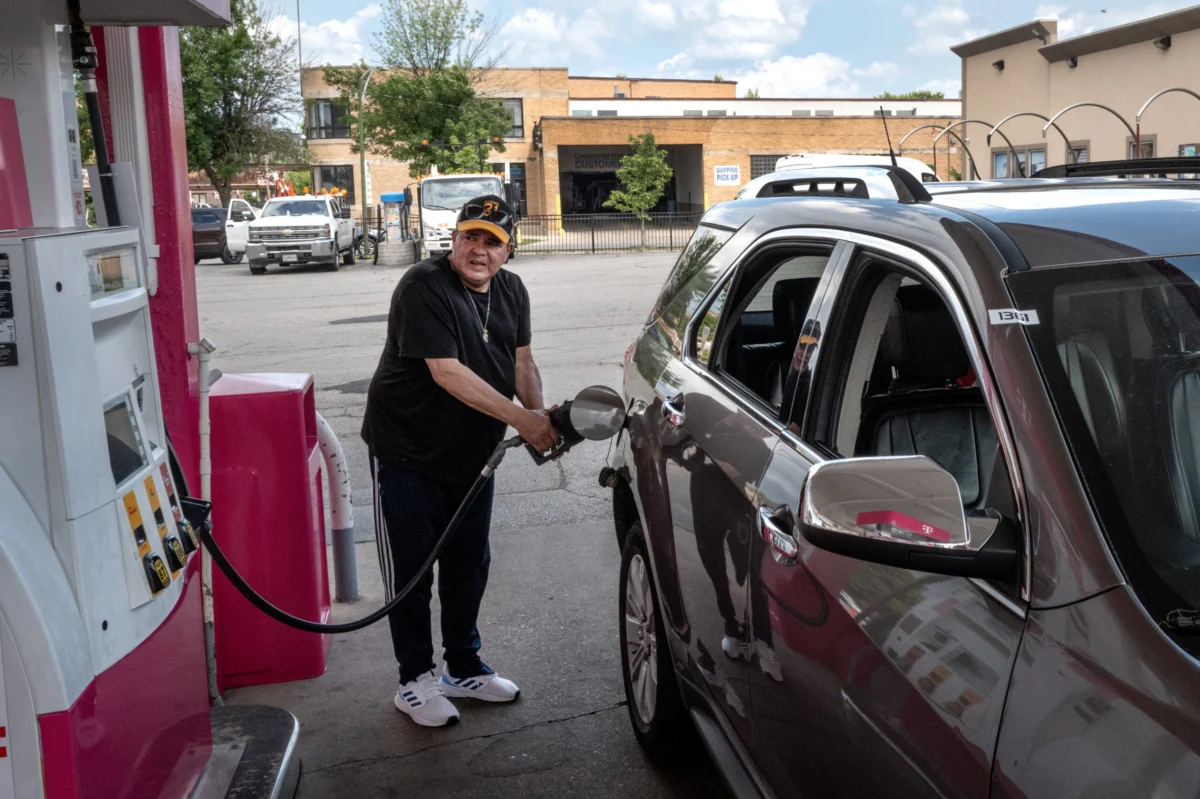
The Federal Reserve concluded its first meeting under the stewardship of newly appointed Chairman Kevin Warsh on Wednesday, June 18, 2026, opting to hold the benchmark interest rate steady. This decision, while a moment of continuity for the central bank, offered scant relief to American consumers grappling with a significant surge in gas prices and pervasive affordability challenges across essential goods and services. The move comes as a critical juncture for the U.S. economy, navigating persistent inflationary pressures amplified by geopolitical tensions and robust domestic demand.
A New Era at the Federal Reserve Amid Economic Headwinds
Kevin Warsh, sworn in as Chairman of the Federal Reserve on May 22, 2026, in a ceremony held in the East Room of the White House, immediately faced a complex economic landscape. His appointment, championed by President Donald Trump, marked a notable shift in leadership, with Warsh previously signaling a potential inclination towards lower interest rates to stimulate economic growth. However, the prevailing economic data presented a stark reality: inflation had unexpectedly accelerated, reaching its fastest pace in three years during May 2026, according to the Consumer Price Index (CPI) report released on June 10, 2026. This inflationary surge was significantly exacerbated by escalating energy costs, a direct economic fallout from the ongoing conflict in Iran. Economists widely contend that these rising energy prices possess the potential for more entrenched and longer-term inflationary effects, a factor that undeniably weighed heavily on the Federal Open Market Committee’s (FOMC) decision-making process.
The Fed’s dual mandate – achieving maximum employment and stable prices – is currently under immense scrutiny. With unemployment rates near historic lows, the focus has increasingly shifted towards controlling inflation. "The Fed can no longer claim there is a balance of risks; inflation is the problem," asserted Stephen Kates, a Certified Financial Planner and financial analyst at Bankrate, underscoring the dominant concern within economic circles. This sentiment suggests that the central bank’s primary battle is now against overheating prices, a position that may necessitate a more hawkish stance in the coming months, potentially leading to interest rate increases – a move that would run contrary to President Trump’s publicly expressed desire for lower borrowing costs.
Chronology of Key Events Leading to the Decision
The path to the June 2026 FOMC meeting was marked by several critical developments:
- May 22, 2026: Kevin Warsh is officially sworn in as Chairman of the Federal Reserve, succeeding his predecessor and signaling a new chapter for the central bank’s leadership. His initial remarks often emphasized a data-dependent approach, though prior statements had indicated openness to easing monetary conditions if warranted.
- May 2026: Throughout the month, geopolitical tensions, particularly concerning the conflict in Iran, intensified. This led to a substantial and sustained increase in global oil prices, directly impacting domestic gasoline costs and broader energy expenditures.
- June 10, 2026: The Bureau of Labor Statistics releases the Consumer Price Index (CPI) report for May, revealing that inflation had risen at its fastest rate in three years. Key drivers included energy, food, and housing costs, significantly exceeding economists’ expectations and demonstrating a broadening of inflationary pressures beyond just supply chain disruptions.
- June 17-18, 2026: The Federal Open Market Committee convenes for its scheduled meeting. With the May CPI report as fresh data, the committee faces heightened pressure to address inflation, effectively constraining any immediate inclination towards rate cuts that might have been considered under different circumstances.
- June 18, 2026: The Federal Reserve announces its decision to hold the benchmark interest rate steady, signaling a cautious approach given the conflicting signals of a robust labor market and rapidly accelerating inflation.
Broader Economic Implications and Expert Commentary
The specter of persistently elevated interest rates, coupled with the real possibility of further increases, presents another significant financial challenge for American households already struggling under mounting cost pressures. The cumulative effect of inflation, higher borrowing costs, and stagnant real wage growth threatens to erode household purchasing power and savings.
Wayne Winegarden, an economist at the conservative think tank Pacific Research Institute, highlighted the tangible impact on daily life: "It makes buying a house more difficult, revolving credit is now more difficult, owning a car is now more expensive." While some financial products, such as existing fixed-rate loans, are not immediately affected by the Fed’s short-term rate adjustments, new borrowing and variable-rate products bear the brunt. "If you are locking in at a higher rate, it’s just another way we are making life unaffordable for American families," Winegarden added, emphasizing the cumulative burden on consumers.
The Fed’s decision underscores the delicate balance it must strike. Raising rates too aggressively risks stifling economic growth and potentially tipping the economy into recession, while failing to address inflation could lead to its entrenchment, making it harder and more painful to control in the long run. The central bank’s independence from political influence, particularly from the White House, remains a critical aspect of its credibility, especially as President Trump has historically advocated for monetary policies that align with his growth agenda.
The Fed’s Ripple Effect: How Policy Impacts Your Wallet
The Federal Reserve’s benchmark, known as the federal funds rate, is the interest rate at which commercial banks lend and borrow excess reserves from each other overnight. While seemingly esoteric, this rate has a profound ripple effect, influencing a vast array of consumer borrowing and savings rates across the economy.
When the Fed raises its benchmark rate, the cost of borrowing typically increases for both consumers and businesses. This tightening of monetary conditions is intended to cool demand, thereby helping to bring down inflation. However, the impact of the Fed’s actions is not uniform, varying significantly across different loan types and financial products.
Credit Cards: A Persistent Burden
Generally, short-term interest rates, such as those applied to credit cards, are most closely tied to the Fed’s benchmark rate. The vast majority of credit cards operate with a variable Annual Percentage Rate (APR), meaning changes in the federal funds rate are often directly passed on to consumers. With the Fed holding rates steady and no immediate cuts on the horizon, the outlook for credit card holders remains bleak. "Credit card APRs don’t tend to change much unless the Fed forces them to, and with no Fed rate cuts likely on the horizon, Americans should expect card APRs to remain high for the foreseeable future," noted Matt Schulz, chief credit analyst at LendingTree. The average annual percentage rate for credit cards has remained stubbornly high, hovering just under 20% since the previous year, placing a substantial financial burden on consumers carrying balances. This elevated cost of revolving credit can quickly spiral, pushing households deeper into debt, especially in an environment where other living expenses are also rising.
Savings Accounts: A Glimmer of Opportunity
Conversely, savings rates also tend to correlate with changes in the target federal funds rate. While the decision to hold rates unchanged has largely kept savings yields stable, some rates have begun to drift marginally lower in anticipation of future market conditions. Nevertheless, high-yield online savings accounts continue to offer above-average returns, with many currently paying more than 4% APY, according to Bankrate data. For consumers looking to mitigate the impact of inflation and high borrowing costs, these accounts represent a crucial financial tool. "If you’re seeking a silver lining in these higher rates, look no further than high-yield savings accounts," Schulz advised, highlighting the opportunity for diligent savers to earn a respectable return on their cash reserves.
Mortgages: Volatility and Affordability Challenges
Unlike short-term rates, 15- and 30-year fixed mortgage rates do not directly track the federal funds rate. Instead, they are primarily influenced by long-term Treasury yields and broader economic conditions, including inflation expectations and investor sentiment. Consequently, mortgage rates have remained highly volatile amidst lingering uncertainty stemming from geopolitical tensions in the Middle East, particularly the Iran conflict. As of June 16, 2026, the average rate for a 30-year, fixed-rate mortgage stood at 6.54%, while the average for a 15-year, fixed-rate mortgage was 6.11%, according to Mortgage News Daily. These elevated rates significantly impact housing affordability, particularly for first-time homebuyers or those looking to refinance. Combined with soaring home prices, the high cost of financing makes homeownership an increasingly distant dream for many American families, contributing to a broader housing crisis.
Auto Loans: A Squeeze on Car Buyers
Auto loan rates, typically fixed for the life of the loan, are also influenced by overall market rates, which are indirectly tied to the Fed’s benchmark. With financing costs remaining elevated, new-car buyers are facing a dual squeeze: not only are vehicle prices themselves more expensive due to supply chain issues and robust demand, but the cost of borrowing to purchase them has also risen substantially. This combination often forces consumers to make difficult choices between significantly higher monthly payments or extending loan terms for longer periods, often six or seven years. "Until the rate picture shifts, buyers will keep stretching loan terms to make payments affordable, accruing more interest through the life of their terms as an unfortunate byproduct," explained Joseph Yoon, consumer insights analyst at Edmunds. With the Fed’s benchmark holding steady, the average rate on a five-year loan for a new car is approximately 6.9%, while the average auto loan rate for a used car is an even higher 10.4% – rates that add thousands of dollars to the total cost of ownership over the loan’s duration.
Looking Ahead: The Path for Chairman Warsh and the Fed
The June 2026 FOMC meeting marks a foundational moment for Chairman Warsh’s tenure. While the decision to hold rates steady was a pragmatic response to conflicting economic signals, the underlying inflationary pressures, particularly from energy markets, suggest that the central bank’s work is far from over. Future meetings will undoubtedly be dominated by the ongoing inflation debate, with the possibility of rate hikes remaining firmly on the table, despite any political preferences for lower rates.
The Fed’s next steps will be critical in shaping the trajectory of the U.S. economy for the remainder of 2026 and beyond. Investors, businesses, and consumers alike will be closely watching for any signals regarding the central bank’s commitment to price stability, its interpretation of incoming economic data, and its willingness to potentially diverge from White House policy preferences if necessary to fulfill its mandate. The challenge for Chairman Warsh and the FOMC will be to navigate these turbulent waters with clear communication and decisive action, ensuring both economic stability and the long-term health of the American financial system.
