

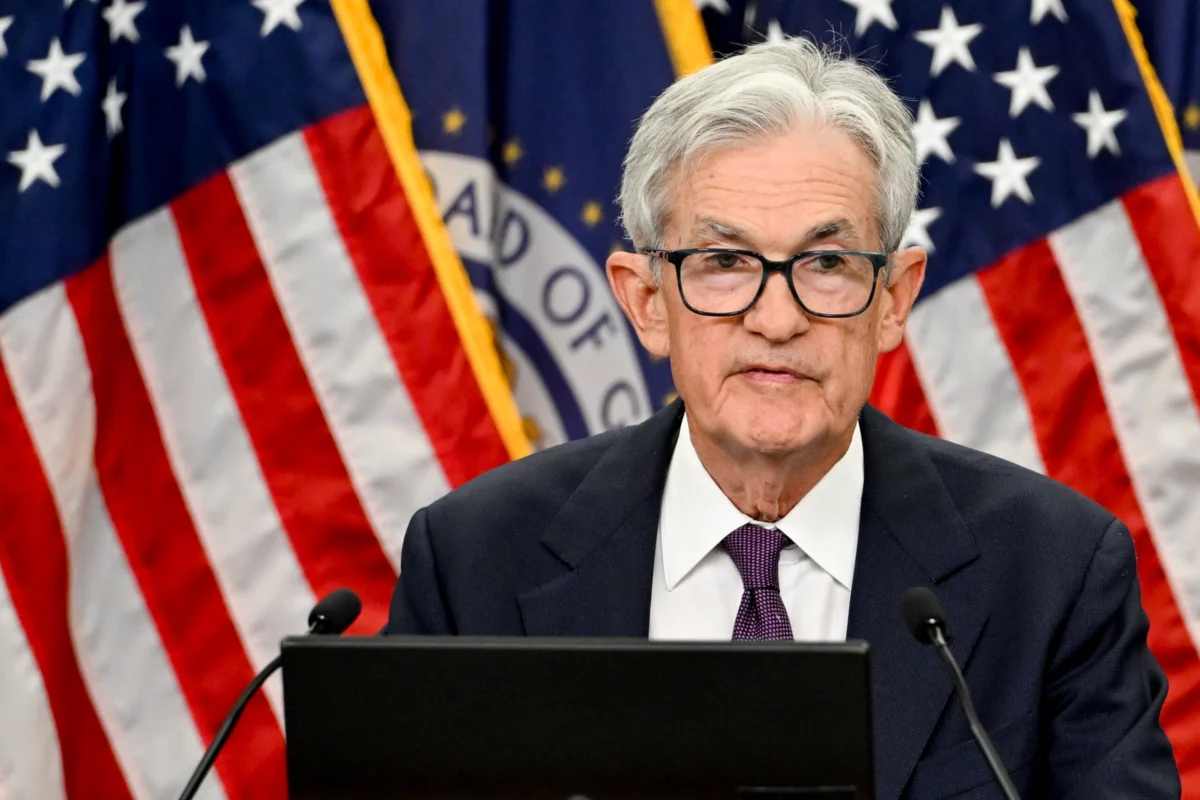
The Federal Reserve concluded its policy meeting on Wednesday by maintaining interest rates at their current levels, signaling a cautious approach amidst surging inflation linked to the war with Iran and an impending potential leadership transition. Central bankers unanimously decided to keep the benchmark federal funds rate within a target range of 3.5% to 3.75%. This decision marks a period of "suspended animation," as described by Sean Snaith, director of the University of Central Florida’s Institute for Economic Forecasting, reflecting the dual uncertainties of geopolitical conflict and a possible change in Fed leadership from Chair Jerome Powell to President Donald Trump’s yet-to-be-confirmed nominee, Kevin Warsh. The holding pattern offers little immediate relief for American consumers grappling with elevated gas prices and broader affordability challenges, as the "cavalry isn’t coming anytime soon," Snaith warned.
The Federal Reserve’s Deliberation and Decision
The Federal Open Market Committee (FOMC), the monetary policy-making body of the Federal Reserve System, faced a complex economic landscape during its April 2026 meeting. Its dual mandate of achieving maximum employment and maintaining price stability has been severely tested by recent global events. For months leading up to this decision, the Fed had engaged in a series of aggressive rate hikes, bringing the federal funds rate from near zero in early 2022 to its current range. This tightening cycle was primarily aimed at taming inflation that had soared to multi-decade highs in the aftermath of the pandemic, driven by supply chain disruptions, robust consumer demand, and expansive fiscal policies.
However, the economic narrative shifted dramatically with the onset of the war with Iran. This new geopolitical conflict introduced a significant exogenous shock, primarily impacting global energy markets. Prior to the war, inflation, while still above the Fed’s long-term 2% target, showed signs of moderating and was not accelerating further. The core Consumer Price Index (CPI), which excludes volatile food and energy components, had been gradually trending downwards, offering some hope that the Fed’s previous actions were taking hold. The latest CPI data, however, painted a different picture, with the headline figure showing a sharp increase, predominantly fueled by rising energy costs. This sudden spike complicated the Fed’s calculus, limiting its room to maneuver. Cutting rates now could further fuel inflationary pressures, while hiking them risked stifling an economy already vulnerable to external shocks and potential slowdowns. The decision to hold rates steady reflects a strategic pause, allowing policymakers to assess the full extent of the war’s economic fallout before committing to a new policy direction.
Geopolitical Tensions and Inflationary Pressures
The conflict with Iran has injected a new and potent source of inflationary pressure into the global economy, with significant repercussions for the United States. The immediate and most visible impact has been the dramatic surge in oil prices. Iran, a major oil producer, and its strategic location in a critical oil transit region, have led to supply disruptions and heightened market speculation, driving crude oil benchmarks like Brent and WTI to levels not seen in years. This "oil shock" is far from a transient phenomenon; economists widely anticipate it to have profound and "longer-term inflationary effects" across various sectors of the U.S. economy.
The ripple effect of higher energy costs is pervasive. Transportation, a fundamental component of nearly every supply chain, becomes more expensive, leading to higher freight costs for goods ranging from food to electronics. Manufacturing industries, heavily reliant on energy for production, face increased operational expenses. These costs are inevitably passed on to consumers in the form of higher prices for a vast array of goods and services, exacerbating existing affordability challenges. Beyond direct energy costs, the uncertainty generated by the war can also disrupt global supply chains, leading to shortages and further price increases. For instance, if key shipping lanes are impacted, delivery times could lengthen, and the cost of importing goods could rise substantially. The psychological impact on consumer and business confidence also plays a role, with expectations of continued inflation often leading to actual price increases as businesses pre-emptively adjust their pricing strategies. This intricate web of direct and indirect impacts means that the Fed’s task of achieving price stability has become considerably more challenging and less predictable than it was just months ago.
The Shifting Landscape of Fed Leadership
Adding another layer of complexity to the Fed’s current predicament is the looming uncertainty surrounding its leadership. The April 2026 policy meeting could potentially be Jerome Powell’s last as Chair of the Federal Reserve. Powell, who has steered the central bank through unprecedented economic challenges, including the COVID-19 pandemic and the subsequent inflationary surge, faces an uncertain future amidst a criminal probe and President Donald Trump’s stated intention to nominate Kevin Warsh. The possibility of a leadership change introduces a significant element of political risk and policy divergence.
Kevin Warsh, a former Federal Reserve governor, is widely considered a more hawkish voice on monetary policy compared to Powell. His potential appointment could signal a shift towards a more aggressive stance on inflation fighting, even if it entails greater risks to economic growth. A new chair might bring different perspectives on the balance between employment and inflation, the role of quantitative easing/tightening, and the overall framework for monetary policy. This transition, if it occurs, would not merely be a change of personnel but potentially a reorientation of the institution’s strategic direction. The period leading up to and immediately following such a change is typically marked by market apprehension and a re-evaluation of economic forecasts. Investors and businesses alike will be closely watching for signals from the new leadership, attempting to discern the future trajectory of interest rates and the Fed’s broader economic philosophy. This adds another dimension to the "suspended animation" described by Snaith, as the institution itself is in a state of flux, awaiting clarity on its future leadership and policy direction.
Expert Analysis and Market Reaction
The decision by the Federal Reserve to hold interest rates steady, while widely anticipated given the prevailing uncertainties, has garnered nuanced reactions from economists and market analysts. Sean Snaith’s characterization of the situation as "suspended animation" perfectly encapsulates the current sentiment. The phrase suggests a temporary pause, an inability to move forward or backward decisively, due to external forces. His stark assessment that "the cavalry isn’t coming anytime soon" resonates deeply with American households already struggling with the erosion of purchasing power. It implies that relief, in the form of lower borrowing costs or significant deflation, is not on the immediate horizon.

Economists largely agree that the Fed is in a holding pattern, caught between the imperative to control inflation and the risk of exacerbating an economic slowdown, particularly with the new variable of the Iran war. Many view this as a pragmatic decision, buying time for more data to emerge on both the geopolitical front and the domestic economy’s response to the war’s impact. However, some express concern that prolonging high interest rates could eventually push the economy into a recession, especially if consumer spending, a key driver of U.S. economic growth, begins to falter under sustained inflationary pressures.
Market reactions have been somewhat muted, largely because the decision was priced in. Stock markets showed minor fluctuations, reflecting investor caution rather than strong directional conviction. Bond yields, particularly on longer-term Treasuries, remain elevated, signaling continued market concern about inflation and the sheer volume of government debt. The yield on the 10-year Treasury note, a key benchmark for mortgage rates and other long-term borrowing, has been volatile, reacting sensitively to every piece of news related to the Iran conflict and inflation data. The U.S. dollar, often seen as a safe-haven asset during times of global uncertainty, has remained relatively strong, reflecting the continued attractiveness of dollar-denominated assets amidst international instability. This stability in the dollar, while beneficial for some aspects of the U.S. economy, can also make American exports more expensive, potentially impacting trade balances. The overarching theme from analysts is one of watchful waiting, with future Fed actions heavily dependent on the evolving geopolitical landscape and subsequent economic data.
Direct Impact on American Consumers and Households
The Federal Reserve’s benchmark interest rate, while seemingly an abstract economic lever, has a profound and tangible trickle-down effect on the financial lives of millions of Americans. It sets the cost of overnight lending between banks, but its influence extends to virtually all forms of consumer borrowing and savings rates.
Credit Cards: Most credit cards feature variable interest rates, meaning they are directly pegged to the prime rate, which typically hovers around 3 percentage points above the federal funds rate. With the federal funds rate holding steady at a relatively high level, the average annual percentage rate (APR) on credit cards has remained stubbornly high, just under 20% according to Bankrate data. This translates into significant financial burden for the millions of Americans who carry a balance on their credit cards. As Matt Schulz, chief credit analyst at LendingTree, succinctly put it, "Without Fed rate cuts, there’s not much reason to expect meaningful declines anytime soon, so carrying a balance will remain very expensive." This means that discretionary spending is curtailed, and households find it harder to pay down debt, potentially leading to increased financial stress.
Mortgage Rates: Fixed mortgage rates, unlike credit card rates, do not directly track the federal funds rate. Instead, they are more closely influenced by the yield on long-term Treasury notes, particularly the 10-year Treasury, which itself is shaped by broader inflation expectations and economic growth forecasts. The recent surge in inflation expectations, fueled by the Iran war and its impact on energy costs, has already pushed mortgage rates significantly higher. According to Mortgage News Daily, the average rate for a 30-year, fixed-rate mortgage jumped to 6.38% as of Tuesday, a considerable increase from 5.99% at the end of February. This sharp rise has a chilling effect on the housing market. Homeowners who locked in historically low rates during the pandemic-era boom are now "feeling stuck," as described by Michele Raneri, vice president and head of U.S. research and consulting at TransUnion. The incentive to sell their current home and buy a new one at a much higher interest rate has diminished, leading to reduced housing inventory and fewer transactions. This lack of "churn," where a dip in rates typically boosts borrowing activity and sales, contributes to a stagnant housing market and limits affordability for prospective buyers.
Student Loans: Federal student loan rates are generally fixed for the life of the loan and are determined annually based on the May auction of the 10-year Treasury note. This structure shields most borrowers from immediate fluctuations in the federal funds rate or recent economic uncertainties. For the current academic year (loans disbursed through June 30), interest rates on undergraduate federal student loans stand at 6.39%, as reported by the U.S. Department of Education. While these rates are higher than historical lows, the fixed nature provides a degree of predictability for borrowers. However, if long-term Treasury yields continue to rise in response to persistent inflation, new federal student loans for the upcoming academic year could see further increases, adding to the cost of higher education.
Car Loans: Auto loan rates are tied to a combination of factors, including the Fed’s benchmark rate, credit risk, and market competition. With financing costs remaining elevated, car buyers are facing a difficult environment. The average rate on a five-year new car loan is currently near 7%, making monthly payments substantially higher. To manage these elevated costs, new car buyers are increasingly opting for longer loan terms, extending repayment periods to six, seven, or even eight years. This trend, while lowering monthly payments in the short term, significantly increases the total cost of ownership over the life of the loan due to accumulated interest. Data from Edmunds highlights this challenge, showing the average monthly payment on a new car reaching an all-time high of $773 in the first quarter of 2026. Joseph Yoon, consumer insights analyst at Edmunds, noted that "Car buyers are in a tough spot right now because they’re getting squeezed from both ends: high sticker prices and high interest rates, with neither showing any signs of letting up." This dynamic means that car ownership remains expensive, and consumers are forced to make trade-offs that can impact their long-term financial health.
Savings Rates: On the brighter side, while the Fed has no direct control over deposit rates, the yields offered on savings accounts and certificates of deposit (CDs) tend to correlate with changes in the target federal funds rate. Although rates on high-yield savings accounts and CDs have retreated from their recent peaks, they continue to offer attractive returns compared to much of the past decade. Top-yielding online savings accounts and one-year CD rates are currently paying around 4%, according to Bankrate. This means that for savers, these accounts are still providing a positive real return, meaning the interest earned is higher than the annual rate of inflation, thereby preserving purchasing power. Matt Schulz emphasized this point, stating, "Yields on high-yield savings accounts and certificates of deposit are down from their peaks of a few years ago, but they’re still strong compared to what we’ve seen for most of the past decade." This offers a small silver lining for individuals with cash reserves, allowing them to mitigate some of the inflationary pressures.
The Broader Economic Outlook and Future Policy Path
The Federal Reserve’s decision to hold rates steady reflects a moment of profound uncertainty for the U.S. economy. The confluence of persistent domestic inflationary pressures, exacerbated by a significant geopolitical shock, and the potential for a transformative change in leadership at the central bank, creates an exceptionally challenging environment for policymakers. The current "neutral" stance is a recognition that the Fed is navigating uncharted waters, where aggressive moves in either direction carry substantial risks.
Looking ahead, the trajectory of the Iran war will be a dominant factor shaping the global economic landscape and, consequently, the Fed’s policy decisions. A de-escalation could alleviate energy price pressures and allow inflation to resume its downward trend, potentially opening the door for future rate cuts. Conversely, an intensification of the conflict could send energy prices soaring further, entrenching inflation and forcing the Fed to consider even more difficult choices. The political transition at the Fed, should Kevin Warsh be confirmed, will also introduce a new set of variables, potentially leading to a shift in monetary policy philosophy.
For American consumers, the immediate future promises continued budgetary pressures. While savings rates offer some respite, the high cost of borrowing for credit cards, mortgages, and auto loans, combined with elevated prices for essential goods and services, means that financial relief remains elusive. The consumer sentiment, as indicated by the Conference Board CEO, is "okay but not great," suggesting resilience but also underlying anxieties. The Fed’s cautious stance underscores the delicate balance required to steer the economy through these turbulent times, aiming to prevent both runaway inflation and a deep recession. The path forward remains highly dependent on external events and internal policy shifts, making vigilance and adaptability key for both policymakers and households alike.
