

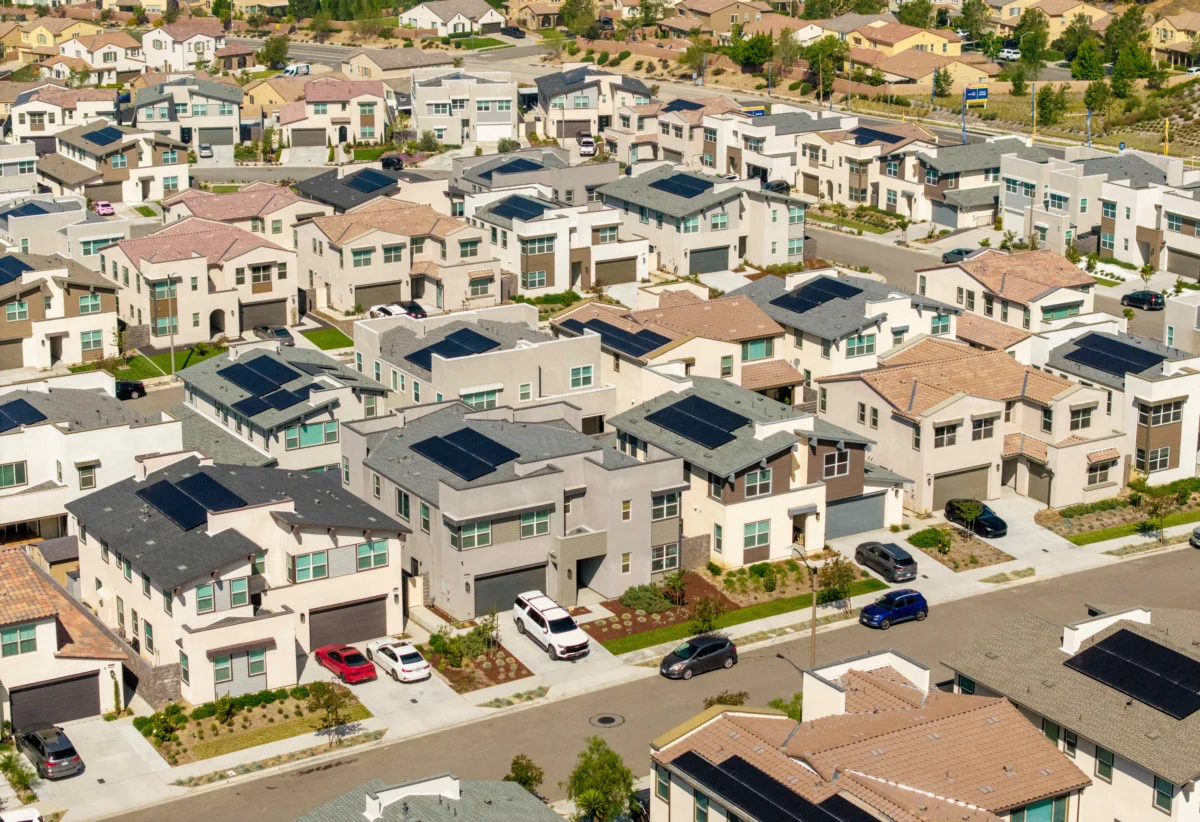
The American housing market is demonstrating a remarkable capacity for adaptation, with mortgage application volume experiencing a notable uptick despite interest rates reaching their highest levels in over a month. As of Saturday, May 9, 2026, new developments in regions like Fontana, California, symbolize a market that, while navigating a complex web of economic uncertainties and geopolitical shifts, continues to see robust activity from prospective homeowners. The Mortgage Bankers Association’s (MBA) seasonally adjusted index revealed a 1.7% increase in total mortgage application volume last week compared with the preceding period, signaling that homebuyers are increasingly acclimatizing to what has become the new normal of elevated borrowing costs.
Surge in Purchase Demand Defies Economic Headwinds
The primary catalyst for this recent surge in overall mortgage applications has been a significant rebound in demand for home purchases. Applications for a mortgage to purchase a home recorded a substantial 4% increase for the week, a figure that becomes even more compelling when viewed in a broader context: purchase applications were also 7% higher than the same week one year ago. This year-over-year growth underscores a sustained, albeit sometimes volatile, appetite for homeownership.
This renewed vigor in buyer activity comes after an initial slowdown at the onset of the spring housing market, a period that notably coincided with the commencement of the war with Iran. The geopolitical conflict introduced a layer of economic uncertainty, likely prompting a pause among some potential buyers as they assessed the broader implications for financial stability and future interest rate trajectories. However, the latest data suggests a growing resilience among consumers. Joel Kan, an MBA economist, encapsulated this sentiment in a recent release, stating, "Potential homebuyers shrugged off the current economic and mortgage rate uncertainties and returned to the market." This observation points to a market segment that, after a period of assessment, has decided to proceed with their housing aspirations, perhaps viewing the current conditions as a sustained reality rather than a temporary anomaly.
Echoing this sentiment, Lawrence Yun, chief economist for the National Association of Realtors (NAR), highlighted similar trends during a conference call this week discussing April home sales. Yun reported that real estate agents across the country were observing a palpable surge in buyer demand over just the last few weeks, reinforcing the MBA’s findings and suggesting a broad-based return of confidence or urgency among buyers. This collective return to the market, despite prevailing high rates, is a critical indicator of housing’s enduring appeal and the underlying demographic pressures that continue to fuel demand.
The Evolving Landscape of Mortgage Interest Rates
The backdrop to this resurgence in buyer activity is a mortgage rate environment that remains elevated. The average contract interest rate for 30-year fixed-rate mortgages with conforming loan balances—those at or below $832,750—edged up to 6.46% from 6.45% in the preceding week. While this week-over-week increase might appear marginal, it positions rates at their highest point in over a month, underscoring the persistent upward pressure. Notably, the points associated with these loans, including the origination fee for those with a 20% down payment, saw a slight decrease to 0.63 from 0.66, potentially offering a minor offset to the rising rate.
The current week has seen even sharper movements in mortgage rates, largely in reaction to a confluence of significant macroeconomic and geopolitical developments. According to a separate survey from Mortgage News Daily, the average rate on the 30-year fixed mortgage has climbed an additional 14 basis points so far this week. This accelerated increase is attributed to two primary factors: less optimistic news regarding a possible resolution to the ongoing war with Iran, which tends to introduce greater market volatility and risk aversion, and a hotter-than-expected monthly report on consumer prices. The latter, indicative of persistent inflationary pressures, often prompts expectations of continued hawkish monetary policy from the Federal Reserve, thereby pushing bond yields and, consequently, mortgage rates higher.
To put this in perspective, mortgage rates have undergone a significant transformation over the past two years. Following a period of historically low rates during the pandemic, driven by accommodative monetary policies, rates began their ascent in early 2022 as the Federal Reserve embarked on an aggressive campaign of interest rate hikes to combat surging inflation. While the Fed directly influences the federal funds rate, which impacts short-term borrowing costs, its actions have a profound indirect effect on long-term rates like mortgages. The 6.46% average rate, while a deterrent for some, represents a stabilization at a higher plateau compared to the sub-4% rates observed just a few years prior, forcing homebuyers to recalibrate their expectations and budgets. This sustained period of elevated rates has effectively reset market psychology, leading to the current scenario where buyers are adjusting to these higher costs as the norm.
Refinance Activity: A Shifting Dynamic
In contrast to the buoyant purchase market, applications to refinance a home loan experienced a slight decline of 1% for the week. Despite this weekly dip, refinance applications remained significantly higher, by 28%, compared to the same week one year ago. This year-over-year increase likely reflects a period in mid-2025 when rates might have been even higher or more volatile, making current rates relatively more attractive for some homeowners.
However, the longer-term trend for refinancing appears to be downward. Joel Kan further noted that refinance applications accounted for a little more than 40 percent of total applications last week, marking the lowest share since July 2025. This diminishing proportion of refinance activity is a logical consequence of the prevailing high-interest rate environment. Many homeowners who secured mortgages during periods of historically low rates (e.g., 2020-2021) have little incentive to refinance into a higher rate. Those who might still benefit are likely a smaller cohort with adjustable-rate mortgages or those who need to extract equity for specific purposes, even at a higher rate. The shrinking share indicates that the pool of eligible and motivated homeowners for refinancing at current rates is contracting.
Broader Economic and Geopolitical Context: Unpacking the "Uncertainties"
The "economic and mortgage rate uncertainties" mentioned by Kan are not abstract concepts but are deeply rooted in the current global and domestic landscape. The "war with Iran," a significant geopolitical development, carries multiple economic implications. Such conflicts typically trigger increased volatility in global energy markets, leading to higher oil prices, which then translate into increased transportation and production costs across various sectors. This inflationary pressure can further complicate the Federal Reserve’s efforts to manage prices, potentially leading to a sustained period of higher interest rates. Furthermore, geopolitical tensions can dampen investor confidence, leading to a flight to safety in assets like U.S. Treasuries, which ironically can initially push bond yields down, but prolonged uncertainty often leads to a risk premium being priced into all assets, including mortgages. The initial stall in the spring housing market underscores the immediate impact of such a conflict on consumer sentiment and financial planning.
Compounding these geopolitical concerns is the persistent challenge of domestic inflation, highlighted by the "hotter-than-expected monthly report on consumer prices." A higher-than-anticipated Consumer Price Index (CPI) report indicates that inflation is not cooling as rapidly as policymakers or markets had hoped. This can solidify expectations that the Federal Reserve will maintain its restrictive monetary policy for longer, or even consider further rate hikes, to bring inflation back to its target. Higher inflation erodes purchasing power and can lead to increased wage demands, creating a cycle that is difficult to break. For the housing market, persistent inflation directly contributes to elevated mortgage rates, as lenders demand higher returns to compensate for the erosion of their capital’s value over time.
Despite these significant headwinds, the resilience of the housing market suggests that other economic factors might be providing a counterbalance. A robust labor market, for instance, with low unemployment rates and steady wage growth, can instill a sense of financial security among potential homebuyers, empowering them to navigate higher borrowing costs. Strong consumer balance sheets, perhaps accumulated during periods of economic stimulus or sustained savings, could also be playing a role. The adaptability of buyers, combined with a potentially strong underlying economic foundation in certain sectors, allows them to "shrug off" some of the prevailing uncertainties.
Affordability and Supply: Ongoing Market Challenges
While demand appears robust, the intersection of elevated mortgage rates and sustained buyer interest continues to exacerbate affordability challenges across the nation. In areas like Fontana, California, a growing suburban hub within the Inland Empire, the demand for housing remains strong, driven by population growth and proximity to job centers. However, this demand, coupled with persistent inventory shortages, places upward pressure on home prices. When higher prices are combined with mortgage rates exceeding 6%, the monthly housing payment for a median-priced home can become prohibitive for a significant portion of the population, particularly first-time homebuyers or those with moderate incomes.
The fundamental issue of housing supply remains a critical constraint. Years of underbuilding, coupled with increasing population, have created a structural deficit in available housing units. Even with new developments like those pictured in Fontana, the pace of construction often struggles to keep up with the accumulating demand. This imbalance creates a competitive market where buyers are often forced to contend with bidding wars or accept higher prices, further straining affordability. While the current market sees buyers returning, it also suggests that those who can afford to buy are doing so, potentially leaving a larger segment of the population priced out.
Expert Perspectives and Future Trajectories
The insights from economists like Joel Kan and Lawrence Yun paint a picture of a market that is not collapsing under pressure but rather recalibrating. Their observations suggest that the initial shock of higher rates and geopolitical events has largely been absorbed, and a segment of buyers has adjusted their expectations. However, the path forward remains nuanced.
Analysts are likely to infer that while buyer sentiment shows resilience, the market is highly sensitive to further shifts in interest rates or economic indicators. A sustained period of inflation above expectations could prompt further tightening from the Federal Reserve, pushing mortgage rates even higher and potentially chilling buyer enthusiasm once again. Conversely, any credible signs of de-escalation in the Iran conflict or a more rapid cooling of inflation could provide some relief, leading to a moderation or even a slight decrease in rates, which would likely stimulate even greater demand.
The long-term trajectory will depend on a delicate balance of factors: the Federal Reserve’s ability to tame inflation without triggering a significant economic downturn, the resolution or stabilization of geopolitical tensions, and the continued pace of housing construction. While the current market demonstrates buyer adaptation, the underlying structural issues of supply and affordability will persist, shaping the housing landscape for the foreseeable future. The current environment indicates that the housing market, much like the broader economy, is operating within a new paradigm where elevated costs and external uncertainties are persistent features, demanding greater flexibility and resilience from all participants.
Conclusion: A Resilient Housing Market Navigates Complex Headwinds
The housing market in mid-2026 presents a compelling narrative of resilience and adaptation. Despite mortgage rates reaching multi-month highs and navigating the initial economic fallout from a geopolitical conflict, homebuyers have demonstrated a willingness to engage, driving up mortgage application volumes, particularly for purchases. This sustained demand, articulated by leading economists, suggests a market that is finding its "new normal" in an environment of elevated borrowing costs. However, this optimism is tempered by the ongoing challenges of affordability, persistent inflationary pressures, and the unpredictable nature of global events. As the market progresses, its ability to maintain momentum will hinge on the evolving interplay of these critical economic and geopolitical forces, demanding careful monitoring from all stakeholders.
