

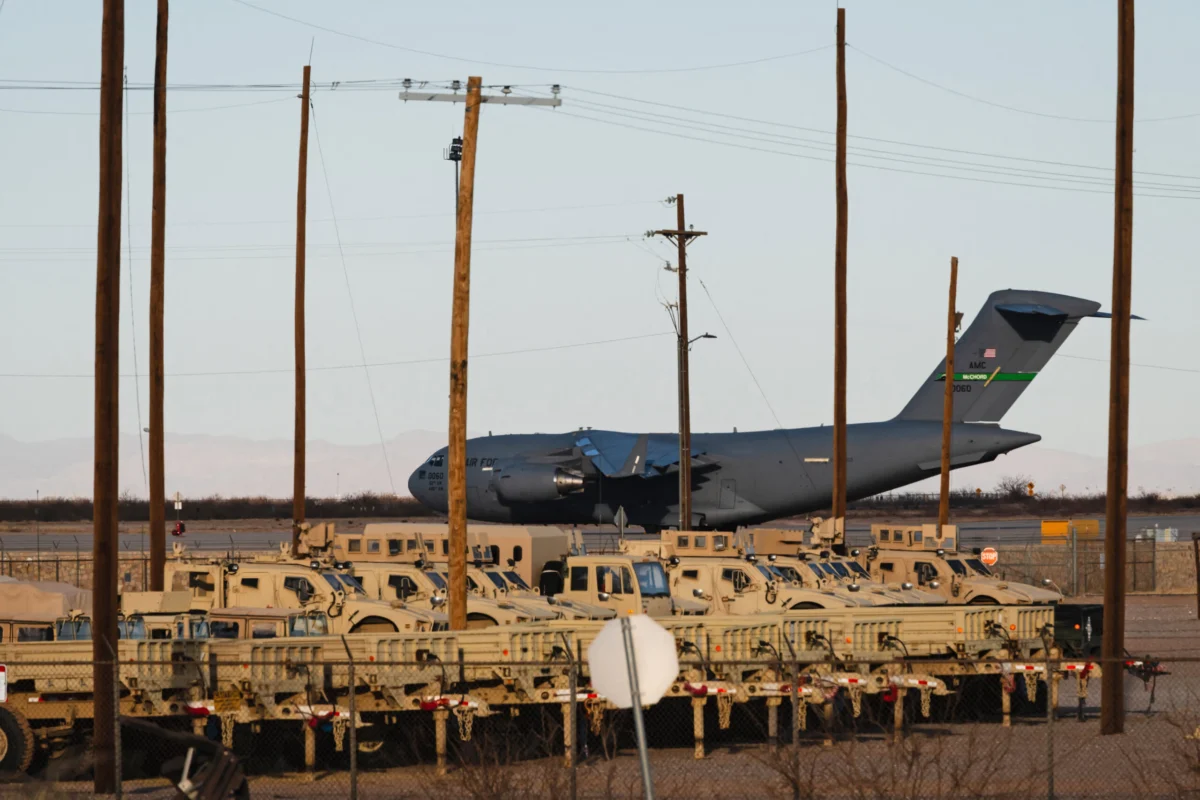
In a significant legal rebuke to the executive branch’s immigration enforcement strategies, U.S. District Court Judge Brian Murphy ruled on Wednesday that the Trump administration acted in direct violation of a standing federal injunction. The ruling followed the clandestine deportation of eight migrants from Texas to South Sudan, a country currently mired in civil instability and classified by the U.S. State Department as a high-risk zone for violence. Judge Murphy, presiding in the District of Massachusetts, stated that the administration’s actions were "unquestionably violative" of a court order issued in March, which was designed to protect the due process rights of individuals being sent to countries other than their own.
The controversy centers on a Boeing C-17 Globemaster III flight that departed from Biggs Army Airfield in Fort Bliss, El Paso, earlier this week. While the Department of Homeland Security (DHS) maintains that the individuals onboard were high-priority targets for removal due to violent criminal histories, the court found that the manner in which they were deported circumvented the legal requirements for "third-country" removals. Under the March injunction, the government is prohibited from sending migrants to a third country without first providing them a meaningful opportunity to raise claims of potential persecution or torture in the destination territory.
The Judicial Ruling and the Breach of Injunction
During an emotional and tense hearing on Wednesday, Judge Murphy detailed the sequence of events that led to the removal of the eight men. The migrants—hailing from Myanmar, Laos, Vietnam, Cuba, Mexico, and South Sudan—were reportedly notified of their final destination late Monday evening, well outside of standard business hours. By Tuesday morning, between 9:00 a.m. and 10:00 a.m., they had already been moved from Immigration and Customs Enforcement (ICE) custody to the waiting military aircraft.
Judge Murphy emphasized that this timeline made it "impossible" for the individuals to consult with legal counsel or communicate with their families. "The department’s actions," Murphy noted, "are unquestionably violative of this court’s order." The judge’s frustration was palpable after a 30-minute sealed proceeding, during which government attorneys reportedly struggled to justify the speed and secrecy of the operation.
The core of the legal dispute lies in the "third-country" designation. While one of the eight migrants was a national of South Sudan, the others were being sent to a country with which they had no known ties. Under international and domestic law, including the United Nations Convention Against Torture (CAT), the U.S. is bound by the principle of non-refoulement, which prohibits the return of individuals to countries where they would likely face torture or irreparable harm. By denying the migrants the time to file for a "Withholding of Removal" or a "Fear of Persecution" interview regarding South Sudan, the court ruled the administration stripped them of their fundamental due process.
Profiles and Government Justification
The Department of Homeland Security, in a press briefing held Wednesday morning, defended the operation as a necessary measure for public safety. According to DHS officials, the group included individuals with "violent criminal convictions," including charges related to murder and sexual assault. The administration has frequently used the presence of criminal records to justify expedited removal processes, arguing that the threat these individuals pose to the American public outweighs the procedural delays of the immigration court system.
The individuals identified in the operation include Enrique Arias-Hierro, Jose Manuel Rodriguez-Quinones, Thongxay Nilakout, Jesus Munoz-Gutierrez, Dian Peter Domach, Kyaw Mya, Tuan Thanh Phan, and Nyo Myint. While the government highlighted their criminal backgrounds, immigration advocates argue that even those with criminal records are entitled to the protections of the law, particularly when being sent to a conflict zone.
The Chronology of the Secret Deportation
The timeline of the deportation suggests a highly coordinated effort to bypass judicial oversight.
- March 2025: Judge Brian Murphy issues an injunction preventing the deportation of migrants to third countries without a "meaningful opportunity" to object based on fears of torture or persecution.
- Early April 2025: The administration attempts to deport individuals from the Philippines, Vietnam, and Laos to Libya. Judge Murphy blocks this move, reaffirming the March injunction.
- Monday, April 14, 2025 (Evening): The eight migrants are notified for the first time that they will be sent to South Sudan.
- Tuesday, April 15, 2025 (Morning): Between 8:45 a.m. and 10:15 a.m., the migrants are loaded onto a Boeing C-17 at Biggs Army Airfield. The flight departs shortly thereafter.
- Wednesday, April 16, 2025: Immigration attorneys file emergency motions after losing contact with their clients. DHS confirms the deportation in a morning briefing. Judge Murphy holds a hearing and rules that the administration violated his order.
Geopolitical Risks: South Sudan as a Destination
The choice of South Sudan as a deportation hub has drawn sharp criticism from humanitarian organizations and the court alike. The country, which gained independence in 2011, has been plagued by instability for much of its existence. A 2018 power-sharing agreement between President Salva Kiir and Vice President Riek Machar brought a fragile end to five years of civil war, but that peace is currently on the brink of collapse.
Recent reports indicate that violent clashes between various factions have ramped up significantly in 2025. The U.S. State Department maintains a "Level 4: Do Not Travel" advisory for South Sudan, citing "crime, kidnapping, and armed conflict." Crucially, in March 2025, the State Department ordered the departure of all non-emergency U.S. government employees from the country due to deteriorating security conditions.
"Sending individuals—many of whom do not speak the local languages or understand the tribal dynamics—into a pre-civil war environment is a death sentence," said an advocate for the migrants. The judge noted the irony of the State Department ordering its own employees out of a country while the DHS simultaneously flies deportees into it.
The Case of the "Disappeared" Migrants
One of the most concerning aspects of the Wednesday hearing was the status of Nyo Myint, a migrant from Myanmar. His attorney, Jonathan Ryan, based in San Antonio, expressed outrage at the lack of transparency from the federal government. While there were suggestions from government attorneys that Myint might have been diverted to his home country of Burma (Myanmar), Ryan stated that he has had no confirmation of his client’s whereabouts.
"I have not heard from my client," Ryan said. "How am I supposed to take their word that they sent him to Burma? He has been ‘disappeared’ by the state."
Ryan’s comments highlight a broader concern among the legal community regarding the "black site" nature of some recent deportation flights. Government attorneys declined to share the final destination or current location of the plane during the hearing, citing security protocols. This lack of transparency has led to accusations that the administration is treating due process as a "privilege" rather than a constitutional mandate. "It is a problem for our democracy when we stop doing due process for unpopular people," Ryan added.
A Pattern of Third-Country Removal Attempts
This week’s flight is not an isolated incident but part of a broader, more aggressive strategy by the Trump administration to clear the backlog of deportable individuals. Earlier this month, the administration attempted a similar maneuver involving Libya. In that instance, migrants from Southeast Asia were slated for removal to Tripoli, a city that has seen intermittent urban warfare for years. Judge Murphy blocked that flight, citing the same due process concerns raised in the South Sudan case.
The use of third countries—often those with weak central governments or those willing to accept financial incentives in exchange for taking deportees—is a tactic intended to bypass the refusal of home countries to accept their citizens back. Countries like Vietnam and Myanmar often have complex or non-existent repatriation agreements with the U.S., leading to thousands of individuals living in a "legal limbo" with final orders of removal but no place to go. By utilizing South Sudan or Libya, the administration appears to be testing the limits of judicial patience and international norms.
Legal and Policy Implications
The ruling by Judge Murphy sets the stage for a potential constitutional showdown between the judiciary and the executive. If the administration continues to ignore or circumvent injunctions, it could face contempt of court charges, though the enforcement of such charges against high-ranking executive officials is historically rare and legally complex.
From a policy perspective, the administration’s "Operation Aurora" and similar initiatives reflect a commitment to mass deportation that prioritizes speed over procedural safeguards. However, this "move fast and break things" approach to immigration law is meeting significant resistance in the federal court system. Legal analysts suggest that the administration may be banking on the hope that once a migrant is physically outside of U.S. borders, the courts lose their jurisdiction to intervene, effectively rendering any legal victory for the migrant moot.
The implications for the eight men already deported remain dire. If the plane has indeed landed in South Sudan, the U.S. government has limited ability to ensure their safety or monitor their status. For those with no ties to the region, they are now "stateless" individuals in one of the most dangerous conflict zones in the world.
As of Wednesday evening, the Department of Justice has not indicated whether it will appeal Judge Murphy’s ruling or if it will attempt to return the migrants to the United States to comply with the court’s order. The case remains a focal point for the ongoing debate over the limits of executive power and the enduring necessity of the rule of law in the face of national security and border enforcement priorities.
