

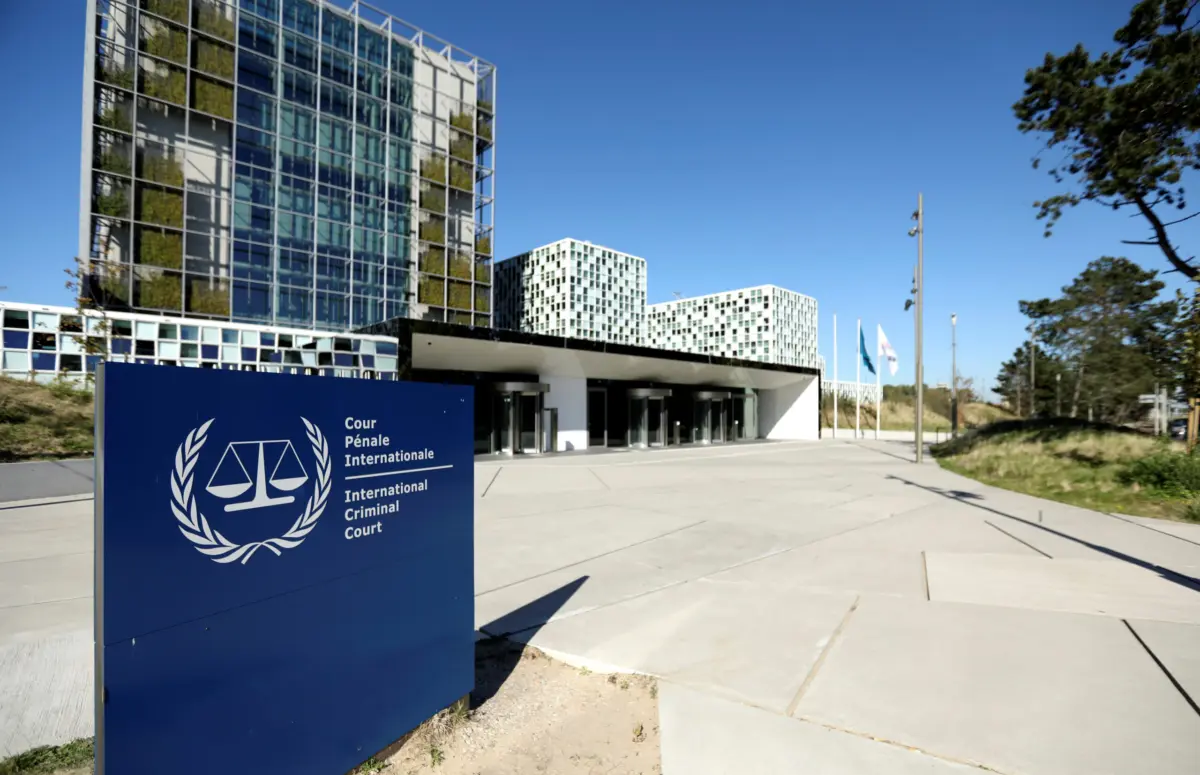
The European Parliament has officially bestowed its highest human rights honor, the Sakharov Prize for Freedom of Thought, upon the International Criminal Court (ICC), marking a definitive moment of transatlantic friction. The announcement, made in Strasbourg, comes less than fourteen days after United States President Donald Trump intensified a campaign against the Hague-based tribunal, vowing to dismantle the institution through a series of aggressive economic and travel sanctions. This prestigious award serves not only as a recognition of the court’s mandate to prosecute the world’s most heinous crimes but also as a symbolic shield brandished by the European Union in defense of the rules-based international order.
In announcing the decision, European Parliament President Roberta Metsola emphasized that the prize reflects a core European commitment to multilateralism. She noted that at a time when the foundations of international law are being tested by geopolitical shifts, the ICC remains a vital instrument for ensuring that no individual, regardless of their rank or political affiliation, is above the law. The decision to honor the institution as a whole, rather than a specific individual, underscores the collective nature of the "unprecedented challenges" currently facing the court’s judges, prosecutors, and administrative staff.
A Growing Consensus of International Recognition
The Sakharov Prize is the second major accolade received by the international legal community this month. Earlier in October, the Norwegian Nobel Committee awarded the 2026 Nobel Peace Prize to Navi Pillay, the former ICC judge and UN High Commissioner for Human Rights. Pillay was recognized for her lifelong dedication to the promotion of peace through the rigorous application of international law. Together, these awards suggest a concerted effort by European and international institutions to bolster the legitimacy of the ICC at a moment when its operational capacity is being threatened by the world’s most powerful economy.
Responding to the announcement, ICC President Tomoko Akane expressed profound gratitude, stating that the recognition arrives at a critical juncture. Akane highlighted that the court is currently operating under a shadow of intimidation that seeks to undermine its judicial independence. "Against this backdrop, the Sakharov Prize carries particular significance," Akane said. "It reaffirms the importance of independent judicial institutions and of those who work tirelessly to uphold international law in the face of adversity."
The Genesis of the Confrontation: Warrants and Sanctions
The current escalation in tensions between Washington and The Hague can be traced back to the ICC’s 2024 decision to issue arrest warrants for high-ranking officials involved in the conflict in Gaza. In November 2024, the court issued warrants for Israeli Prime Minister Benjamin Netanyahu and his former Defence Minister, Yoav Gallant, alleging war crimes and crimes against humanity. While the court also issued warrants for leaders of Hamas, the move against Israeli leadership drew immediate and fierce condemnation from both the Israeli government and its allies in the United States.
The Trump administration, which has long maintained that the ICC lacks jurisdiction over citizens of non-member states such as the U.S. and Israel, viewed the warrants as a "politicized attack" on a sovereign democracy. Following his return to office, President Trump moved to fulfill campaign promises to "cripple" the court. The newly announced sanctions are designed to be more comprehensive than previous measures, targeting the personal finances of ICC officials and any third-party entities that provide material support or evidence to the court’s investigations.
U.S. Secretary of State Marco Rubio defended the sanctions in a widely circulated video statement, labeling the ICC a "rogue court." Rubio stated, "We will ban transactions with this fake ICC, cutting off their resources and crippling their ability to operate against us. The message is clear: the United States and the American people are not subject to the jurisdiction of this body." The U.S. measures also extend to UN special rapporteurs and Palestinian human rights organizations that have collaborated with the ICC’s Office of the Prosecutor.
Timeline of U.S.-ICC Relations and Recent Escalations
The relationship between the United States and the International Criminal Court has been characterized by cycles of hostility and cautious cooperation since the court’s inception. Understanding the current crisis requires a look at the historical trajectory of this legal standoff:
- 1998–2002: The Rome Statute is adopted. While the Clinton administration signed the treaty, the Bush administration later "unsigned" it, citing concerns over the potential for politically motivated prosecutions of U.S. service members.
- 2002: The U.S. Congress passes the American Service-Members’ Protection Act, colloquially known as the "Hague Invasion Act," which authorizes the use of military force to liberate any American or citizen of a U.S.-allied country being held by the ICC.
- 2020: The first Trump administration issues an executive order sanctioning ICC Prosecutor Fatou Bensouda over investigations into alleged war crimes in Afghanistan.
- 2021: The Biden administration lifts the sanctions, opting for a policy of "disagreement without obstruction," particularly as the ICC began investigating Russian actions in Ukraine.
- May 2024: ICC Prosecutor Karim Khan announces he is seeking arrest warrants for Israeli and Hamas leaders.
- November 2024: The ICC formally issues arrest warrants for Netanyahu and Gallant.
- October 2026: President Trump announces a new, expanded sanctions regime, promising to dismantle the court "brick by brick."
- Late October 2026: The European Union awards the Sakharov Prize to the ICC, signaling a major diplomatic rift with the United States.
The European Response: Protective Measures and "Blocking Statutes"
The European Union’s support for the ICC is not merely symbolic. EU officials have indicated that they are preparing a suite of legal and economic countermeasures to protect the court from U.S. interference. Central to this strategy is the potential implementation of a "blocking statute."
A blocking statute is a legislative tool that prohibits EU citizens and companies from complying with the extraterritorial effects of foreign sanctions. Similar to the measures used to protect European trade with Iran and Cuba in the 1990s, this statute would effectively nullify the impact of U.S. sanctions within the European single market. It would allow ICC officials to maintain bank accounts, travel freely within the Schengen Area, and continue their work without fear of their assets being frozen by U.S.-linked financial institutions.
European Commission President Ursula von der Leyen reaffirmed this commitment, stating that the ICC "must be free to pursue its mission, independently, and without pressure or intimidation." Behind the scenes, Brussels is reportedly attempting to use the six-month grace period before the U.S. sanctions take full effect to engage in diplomatic negotiations with Washington. However, analysts suggest that given the current political climate in the U.S., a reversal is unlikely, forcing the EU to choose between its closest security ally and its commitment to international law.
Analyzing the Broader Implications for Global Justice
The clash between the U.S. and the EU over the ICC represents a fundamental disagreement on the nature of global sovereignty. The U.S. position, as articulated by the Trump administration, is rooted in "Westphalian sovereignty," where the nation-state remains the ultimate arbiter of justice for its citizens. In contrast, the EU’s stance reflects a "post-national" view, where universal human rights and international treaties create a legal framework that transcends national borders.
If the U.S. succeeds in "crippling" the ICC, the implications for global justice could be profound. The court is currently the only permanent international body capable of trying individuals for genocide and crimes against humanity in regions where domestic courts are unable or unwilling to act. Investigations are currently active in several theaters, including Ukraine, Sudan (Darfur), the Democratic Republic of the Congo, and Myanmar.
Furthermore, the sanctions against UN rapporteurs and human rights groups create a "chilling effect" on the collection of evidence. Organizations that provide testimony or documentation to the ICC may find themselves cut off from international funding and the global banking system, effectively silencing the voices of victims on the ground.
Conclusion: A Divided West in an Uncertain World
The awarding of the Sakharov Prize to the International Criminal Court is a high-stakes gamble by the European Union. By elevating the court to the status of a premier human rights defender, the EU has made it difficult to compromise with the U.S. without appearing to abandon its own core values.
As the six-month deadline for the implementation of U.S. sanctions approaches, the international community watches a growing divide within the Western alliance. The outcome of this struggle will likely determine the viability of international criminal justice for the next generation. Whether the ICC emerges from this period as a strengthened, independent institution or as a "brick-by-brick" casualty of geopolitical realignment remains the defining question for the future of the international legal order. For now, the Sakharov Prize stands as a testament to Europe’s belief that justice should be blind to power, even when that power emanates from its most significant partner.
