

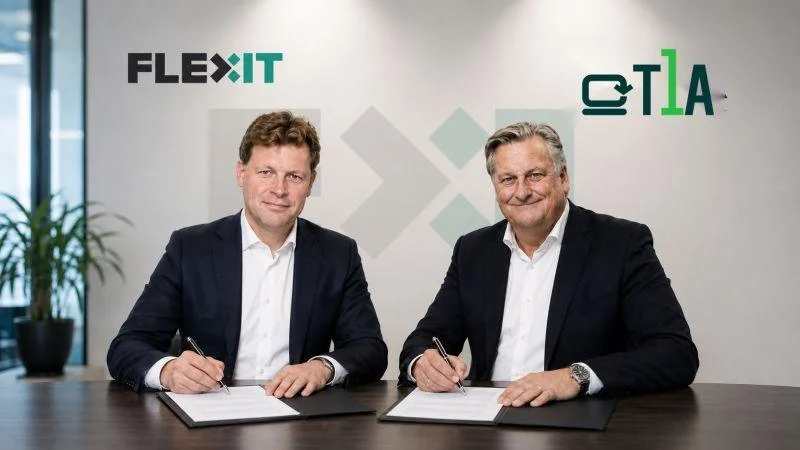
The European technology landscape reached a significant milestone in the transition toward a circular economy this week as T1A, a leading provider of circular IT solutions, announced the strategic acquisition of Flex IT. This transaction, backed by the French investment giant Eurazeo through its dedicated impact buyout fund, aims to establish a preeminent European circular IT platform with combined annual revenues estimated at €150 million (approximately USD $174 million). The merger represents a major consolidation in the sustainable hardware sector, bridging the gap between corporate IT asset disposition and the secondary retail market.
The deal is a direct result of Eurazeo’s Planetary Boundaries Fund (EPBF) executing its mandate to scale environmental solutions. EPBF, which acquired a majority stake in Denmark-based T1A in May 2026, was joined in this transaction by Dansk Vækstkapital, acting as a value-add minority investor. By integrating the operational strengths of T1A and Flex IT, the new entity is positioned to manage the entire lifecycle of enterprise technology, from the moment a device is retired by its first owner to its eventual refurbishment and redistribution to a new user.
A Strategic Union of Lifecycle Specialists
The merger is fundamentally built on the complementary nature of the two companies’ operations, which previously occupied opposite ends of the circular value chain. T1A, headquartered in Denmark, has built a reputation for its sophisticated collection and processing infrastructure. The company specializes in the "first-use" exit phase, collecting hardware from corporate clients and performing high-level, certified data erasure and refurbishment. Their expertise ensures that sensitive corporate data is handled according to the strictest security protocols while preparing the physical assets for a second life.
Conversely, the Netherlands-based Flex IT has focused on the distribution and "second-life" phase of the cycle. With a massive network of approximately 13,000 resellers across Europe, Flex IT provides the commercial engine necessary to move refurbished hardware back into the hands of consumers, educational institutions, and small businesses. Beyond distribution, Flex IT operates substantial refurbishment facilities in Poland and offers specialized "hardware-as-a-service" models, including rental and demonstration programs.
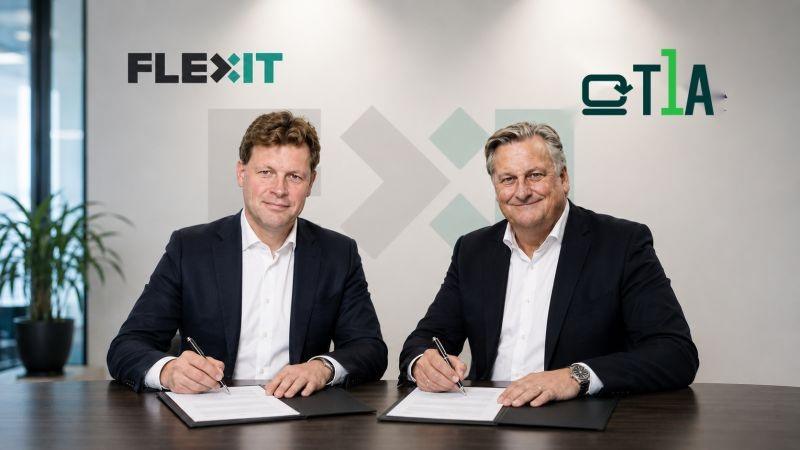
By merging these two entities, the combined group creates a closed-loop system. A device retired by a corporation in Copenhagen can now be collected by T1A, wiped and refurbished at a certified facility, and then sold through Flex IT’s network in France or Germany. This vertical integration ensures that the chain of custody remains intact, maximizing the residual value of the hardware while providing a transparent, sustainable solution for ESG-conscious corporations.
Leadership and Operational Synergy
The leadership structure of the newly formed platform reflects a balanced integration of both organizations. Angelo Bul, the former Chief Executive of Flex IT, has been appointed as the Chief Executive Officer of the combined group. Peter Hemicke, the founder of T1A, will transition to the role of Executive Chairman and remains a significant co-investor alongside the Eurazeo Planetary Boundaries Fund.
In a statement following the announcement, Angelo Bul emphasized the cultural and environmental shift the merger intends to catalyze. "Far too much corporate hardware is still scrapped, or left in a cupboard for three years, without anyone ever asking whether it could be used again," Bul noted. "Together with T1A, we can now take responsibility for the whole life of a client’s equipment, from the day it arrives to the day it leaves and beyond. That is what makes reuse the normal choice rather than just the virtuous one."
Peter Hemicke echoed this sentiment, highlighting the logistical and security advantages of the merger. "What we can do now is take a device out of a company in one country and put it back to work in another, under warranty, with the chain of custody intact," Hemicke said. This capability is particularly vital for multinational corporations that require standardized sustainability reporting and data security assurances across their entire geographic footprint.
The Financial Catalyst: Eurazeo’s Planetary Boundaries Fund
The acquisition serves as a landmark transaction for Eurazeo’s Planetary Boundaries Fund (EPBF), which was launched in 2024 with a target size of €750 million. The fund reached its first close in March 2025 at €300 million, signaling strong investor appetite for impact-driven private equity. EPBF is uniquely focused on the "planetary boundaries" framework—a scientific concept developed by the Stockholm Resilience Centre that identifies nine global processes that regulate the stability and resilience of the Earth system.

By investing in T1A and facilitating the Flex IT acquisition, Eurazeo is targeting the boundary of "biochemical flows" and "resource depletion." The circular IT model directly addresses the growing crisis of electronic waste (e-waste), which is currently the fastest-growing waste stream in the world. According to United Nations data, the world generated a record 62 million tonnes of e-waste in 2022, a figure that is projected to rise significantly by 2030 if current consumption patterns persist.
Eurazeo’s strategy with EPBF is to scale businesses that provide tangible alternatives to linear "take-make-waste" economic models. The circular IT platform formed by T1A and Flex IT provides a scalable solution for resource recovery, refurbishment, and the sharing economy. By extending the life of a laptop or server from three years to six or nine years, the platform significantly reduces the demand for raw material extraction—such as lithium, cobalt, and gold—and lowers the carbon footprint associated with manufacturing new devices.
Industry Context: The Rise of the Circular IT Economy
The timing of this merger coincides with a broader shift in the European regulatory and corporate landscape. The European Union’s Corporate Sustainability Reporting Directive (CSRD) and the Sustainable Products Initiative are putting increased pressure on companies to account for their Scope 3 emissions and the end-of-life treatment of their assets. Furthermore, the "Right to Repair" legislation in Europe is fostering a market environment where refurbished and repairable goods are becoming more attractive to both enterprise and consumer buyers.
The IT Asset Disposition (ITAD) market is no longer a niche service; it has become a critical component of corporate risk management and sustainability strategy. Modern corporations are seeking partners who can provide "circularity-as-a-service," offering not just a way to get rid of old equipment, but a way to prove that the equipment was handled in an environmentally responsible and data-secure manner.
Market analysts suggest that the €150 million revenue platform created by this merger is likely just the beginning of a larger consolidation trend. As the secondary market for IT hardware matures, larger players with pan-European reach will be better positioned to serve the needs of global enterprises and navigate the complex logistics of cross-border hardware movement and local tax regulations.

Timeline of Key Events
The formation of this platform is the culmination of several years of strategic planning and capital raising:
- 2024: Eurazeo launches the Planetary Boundaries Fund (EPBF), focusing on thematic impact buyouts.
- March 2025: EPBF announces its first close at €300 million, attracting institutional investors interested in circular economy solutions.
- May 2026: Eurazeo’s EPBF acquires a majority stake in T1A, identifying the Danish company as a prime vehicle for consolidation in the circular IT sector.
- September 2026: T1A, backed by Eurazeo, officially acquires Flex IT, creating the integrated €150 million platform.
Broader Economic and Environmental Implications
The environmental impact of this merger is substantial when viewed through the lens of carbon avoidance. Manufacturing a single laptop can generate between 200kg and 350kg of CO2 equivalent, with the vast majority of those emissions occurring during the extraction of raw materials and the assembly phase. By extending the life of a single device through professional refurbishment, the T1A-Flex IT platform effectively offsets the need for a new device to be manufactured, providing a measurable "avoided emissions" metric for its clients.
Furthermore, the merger addresses the "digital divide" by making high-quality, enterprise-grade technology available at lower price points through the refurbished market. This secondary market is essential for schools, non-profits, and emerging businesses that require reliable hardware but may not have the budget for brand-new equipment.
As the combined company moves forward, its primary challenge will be integrating the logistical networks of Denmark, the Netherlands, and Poland while maintaining the high standards of data security that corporate clients demand. However, with the financial backing of Eurazeo and the operational experience of Bul and Hemicke, the platform is well-positioned to lead the European market.
This transaction serves as a blueprint for how private equity can drive the transition to a circular economy. By identifying fragmented markets with high environmental impact and providing the capital necessary for consolidation, firms like Eurazeo are demonstrating that sustainability and financial scale are not mutually exclusive. The new €150 million circular IT platform stands as a testament to the viability of reuse as a primary business model in the 21st century.
