

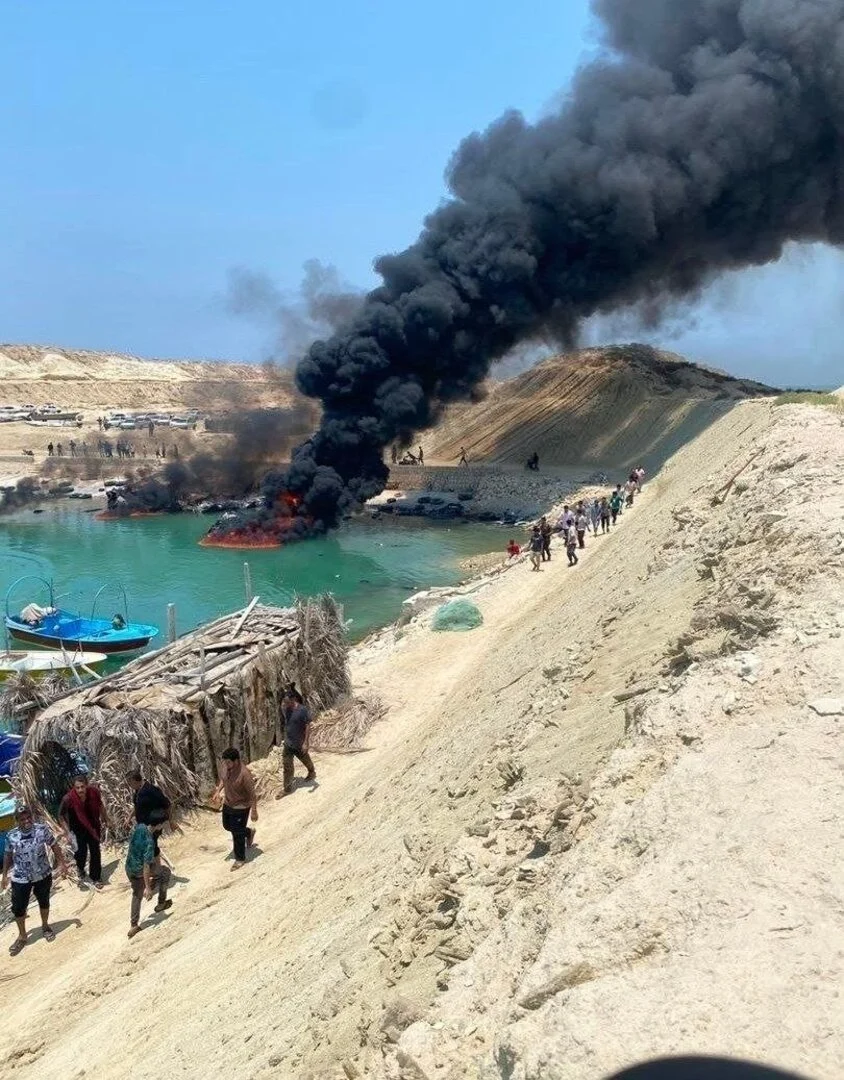
Iranian officials have vehemently condemned a series of United States military strikes across Bushehr province, asserting that the coordinated attacks on July 8, 2026, inflicted significant damage on civilian infrastructure, including areas alarmingly close to the Bushehr nuclear power plant, critical airports, logistical facilities, and active fishing wharfs, where several fishing boats reportedly caught fire. In stark contrast, the US Department of Defense maintained that its operations were meticulously aimed at legitimate military targets, designed to degrade capabilities posing a threat to regional stability and American interests, while denying any deliberate targeting of civilian sites. This latest escalation marks a perilous juncture in the long-standing, volatile relationship between Washington and Tehran, drawing immediate international concern over the potential for broader regional destabilization.
Main Facts: A Province Under Fire
The strikes, which commenced in the early hours of Thursday, July 8, 2026, reportedly targeted various locations within Bushehr province, a strategic coastal region in southwestern Iran. Iranian state media, citing local authorities and eyewitness accounts, detailed a litany of damages. Reports indicated that facilities near the Bushehr nuclear power plant experienced power disruptions and minor structural damage, though Iranian Atomic Energy Organization officials swiftly affirmed that the plant itself remained secure and operational, with no release of radioactive material. However, the proximity of the strikes to such a sensitive installation immediately amplified international anxieties.
Further reports from Tehran highlighted extensive damage to Shahid Beheshti Airport in Bushehr city and other auxiliary airfields, impacting runways, radar installations, and administrative buildings. Logistical facilities, crucial for the movement of goods and supplies, were also cited as targets, with warehouses and transport hubs reportedly sustaining heavy destruction. Perhaps most visually stark were the accounts from the Persian Gulf coastline, specifically around fishing wharfs, where multiple fishing boats were engulfed in flames, leading to significant economic losses for local communities dependent on the fishing industry. Iranian authorities have not yet released definitive figures on casualties but have indicated that emergency services were overwhelmed by the scope of the damage.
The Pentagon, in its official statement released hours after the operations concluded, confirmed that US forces had conducted "defensive strikes" against targets in Iran. The statement explicitly stated that these actions were a direct response to a series of escalating attacks by Iran-backed proxy groups against US personnel and assets in the broader Middle East region over the preceding weeks. US officials insisted that all targets were carefully selected military sites, including missile storage facilities, drone launch sites, and naval assets believed to be involved in illicit activities or threats to international shipping. The US emphasized its commitment to minimizing civilian harm, attributing any reported civilian damage to the "inherent risks of military operations" or the alleged Iranian practice of co-locating military assets within or near civilian infrastructure.
Chronology of Escalation and Retaliation
The strikes on Bushehr province did not occur in a vacuum but are the culmination of a protracted period of heightened tensions between the United States and Iran, exacerbated by regional proxy conflicts.
- Early 2026: A series of sophisticated drone and missile attacks target US military bases and diplomatic compounds in Iraq and Syria, with Washington consistently attributing responsibility to Iranian-backed militias.
- May-June 2026: Shipping lanes in the Strait of Hormuz and the wider Persian Gulf experience an increase in "harassment" incidents, including alleged attempts to interdict commercial vessels, which the US Navy publicly attributes to Iran’s Islamic Revolutionary Guard Corps (IRGC) naval forces. Oil prices begin to show volatility in response to these maritime security concerns.
- June 28, 2026: A particularly damaging drone strike hits a key US logistical hub in Kuwait, resulting in casualties among civilian contractors and significant material losses. The Pentagon issues a strong warning, vowing "decisive action" against perpetrators and their state sponsors.
- July 3, 2026: US Secretary of State engages in a series of urgent diplomatic consultations with regional allies, reportedly sharing intelligence regarding Iran’s alleged role in the recent attacks and outlining potential response options.
- July 7, 2026 (Evening GMT): Intelligence reports indicate heightened alert levels within US Central Command (CENTCOM) and naval assets in the Persian Gulf. Iranian state media reports unusual aerial activity over its western provinces, though dismisses it as routine.
- July 8, 2026 (Early Hours IRDT): Multiple waves of US air and naval assets launch strikes against targets across Bushehr province. The attacks are reported to have lasted several hours.
- July 8, 2026 (Morning IRDT): Iranian state television breaks news of the strikes, with initial reports focusing on the extent of damage and condemning the "act of aggression."
- July 8, 2026 (Mid-day EST): The Pentagon issues its official statement confirming the strikes and outlining their rationale, emphasizing the military nature of the targets.
- July 9, 2026: The international community begins to react, with calls for de-escalation from the United Nations and various national governments. Iranian and US officials continue to exchange accusations.
Supporting Data: Bushehr’s Strategic Significance
Bushehr province is not merely a coastal region; it is a nexus of Iran’s strategic interests and a critical component of its national infrastructure. Its geographical location on the Persian Gulf makes it vital for maritime trade, energy exports, and military projection.
- Bushehr Nuclear Power Plant: The plant, Iran’s only operational nuclear power facility, is a VVER-1000 pressurized water reactor built with Russian assistance. Located approximately 17 kilometers southeast of Bushehr city, it has been a focal point of international scrutiny regarding Iran’s nuclear program. While the IAEA has consistently monitored the plant, any military action in its vicinity inevitably raises concerns about safety and proliferation risks, regardless of direct targeting. The plant provides a significant portion of the region’s electricity, underscoring its civilian importance.
- Ports and Maritime Infrastructure: Bushehr port is one of Iran’s oldest and most active ports, handling a substantial volume of commercial cargo and serving as a key fishing hub. The province’s extensive coastline also hosts numerous smaller ports and fishing wharfs, essential for local livelihoods and regional commerce. The reported damage to these facilities could have immediate economic repercussions for thousands of residents.
- Energy Sector: The region is rich in natural gas reserves, including parts of the massive South Pars/North Dome gas field, shared with Qatar. While the strikes were not reported to have directly hit gas infrastructure, Bushehr province is integral to Iran’s energy production and export capabilities. Any disruption to its broader logistical network could indirectly impact the energy sector.
- Military Installations: Given its strategic location, Bushehr province is known to host various Iranian military facilities, including naval bases, air defense systems, and potential missile storage sites. These installations are considered legitimate military targets by adversarial forces, though their exact locations relative to civilian areas often become a point of contention during conflicts.
Iranian officials estimate the initial economic damage to civilian infrastructure in Bushehr province to be in the hundreds of millions of dollars, a figure that could rise significantly as comprehensive assessments are completed. The disruption to fishing operations alone could impact thousands of families and the regional food supply chain.
Official Responses: Conflicting Narratives and International Concern
The aftermath of the strikes saw a flurry of official statements, each framing the events through its own national interest and diplomatic objectives.
Iran’s Stance:
Iran’s Foreign Ministry spokesperson, Saeed Khatibzadeh, vehemently condemned the US actions as a "blatant act of state terrorism" and a "gross violation of international law and Iran’s national sovereignty." He stated that Iran reserved the right to respond decisively and proportionately to these "criminal acts." The head of the Iranian Atomic Energy Organization, Mohammad Eslami, issued a separate statement assuring the international community that the Bushehr nuclear power plant was "fully secure and operational," despite minor disruptions to external power lines, and that IAEA inspectors would be granted full access to verify the plant’s integrity. General Hossein Salami, Commander-in-Chief of the Islamic Revolutionary Guard Corps (IRGC), vowed "a painful and crushing response" to the US aggression, emphasizing that Iran would not tolerate attacks on its territory or its people. Iranian state media extensively covered the damage reports, showcasing images of burning boats and damaged buildings, aimed at galvanizing public opinion and drawing international sympathy.
United States’ Position:
The Pentagon’s spokesperson, Brigadier General Patrick Ryder, reiterated that the strikes were "self-defense actions" executed to protect US personnel and interests in the region. "These precision strikes targeted facilities and assets directly linked to the recent pattern of attacks against our forces and allies," Gen. Ryder stated during a press briefing. He explicitly denied any intent to target civilian infrastructure or the nuclear power plant, asserting that "every precaution was taken to avoid collateral damage." When pressed on Iranian claims of civilian harm, he suggested that the proximity of Iranian military assets to civilian areas was a tactic that "unfortunately places innocent lives at risk." The US Department of State also issued a statement, urging Iran to "cease its destabilizing activities" in the region and to "engage in de-escalation rather than provocation," framing the strikes as a necessary measure to restore deterrence.
International Reactions:
The United Nations Secretary-General, António Guterres, expressed deep concern over the escalating tensions, calling on both sides to "exercise maximum restraint" and to "avoid any actions that could further destabilize the region." He urged for a diplomatic resolution and adherence to international law.
The International Atomic Energy Agency (IAEA) confirmed it was "closely monitoring the situation" at the Bushehr nuclear power plant and was in contact with Iranian authorities regarding the safety and security of the facility. It reiterated its mandate to ensure the peaceful use of nuclear energy.
European Union foreign policy chief, Josep Borrell, called for an urgent de-escalation and urged all parties to return to the negotiating table, warning that "the region cannot afford another conflict."
Saudi Arabia and the United Arab Emirates, key US allies in the region, issued cautious statements, expressing concern over regional stability but broadly supporting actions aimed at curbing "destabilizing actors."
Russia and China condemned the US strikes, with Russia’s Foreign Ministry calling them "illegal and counterproductive" and China’s spokesperson urging respect for Iran’s sovereignty and territorial integrity.
Broader Impact and Implications
The US strikes on Bushehr province carry significant implications, not only for the immediate future of US-Iran relations but for the wider geopolitical landscape of the Middle East and global energy markets.
Regional Stability and Conflict Risk: The most immediate concern is the heightened risk of a wider regional conflict. Iran’s vowed "painful response" could manifest in various ways, including renewed attacks by proxy groups, cyberattacks, or direct military action against US or allied targets in the Gulf. This tit-for-tat escalation could spiral out of control, drawing in other regional actors and leading to a full-scale confrontation that neither side explicitly desires but could inadvertently trigger. The already fragile security environment in Iraq, Syria, and Yemen could further deteriorate.
US-Iran Relations and Diplomacy: These strikes severely undermine any residual prospects for diplomatic engagement between Washington and Tehran. Efforts to revive the Iran nuclear deal (JCPOA), which had been largely moribbled since 2018, are now likely to be shelved indefinitely. The incident reinforces hardline positions on both sides, making future de-escalation efforts exceedingly challenging. Trust, already minimal, has been further eroded.
International Law and Sovereignty: Iran’s claims of a violation of its sovereignty and international law will resonate in various international forums. The US justification of "self-defense" against non-state actors operating from Iranian soil raises complex questions about the parameters of defensive actions and the threshold for military intervention against sovereign states. This debate will likely continue to fuel geopolitical tensions and diplomatic maneuvers at the UN and other multilateral bodies.
Economic Ramifications: The Bushehr strikes, particularly the damage to port facilities and the threat to maritime security, could have a tangible impact on global energy markets. The Strait of Hormuz, through which a significant portion of the world’s seaborne oil passes, remains a critical chokepoint. Any perceived threat to its navigability due to heightened tensions could cause oil prices to spike, impacting global economies already contending with inflation and supply chain issues. Local economies in Bushehr, reliant on fishing and maritime trade, face immediate hardship.
Nuclear Safety and Proliferation: While Iranian officials maintain the Bushehr nuclear power plant is safe, the proximity of the strikes to a civilian nuclear facility is a deeply troubling precedent. It raises questions about the protocols for military action near such sensitive sites and underscores the inherent risks in conflicts involving nuclear-armed or nuclear-capable states. The IAEA’s role in monitoring and verifying the safety of nuclear installations becomes even more critical in such a volatile environment.
In conclusion, the US strikes on Bushehr province represent a dangerous escalation in the perennial US-Iran standoff. With conflicting narratives over civilian damage versus military targeting, and an array of potentially devastating implications for regional stability, global economics, and international law, the international community watches with bated breath, hoping for a path to de-escalation that currently appears increasingly elusive. The long-term consequences of these events on the already volatile Middle East remain to be seen, but the immediate outlook points towards continued tension and potential for further conflict.
