

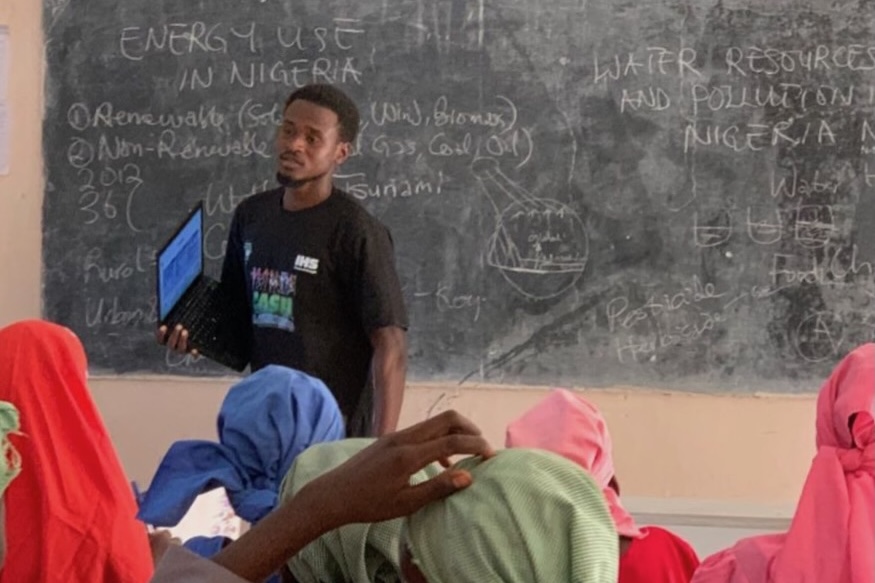
In the sweltering afternoon heat of Maiduguri, the capital of Nigeria’s Borno State, the Yerwa Government Girls’ Secondary School serves as a sanctuary of learning amidst a landscape scarred by over a decade of turmoil. Inside one of its classrooms, 26-year-old Aliyu Ibrahim stands before a group of attentive high school students, his laptop open and a chalkboard behind him displaying the day’s agenda: "Energy use in Nigeria" and the intersection of environmental degradation and regional stability. Ibrahim is not just a teacher; he is a survivor and the co-founder of the Green Panthers, a youth-led organization dedicated to climate literacy in one of the world’s most volatile regions. His mission is to transform the trauma of conflict into a catalyst for environmental stewardship, arming the youth with the knowledge to rebuild a crumbling ecosystem.
The story of the Green Panthers begins in the village of Izge, Ibrahim’s childhood home. Located near the epicenter of the Boko Haram insurgency, Izge became a symbol of the "bloody recent history" of northeast Nigeria when it was brutally attacked in 2014. The massacre resulted in the deaths of 105 villagers, but for Ibrahim, the tragedy did not end with the burial of the dead. As a teenager, he witnessed the secondary, slower-moving catastrophe that followed the violence: the total collapse of the local environment. Abandoned farmlands became dust bowls, the sound of irrigation pumps was replaced by an eerie silence, and the once-bountiful Lake Chad continued its retreat, leaving fishermen without a livelihood. This "shattered hope" among the youth became the driving force behind the establishment of the Green Panthers in 2019.
The Intersection of Climate Change and Armed Conflict
To understand the work of the Green Panthers, one must grasp the unique "climate-security nexus" that defines life in Borno State. The region sits at the edge of the Sahel, where the impacts of global warming are not theoretical but existential. According to Mayokun Iyaomolere, an expert from the Institute of Ecology and Environmental Study at Obafemi Awolowo University, Borno is facing some of the most intense impacts of global warming in sub-Saharan Africa. Extreme heatwaves and prolonged droughts are not only damaging crops but are also directly linked to increased mortality rates and mass displacement.
The insurgency led by Boko Haram and its offshoots has exacerbated these environmental stressors. Between 2011 and 2023, the conflict claimed more than 38,000 lives and displaced millions of people. When farmers are forced to flee their lands due to the threat of violence, the land is left untended, leading to rapid soil erosion and loss of biodiversity. Furthermore, the conflict has polluted natural resources; scorched-earth tactics and the destruction of infrastructure have leaked toxins into the soil and water tables. This creates a vicious cycle: climate change destroys livelihoods, which fuels poverty, which in turn makes young people more susceptible to recruitment by extremist groups. Ibrahim’s curriculum aims to break this cycle by demonstrating that environmental protection is a form of peacebuilding.
A Chronology of Environmental and Social Decline
The timeline of Borno State’s decline provides a stark backdrop for the Green Panthers’ urgency. Historically, the state was an agricultural powerhouse. In the decades prior to the insurgency, Borno produced over 420,000 tons of wheat annually, accounting for nearly a third of Nigeria’s national consumption. The fertile floodplains of the Lake Chad Basin supported a robust economy of fishing and farming. However, the emergence of Boko Haram in 2009 marked the beginning of a sharp reversal.

By 2015, reports from the Nigerian Observer indicated that the production of staple crops like wheat and millet had plummeted by 80 percent. Farmers who stayed behind faced "double jeopardy": the risk of being killed by insurgents or the certainty of crop failure due to increasingly erratic rainfall. By 2024, data showed that the Sahara Desert was encroaching southward at a rate of nearly half a mile per year. This desertification is reshaping the geography of Borno and Yobe States, turning once-green corridors into arid wastes. For the 70 percent of Borno’s 6 million residents who depend on agriculture, these statistics represent a direct threat to survival.
The Green Panthers’ Educational Framework
Faced with these daunting challenges, Ibrahim and his fellow volunteers have developed a specialized pedagogical approach. Recognizing that climate change can feel like an abstract concept, the Green Panthers use visual aids—images of flooded neighborhoods, dried-up riverbeds, and skeletal livestock—to anchor their lessons in reality. Research has shown that visual learning is particularly effective in high-stress environments, as it aids memory retention and helps students connect global phenomena to their local experiences.
The lessons are conducted in English and local languages, primarily Hausa and Kanuri, to ensure that the message reaches students from all backgrounds. Because the security situation remains fluid, the group utilizes "free periods" in schools for their monthly sessions. When active conflict or travel restrictions make physical visits impossible, the Green Panthers pivot to digital platforms like Zoom, ensuring that the education continues despite the instability outside the classroom.

The curriculum is not limited to theory. It emphasizes practical skills such as upcycling and sustainable agriculture. For example, students are taught how to turn "sweet candy nylons" and discarded paper into functional items like bowls and spoons using papier-mâché techniques. This focus on waste management is crucial in a region where formal trash collection is non-existent and plastic pollution often clogs the few remaining drainage systems, leading to catastrophic urban flooding during the brief but intense rainy seasons.
Case Studies in Youth Advocacy: Mabel and Fatima
The impact of the Green Panthers is best seen through the eyes of the students. Mabel Natal Ahmad, a 17-year-old student at Yerwa Girls’ School, has become a local champion for upcycling. After attending the Green Panthers’ workshops, she began collecting paper scraps and plastic wrappers to create art and household tools. More importantly, she took these lessons home. Her parents, initially skeptical, now use discarded beverage cans to start seedlings in their flower nursery. Mabel’s story illustrates the "multiplying effect" of the program: by educating one student, the Green Panthers reach an entire household.
Another student, 15-year-old Fatima Muhammed, credits the program with more than just environmental knowledge. Before joining the club, Fatima struggled with a debilitating fear of public speaking. Through the Green Panthers’ interactive sessions, she gained the confidence to speak about the issues affecting her community. "I would like to be a climate advocate like Aliyu after my education," she says, highlighting how the program is cultivating the next generation of leaders who view environmentalism as a viable and necessary career path.

Institutional Support and Structural Barriers
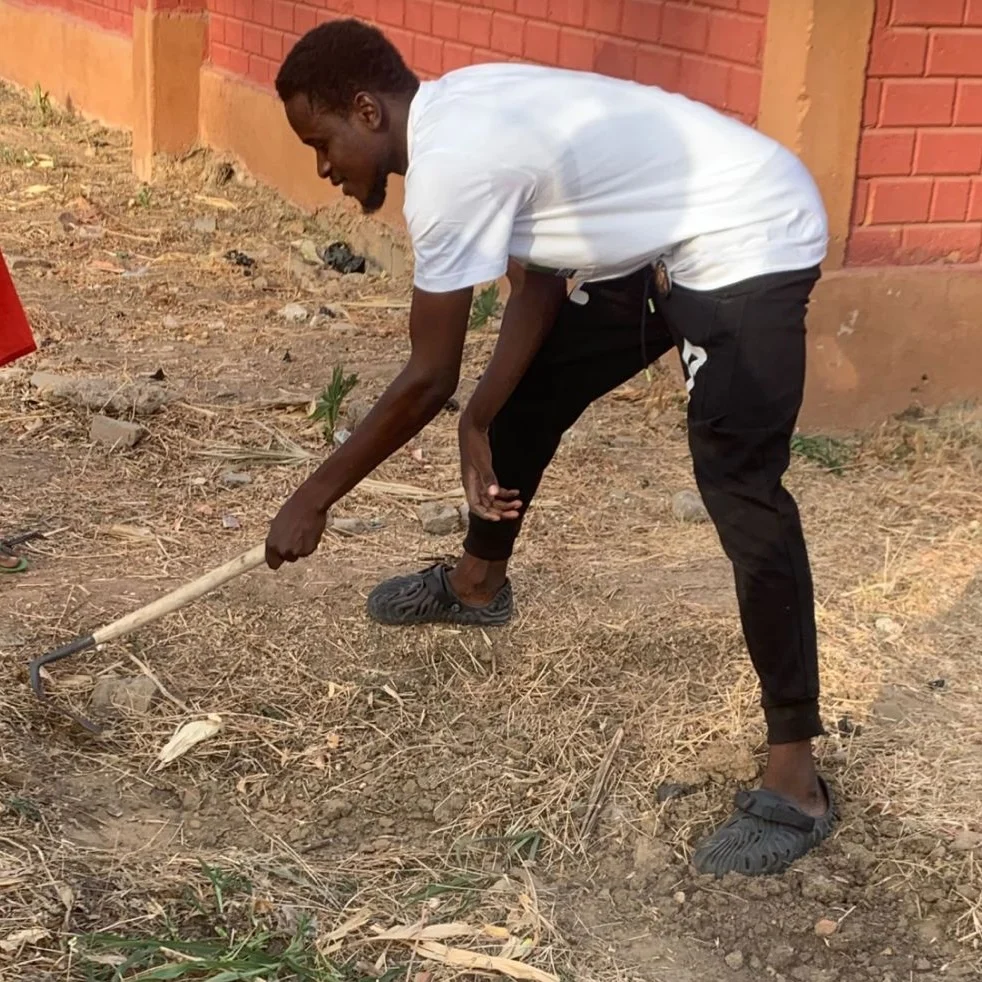
While the Green Panthers have achieved significant success—engaging over 200 communities across Borno, Adamawa, and Yobe states and planting over 4,000 trees—the path forward is fraught with obstacles. Bashir Muhammed, a volunteer with the organization, notes that while they receive some support from the Borno State Ministry of Environment and individual donors, funding remains precarious. Most initiatives are short-term, making it difficult to sustain "afforestation" projects that require years of care and protection to be successful.
Insecurity remains the most significant hurdle. Ibrahim expresses a desire to expand the program into neighboring Chad, Cameroon, and Niger—countries that share the Lake Chad Basin and face identical climate and security threats. However, the presence of armed groups along the borders makes such expansion a life-threatening endeavor. Additionally, land ownership and usage disputes complicate tree-planting efforts. In a region where land is the most precious commodity, finding space to plant protective green belts often leads to friction between local authorities and displaced populations.
Analysis of Implications: Education as Resistance
The work of the Green Panthers represents a shift in how climate action is perceived in the Global South. It is not merely a hobby for the elite but a "means of survival and an act of resistance" for the marginalized. By imparting climate literacy, Ibrahim is arming youth with the tools to hold power structures accountable. If the next generation of Nigerians understands that their poverty is linked to environmental mismanagement and global carbon emissions, they are more likely to demand systemic change from both their local government and the international community.

Furthermore, the Green Panthers’ focus on local languages and visual aids serves as a model for climate communication in other conflict-affected regions. It moves away from the jargon-heavy discourse of international climate summits and brings the conversation to the "front lines" where the impact is most acute.
As Ibrahim looks toward the future, his optimism remains guarded but firm. The development of new educational materials that translate complex climate vocabulary into local dialects is the next step in his mission. He believes that while the Green Panthers cannot stop the desert from moving or the insurgents from attacking, they can ensure that the people of Borno State are no longer silent victims of these forces. Through education, they are planting the seeds of a more resilient, green, and peaceful Nigeria.
