

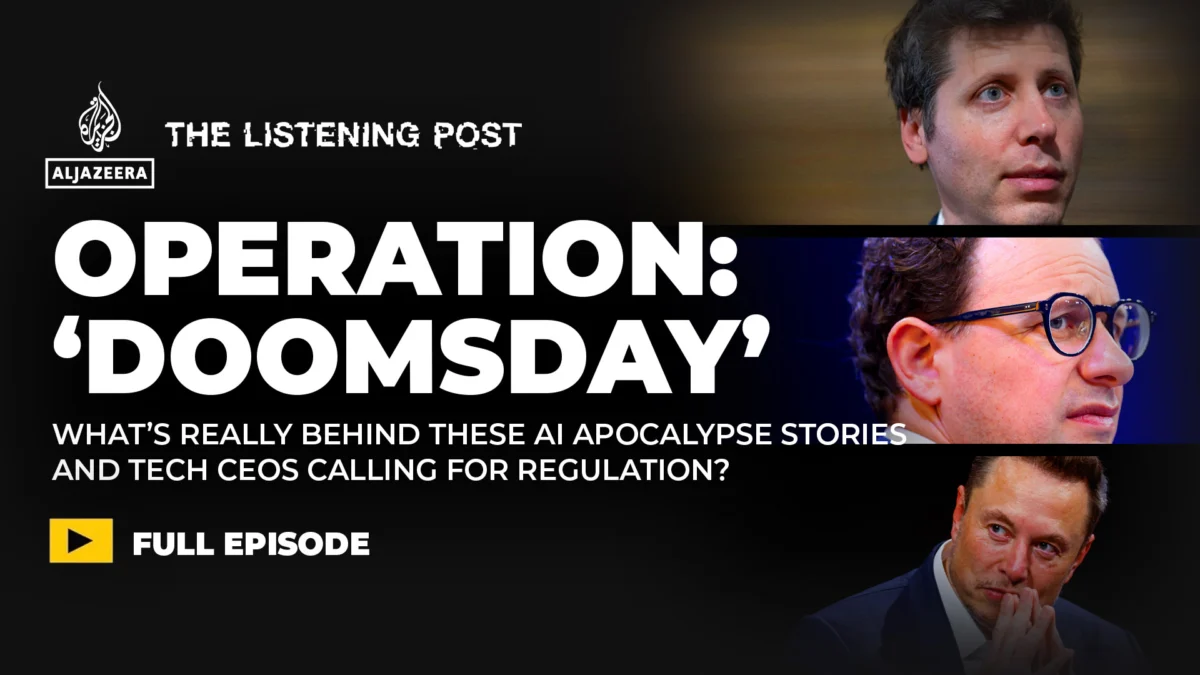
The discourse surrounding Artificial Intelligence (AI) has reached a fever pitch, with an overwhelming focus in global headlines on the speculative existential threats it poses to humanity. While the specter of a future AI apocalypse captures public imagination and media attention, a critical question emerges: is this preoccupation diverting focus from the tangible, immediate damage AI is already inflicting on societies worldwide? Simultaneously, a parallel narrative unfolds as leading AI CEOs publicly advocate for increased regulation, prompting observers to question whether their motivations are rooted primarily in ensuring public safety or in strategically consolidating their influence over the burgeoning technology’s future trajectory. These complex questions formed a central point of discussion among industry experts, including Leo Schwartz, a reporter for The Information; Sarah Myers West, co-executive director of AI Now; Aaron Mak, a technology reporter for Politico; and Cori Crider, executive director of the Future of Tech Institute.
The Dichotomy of AI Discourse: Future Fears vs. Present Realities
The rapid advancements in AI, particularly in large language models and generative AI, have undeniably ushered in an era of unprecedented technological capability. From transforming industries to personalizing user experiences, AI’s integration into daily life is pervasive. However, this transformative power is not without its drawbacks, and a growing chorus of critics argues that the media’s focus on dystopian future scenarios, often sensationalized, overshadows the concrete harms AI is already perpetrating.
Background Context: The Evolution of AI and its Societal Footprint
AI’s journey from theoretical concepts to practical applications has accelerated dramatically in the past decade. Early AI systems were largely rule-based, but the advent of machine learning, deep learning, and neural networks has enabled AI to perform complex tasks, recognize patterns, and even generate creative content with remarkable sophistication. Companies like OpenAI, Google DeepMind, Microsoft, and Meta have been at the forefront of this revolution, releasing powerful models that have captivated the public.
However, as these technologies scale, so too do their societal implications. The "present damage" attributed to AI encompasses a broad spectrum of issues. Algorithmic bias, for instance, has been extensively documented in areas ranging from facial recognition systems that misidentify people of color more frequently, to hiring algorithms that perpetuate gender or racial discrimination, and even credit scoring systems that disadvantage minority groups. These biases, often unintentional, arise from biased training data reflecting historical societal inequalities.
Furthermore, AI’s role in the spread of misinformation and disinformation is a pressing concern. Generative AI can create highly convincing fake images, videos (deepfakes), and text, making it increasingly difficult for the public to discern truth from fabrication. This capability poses significant threats to democratic processes, public trust, and social cohesion. Job displacement, particularly in sectors susceptible to automation, is another immediate economic impact, raising questions about future employment landscapes and the need for reskilling initiatives. Surveillance technologies powered by AI also raise profound privacy concerns, enabling unprecedented levels of data collection and monitoring by both state and corporate actors, often without adequate oversight.
Supporting Data and Examples of Current Harms
Reports from organizations like the AI Now Institute consistently highlight the social costs of unchecked AI deployment. For example, studies have shown that commercially available facial recognition systems exhibit significant accuracy disparities across demographic groups, with error rates up to 100 times higher for women of color compared to white men. In the realm of employment, a 2020 study by the National Bureau of Economic Research found that AI adoption could lead to substantial job losses in routine tasks, potentially affecting millions of workers globally. The environmental impact of training massive AI models, requiring immense computational power and energy, also contributes to carbon emissions, an often-overlooked present harm. For instance, training a single large language model can produce emissions equivalent to several cars over their lifetime.
Chronology of AI’s Regulatory Landscape and Public Concerns
- 2012-2018: Early advancements in deep learning (e.g., ImageNet breakthroughs) spark initial public interest and industry investment. Concerns about algorithmic bias begin to surface in academic circles.
- 2019-2021: Release of powerful models like GPT-2 and GPT-3 by OpenAI demonstrates generative AI capabilities, intensifying discussions around ethical AI and the potential for misuse (e.g., fake news generation). European Union begins drafting the AI Act.
- 2022: The widespread public release of ChatGPT by OpenAI catapults generative AI into mainstream consciousness, leading to a surge in both excitement and alarm. This period marks a shift towards more urgent calls for regulation from various stakeholders.
- 22 March 2023: Over 1,000 technology leaders and researchers sign an open letter calling for a six-month pause on training AI systems more powerful than GPT-4, citing "profound risks to society and humanity."
- May 2023: High-profile AI CEOs, including Sam Altman of OpenAI, testify before the US Congress, advocating for regulatory frameworks and international cooperation, acknowledging potential risks.
- October 2023: The G7 nations establish a code of conduct for AI developers, signaling a global push towards responsible AI governance.
- November 2023: The UK hosts the inaugural AI Safety Summit, bringing together world leaders, industry executives, and experts to discuss AI risks and international collaboration.
Industry Motivations and Regulatory Dynamics
The public call for regulation by AI CEOs raises complex questions regarding their underlying motivations. Are these calls genuinely driven by a commitment to public safety, or do they serve as a strategic maneuver to shape the regulatory landscape in a way that benefits their dominant market positions? Experts like Sarah Myers West of AI Now and Cori Crider of the Future of Tech Institute often highlight the risk of "regulatory capture," where industry leaders influence regulations to create barriers to entry for smaller competitors, consolidate power, and potentially stifle innovation from alternative, more ethically aligned sources. They argue that focusing on catastrophic future scenarios allows these companies to deflect attention from the immediate, demonstrable harms caused by their existing products and shift the narrative towards "safety" that they can then define and control.
Conversely, proponents of industry-led regulation argue that the developers of these technologies possess the deepest understanding of their capabilities and limitations, making their input invaluable for effective policymaking. They contend that a proactive approach by industry leaders can prevent more draconian or ill-informed regulations that could stifle innovation altogether. Aaron Mak of Politico often covers the intricate lobbying efforts and political maneuvering surrounding AI regulation in Washington, underscoring the high stakes involved for both public interest and corporate bottom lines. Leo Schwartz of The Information provides insights into the internal dynamics of these AI companies, often revealing the tension between rapid development and ethical considerations.
Broader Impact and Implications
The ongoing debate over AI’s present harms versus future risks, and the motivations behind calls for regulation, has significant implications. It shapes public perception of AI, influences investment decisions, and ultimately determines the ethical and legal frameworks governing this transformative technology. The risk is that if present harms are continuously downplayed, vulnerable populations will bear the brunt of AI’s negative consequences, exacerbating existing inequalities. Furthermore, allowing dominant AI firms to dictate the terms of their own regulation could lead to a highly centralized and less accountable AI ecosystem, stifling open source development and alternative approaches that prioritize democratic values and human rights.
"NAZA": A Documentary Ignites Fury Over Israeli-Palestinian Conflict Narrative
In a stark illustration of the power of media and the deep sensitivities surrounding the Israeli-Palestinian conflict, a documentary titled "NAZA" has provoked widespread outrage in Israel. The film, which reportedly lifts the lid on what it portrays as "Israel’s calculated killing of Palestinians," has led to severe accusations of treason against its Israeli filmmakers. The controversy has been amplified by threats emanating from senior government and military officials, alongside condemnation from journalists and online activists, highlighting the perilous environment for dissenting voices within the country. Elettra Scrivo has been reporting on the unfolding story.
Background Context: The Narrative Battleground
The Israeli-Palestinian conflict is not merely a geopolitical struggle; it is also a profound battle of narratives, deeply rooted in history, identity, and victimhood. Both sides possess deeply held, often irreconcilable, accounts of events, particularly concerning violence and accountability. In such an environment, any artistic or journalistic endeavor that challenges an established national narrative is likely to be met with intense scrutiny, and potentially, severe backlash.
Israel, a nation founded on the premise of security and self-defense, views criticisms of its military actions, especially when framed as "calculated killing," as direct attacks on its legitimacy and its right to exist. For many Israelis, such portrayals are seen as anti-Semitic or as providing ammunition to those who seek to delegitimize the state. Consequently, filmmakers or journalists who present narratives that deviate sharply from the official government line or the dominant public discourse often face accusations of disloyalty or even treason, particularly during periods of heightened tension.
The Nature of the Outrage and Threats
The outrage surrounding "NAZA" appears to stem from its direct challenge to the Israeli state’s official narrative regarding its military conduct. By alleging "calculated killing," the documentary suggests a premeditated and systematic approach to violence against Palestinians, a claim that directly contradicts Israel’s assertions of defensive actions and adherence to international law. Such a portrayal is perceived by many Israelis as a betrayal, especially coming from fellow citizens.
The threats faced by the filmmakers are multi-faceted and severe. Threats from "senior government and military officials" carry significant weight, implying potential legal repercussions or state-sanctioned harassment. Accusations of treason, while often rhetorical, can also pave the way for formal investigations or social ostracization. The involvement of "journalists and online activists" in the condemnation signals a broader societal rejection, creating a hostile environment for the filmmakers and potentially limiting their future professional opportunities within Israel. This dynamic underscores the fragility of freedom of expression when it clashes with deeply entrenched national security concerns and patriotic sentiments.
Supporting Data on Freedom of Expression in Conflict Zones
The case of "NAZA" is not isolated. Across the globe, filmmakers, journalists, and artists working in conflict zones frequently face harassment, threats, and legal action for their work. Organizations like Reporters Without Borders and the Committee to Protect Journalists consistently document cases where media professionals are targeted for challenging official narratives. In regions like Israel and Palestine, where political sensitivities are exceptionally high, the space for critical documentary filmmaking is particularly constrained. For instance, according to human rights organizations, journalists and filmmakers critical of government policies in Israel and the Palestinian territories have faced travel restrictions, arrest, and violence.
Chronology of the "NAZA" Controversy (Inferred)
- Early 2023 (Inferred): Production and initial screenings of "NAZA" in independent film circuits or international festivals, possibly outside Israel.
- Mid-2023 (Inferred): The documentary gains traction, potentially through online distribution or mentions in international media, drawing attention from Israeli media and authorities.
- Late 2023 (Inferred): Widespread public outrage erupts in Israel following reports or excerpts of the documentary’s content, leading to initial accusations against the filmmakers.
- November-December 2023 (Inferred): Senior government and military officials issue public condemnations and threats, escalating the controversy. Journalists and online activists join the chorus of criticism, labeling the filmmakers as traitors.
- Ongoing (Inferred): The filmmakers likely face continued pressure, potential legal challenges, and a hostile public environment, while international human rights and artistic freedom organizations may voice support.
Broader Impact and Implications
The controversy surrounding "NAZA" has several far-reaching implications. Firstly, it highlights the shrinking space for dissent and critical artistic expression within Israel, especially on issues pertaining to the conflict. This chilling effect could deter future filmmakers and artists from tackling sensitive subjects, leading to a more homogenized and less critical media landscape. Secondly, it further entrenches the existing polarization of narratives surrounding the Israeli-Palestinian conflict, making constructive dialogue even more challenging. The immediate implication for the filmmakers is severe personal and professional risk. More broadly, such incidents draw international attention to issues of freedom of speech and human rights in the region, potentially affecting Israel’s international standing and relations with countries that prioritize artistic freedom. The incident underscores the profound power of storytelling, particularly documentary film, to challenge established truths and provoke intense societal reactions.
Cassava Republic Press: Two Decades of Reshaping African Literary Landscape
Literature, as a powerful medium, plays an indispensable role in shaping how individuals and communities perceive themselves and how they are, in turn, perceived by the global community. For decades, much of the African literary output, despite its richness and diversity, found its primary publishing avenues outside the continent. This external gatekeeping often meant that narratives were filtered, selected, and presented through a non-African lens, potentially impacting authenticity and thematic focus. Twenty years ago, Cassava Republic Press emerged with a clear and ambitious mission: to fundamentally alter this paradigm by establishing a robust publishing house rooted firmly in Africa. The initiative aimed not just to publish African stories, but to reclaim the very control over their dissemination and interpretation. Tariq Nafi has been examining the profound impact this publisher has had on reshaping the industry and assessing the extent to which true control over African stories has genuinely returned home.
Background Context: The Legacy of External Publishing
The history of modern African literature is inextricably linked to colonial and post-colonial dynamics. For much of the 20th century, African authors, including literary giants like Chinua Achebe, Wole Soyinka, and Ngũgĩ wa Thiong’o, relied heavily on Western publishers. While these publishers provided crucial platforms, they also exerted significant influence. Editorial decisions, marketing strategies, and even the selection of what was deemed "publishable" often reflected Western tastes, market demands, and perceptions of Africa. This often led to a preference for certain narratives (e.g., stories of conflict, poverty, or exoticism) over others, potentially marginalizing diverse voices and contemporary experiences.
The implications of this external control were multifaceted:
- Loss of Narrative Control: African stories were often interpreted and packaged for a non-African audience, potentially diluting their intended impact for local readers.
- Limited Representation: A narrow range of African experiences and genres gained international traction, failing to reflect the continent’s vast cultural and linguistic diversity.
- Economic Disadvantage: The majority of profits and infrastructure remained outside Africa, hindering the development of a sustainable local publishing industry.
- Cultural Disconnect: The distance between publishers and local readerships could lead to books being less accessible or relevant to African communities.
The Vision of Cassava Republic Press
Founded by Bibi Bakare-Yusuf and Jeremy Weate in 2004, Cassava Republic Press was established with a clear objective: to build a world-class publishing house on the African continent, dedicated to African voices. Their vision extended beyond simply printing books; it aimed to cultivate a vibrant literary ecosystem that would nurture African talent, provide platforms for diverse narratives, and foster a sense of ownership over African intellectual property. This meant investing in editorial expertise, robust distribution networks, and innovative marketing strategies tailored to African contexts.
Supporting Data and Impact Metrics
Over its two decades, Cassava Republic Press has made significant inroads:
- Catalog Growth: From a handful of titles in its early years, Cassava Republic now boasts a diverse catalog of over 100 books, spanning fiction, non-fiction, poetry, and children’s literature.
- Award Recognition: Many of its published authors have received prestigious literary awards, including the Caine Prize for African Writing, the Commonwealth Writers’ Prize, and longlistings for the Booker Prize, elevating the profile of African literature on the global stage.
- Market Penetration: The press has expanded its distribution channels across Africa, Europe, and North America, ensuring broader accessibility for African narratives. Its efforts have also inspired other independent African publishers, contributing to a more robust continental publishing scene.
- Author Empowerment: By offering competitive terms, nurturing talent, and providing a culturally sensitive editorial environment, Cassava Republic has empowered a new generation of African writers.
- Genre Diversification: The press has actively championed genres often overlooked by Western publishers, such as contemporary urban fiction, speculative fiction, and LGBTQ+ narratives from African perspectives, showcasing the breadth of African creativity.
Chronology of Cassava Republic Press’s Journey
- 2004: Cassava Republic Press is founded in Abuja, Nigeria, by Bibi Bakare-Yusuf and Jeremy Weate, with a mission to publish the best of African writing.
- 2006: Publishes its first significant titles, beginning to establish its presence in the Nigerian and wider African literary scene.
- 2010: Gains international recognition as some of its authors begin to win prestigious literary awards, drawing attention to the quality of its publications.
- 2014: Expands its operations, establishing a UK arm to enhance international distribution and reach a broader diaspora audience. This move signals a strategic intent to compete on a global scale while retaining its African roots.
- 2017: Launches its children’s imprint, "Ankara Press," further diversifying its catalog and addressing the need for culturally relevant children’s literature in Africa.
- 2020-Present: Continues to grow its author list, championing new voices and experimenting with digital publishing models, further cementing its position as a leading voice in African literature.
Voices from the Literary Community
Bibi Bakare-Yusuf, as co-founder and publishing director, has been a vocal advocate for the imperative of African control over African stories. She often emphasizes that publishing is not just about books, but about "cultural infrastructure" and the power to define one’s own identity. Her vision has been instrumental in creating a space where African writers can tell their stories authentically, without the pressure to conform to external expectations.
Chika Unigwe, an acclaimed author and professor of creative writing, whose work has been published by Cassava Republic, attests to the transformative impact of such presses. She notes that having an African publisher who understands the cultural nuances and linguistic specificities of her work is invaluable. This understanding fosters a collaborative relationship that empowers authors to explore complex themes with greater freedom and authenticity, ultimately enriching the literary output.
Tinashe Mushakavanhu, an assistant professor at Harvard University and a scholar of African literature, offers an academic perspective on Cassava Republic’s significance. He highlights how the press has not only diversified the literary landscape but also contributed to a re-evaluation of African literary canons, challenging the long-standing dominance of texts published solely by Western houses. Mushakavanhu argues that by providing a platform for a wider array of voices and perspectives, Cassava Republic has played a crucial role in legitimizing and globalizing contemporary African literature on its own terms.
Broader Impact and Implications
Cassava Republic Press’s two-decade journey represents a profound shift in the politics of storytelling. By proving the viability and necessity of an Africa-rooted publishing model, it has inspired a new generation of independent publishers and fostered a more self-reliant literary ecosystem on the continent. This shift has several significant implications:
- Cultural Empowerment: It enables Africans to define and disseminate their own narratives, fostering cultural pride and countering historically imposed stereotypes.
- Economic Development: It contributes to the growth of creative industries in Africa, creating jobs and fostering local expertise in publishing, editing, and design.
- Literary Diversity: It encourages a wider range of genres, themes, and voices to emerge, moving beyond narrow representations of Africa.
- Global Recognition: By publishing high-quality, authentic African stories, it elevates African literature on the global stage, attracting international readership and academic interest.
While challenges remain, including distribution infrastructure, funding, and the digital transformation of publishing, Cassava Republic Press stands as a testament to the power of indigenous initiatives in reclaiming cultural sovereignty and reshaping global literary landscapes. The question of whether control has truly "come home" is complex, but the strides made by Cassava Republic Press unequivocally demonstrate a powerful and sustained movement towards that goal.
