

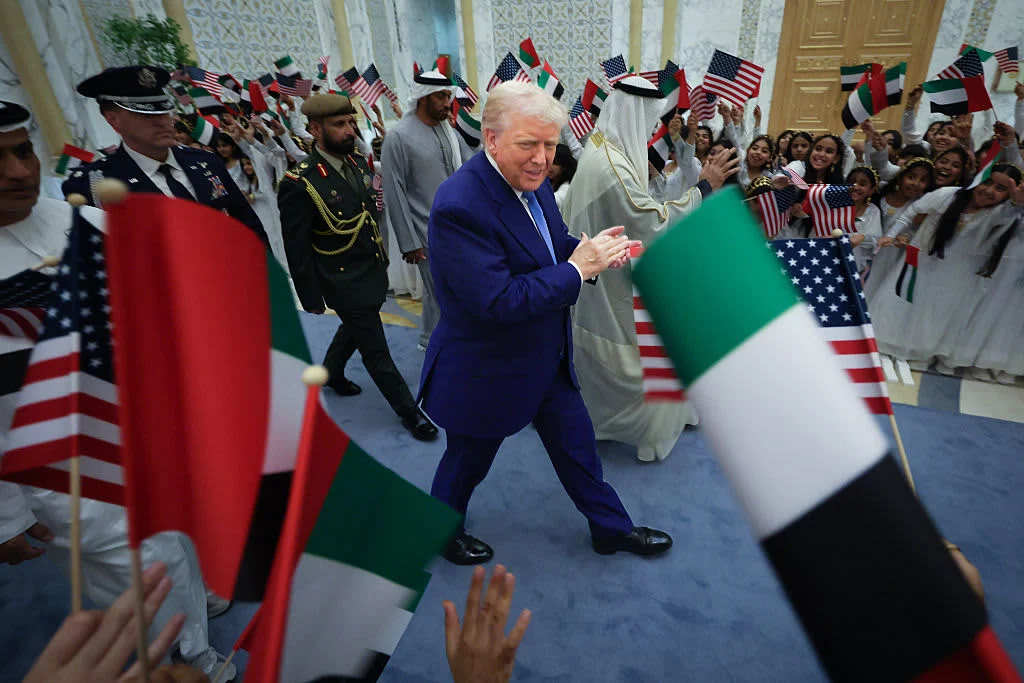
President Donald Trump’s foreign real-estate licensing business experienced a significant surge during his initial year back in the Oval Office, generating a robust $59.5 million in 2025. This dramatic increase stemmed from international developers’ willingness to pay substantial premiums for the right to brand luxury towers, sprawling golf courses, and coastal resorts with the highly recognizable Trump name. The expansion marks a notable pivot from his administration’s earlier stance on international dealings and has reignited intense scrutiny from ethics watchdogs and legal experts regarding the potential collision of presidential power and private financial gain.
A Financial Boom Driven by Policy Reversal
The revenue generated from foreign licensing, encompassing the use of the Trump name on properties globally, escalated by an astounding 71% from 2024 figures. This sum was nearly ten times higher than the revenue reported in 2023, according to a CNBC analysis of Trump’s annual financial disclosure. This financial boom was largely propelled by the Trump Organization’s strategic reversal of a key pledge made during his first term: to pursue "no new foreign deals whatsoever."
During his second term, the Trump Organization adopted an updated ethics policy. This policy explicitly bars new material transactions with foreign governments but critically permits deals with private foreign companies. This distinction has become a central point of contention for critics, especially in regions where the line between private enterprise and state control can often be blurred.
A significant portion of this growth originated from newly formed or reactivated entities. Four Trump-affiliated licensing LLCs, which were not listed in his 2024 disclosure, collectively generated $20.25 million in 2025, accounting for 82% of the total increase. Additionally, five other licensing LLCs, previously designated as inactive, contributed another $9.64 million to the burgeoning revenue stream. The geographical distribution of this income heavily favored the Persian Gulf, with more than 60% of the licensing fees originating from projects in these oil-rich nations.
The Gulf Connection: A Primary Revenue Stream and Its Implications
The Gulf region emerged as the most lucrative territory for the Trump brand. Projects linked to the United Arab Emirates alone generated approximately $22 million in licensing income for Trump in 2025. Saudi Arabia followed with $9 million, and Qatar contributed $5 million. Much of this substantial revenue flowed through two prominent Gulf real-estate developers: Saudi-linked Dar Al Arkan and UAE-based Damac.
Trump’s disclosures indicated $25.8 million tied to projects involving Dar Al Arkan and its Dubai-based international arm, Dar Global. Damac-linked projects contributed an additional $11.3 million. The underlying business model for these arrangements is straightforward: local developers finance and construct the properties, while the Trump Organization receives fees for the use of its prestigious name and, in some instances, for managing the properties.
This surge in "branded residences" within the Gulf, particularly in Dubai, underscores a broader market trend where luxury and celebrity names are leveraged to command premium prices. Data from commercial real estate services and investment company CBRE indicated a 26% year-over-year rise in branded-home transaction volume during the first nine months of 2025, with sales value climbing by 51%. However, critics argue that the Trump name offers something unique that other luxury brands cannot: the implicit suggestion of access to the power and influence of the U.S. presidency.
Case Study: Damac, Data Centers, and Policy Overlap
The relationship with Damac offers a particularly illustrative example of the intricate overlap between Trump’s private business interests and his public duties. The $11.3 million in licensing payments from Damac included two newly disclosed $5 million fees specifically tied to Damac’s Abu Dhabi projects, despite the Trump Organization having no active developments there. This is permissible because developers can secure contractual rights to use the Trump brand in advance of construction, often through upfront or milestone-based fees.
These payments coincided with Damac’s aggressive pursuit of a major U.S. expansion. In January 2025, Damac’s founder, billionaire Hussain Sajwani, a long-time friend of Trump, joined then President-elect Trump at his Mar-a-Lago Club in Palm Beach, Florida. During this high-profile event, Sajwani announced ambitious plans to invest at least $20 billion in U.S. data centers. Trump publicly lauded this commitment, promising that companies investing at least $1 billion would receive expedited environmental and regulatory reviews. Sajwani, in an interview with CNBC at the time, declared that "the sky is the limit" for Damac’s U.S. investment.
Just six months later, President Trump signed an executive order directing federal agencies to accelerate permitting for qualifying data centers and their supporting energy infrastructure. While the policy applied broadly, Damac soon advanced a significant data-center project that could directly benefit from these expedited federal processes. By December 2025, a Damac subsidiary had purchased eight parcels of land near Canton, Ohio, for $36.5 million for a proposed data center. Notably, the same property had changed hands for only $8.55 million just two days prior, according to county property records. The project will necessitate close coordination with local officials on critical infrastructure like power and water.
Scott Greytak, deputy executive director of Transparency International U.S., an anti-corruption nonprofit, articulated the concern: "A developer whose project depends on federal permitting and energy policy has a direct financial interest in the administration’s decisions." While Canton city spokesperson Christian Turner stated that Damac Digital is "subject to the same requirements as any other developer" and that no incentives have been approved, ethics experts remain troubled.
Kedric Payne, ethics director at the Campaign Legal Center, an organization dedicated to government ethics, remarked, "It seems as though this Damac project was padding the president’s private business to help grease the wheels for data centers affected by Trump policies." He added, "When presidential decisions appear directly connected to his financial interests, you have, at the very least, the appearance of an ethics problem." CNBC found no direct evidence that Damac’s payments influenced the executive order or that Trump personally intervened on the company’s behalf, but the confluence of events raises unavoidable questions about potential conflicts.
Navigating State Ties: Qatar and Oman Projects
Beyond direct corporate dealings, other Persian Gulf projects introduce a different dimension of conflict questions, particularly concerning the subtle distinction between private developers and state-controlled entities. In both Qatar and Oman, the Trump Organization entered into licensing agreements with private developers, adhering to its second-term ethics policy of avoiding direct government deals. However, both projects involve entities that are intrinsically linked to the respective states. Critics argue that in many Gulf nations, the distinction between a private developer and a foreign government can be "meaningless," as royal families or state representatives often hold significant stakes or board positions.
In Qatar, Trump disclosed $5.25 million in licensing income from Dar Global’s plans for a Trump-branded golf club and luxury villas. This project is part of the Simaisma coastal development, a larger initiative led by Qatari Diar, a real estate investment company established and chaired by Qatar’s sovereign wealth fund and municipality minister, respectively. The announcement of this Trump-licensed project on April 30, 2025, occurred just two weeks before President Trump’s visit to Doha in May 2025, marking a significant foreign policy trip of his second term. During this visit, major aviation, defense, and economic agreements were announced with Qatar, further intertwining the diplomatic and financial spheres.
"The concern is not that these deals prove a quid pro quo," Greytak noted. "It is that Qatar was putting money into the president’s business while seeking major agreements from his administration, raising unavoidable questions about whose interests shaped the relationship." Again, CNBC found no evidence that the Trump project directly influenced any of these agreements, and the Qatari government and Qatari Diar did not respond to inquiries about whether the project was discussed alongside the new U.S. agreements.
A similar structure is evident in the Oman project, which pairs a private developer with a state-owned partner. Trump reported nearly $1 million in licensing income tied to Aida, a development being constructed through a joint venture between Dar Global and Omran Group, the Omani government’s tourism-development arm. The Omani government and Omran Group also declined to respond to detailed questions regarding the state-owned company’s role in the project or its involvement in the Trump licensing agreement.
Beyond the Gulf: The Vietnam Deal and Tariff Negotiations
The expansion of Trump’s foreign licensing revenue extended beyond the Middle East. In Vietnam, Trump reported $5 million tied to a planned $1.5 billion golf development outside Hanoi. This project advanced during a sensitive period when Vietnamese officials were engaged in negotiations with the Trump administration to avert a threatened 46% tariff on their goods.
In May 2025, then-Prime Minister Pham Minh Chinh attended the project’s groundbreaking ceremony alongside Eric Trump, son of President Trump and executive vice president of the Trump Organization. Prime Minister Chinh remarked that Eric Trump’s visit had "motivated us to expedite this project." Kedric Payne commented on the timing, stating, "It’s hard to say that there’s a coincidence when official decisions happen so close in time to the family business receiving financial benefits." While CNBC found no evidence that the Trump project influenced the tariff negotiations or the final rate imposed on Vietnamese goods, and the Vietnamese government did not respond to inquiries, the optics again raised questions about potential influence.
The Emoluments Clause: Unresolved Legal Questions
Collectively, the projects in Qatar, Oman, and Vietnam underscore unresolved legal questions under the U.S. Constitution’s Foreign Emoluments Clause. This clause, embedded in Article I, Section 9, Clause 8, prohibits federal officeholders from accepting certain gifts, emoluments, offices, or titles from foreign states without the consent of Congress.
"The central issue is whether payments routed through a private developer can still be attributed to a foreign state when a government-controlled company owns the land, finances the project or participates in its development," explained Scott Anderson, a Brookings Institution senior fellow and general counsel and senior editor at the Lawfare blog. Courts have yet to definitively resolve this complex question. During Trump’s first term, several lawsuits alleging violations of the clause were dismissed by the Supreme Court as moot after he left office in 2021, without a ruling on the merits.
Anderson, a former legal adviser at the U.S. Embassy in Baghdad, acknowledged that "the framers didn’t anticipate licensing fees." However, he emphasized that the clause’s "pretty broad scope" strongly suggests that officials should not benefit financially from foreign governments without explicit congressional approval.
Official Responses and Watchdog Concerns
In response to these burgeoning concerns, the Trump Organization asserted to CNBC that it operates "completely separate from the presidency," rigorously complies with all ethics and conflict-of-interest laws, and employs an outside ethics adviser to mitigate potential conflicts. The organization, however, declined to address specific questions concerning individual foreign licensing projects.
A White House spokesperson, when asked about Trump’s foreign deal-making, did not directly address the arrangements. Instead, the spokesperson stated that "the only special interest guiding" Trump’s decisions is "the best interest of the American people." The spokesperson further highlighted the more than $2 trillion in investment commitments and commercial, defense, aviation, and technology deals announced during the President’s May 2025 Gulf trip as evidence of his administration’s focus on national interests.
Ethics watchdogs remain unconvinced. Scott Greytak of Transparency International U.S. bluntly stated, "Foreign governments and politically connected businesses now have a direct, incredibly visible way to put money into the sitting president’s pocket." He added, "The conflict is already in plain sight right now. We don’t need to wait for some kind of smoking gun to see a quid pro quo."
The Trump family has previously addressed these criticisms. Eric Trump, in an interview with The New York Times in 2024, maintained that the family "did everything imaginable to avoid any appearance of impropriety" but "got crushed anyway." He defiantly concluded, "We can’t just sit out in perpetuity, and I won’t." Donald Trump himself was even more direct, telling The Times in January 2026, "I found out that nobody cared. I’m allowed to."
Ben Freeman, director of the Democratizing Foreign Policy program at the Quincy Institute for Responsible Statecraft, questioned the overarching policy direction. "Is this an America First foreign policy, or is this a Trump First foreign policy?" he posed, underscoring the fundamental tension. Kedric Payne echoed these sentiments, emphasizing that even the "appearance of an ethics problem" erodes public trust and raises significant concerns about the integrity of presidential decision-making.
The dramatic increase in foreign licensing revenue for the Trump Organization during President Trump’s first year back in office has therefore created an unprecedented landscape where the immense power of the presidency is inextricably linked to substantial private financial interests. While direct evidence of quid pro quo remains elusive, the intricate web of business dealings, policy decisions, and the constitutional ambiguities of the Emoluments Clause continue to fuel a vigorous debate about the ethical boundaries of presidential conduct and the potential for perceived conflicts of interest on the global stage.
