

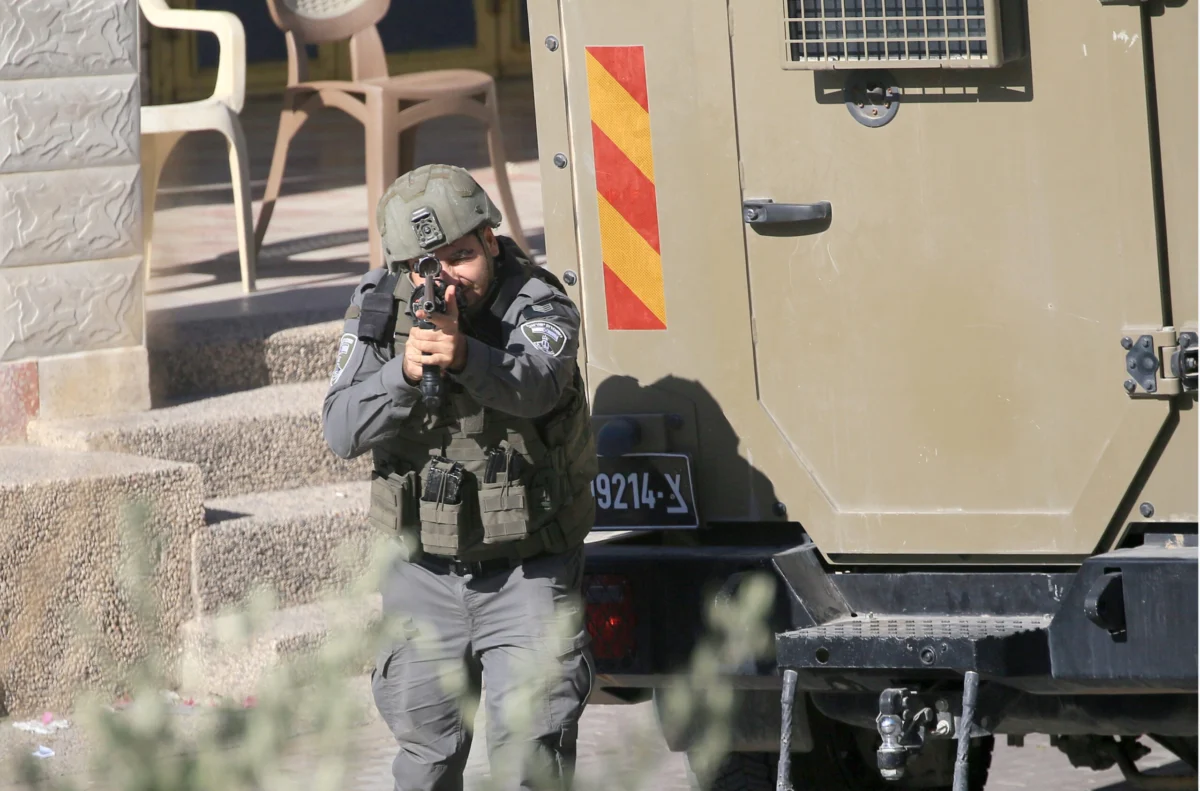
The occupied West Bank experienced a weekend of heightened violence, resulting in the deaths of a Palestinian man near Jenin and an Israeli settler in a separate incident near Halamish. These events underscore the volatile security situation pervading the territory, characterized by escalating confrontations between Israeli forces, Palestinian residents, and Israeli settlers. The incidents have ignited renewed calls for de-escalation from international bodies while fueling condemnations and vows of retaliation from both sides, further deepening the entrenched cycle of conflict.
Chronology of Incidents
The first fatality occurred on Sunday, when Israeli forces killed a Palestinian man identified as Mohammad Abu Asab, 20, from the Jenin refugee camp. According to an Israeli army spokesperson, Abu Asab "attempted to carry out a vehicular attack" near the illegal settlement of Ganim, located east of the Palestinian city of Jenin in the northern occupied West Bank. Israeli forces responded by opening fire, killing Abu Asab at the scene. The spokesperson further stated that there were no casualties reported among Israeli forces during the incident.
Following the shooting, the Palestine Red Crescent Society reported that Israeli forces prevented their medical teams from reaching the victim. This prevention of access to medical aid for injured Palestinians by Israeli forces is a recurring point of contention, frequently highlighted by human rights organizations and Palestinian authorities as a violation of international humanitarian law. Palestinian official news agency Wafa corroborated the Red Crescent’s account, emphasizing the humanitarian concern surrounding such restrictions.
Hours later, in a separate and unrelated incident, an Israeli settler succumbed to his wounds after being fatally shot in an attack near the illegal settlement of Halamish (also known as Neveh Tzuf) in the central West Bank. The victim, identified as a 30-year-old man, was rushed to a hospital following the shooting but was later pronounced dead. Police confirmed his death, initiating a widespread search operation for the perpetrator.
The Israeli army launched an immediate manhunt for the suspect, who reportedly opened fire from a vehicle before fleeing the scene on foot. In response to the attack, Israeli forces swiftly implemented significant security measures, including the closure of all entry and exit points to the nearby Palestinian cities of Ramallah and el-Bireh. Such closures are standard procedure following attacks against Israelis in the West Bank, often leading to severe disruptions for thousands of Palestinian residents attempting to commute for work, education, or essential services. Wafa news agency documented these closures, highlighting the collective punishment aspect perceived by many Palestinians.
Background and Context of West Bank Tensions
The West Bank, including East Jerusalem, has been under Israeli occupation since the 1967 Six-Day War. International law considers Israeli settlements in these territories illegal, a position reiterated by numerous United Nations resolutions and the International Court of Justice. Despite this, the settler population has steadily grown, with an estimated 490,000 Israeli settlers living in over 130 official settlements and dozens of unauthorized outposts across the West Bank, alongside approximately 3 million Palestinians. This demographic reality often leads to friction over land, resources, and freedom of movement.
The Jenin area, in particular, has emerged as a significant flashpoint in recent years. It is home to a densely populated refugee camp that has historically been a stronghold of Palestinian armed groups. Since early 2022, the Israeli military has conducted near-daily raids into Jenin and other Palestinian cities in what it describes as "Operation Break the Wave," aimed at dismantling militant infrastructure and apprehending suspects following a series of attacks inside Israel. These raids frequently involve armed clashes, often resulting in Palestinian casualties, including both militants and civilians. The Palestinian Authority has largely lost effective control over parts of Jenin and Nablus, contributing to a power vacuum that armed factions have sought to fill.
The increasing frequency and lethality of these confrontations have made the past year one of the deadliest for Palestinians in the West Bank in nearly two decades. The Israeli human rights organization B’Tselem reported that 2022 saw 155 Palestinians killed by Israeli security forces in the West Bank, including East Jerusalem, the highest number since 2004. This trend has continued into the current year, with figures already indicating a grim trajectory.
Supporting Data and Statistics on the Escalation
The year 2023 has already witnessed a significant surge in violence across the West Bank. According to data compiled by the UN Office for the Coordination of Humanitarian Affairs (OCHA), hundreds of Palestinians have been killed by Israeli forces or settlers since the beginning of the year. The Palestinian Ministry of Health reports similar figures, consistently updating the casualty count which includes a substantial number of children. In parallel, Israeli security services have reported a rise in attacks targeting Israelis, including shooting incidents, stabbings, and vehicular assaults, particularly in the West Bank.
Vehicular attacks, while less frequent than stabbings or shootings, have been a persistent tactic used by individuals seeking to target Israelis. Israeli security forces often categorize any attempt to ram a vehicle into soldiers or civilians as a "vehicular attack," a determination that is frequently disputed by Palestinian witnesses and human rights groups, who sometimes argue that these incidents involve panicked drivers or unintended collisions. However, the Israeli military protocol dictates a response with lethal force when such threats are perceived.
The Halamish settlement, like many others, is situated in an area that has seen numerous attacks and clashes over the years. Settlements are often protected by Israeli military outposts and patrols, yet the vast and often rugged terrain of the West Bank makes complete security challenging to maintain. The closure of Palestinian cities like Ramallah and el-Bireh in response to attacks highlights the severe impact on Palestinian daily life. These closures can last for hours or even days, isolating communities and hindering economic activity.
Official Responses and Reactions
The immediate aftermath of the incidents prompted a flurry of reactions from various stakeholders.
- Palestinian Authority (PA): The Palestinian Ministry of Foreign Affairs and Expatriates issued a strong condemnation of the killing of Mohammad Abu Asab, labeling it an "extrajudicial execution" and an act of "state terrorism." The PA called on the international community to provide immediate protection for the Palestinian people and to hold Israel accountable for its actions, demanding an independent international investigation into the incident. PA spokespersons reiterated their demand for an end to the occupation and the establishment of an independent Palestinian state. They also condemned the prevention of medical access as a blatant disregard for human life and international law.
- Hamas and Islamic Jihad: Palestinian militant groups, including Hamas and Islamic Jihad, praised the attack near Halamish as a "heroic act of resistance" and a "natural response to the crimes of the occupation." They warned of further retaliation for Israeli actions, particularly in Jenin, and called for continued armed struggle against Israeli forces and settlers. While not directly claiming responsibility for the Halamish shooting, their rhetoric typically frames such acts within the broader context of Palestinian resistance.
- Israeli Government and Military: Israeli Prime Minister Benjamin Netanyahu issued a statement condemning the "terrorist attack" near Halamish and vowed to apprehend the perpetrators and ensure they face justice. He reiterated Israel’s commitment to the security of its citizens and soldiers, emphasizing the right to self-defense. The Israeli military stated that it would continue its operations to counter "terrorist threats" in the West Bank and ensure the safety of Israeli communities. Defense Minister Yoav Gallant underscored that Israel would not tolerate any harm to its citizens and would act with determination against those seeking to undermine security.
- International Community: The United Nations Special Coordinator for the Middle East Peace Process, Tor Wennesland, expressed deep concern over the escalating violence, calling on all parties to exercise maximum restraint and avoid actions that could further inflame tensions. He reiterated the UN’s call for prompt, thorough, and transparent investigations into all incidents of violence, particularly those resulting in fatalities. The European Union also issued a statement, urging for de-escalation and emphasizing the need to protect civilians in accordance with international humanitarian law. The United States, a key mediator in the region, typically calls for calm and a reduction in violence, urging both sides to take steps to restore stability and avoid unilateral actions that could jeopardize a two-state solution. While specific statements on these particular incidents may vary, the general stance often emphasizes the need for security for Israelis and human rights for Palestinians.
Broader Impact and Implications
The latest fatalities further destabilize an already fragile region, carrying several significant implications:
- Escalation of Violence: The cycle of attack and retaliation is a major concern. The killing of a Palestinian man is often followed by retaliatory actions from Palestinian armed groups, and the killing of an Israeli settler is almost always followed by intensified Israeli military operations and sometimes settler vigilantism. This tit-for-tat violence threatens to spiral out of control, making de-escalation increasingly difficult.
- Erosion of Trust and Peace Prospects: The continuous violence further erodes any remaining trust between Israelis and Palestinians, pushing the prospect of a political resolution further out of reach. With no meaningful peace process underway, and both sides entrenched in their positions, the daily reality is one of ongoing conflict.
- Humanitarian Concerns: The closures of cities, restrictions on movement, and impediments to medical access exacerbate the humanitarian situation for Palestinians. Such measures, while implemented for security reasons by Israel, are viewed by Palestinians and human rights organizations as collective punishment, infringing on fundamental rights and exacerbating economic hardship.
- Political Ramifications: On the Israeli side, the deaths reinforce calls for stronger security measures and a more assertive stance against Palestinian militancy. For the Palestinian Authority, the inability to protect its population from Israeli military actions and settler violence undermines its legitimacy, while the rise of armed groups challenging its authority complicates governance.
- International Scrutiny: The persistent violence draws continued international scrutiny and condemnation, placing pressure on Israel to adhere to international law and on the Palestinian Authority to exert control over militant factions. However, without concerted international diplomatic efforts, such condemnations often have limited practical effect on the ground.
- Radicalization: The loss of life on both sides, coupled with the lack of a political horizon, risks further radicalizing individuals within both communities, making future generations more prone to violence and less open to dialogue or compromise.
In conclusion, the deaths of a Palestinian man near Jenin and an Israeli settler near Halamish are not isolated incidents but rather symptomatic of a deeply entrenched and rapidly deteriorating situation in the occupied West Bank. The events underscore the urgent need for a cessation of violence, adherence to international law, and renewed efforts from the international community to address the root causes of the conflict, lest the region descend into further instability and bloodshed.
