

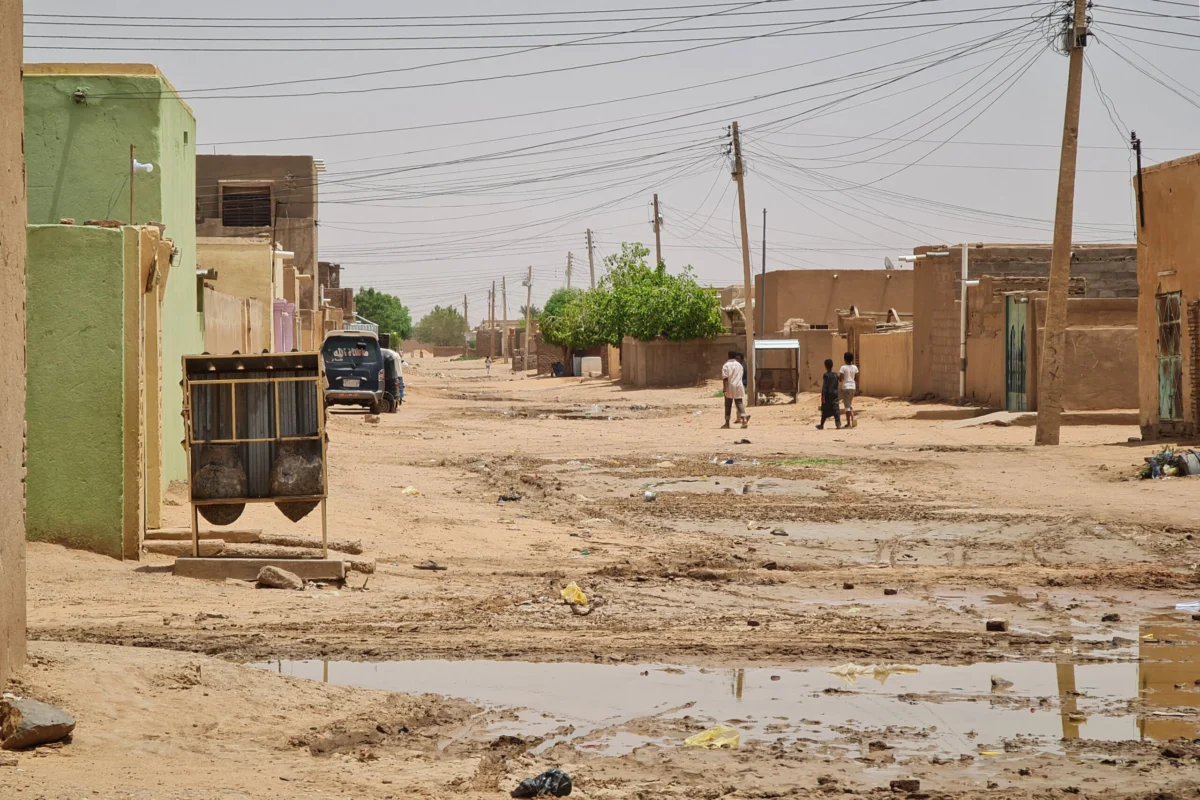
Health officials in Sudan confirmed on Saturday that a devastating airstrike in a residential district of Khartoum resulted in the deaths of at least 17 individuals, including five children, marking one of the most lethal incidents in the capital since the outbreak of hostilities in mid-April. The strike targeted the Yarmouk neighborhood in southern Khartoum, an area that has become a focal point of intense urban warfare between the Sudanese Armed Forces (SAF), led by General Abdel Fattah al-Burhan, and the paramilitary Rapid Support Forces (RSF), commanded by General Mohamed Hamdan "Hemedti" Dagalo.
The Sudanese Ministry of Health reported that the bombardment destroyed at least 25 homes, leaving several families trapped beneath the rubble. In addition to the confirmed fatalities, an unknown number of women and elderly residents were among the casualties, while dozens more sustained injuries and were transported to local hospitals, many of which are operating with severely limited supplies. A local volunteer organization known as "The Emergency Room," which coordinates grassroots humanitarian aid in the absence of international NGOs, corroborated the ministry’s report, stating that at least 11 people were treated for shrapnel wounds and trauma following the blast.
The exact nature of the strike—whether conducted by a piloted fighter jet or an unmanned aerial vehicle (drone)—remains under investigation. While the SAF possesses a traditional air force and has frequently utilized MiG and Sukhoi jets to target RSF positions, the RSF has increasingly deployed drones and mobile anti-aircraft batteries to counter the military’s aerial superiority. In a statement released shortly after the incident, the RSF accused the military of a "cowardly" bombardment of civilian quarters and claimed to have successfully downed a military MiG fighter jet during the engagement. These claims, however, have not been independently verified by international observers or local journalists.
Chronology of the Conflict: From Political Tension to Urban Warfare
The current violence is the culmination of months of escalating friction between the SAF and the RSF, two entities that once shared power following the 2019 ouster of long-time autocrat Omar al-Bashir and the subsequent 2021 military coup. The primary point of contention involved the proposed integration of the RSF into the regular army, a key requirement for the transition back to civilian rule. Disagreements over the timeline of this integration and the future chain of command led to the first shots being fired on April 15, 2023.
Since that date, the conflict has evolved through several distinct phases:
- April 15–30, 2023: Initial clashes erupted at the Merowe airbase and across Khartoum. The RSF quickly seized key strategic sites, including the Presidential Palace and Khartoum International Airport, while the SAF responded with heavy artillery and airstrikes.
- May 2023: Fighting spread to the Darfur region, specifically the cities of Genena and Nyala. Multiple short-term ceasefires, brokered by the United States and Saudi Arabia in Jeddah, were repeatedly violated by both sides within hours of signing.
- Early June 2023: The conflict shifted into a war of attrition. The RSF consolidated its presence in residential neighborhoods, using civilian homes as shields and barracks. The SAF intensified its aerial campaign, leading to increased collateral damage in densely populated areas like Yarmouk and Omdurman.
- June 14–17, 2023: The assassination of West Darfur Governor Khamis Abdalla Abkar signaled a dangerous escalation in ethnic violence, coinciding with the deadly Yarmouk airstrike and the near-total collapse of the Jeddah peace talks.
Supporting Data: The Growing Human Cost
The humanitarian toll of the conflict has reached staggering proportions. According to the United Nations and the International Organization for Migration (IOM), more than 2.2 million people have been forcibly displaced since April. Of these, approximately 1.7 million remain internally displaced within Sudan, often moving from one conflict zone to another in search of safety. An additional 500,000 people have crossed borders into neighboring countries, including Egypt, Chad, South Sudan, and Ethiopia, placing immense pressure on regional resources.
The healthcare system in Khartoum is on the brink of total collapse. The World Health Organization (WHO) estimates that nearly 70% of hospitals in conflict-affected areas are out of service. Those that remain open face acute shortages of medicine, electricity, and clean water. Furthermore, the "Sudan Doctors’ Syndicate" has reported that medical facilities have been targeted or occupied by combatants, further restricting civilian access to life-saving care.
Casualty figures remain difficult to track due to the intensity of the fighting and the breakdown of communications. While official estimates place the death toll in the thousands, activists on the ground suggest the true number is significantly higher, particularly in Darfur, where mass graves have been reported but not yet fully documented by international investigators.
The Crisis in Darfur and the Assassination of Governor Abkar
While Khartoum serves as the political and military heart of the conflict, the situation in the western region of Darfur has taken an even more ominous turn. The city of Genena, the provincial capital of West Darfur, has witnessed a resurgence of the ethnic violence that decimated the region in the early 2000s.
Reports indicate that Arab militias, known as the Janjaweed—from which the RSF originally emerged—have joined the current conflict on the side of the paramilitary forces. These militias have been accused of targeting the Masalit community and other non-Arab ethnic groups. The violence reached a tipping point on Wednesday when West Darfur Governor Khamis Abdalla Abkar was abducted and killed.
The assassination occurred just hours after Abkar gave a televised interview in which he accused the RSF and allied militias of genocide and called for international intervention. Video footage circulating on social media appeared to show Abkar in the custody of men wearing RSF uniforms shortly before his body was found. While the RSF denied responsibility for the killing, attributing it to "outlaws" and long-standing tribal feuds, the UN High Commissioner for Human Rights condemned the "cold-blooded" slaying and called for an immediate investigation.
Official Responses and International Stalled Diplomacy
The international community has struggled to find a viable path toward peace. The "Jeddah process," led by the U.S. and Saudi Arabia, was suspended earlier this month after the SAF withdrew from negotiations, citing the RSF’s failure to vacate civilian homes and public infrastructure.
In a statement following the Yarmouk airstrike, a spokesperson for the United Nations Secretary-General expressed "grave alarm" over the continued use of heavy weaponry in urban centers. "The targeting of residential areas and the resulting deaths of children are unacceptable violations of international humanitarian law," the statement read. The African Union (AU) has also called for a "silencing of the guns," but its efforts have been hampered by internal divisions and a lack of leverage over the warring generals.
Domestically, the military’s top brass has remained defiant. A military spokesman did not respond to inquiries regarding the Yarmouk strike but has previously maintained that the SAF is conducting "surgical strikes" against "rebel hideouts." Conversely, the RSF continues to portray itself as a defender of democracy against the "remnants" of the Bashir regime, despite widespread reports of its troops looting markets and occupying private residences.
Strategic Analysis and Long-term Implications
The events of mid-June suggest that Sudan is entering a protracted and fragmented civil war. The failure of either side to achieve a decisive military victory in Khartoum has led to a "zero-sum" mentality, where both Burhan and Hemedti believe that survival depends on the total elimination of the other.
Several implications arise from the current trajectory:
- State Fragmentation: There is an increasing risk that Sudan will split into fiefdoms controlled by different armed factions. While the SAF maintains control over much of the east and the Red Sea coast (including Port Sudan), the RSF holds significant sway in Khartoum and the Darfur heartland.
- Regional Instability: A collapsed Sudan could destabilize the entire Horn of Africa and the Sahel. The influx of refugees into Chad and South Sudan—countries already struggling with their own internal crises—could trigger a wider regional humanitarian disaster.
- Ethnic Polarization: The involvement of ethnic militias in Darfur threatens to turn a political power struggle into a full-scale ethnic conflict. This could lead to a repeat of the atrocities of 2003, for which former leaders still face charges at the International Criminal Court.
- Economic Ruin: Sudan’s economy, already fragile before the war, is in freefall. The destruction of the industrial base in Khartoum and the disruption of agricultural cycles in the Gezira scheme portend a massive famine in the coming months.
As the smoke clears over the Yarmouk neighborhood, the prospects for a civilian-led democratic transition appear more distant than ever. The international community faces the daunting task of not only brokering a ceasefire but also addressing the deep-seated structural issues that allowed two rival military apparatuses to hold the nation’s 45 million citizens hostage. For the families in southern Khartoum searching for their loved ones in the ruins of their homes, the geopolitical maneuvers of generals and diplomats offer little comfort in the face of immediate and unrelenting violence.
