

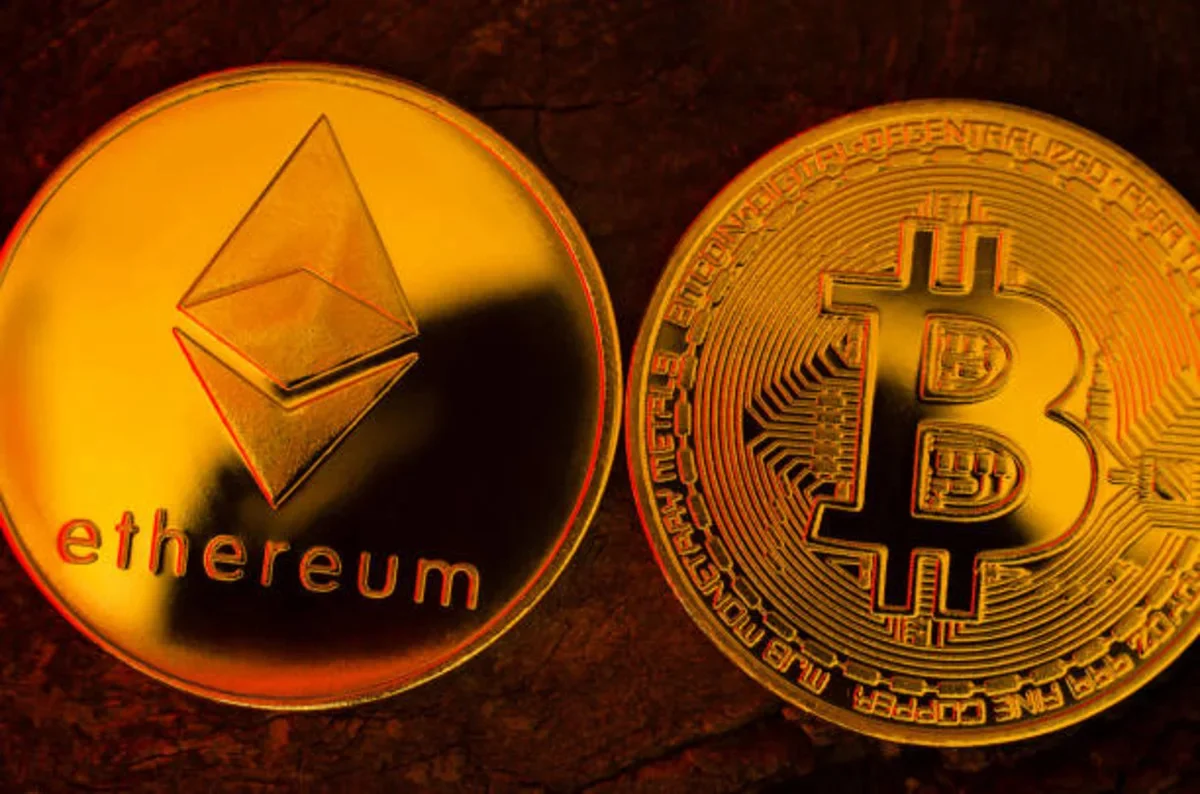
Bitcoin (BTC-USD) commenced trading on Tuesday, September 1, 2026, at $78,559.11, marking a 1.1% increase from its Monday opening price, only to recede to $77,945.97 by 8:19 a.m. ET as market sentiment shifted. Similarly, Ethereum (ETH-USD) opened stronger at $2,467.13, up 2% from Monday, before edging lower to $2,454.23 by the same morning timestamp. This initial strength followed by a subsequent decline was not exclusive to digital assets; traditional safe-haven commodities like gold and silver also exhibited parallel price patterns, reflecting a broader market reaction to evolving macroeconomic forecasts. The primary catalyst for this reversal appears to be the intensifying anticipation of an interest rate hike by the Federal Reserve later this month, compounded by geopolitical instability in the Middle East.
The Federal Reserve’s Tightrope Walk: Inflation, Employment, and Geopolitics
The Federal Reserve finds itself navigating an increasingly complex economic landscape, balancing its dual mandate of achieving maximum employment and maintaining price stability. Recent shifts in market expectations, as tracked by tools like the CME Group’s FedWatch, underscore the growing conviction that the central bank will opt for a tighter monetary policy. As of September 1, 2026, the FedWatch tool indicated a 66.4% probability of a 25-basis-point rate increase by the Federal Open Market Committee (FOMC), a stark contrast to just last week when the odds favored leaving rates unchanged at 60.4%. This dramatic pivot in expectations suggests a confluence of recent economic data and external pressures pushing the Fed towards a more hawkish stance.
For months, the Fed has grappled with persistent inflationary pressures, which have proven more stubborn than initially anticipated. While robust job growth and declining unemployment figures have signaled a strong labor market, the consumer price index (CPI) and personal consumption expenditures (PCE) data have consistently remained above the Fed’s long-term 2% target. Policymakers have repeatedly emphasized their commitment to bringing inflation under control, even if it entails measures that could temper economic growth. Higher interest rates are a primary tool for curbing inflation by increasing the cost of borrowing, thereby reducing consumer spending and investment. However, this approach inherently carries the risk of slowing economic activity too much, potentially leading to a recession. The market’s interpretation of recent economic indicators, perhaps stronger-than-expected inflation readings or hawkish remarks from Fed officials, has evidently shifted the consensus towards an imminent rate hike.
Geopolitical Fires Fueling Inflationary Concerns: The Iran Conflict
Adding another layer of complexity to the Fed’s decision-making process is the escalating geopolitical situation in the Middle East. The ongoing conflict in Iran, which saw the first U.S. attacks since July over the weekend, coupled with recent threats of additional strikes by President Trump, has sent shockwaves through global energy markets. Oil prices have surged in response to the increased instability, raising fears of supply disruptions from a crucial oil-producing region. This rise in crude oil prices has a direct and significant impact on inflation, as it translates to higher costs for transportation, manufacturing, and ultimately, consumer goods.
The interconnectedness of global markets means that a conflict in one region can have far-reaching economic consequences. Higher oil prices contribute to "cost-push" inflation, where the cost of producing goods and services increases, leading businesses to raise prices. This phenomenon directly undermines the Fed’s efforts to control price growth, making their job "extremely difficult," as the article notes. The prospect of sustained high energy costs intensifies the pressure on the central bank to act decisively to prevent inflation from becoming entrenched. Moreover, geopolitical uncertainty often drives investors towards traditional safe-haven assets, but in the current environment, even gold and silver are caught between inflation fears and the disincentive of rising interest rates. The unpredictability of the conflict and the potential for further escalation create a volatile backdrop for monetary policy decisions, with market participants closely monitoring every development.
Impact on Non-Yielding Assets: Crypto, Gold, and Silver
The overarching pattern observed across cryptocurrencies, gold, and silver this morning – an initial strong opening followed by a retreat – can be largely attributed to the mounting expectations of a Fed rate hike. This phenomenon is rooted in the fundamental characteristic of these assets: they do not pay interest to investors. In an environment of rising interest rates, traditional interest-bearing assets, such as bonds or high-yield savings accounts, become more attractive. The "opportunity cost" of holding non-yielding assets increases, as investors can earn a better return elsewhere with potentially lower risk.
For Bitcoin and Ethereum, which derive their value from scarcity, network utility, and speculative demand rather than cash flows or dividends, this dynamic is particularly pronounced. When interest rates are low, the appeal of riskier, higher-growth potential assets like cryptocurrencies is amplified. However, as rates climb, the allure diminishes, as the prospect of guaranteed, albeit modest, returns from less volatile investments becomes more appealing. This inverse relationship often sees capital flow out of speculative assets and into more conservative, yield-generating instruments during periods of monetary tightening. The recent market action confirms this trend, with traders likely adjusting portfolios in anticipation of the Fed’s move.
Bitcoin’s Performance: A Test of Digital Gold Narrative
Bitcoin, often hailed as "digital gold" due to its finite supply and decentralization, saw its opening price on September 1, 2026, at $78,559.11, a modest 1.1% gain from Monday. However, its subsequent dip to $77,945.97 suggests that its safe-haven narrative is being challenged by the immediate pressures of rising interest rates and a stronger dollar, which typically accompanies hawkish Fed policy. While Bitcoin has shown resilience over its lifetime, its journey has been marked by extreme volatility. Its all-time high of $128,198.07, achieved on October 6, 2025, stands as a testament to its explosive growth potential, particularly during periods of expansive monetary policy and high liquidity. Conversely, its all-time low of $0.04865 on July 14, 2010, serves as a stark reminder of its nascent beginnings and the significant risks involved.
The current price point, while considerably higher than its initial valuations, places Bitcoin significantly below its peak, indicating a period of consolidation or correction following its 2025 rally. Market capitalization and 24-hour trading volumes for Bitcoin often reflect broader investor sentiment. While specific figures are not provided in the original content for September 1, 2026, it can be inferred that liquidity remains robust, but overall market participation might be more cautious. Analysts often point to Bitcoin’s supply halving events as key drivers for long-term appreciation, but in the short to medium term, macroeconomic factors like interest rates and geopolitical stability tend to exert dominant influence on its price movements. The asset’s correlation with traditional equities, particularly tech stocks, has also increased during recent periods of market uncertainty, further solidifying its perception as a risk-on asset rather than a pure inflation hedge in the current climate.
Ethereum’s Trajectory: Utility, Staking, and Market Sensitivity
Ethereum, the backbone of a vast decentralized ecosystem, experienced a stronger opening than Bitcoin on September 1, 2026, rising 2% from Monday to $2,467.13. However, it too succumbed to selling pressure, falling to $2,454.23 by mid-morning. Ethereum’s performance, while often correlated with Bitcoin, also reflects its unique utility and the ongoing development of its network. Its all-time high of $4,953.73 on August 24, 2025, highlights the immense growth in decentralized finance (DeFi), non-fungible tokens (NFTs), and other Web3 applications built on its blockchain. Its historical low of $0.4209 on October 21, 2015, similarly shows its incredible journey from obscurity to a foundational digital asset.
Unlike Bitcoin, Ethereum offers a mechanism for investors to earn a yield through "staking," where ETH holders lock up their tokens to help secure the network and process transactions. This process, introduced after its transition to a Proof-of-Stake consensus mechanism (often referred to as "The Merge" in 2022), provides a potential counter-argument to the "non-yielding asset" critique. In a rising rate environment, staking rewards on Ethereum could theoretically offer a competitive yield compared to traditional financial instruments, potentially mitigating some of the opportunity cost for long-term holders. However, the volatility of ETH’s underlying price often outweighs the staking yield in the short term, making it still highly sensitive to macroeconomic shifts. The growth of Ethereum’s ecosystem, including Layer 2 scaling solutions and continued innovation in dApps, remains a critical long-term driver, but short-term price action is undeniably tied to broader market sentiment and monetary policy.
The Broader Implications and Forward Outlook
The market’s current trajectory suggests a cautious outlook for risk assets, including cryptocurrencies, as long as the specter of higher interest rates looms large. The Fed’s commitment to taming inflation, exacerbated by the Iran conflict’s impact on energy prices, indicates that the era of ultra-loose monetary policy is firmly in the rearview mirror. Investors will be keenly watching the upcoming FOMC meeting for concrete signals regarding the pace and magnitude of future rate adjustments. Any deviation from the currently anticipated 25-basis-point hike, whether more aggressive or surprisingly dovish, could trigger significant market volatility.
Beyond interest rates, the geopolitical situation in Iran remains a critical wildcard. A de-escalation of tensions could ease pressure on oil prices and, consequently, inflation, providing the Fed with more flexibility. Conversely, further escalation could send oil prices soaring, forcing the Fed into an even more aggressive tightening cycle, potentially risking a sharper economic downturn. The interplay between these two dominant forces – monetary policy and geopolitics – will largely dictate market performance in the coming months.
For cryptocurrency investors, this period calls for vigilance and a deep understanding of market fundamentals. While the long-term adoption and technological advancements of Bitcoin and Ethereum continue to attract investment, the short-term landscape is heavily influenced by macro factors. Diversification, risk management, and a focus on assets with clear utility or strong community support are becoming increasingly important strategies in this evolving environment. The digital asset market, once seen as entirely detached from traditional finance, is now demonstrating its increasing integration and sensitivity to global economic and political currents.
Understanding the Core Assets: Bitcoin and Ethereum
For those less familiar with these digital assets, a brief overview is crucial. Bitcoin, often referred to as digital gold, is a decentralized digital currency, meaning it operates without a central bank or single administrator. Its value is derived from its scarcity (a capped supply of 21 million coins), its security through cryptographic proof, and its increasing adoption as a store of value and medium of exchange.
Ethereum, on the other hand, is not just a cryptocurrency but a decentralized, open-source blockchain with smart contract functionality. While "Ethereum" often refers to the platform, the native cryptocurrency that powers it and is used for transactions and staking is called Ether (ETH). It is the foundational layer for countless decentralized applications (dApps), including DeFi protocols, NFTs, and metaverse projects, making its ecosystem a vibrant and continuously evolving space within the broader crypto market. Investors engage with ETH for various reasons, from short-term trading to long-term accumulation and yield generation through staking, contributing to its role as a foundational piece of a modern digital portfolio.
The current market conditions serve as a powerful reminder of the intricate web of factors influencing asset prices, from central bank policy to international conflicts. As the global economy navigates these challenges, the resilience and adaptability of digital assets like Bitcoin and Ethereum will be continually tested.
