

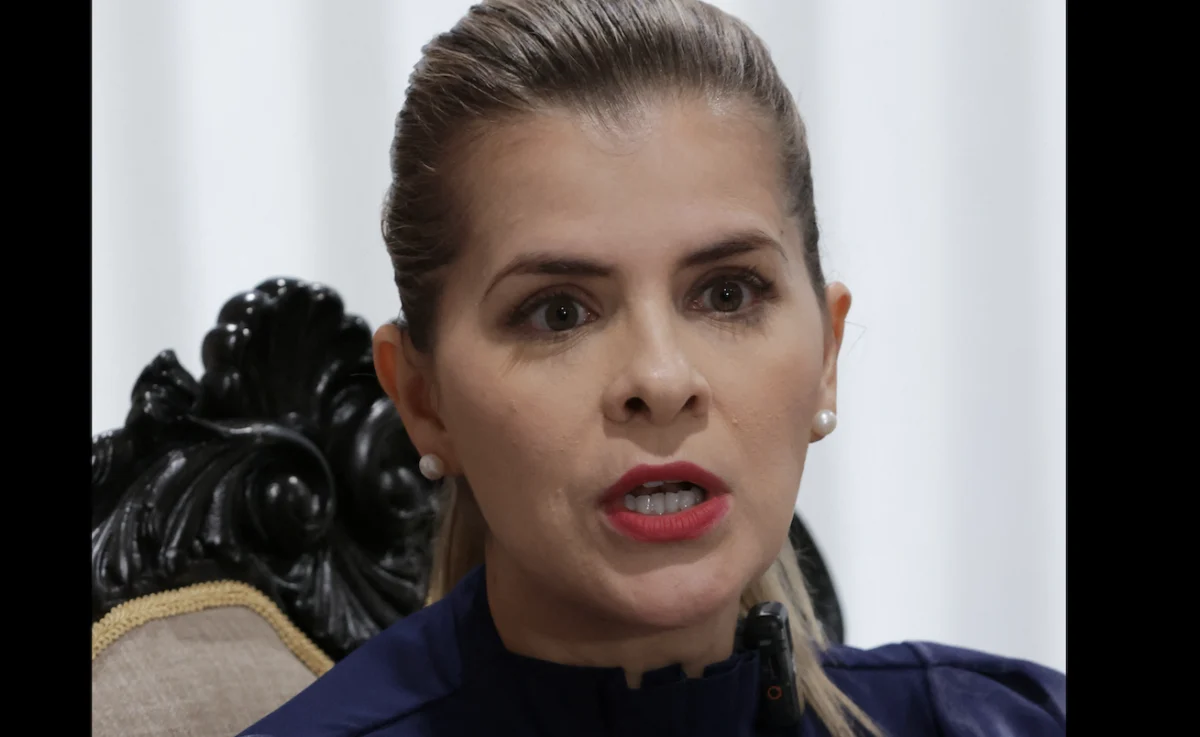
In a statement that has sparked intense debate across Central America, Costa Rican President Laura Fernandez addressed the possibility of hosting United States ground forces to assist in the nation’s escalating struggle against organized crime and transnational security threats. Speaking from the capital of San José on September 5, 2026, President Fernandez clarified that while no formal plans are currently in motion, the strategic presence of U.S. military personnel could provide a significant deterrent against the cartels and smuggling rings that have increasingly used the country as a transit hub. The President was careful to emphasize that any such deployment would strictly adhere to constitutional protocols, requiring the explicit approval of the Legislative Assembly, and would likely be focused on logistics, intelligence, and high-level training rather than direct combat operations.
The announcement comes at a pivotal moment for Costa Rica, a nation that has historically prided itself on its lack of a standing military since 1948. For decades, the "Switzerland of Central America" has relied on its national police force, the Fuerza Pública, and international treaties to maintain its borders. However, a surge in homicide rates and the sophisticated tactics of international drug trafficking organizations have pushed the country’s internal security apparatus to its limits. President Fernandez’s comments reflect a growing pragmatism within the administration, suggesting that the traditional model of "civilian-only" policing may no longer be sufficient to counter the heavily armed syndicates operating in the region.
Historical Context: A Tradition of Neutrality and Abolition
To understand the weight of President Fernandez’s remarks, one must look back to December 1, 1948, when President José Figueres Ferrer famously took a sledgehammer to the walls of the Cuartel Bellavista, symbolizing the abolition of the Costa Rican army. This decision redirected military spending toward education, healthcare, and environmental conservation, fostering a period of unprecedented stability and democratic growth in a region often plagued by civil wars and military dictatorships.
Throughout the Cold War and the subsequent "War on Drugs," Costa Rica maintained its security through a delicate balance of diplomatic neutrality and strategic partnerships. The country has a long-standing maritime cooperation agreement with the United States, which allows U.S. Coast Guard vessels to patrol Costa Rican waters in pursuit of narcotics traffickers. However, the introduction of ground forces—even for support roles—represents a significant departure from this historical norm. Critics argue that even a limited U.S. military presence could erode the nation’s sovereignty and compromise its identity as a pacifist state, while proponents suggest that the nature of modern threats requires a more robust and modernized defensive posture.
The Escalating Security Crisis in 2026
The backdrop to this potential policy shift is a deteriorating security landscape that has seen Costa Rica transition from a transit point to a logistics hub for international cartels. By mid-2026, crime statistics provided by the Judicial Investigation Department (OIJ) indicated a 15% year-over-year increase in violent crime, with a record number of homicides linked to territorial disputes between rival gangs.
The "Mexicanization" of local criminal groups—referring to the adoption of extreme violence and high-caliber weaponry used by Mexican cartels—has overwhelmed local police precincts. Furthermore, the northern border with Nicaragua and the southern border with Panama have become increasingly porous, facilitating the movement of not only illicit drugs but also human trafficking networks and illegal mining operations. The Fernandez administration has argued that the technical expertise and surveillance capabilities of the U.S. military could bridge the "capability gap" that currently exists within the Fuerza Pública, particularly in remote jungle regions where law enforcement presence is minimal.
Proposed Framework for Cooperation
President Fernandez was specific in her assertion that any U.S. involvement would be collaborative and subservient to Costa Rican law. Under the proposed framework, U.S. ground forces would likely engage in:
- Intelligence and Surveillance: Utilizing advanced drone technology and satellite imagery to track movements along the "inter-oceanic" corridor used by smugglers.
- Infrastructure Development: Assisting in the construction of secure outposts and communication networks in the Osa Peninsula and the Caribbean coast.
- Tactical Training: Providing elite training to the Special Intervention Unit (UEI) and the Border Police to handle high-stakes encounters with paramilitary-style criminal groups.
- Logistical Support: Improving the transport capabilities of Costa Rican forces, who often lack the helicopters and all-terrain vehicles necessary to navigate the country’s rugged topography.
The President reiterated that this would not constitute a "permanent base" but rather a series of "rotational exercises and support missions." Nevertheless, the distinction between a permanent presence and long-term rotational exercises is often thin in the eyes of constitutional scholars and opposition lawmakers.
Legislative Hurdles and Constitutional Requirements
Under Article 12 of the Political Constitution of Costa Rica, the "proscription of the Army as a permanent institution" is a fundamental pillar of the state. However, the same article allows for the organization of military forces for "continental defense or for the maintenance of public order" under the direction of the civil power. Crucially, any entry of foreign troops into national territory must be authorized by the Legislative Assembly.
The 57-member Assembly is currently divided on the issue. The ruling party, while holding a significant bloc, would need to build a coalition with centrist and conservative factions to reach the two-thirds majority required for such a sensitive motion. Early reactions from the opposition have been mixed. Representative Miguel Sanchez of the Social Christian Unity Party stated that while security is a priority, the "militarization of the streets" is a line that cannot be crossed. Conversely, members of the National Liberation Party have signaled a willingness to discuss the proposal, provided there are strict "sunset clauses" and oversight mechanisms to ensure the U.S. forces remain in a non-combat capacity.
Regional Implications and Geopolitical Responses
The suggestion of U.S. ground forces in Costa Rica has sent ripples throughout Latin America. In Washington, the State Department issued a cautious statement, reaffirming its commitment to regional security while emphasizing that any cooperation would be at the request and invitation of the Costa Rican government. Analysts suggest that for the United States, a presence in Costa Rica would offer a stable platform to counter the growing influence of non-traditional actors in Central America, including Chinese infrastructure investments and Russian security cooperation with neighboring Nicaragua.
Nicaragua, under the leadership of the Ortega-Murillo administration, has already voiced its opposition, characterizing the potential move as an "imperialist provocation" that threatens the balance of power in the Isthmus. Relations between San José and Managua have been strained for years due to border disputes and the influx of Nicaraguan political refugees into Costa Rica. A U.S. military presence on the border could further escalate these tensions, potentially leading to increased militarization on the Nicaraguan side.
Panama, to the south, has taken a more observant stance. Having also abolished its military in the 1990s, Panama shares many of Costa Rica’s security challenges regarding the Darien Gap. If the Costa Rican model of U.S. ground cooperation proves successful and politically viable, it could set a precedent for Panama to seek similar arrangements.
Supporting Data: The Cost of Insecurity
Economic data supports the administration’s urgency. A 2025 report from the World Bank estimated that crime and violence cost Costa Rica approximately 4.5% of its GDP annually, factoring in lost productivity, healthcare costs, and the negative impact on the tourism industry—the backbone of the national economy. In 2026, the tourism sector reported a 10% decline in bookings in the Limón province, a region hit particularly hard by cartel-related violence.
Furthermore, the United States has already been a significant donor to Costa Rican security. Since 2020, the U.S. has provided over $150 million in equipment and training through the Central America Regional Security Initiative (CARSI). However, the Fernandez administration argues that "hardware alone" is no longer enough. The complexity of modern criminal networks, which utilize encrypted communications and semi-submersible vessels, requires the kind of "on-the-ground" technical synergy that only direct military-to-military (or military-to-police) cooperation can provide.
Public Opinion and Social Impact
The Costa Rican public is deeply divided. Recent polling conducted by the University of Costa Rica (UCR) suggests that 48% of the population would support a limited U.S. military presence if it resulted in a measurable decrease in crime. However, 42% remain staunchly opposed, citing a deep-seated national identity rooted in peace and the fear that Costa Rica could be drawn into broader geopolitical conflicts.
Human rights organizations have also raised concerns. "The introduction of foreign military forces into a civilian policing environment often leads to a blurring of lines regarding the use of force and accountability," said a spokesperson for a leading San José-based NGO. There are fears that a "hardline" approach could lead to the types of human rights abuses seen in other Latin American nations that have militarized their domestic security.
Analysis of Potential Outcomes
As the Fernandez administration prepares to bring a formal proposal to the Legislative Assembly later this year, several scenarios could unfold. The most likely outcome is a highly restrictive agreement that permits U.S. forces to operate only in specific "special zones" or for clearly defined "training windows." This would allow the government to claim a victory for national security while placating those concerned about sovereignty.
However, the risk of mission creep remains a significant concern. Historically, what begins as "training and logistics" can evolve into more active roles if the security situation continues to deteriorate. The administration will have to navigate this "slippery slope" with extreme transparency if it hopes to maintain public trust.
In the broader context of U.S. foreign policy, this development signals a shift toward "integrated deterrence" in the Western Hemisphere. By working with a stable, democratic partner like Costa Rica, the U.S. can demonstrate a model of security cooperation that prioritizes institutional strengthening over mere tactical gains.
Conclusion
The remarks by President Laura Fernandez mark a potential turning point in Costa Rican history. By acknowledging that U.S. ground forces could play a role in national security, she has challenged a century-old consensus on the nation’s defense. Whether this proposal becomes a reality or remains a strategic talking point will depend on the ensuing debate within the Legislative Assembly and the evolving nature of the security threats facing the region. As of September 2026, Costa Rica stands at a crossroads, forced to weigh its cherished traditions of peace and neutrality against the harsh realities of a modern, violent, and globalized criminal underworld. The decision made in the coming months will not only redefine the U.S.-Costa Rica relationship but will also reshape the security architecture of Central America for the next decade.
