

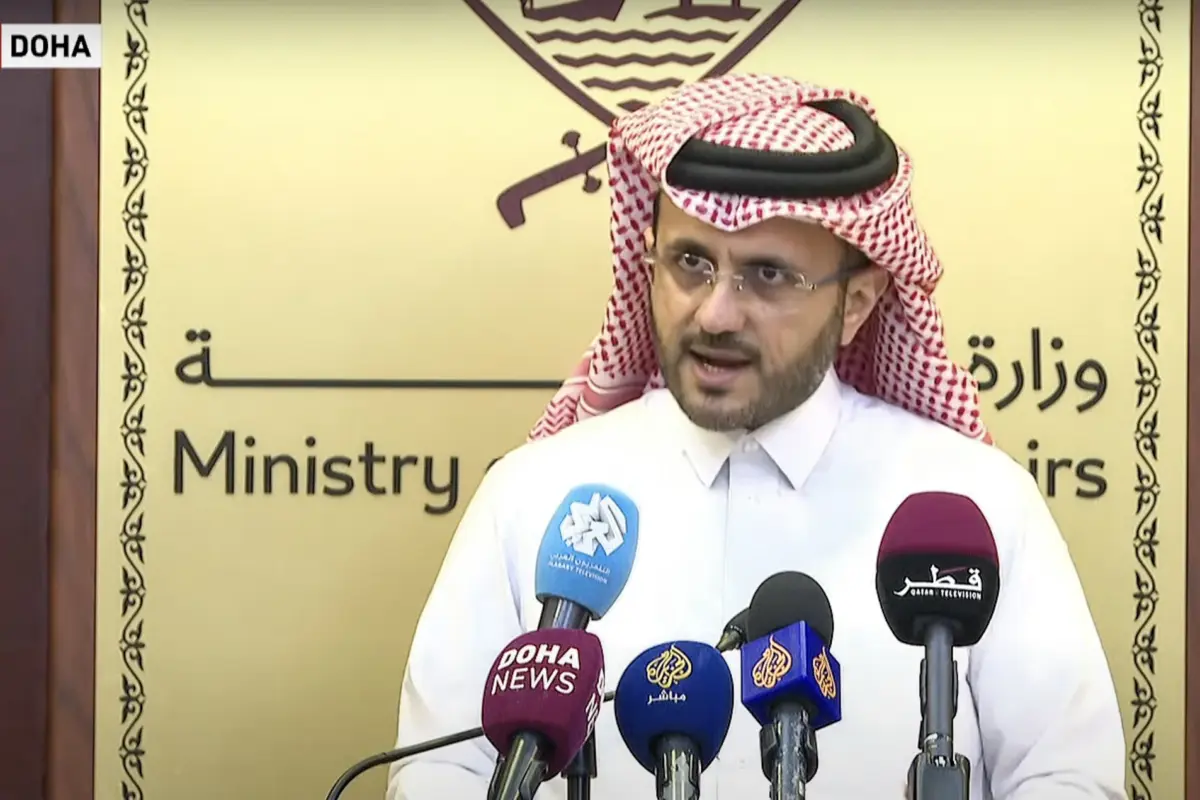
The government of Qatar has formally dismissed allegations from Israeli political figures and media outlets suggesting that the Gulf state interfered in Israel’s recent parliamentary elections, labeling the claims a coordinated "disinformation campaign." As Israel navigates the aftermath of a highly polarized election cycle in late 2026, the Foreign Ministry in Doha issued a stern rebuttal against accusations that it provided illicit funding to Arab-Israeli political parties to influence the democratic process. The rejection comes at a time of heightened regional volatility, where Qatar remains a central, yet often scrutinized, mediator in multiple overlapping conflicts involving Israel, the Palestinian territories, and Iran.
The controversy erupted as partial results from Tuesday’s Knesset elections indicated a significant deadlock, with Prime Minister Benjamin Netanyahu’s Likud-led bloc failing to secure a clear governing majority. Amid this political uncertainty, figures within the Likud party and several right-wing media affiliates began circulating unsubstantiated reports claiming that Qatari funds were funneled into "get-out-the-vote" initiatives specifically targeting the Arab-Israeli sector. These claims suggest that the surge in turnout among Arab citizens—which led to a record number of seats for Arab-led lists—was the result of foreign financial intervention rather than domestic political mobilization.
Doha’s Categorical Denial
Majed al-Ansari, the spokesperson for Qatar’s Ministry of Foreign Affairs, utilized social media and official diplomatic channels on Thursday to address what he termed "ridiculous and dangerous" allegations. In a statement posted on X, al-Ansari emphasized that Qatar maintains a policy of strict non-interference in the internal affairs of other sovereign states. He argued that the accusations were a cynical attempt by embattled Israeli politicians to deflect from their own electoral shortcomings.
"[Some Israeli politicians] accuse Qatar of buying off Benjamin Netanyahu, the Israeli political left and now, in this latest campaign, the Arab vote. If these claims were to be believed, Qatar would apparently own all of Israel," al-Ansari remarked, highlighting the contradictory nature of the various conspiracy theories leveled against the state. He further urged Israeli leaders to focus on the domestic needs of their electorate and the "damage they’ve created in the region" rather than seeking external scapegoats for their political failures.
The spokesperson’s comments reflect a growing frustration in Doha over the recurring use of Qatar as a "political football" in Israeli domestic discourse. For years, Qatar has been a convenient target for Israeli hawks, despite the fact that the Israeli government itself has historically facilitated the transfer of Qatari funds into the Gaza Strip for humanitarian aid and administrative salaries—a policy Netanyahu once defended as a means to maintain stability.
Institutional Rebuttal from Israel’s Election Oversight
The allegations of foreign meddling have not been supported by Israel’s own regulatory bodies. Dean Livine, the acting director of Israel’s Central Elections Committee (CEC), issued a formal letter to a Member of Parliament and fellow committee member, explicitly rejecting the notion that the integrity of the vote had been compromised. Livine’s correspondence served as a rare institutional defense against the narrative being pushed by the Prime Minister’s allies.
"The Knesset elections were conducted lawfully. The integrity of the elections at polling stations was rigorously safeguarded," Livine wrote, affirming that there was no evidence of foreign financial interference or organized fraud that could have skewed the results. The CEC’s stance provides a significant blow to the Likud party’s narrative, suggesting that the increase in Arab voter participation was a legitimate expression of the domestic political will rather than a product of external manipulation.
A Timeline of Escalating Tensions (2023–2026)
To understand the current friction, it is necessary to examine the trajectory of Israel-Qatar relations over the past three years. While Qatar does not have formal diplomatic ties with Israel, it has acted as the primary interlocutor between the Israeli government and Hamas, particularly following the events of October 7, 2023.
- October 2023 – Early 2024: Following the Hamas-led attacks, Qatar emerged as the lead mediator for hostage negotiations. Despite this role, Israeli influence experts and political advisers reportedly launched a secret campaign targeting Qatar’s reputation globally, attempting to link the Gulf state directly to the financing of the October 7 operation.
- September 2025: During the height of the Israeli military operations in Gaza, Prime Minister Netanyahu publicly boasted about "attacking" Qatari interests, signaling a shift from pragmatic cooperation to open hostility. This period saw a surge in rhetoric accusing Doha of playing a "double game."
- 2026 Election Cycle: As the 2026 elections approached, the narrative shifted toward domestic interference. With Netanyahu’s political survival at stake and the Arab lists gaining unprecedented momentum, the "Qatari funding" trope was revitalized to delegitimize the potential influence of Arab parties in a coalition government.
The Strategic Importance of the Arab Vote
The 2026 elections were marked by a historic surge in participation within the Arab-Israeli sector, which comprises roughly 20% of the population. Partial results showed the two primary Arab lists securing a record number of seats, positioning them as potential "kingmakers" in a fractured parliament. However, the mainstream Zionist parties, including the center-left opposition, have remained hesitant to enter a formal partnership with these lists, fearing a backlash from nationalist voters.
By accusing Qatar of funding these parties, Likud strategists aim to frame any potential cooperation between the opposition and the Arab lists as a "surrender to foreign interests." This tactic serves to isolate the Arab representatives and prevent the formation of a government that could unseat the current administration.
Qatar’s Broader Geopolitical Role
Beyond the immediate context of the Israeli elections, Qatar continues to navigate a complex role as a regional "bridge-builder." The Foreign Ministry reiterated that the latest accusations would not distract Doha from its diplomatic responsibilities. Qatar is currently leading two major mediation efforts:
- The Israel-Palestine Conflict: Doha remains a central figure in attempting to negotiate a permanent ceasefire and oversee humanitarian aid in Gaza. The Qatari government has consistently advocated for a "just and comprehensive peace" based on a two-state solution, even as it faces criticism for hosting the political wing of Hamas.
- The US-Israel-Iran War: Perhaps more critically, Qatar is currently the primary mediator between Washington and Tehran in an effort to de-escalate the ongoing conflict between the United States, Israel, and Iran. This role makes Qatar indispensable to U.S. foreign policy in the Middle East, a fact that often provides Doha with a layer of diplomatic protection against Israeli pressure.
Al-Ansari’s statement underscored that Qatar’s commitment to regional stability remains unshaken. "These are internal Israeli matters in which we do not interfere, and we will not accept any attempt to draw Qatar into its domestic political disputes," he concluded.
Analysis: The Implications of Scapegoating
The persistence of the "Qatar interference" narrative in Israeli politics has several long-term implications. First, it risks undermining the very mediation channels that Israel relies on for hostage releases and regional de-escalation. If the relationship between the two states deteriorates further, the mechanism for communication with non-state actors in Gaza and Lebanon could collapse.
Second, the rhetoric contributes to the further marginalization of the Arab-Israeli electorate. By characterizing their political participation as a product of foreign bribery, the narrative erodes the democratic legitimacy of a significant portion of the Israeli citizenry. This could lead to increased domestic unrest and a breakdown in social cohesion within Israel.
Finally, the tension highlights a growing rift between the Israeli government and its Western allies. While some Israeli politicians castigate Qatar, the United States continues to view Doha as a "Major Non-NATO Ally" and a vital partner in maintaining the regional balance of power. The divergence in how Qatar is perceived in Jerusalem versus Washington creates a point of friction that complicates a unified Western strategy in the Middle East.
As the final votes in the 2026 election are tallied, the focus remains on whether Israel can form a stable government. However, the shadow of these allegations suggests that regardless of the outcome, the "Qatar factor" will continue to be a potent and divisive tool in the region’s political landscape. For Doha, the priority remains clear: maintaining its status as an indispensable neutral party while shielding itself from the domestic volatility of its neighbors.
