

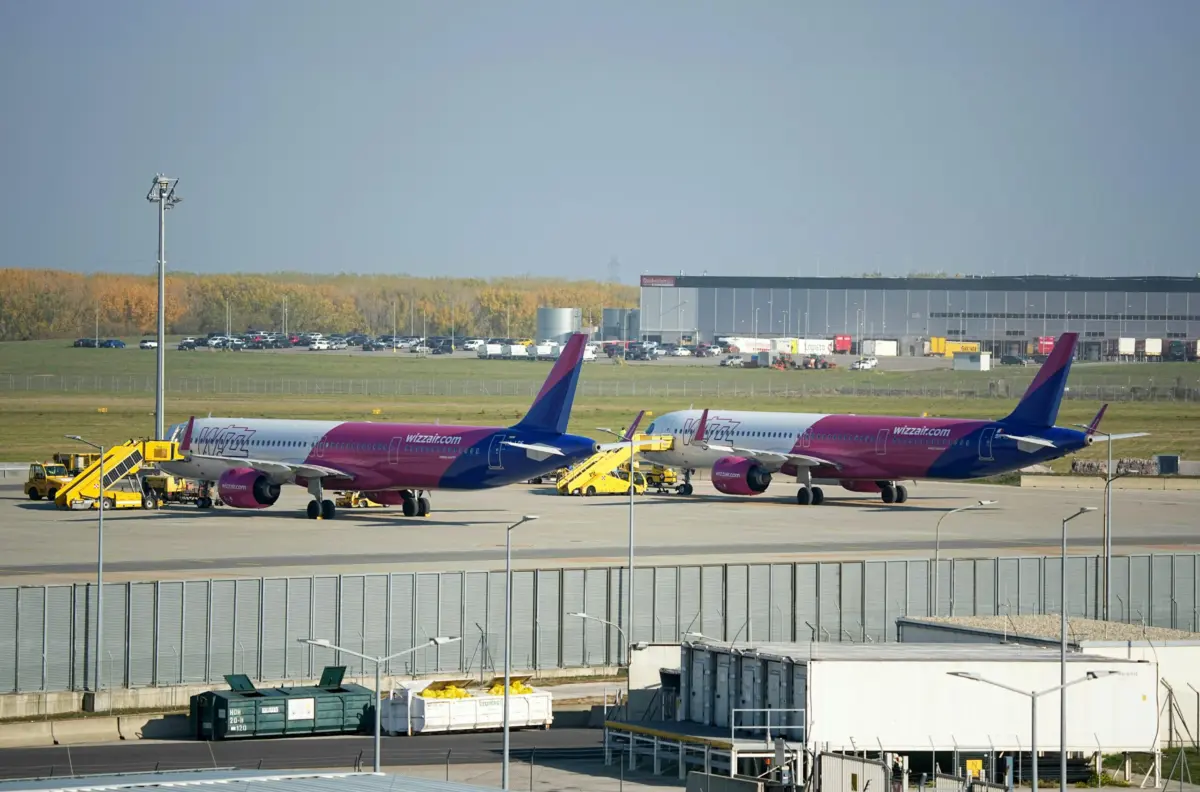
A sophisticated and widening campaign of hoax bomb threats has entered a volatile new phase across Europe, transitioning from the disruption of commercial aviation to the direct targeting of major media organizations. What began earlier this week as a series of isolated alerts has evolved into a coordinated effort to sow panic, strain emergency resources, and test the defensive posture of North Atlantic Treaty Organization (NATO) member states. By Friday, the wave of threats had compelled the evacuation of newsrooms in Ireland and Bulgaria, triggered fighter jet scrambles across central Europe, and prompted the first reported involvement of NATO air patrols to secure regional airspace.
The escalation reached a critical point on Friday morning when several prominent news outlets received emailed threats. In Ireland, the national public broadcaster RTE was forced to briefly evacuate its Dublin headquarters, including television and radio studios, after an email warned that an explosive device would detonate within 45 minutes. David McCullagh, a presenter for RTE Radio One, informed listeners of the disruption shortly after staff were permitted to return to the building. The Irish government confirmed that the campaign was not limited to the public broadcaster; similar threats were directed at Virgin Media, Newstalk radio, and The Irish Independent newspaper.
Across the continent, the Bulgarian broadcaster Nova TV reported receiving a near-identical threat. These emails were reportedly sent under the pseudonym "Mikhail Andropov" and featured the subject line "Message to the West." Security analysts note that the name appears to be a calculated pseudonym, potentially referencing Cold War-era figures to heighten the psychological impact of the messages. The content of the emails portrayed the hoaxes not as isolated incidents, but as a "prelude" to a broader campaign of disruption intended to destabilize European social and economic infrastructure.
The Chronology of Escalation
The current crisis began in the early days of the week, initially focusing on the aviation sector, which is uniquely vulnerable to the logistical chaos caused by security alerts.
On Tuesday, approximately half a dozen flights were disrupted. These early incidents were treated as isolated security lapses, but the frequency increased sharply by mid-week. On Thursday, the situation escalated dramatically when more than two dozen flights across the European Union were targeted. These threats forced several aircraft to make unplanned landings in third countries, while others were shadowed by military interceptors until they exited specific national airspaces.
By Friday, the scope of the operation had broadened to include both the media and high-altitude transit corridors. Hungarian Defense Minister Romulusz Ruszin-Szendi reported that Hungarian Gripens were scrambled to escort airliners traveling from Brussels to Sofia and from Prague to Bucharest. Furthermore, Czech police registered threats against nine separate flights departing from or arriving at Prague’s Václav Havel Airport. While no flights were ultimately canceled, the secondary effects—including delayed departures, missed connections, and the deployment of specialized K9 and bomb disposal units—created a significant bottleneck in regional air traffic.
NATO Involvement and Military Response
For the first time since the start of the hoax wave, the Western defense alliance has become directly involved in the response. Minister Ruszin-Szendi confirmed that NATO command ordered an air patrol near the Hungarian-Romanian border on Friday. This move signifies a shift in how the threats are being perceived by intelligence officials—moving from a civil aviation policing matter to a potential hybrid warfare challenge.
The use of fighter jets to escort civilian airliners is a standard but high-cost protocol known as Quick Reaction Alert (QRA). When a "renegade" or threatened aircraft enters a nation’s airspace, military jets are deployed to provide visual reconnaissance and to ensure the aircraft follows air traffic control instructions. In France, aviation authorities confirmed that four new bomb threats were made against aircraft in their territory on Friday. All flights landed safely, but only after rigorous security protocols were enacted. Similarly, in Denmark, police monitored threats directed at Copenhagen Airport, though they ultimately determined there was no immediate danger to the public.
Supporting Data and Economic Impact
The economic and operational toll of these hoaxes is substantial. While the threats have thus far proven to be non-credible—no explosive devices have been discovered on any of the targeted planes or premises—the cost of the "abundance of caution" approach is measurable.
- Fuel and Operational Costs: A single diversion of a long-haul narrow-body aircraft (such as a Boeing 737 or Airbus A320) can cost an airline between $20,000 and $50,000 in additional fuel, landing fees, and ground handling charges. For the more than 30 flights affected this week, the direct cost to the aviation industry is estimated to exceed $1.2 million.
- Military Expenditure: The cost of scrambling a fourth-generation fighter jet like a Saab Gripen or a Dassault Rafale ranges from $10,000 to $25,000 per flight hour. With multiple scrambles reported across Hungary, France, and Czechia, the burden on national defense budgets is climbing.
- Productivity Loss: The evacuation of RTE in Dublin and Nova TV in Sofia resulted in hours of lost broadcasting and administrative time. In the case of aviation, thousands of passengers have faced delays, impacting business travel and tourism.
Official Reactions and Investigative Status
Government officials across Europe have condemned the campaign while emphasizing the need for a coordinated international investigation. A spokesperson for the British broadcaster Sky, which also received a threat, stated, “We have carried out a security assessment and reported the matter to the relevant authorities.”
The Irish government issued a more pointed statement, linking the media threats to the ongoing aviation disruption. “These threats come on the heels of the ongoing disruption to aviation around Europe caused by similar threats, and it seems likely that this is a coordinated campaign of disruption,” the statement read. The Irish Department of Justice is reportedly working with Europol and Interpol to trace the origin of the "Mikhail Andropov" emails, which are believed to have been sent through encrypted or proxied servers to mask the sender’s location.
Security experts suggest that the perpetrator’s goal may be "security fatigue." By flooding the system with false positives, the attacker forces authorities to exhaust resources and potentially lower their guard, or they may simply be seeking to demonstrate the fragility of Western infrastructure. Al Jazeera’s Frances Read, reporting from London, noted that the sheer volume of the hoaxes is forcing a re-evaluation of security protocols. “The number of hoax threats this week is making governments sit up and take notice about where this might be coming from and also think of solutions for how to deal with it,” she observed.
Broader Implications and Fact-Based Analysis
The transition of targets from "hard" infrastructure like airports to "soft" targets like newsrooms suggests a desire for maximum media visibility. By targeting the very organizations responsible for reporting the news, the perpetrators ensure that their "Message to the West" receives immediate and widespread amplification.
From a security standpoint, these events highlight the challenges of the digital age, where a single anonymous email can trigger a multi-million-euro military and police response. This "asymmetric" threat allows a single actor or a small group to exert influence far beyond their physical reach.
There is also a significant psychological component. For passengers on the diverted flights—such as the Ryanair flight from Rome to Lisbon or the various Prague-bound jets—the experience of being escorted by fighter jets and searched by armed police is traumatic. This contributes to a general sense of unease and can have long-term effects on public confidence in international travel.
As the week concludes, European intelligence agencies are focused on identifying the digital footprint of the "Mikhail Andropov" persona. While the threats have remained hoaxes, the coordination required to target multiple sectors across more than half a dozen countries suggests a level of planning that transcends typical "trolling." The involvement of NATO suggests that Western allies are now treating these disruptions as a collective security concern, signaling a move toward more robust cyber-defense and intelligence-sharing to mitigate the impact of future hoax campaigns.
For now, aviation and media sectors remain on high alert. Authorities have urged the public to remain calm but vigilant, noting that while the disruption is significant, the safety systems currently in place—from air traffic control to newsroom security protocols—have successfully prevented any physical harm during this unprecedented wave of harassment.
