

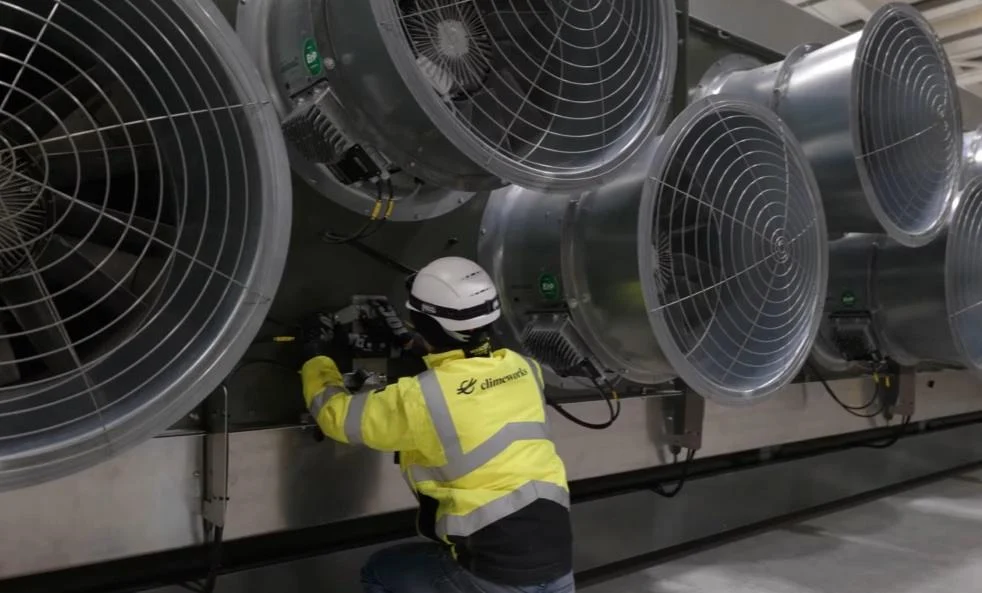
In a significant advancement for the burgeoning carbon removal industry, Zurich-based Climeworks has announced a major technological breakthrough at its "Mammoth" direct air capture (DAC) and storage facility in Iceland. The company revealed that a series of strategic upgrades have successfully doubled the plant’s CO2 capture performance under real-world operating conditions while simultaneously reducing the operating costs per ton of sequestered carbon by approximately 50%. This development marks a pivotal moment for the scaling of carbon dioxide removal (CDR) technologies, which are increasingly viewed as essential components in the global effort to mitigate the impacts of climate change and reach net-zero emissions by mid-century.
Founded in 2009 by engineers Christoph Gebald and Jan Wurzbacher, Climeworks has positioned itself as a pioneer in the DAC sector. The company currently operates the world’s two largest and most advanced DAC plants: "Orca," which began operations in 2021, and "Mammoth," which launched in early 2024. The Mammoth facility represents a ten-fold increase in scale over its predecessor, and these latest performance metrics suggest that the leap in size has been matched by a leap in efficiency.
Technical Enhancements and Sorbent Innovation
The performance gains at the Mammoth facility are attributed to two primary areas of innovation: chemical sorbent refinement and mechanical design optimization. DAC technology functions by using large fans to pull atmospheric air through a filter—or "collector container"—filled with a specialized chemical sorbent. This sorbent acts as a chemical sponge, selectively binding with CO2 molecules while allowing the rest of the air to pass through. Once the filter is saturated, the container is closed, and heat is applied to release the pure CO2, which can then be permanently stored underground or utilized in industrial processes.
Climeworks’ recent upgrades focused heavily on the sorbent’s formulation and production process. By enhancing the chemical properties of the capture material, the company has increased its capacity to hold CO2 per cycle. This refinement allows each collector container to process more air and trap more greenhouse gases in a shorter timeframe. Furthermore, mechanical improvements to the plant’s design, including upgraded equipment and more efficient heat exchange processes, have streamlined the overall operation.
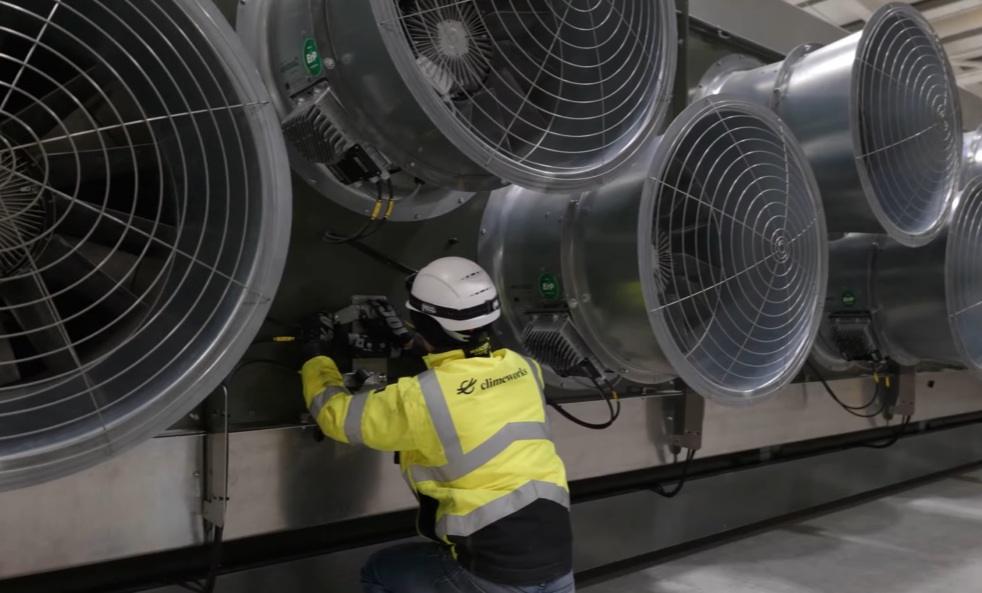
According to data released by Climeworks, these combined upgrades have delivered more than a twofold increase in throughput over the 18 months of Mammoth’s operational testing phase. The company confirmed that the plant’s first batch of upgraded collector containers is now achieving, and in some cases exceeding, the original design run rates. This validation of the technology in the harsh, real-world conditions of Iceland’s volcanic landscape is a crucial proof of concept for the company’s future expansion plans.
A Strategic Timeline: From Orca to the Next Generation
The journey of Climeworks reflects the rapid maturation of the carbon removal sector. The timeline of the company’s development illustrates a consistent trajectory toward industrial-scale deployment:
- 2009: Climeworks is founded as a spin-off from ETH Zurich.
- 2017: The company launches the world’s first commercial DAC plant in Hinwil, Switzerland, providing CO2 to a nearby greenhouse.
- 2021: The "Orca" plant begins operations in Iceland, capable of capturing 4,000 tons of CO2 per year. This facility marked the first time DAC was combined with permanent geological storage via the Carbfix process.
- May 2024: The "Mammoth" facility begins operations. With a design capacity of 36,000 tons of CO2 per year when fully built out, it is the largest plant of its kind.
- September 2026: Climeworks announces the doubling of capture performance and a 50% reduction in operational costs at Mammoth.
- Early 2027: The company plans to begin testing its "next-generation" DAC technology at the Mammoth site.
The upcoming 2027 testing phase is expected to introduce even more radical improvements. Laboratory results for the next-generation technology have already demonstrated a tenfold improvement in sorbent lifetime. This longevity is critical for economic viability, as it reduces the frequency and cost of sorbent replacement—one of the primary drivers of operational expenses in DAC plants. Additionally, the new technology promises a fourfold improvement in "process densification," meaning that future plants will require significantly fewer collector containers to achieve the same net carbon removal production, leading to smaller physical footprints and lower capital expenditures.
The Icelandic Advantage: Energy and Storage
The success of the Mammoth facility is inextricably linked to its location in Iceland. Direct Air Capture is an energy-intensive process, requiring both electricity to run fans and thermal energy to release the captured CO2 from the sorbent. In Iceland, Climeworks leverages the country’s abundant geothermal resources. The Mammoth plant is powered by renewable energy from ON Power’s Hellisheidi Geothermal Power Plant, ensuring that the carbon removal process itself has a minimal carbon footprint.
Furthermore, Iceland provides the ideal geological conditions for permanent carbon storage. Climeworks partners with Carbfix, an Icelandic company that has pioneered a method of carbon mineralization. Once the CO2 is captured by Climeworks, it is dissolved in water and injected into deep basaltic rock formations. Through a natural chemical reaction, the CO2 reacts with the basalt to form solid carbonate minerals—essentially turning the gas into stone—within less than two years. This method offers one of the most secure and permanent forms of carbon sequestration available today.

Economic Implications and the Path to $100 Per Ton
One of the greatest hurdles for the DAC industry has been the high cost of capture. Early estimates for DAC-based carbon removal often ranged from $600 to $1,000 per ton of CO2. To become a mainstream climate solution, many experts believe the cost must drop toward the "holy grail" of $100 per ton.
The announcement that Climeworks has halved its operating costs at Mammoth is a significant step toward this target. Jan Wurzbacher, co-founder and co-CEO, emphasized the importance of this operational experience: "Climeworks is the only company worldwide that has been delivering direct air capture-based carbon removal to customers for several years. Mammoth is enabling us to maintain that leading position, while at the same time providing a platform for the accelerated deployment and validation of future step changes in technology, cost, and performance."
Lowering costs is essential for attracting more corporate buyers into the voluntary carbon market. To date, Climeworks has secured long-term removal agreements with major global corporations, including Microsoft, Shopify, Stripe, and Swiss Re. These companies pay a premium for DAC-based removals because of their high "additionality" and "permanence" compared to traditional nature-based offsets like reforestation. As Climeworks continues to drive down costs through technological innovation, the addressable market for these services is expected to expand exponentially.
Global Context and Environmental Necessity
The advancements at Mammoth come at a time of increasing urgency in climate science. The Intergovernmental Panel on Climate Change (IPCC) has stated that to limit global warming to 1.5°C, the world must not only aggressively reduce new emissions but also remove billions of tons of existing CO2 from the atmosphere by 2050.
While nature-based solutions like planting trees are vital, they are often limited by land availability and the risk of carbon being released back into the atmosphere through wildfires or decay. Engineering solutions like DAC offer a scalable, measurable, and permanent alternative. However, the current global capacity for DAC is still in its infancy, measuring in the tens of thousands of tons, whereas the required scale is in the gigatons (billions of tons).

Climeworks’ ability to double performance and reduce costs provides a roadmap for the rapid industrialization of the sector. The lessons learned at Mammoth are already being applied to the company’s global expansion strategy, which includes projects in the United States, Norway, and Kenya. In the U.S., Climeworks is a key participant in the Department of Energy’s "Regional DAC Hubs" program, which aims to kickstart large-scale carbon removal projects across the country.
Industry Reactions and Future Outlook
Industry analysts have reacted positively to the news, noting that the "real-world" nature of the performance data is more valuable than theoretical lab results. The fact that the improvements were achieved on a plant that is already operational suggests that the learning curve for DAC technology may be steeper—and thus more promising—than previously thought.
However, challenges remain. Scaling DAC to a gigaton level will require massive investments in renewable energy infrastructure and a global build-out of CO2 transport and storage networks. Critics also point out that carbon removal should not be used as an excuse by heavy emitters to delay the transition away from fossil fuels. Climeworks has consistently advocated for a "mitigation-first" approach, where carbon removal is used to address hard-to-abate sectors and historic emissions rather than replacing immediate decarbonization efforts.
As Climeworks prepares to test its next-generation technology in 2027, the eyes of the climate tech world remain on Iceland. The performance of the Mammoth plant serves as a barometer for the entire DAC industry. If Climeworks can continue to demonstrate that carbon removal can be made more efficient and more affordable, it may well prove that the technology is ready to transition from a niche scientific endeavor to a foundational pillar of the global green economy.
